How Much of Political Messaging Relies on Public Bias?

This post is a response to a question posed in its complete format: “Are politics and marketing highly dependent upon, and structured around, the inability of the masses to think logically, act responsibly, and go beyond surface thought; especially go beyond surface thought?”
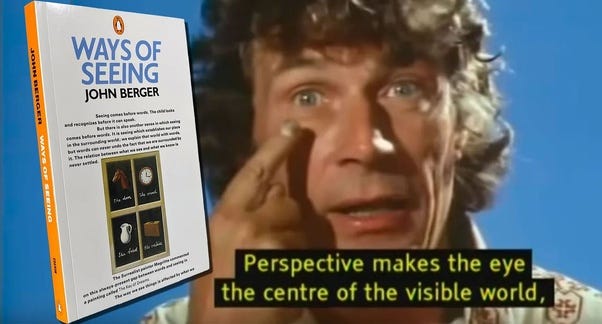
“All Publicity Works Upon Anxiety.”

John Berger’s “Ways of Seeing” was an excellent introduction to my young mind as an art student in the early 1980s, helping me become more consciously aware of the then-daily bombardment of thousands of messages. It’s been decades, so I vaguely remember it, but I recall being repeatedly reminded of it over all this time. That suggests some “staying power” in my mind, with value over time. The book and/or the four-part documentary series created from it are both worthwhile experiences.
All four episodes have been combined into a single 2-hour YouTube presentation.

“We never look at just one thing; we are always looking at the relation between things and ourselves.”

The numerous concepts this short volume addresses introduced me to the layers of meaning in the images we encounter. The venue, the presenter’s intent, and the state of mind we bring to the viewing experience all coalesce into a unique perception we create for ourselves.

We are bombarded daily by thousands of images, according to the observations made in the early 1970s. I imagine the then-massive number I don’t quite recall at the moment (and am too lazy to scrub through the video to find it) has mushroomed by orders of magnitude since.

Marshal McLuhan challenged presumptions about media and its consumption.
We learned to think strategically about the messages we consumed.
His maxim, “The Medium is the Message,” gained him some notoriety among the media-savvy.

Then came “SEX” on a Ritz Cracker;

I’ve referred to a “we” requiring a definition. I think it was implied in “media-savvy” because it relates to awareness of what we are expected to believe and why it is essential to accept what is desired of us.

To be “media savvy” means being aware of the content of the ideas we consume and of how we choose which ideas to consume.
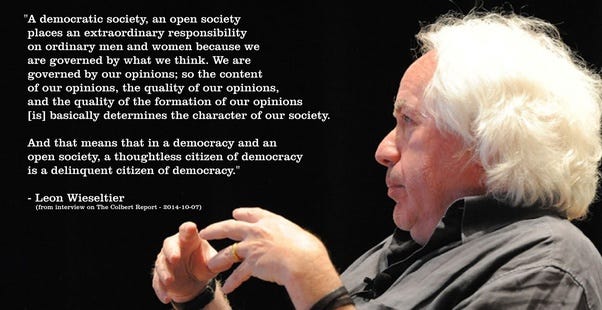

All Communication is Purposeful

We communicate not out of a compulsion to occupy idle time,
not even necessarily for social entertainment,
at least not when we go beyond the most superficial levels.
We communicate with one another because we must to survive.

Without communication, we would not be here today to examine our communication.

Who benefits most from what we believe?
It seems less about the people and more about benefiting those who have benefited most from a predatory system.

The above examples are from popular social discourse, about forty years ago and below is an example of current popular discourse:

(I refer to this example above as “popular” because it represents strategic messaging to serve a communication function of industry within the broader context of a culture structured around industry, economics, and consumption.)

The strategic manipulation of messaging is prevalent throughout society, in every domain, from interpersonal dynamics to international relations.

Whatever humans evolve into, some form of socially cohesive network of “shared perspectives” will perpetually question our experiences and compose new narratives to correct our collective perspectives.

Many of us do so with earnest and deep commitment to learning. Most will spare what time they can through highly structured days, allowing minimal opportunity for reflection.

We won’t stop thinking and talking about our experiences because we can’t. Willful ignorance may take centre stage from time to time, but it eventually gets the hook to exit left as it’s booed off the stage.

If the story doesn’t touch grass and meet reality, the people eventually figure out we’ve all been played for suckers by ever bigger games of power, and we find ourselves repeating history as ever-expanding dominions of power promise unity and deliver submission.

The barrage of imagery, sounds, videos, and merch-oriented stories has become increasingly overtly political. Factions grow around concepts and issues, not geography or physical commerce, but in the world of ideas, of how we think, how we see the world, and how the world looks back at each of us.

What do we want?
Certainly not chaos?

Chaos invariably leads people to one incontrovertible conclusion: for communication to succeed, there must be a relationship of trust. Without trust, there can only be chaos.

Choosing trust is a binary decision about life and what that means to each of us, from micro to macro scales, now encircling the globe.

Trust Means Accountability:

One hundred years ago, our circles of trust were local and lifelong.
Today’s global reach with casual effort was unimaginable then.

Where we end up one hundred years from now is provocative to contemplate. Some form of examination of the information we consume will continue for as long as some similar form of abstract thinking persists.

How Aware Are We Today?
Or, how much awareness can our general public sustain without inviting chaos?

What do we reeeeeally know about what’s going on around us?
Well, that’s easy, chaos.

Changes are occurring everywhere while everyone competes for resources and integration into the general machinery of social production.

We know how power structures coalesce to construct universal narratives about the acceptable social order we are encouraged to support, while our own needs are increasingly neglected.

We know that some messages aim at social disruption, whereas others aim at social cohesion.
What we do as a society to facilitate cohesion after a half-century steady diet of failed promises.

I’m reasonably sure most of the public knows, or is becoming aware of, the apparent disarray in our politics. How dependent is this massive economic superstructure on our willing participation?

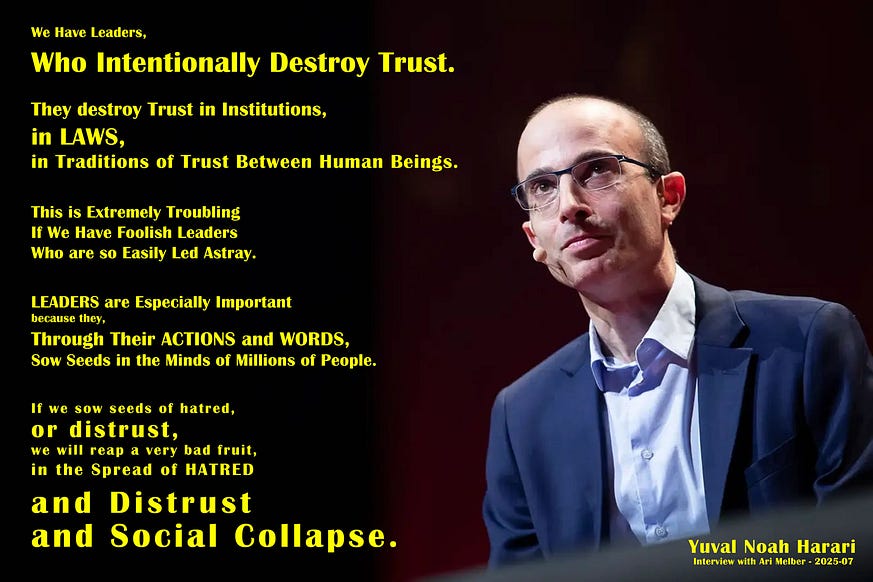
We must have leaders we can trust who will represent the needs of the many over the few who benefit most from a corrupted system gone askew.

How to Best Help People Solve Their Issues

This post is a response to a question posed in its complete format: “How do you listen to people open up about their issues without trying to solve them? How do you just comfort people?”

One of the first things a first referral counsellor learns is that you cannot solve other people’s problems for them. Even more so, you don’t want to solve their problems because what you might see as a solution for yourself is likely not a solution for them.

What you end up doing is creating a dependency relationship with someone who now has a scapegoat to blame when your solutions backfire on them.

You end up giving them permission to take the easy route of blaming you for their problems instead of learning how to solve their problems for themselves.

You don’t want that kind of monkey on your back because it could haunt you for life.

Most people want to be heard without judgment. The act of actively listening to them while validating their emotions and the struggles they are experiencing is often the only thing they want or need.

Being able to openly express oneself without fear of being misjudged for their struggles or how they deal with them is all the healing most people need most of the time. That opportunity often gives them enough space to hear themselves through your perspective and devise solutions for themselves by being able to speak freely about their problems.

If you sincerely want to help people solve their problems, you must understand that the best way to accomplish both your goal and theirs is to listen and acknowledge their struggles while validating their feelings and who they are as people.

You almost cannot help someone more thoroughly than by letting them know they matter. Most people only want to know that someone hears them and sees them as a living, breathing, independent human being with a core of reality all their own, just like how you think of yourself. People often only need assurance that they can achieve their goals if they apply themselves.

At most, you can offer ideas for where assistance is available, identify resources they may not be aware of, or repeat their statements to them in your own words. Often, simply saying something they said in different words is enough for them to see their problem with different eyes and in ways they can more easily identify solutions.

It may feel especially tough if you can spot what appears like a simple solution to you, that you would rather hand it to them so that you can continue with other matters, but it’s more important to realize how this is a learning process for both of you. Both of you can learn more about yourselves by allowing the process to evolve naturally and without trying to push it to a conclusion you see as the most optimal outcome.

A solution may appear simple to you, but you can’t know all the underlying variables, and many of which they often don’t recognize themselves. No matter how simple the solution may appear, they must find it themselves before it can succeed.

The challenge this creates for you, which you use to your benefit, is that it takes the focus off your desire to fix their problem for them quickly and puts you in a position of thinking about a strategy for helping them to see their problem from different perspectives, including how you imagine is a solution. As long as they can feel that they have identified their solution on their own and without being given instructions to follow by rote, they will be more able to apply their creativity when implementing their solution without holding you accountable for their failures.

I hope this helps you in helping others.

Cheerz

Why should I contribute to society?


This post is a response to a question posed in its complete format: “Aside from it being a moral duty, why should I contribute to society?”

As a reason to contribute to society, a “moral duty” represents a form of coercion which garners the absolute least that one will contribute. Referring to contributions made to society as a “moral duty” creates the perception that it’s like paying a tax. You do it because you have to.

That’s the best way to get the worst attitudes and the least value in contributions from people.

Paying it forward” is a far better way to frame contributions to society because it serves as a reminder of how one has benefited from society and the contributions of others as part of a shared community.

Another context that can help to imbue the concept of contributing to society with motivational meaning is as a team. As members of a species, we are all members of the same “team” in the sense of our challenge to maintain survival. This perspective is why I chose the concept of a bucket brigade to illustrate the idea of working together to put out a fire.

Understanding the difference in perspective between one who feels they “should” versus feeling like one “can” will clarify the attitude we should be cultivating in society to encourage contributions back to society. When a person feels like they’re a valued member of a supportive community that enables their members to achieve their best potential, it cultivates an attitude of gratitude that prompts people to think positively of what they can do in return for their community.

Think of it like gift-giving during the holidays, where people go to great lengths to impress someone with a special gift they know will be meaningful to the recipient, versus the sentiment people demonstrate when put in as minimal an effort into their gift as they can get away with to meet an expectation from someone they don’t care about but feel an obligation to gift them something.

To do what one “should do” invites the minimum effort to meet a bar of expectations set by the lowest common denominator and is characterized in the best of terms as an apathetic form of disengagement from one’s community. Why give something to society when you don’t value it?

Conversely, when one feels closely connected to a community that has cultivated gratitude within their mindset, they want to give as much as they can afford to adequately express their appreciation for what they value receiving from their community.

To do what one can, rather than what one must, is to be motivated by a natural desire to contribute out of a spirit of reciprocity.

This is why the social contract is crucial to our health as a society and why community development is an essential mindset for leaders to adopt and cultivate within society. Community members who feel they belong to a larger dynamic and are valued for their contributions are engaged and self-motivated to do what they can to improve life for everyone else.

They understand and value the meaning of the words, “We are all in this together.”

This sentiment is the glue that will keep society from collapsing into chaos during the most troubling times.

This sentiment is the glue that has given humanity the grace to survive and prosper to such a degree that our short presence here will be as lasting into the future as hundreds of millions of years of a planet dominated by dinosaurs has been to date within a fraction of the time they existed.

When one feels connected enough to something, they have no problem going out of their way to contribute as much as they can afford because they believe their giving is its own reward. They derive pleasure and fulfilment from giving to their community. They will go to great lengths to contribute as much as possible to their society because giving transcends moral duty.

Some people will give to causes, for example, because they want receipts to lower their tax burden through the benefit of deductions.

Other people give to cancer research, for example, because they have been personally affected by the issue. Giving as much as they can afford is a way of coping with the issue by acknowledging a loss or a deeply impactful experience. Giving is rewarded by a cultivation of hope within oneself.

Many people volunteer their time in contributions to a cause because of the social connections they create and benefit from on an intangible level. Giving energizes one’s spirit through interpersonal interactions and cultivates the interconnectedness that defines a core need for the human condition.

In all self-motivated cases, one’s contributions are made without considering moral implications because those are justifications which devalue the experience.

In all cases, people give in greater abundance and more honestly of themselves when internally motivated by intangible and intrinsic benefits than by material and extrinsic ones.

Understanding why one would want to contribute to society out of an internally motivated reason is far more crucial to the value of one’s contributions than meeting an arbitrary degree of obligation.

Understanding how one has benefited from the efforts of those who came before us and how we are each linked in a centuries-long chain of humans collectively contributing to an aspirational future for all of humanity is how to convert an obligation into a desire.

When we are disconnected from our humanity and community as humans, we lose sight of the value of our contributions to an evolving whole.

Learning to appreciate our distinctive differences between individuals and celebrating those differences while embracing the uniqueness of their contributions is how we can justify giving the best of what we can to those who will come after us and allow us to be remembered as individuals who each gave our best to make their lives better.

Cultivating this community spirit of belonging is how we survive our challenges, such as those we are struggling through today. Our connection to community allows us to cope with and overcome being inundated by the toxic influences of those who lack appreciation or reverence for the sacred nature of what we collectively benefit from.

Encouraging the creation of connections between us results in a superior form of morality that organically emerges in society to endure throughout our existence on this planet more successfully.

There is no valid reason why you “should” give back to society. However, without a desire to give back to society, you have lost out on one of the most valuable sentiments a human can experience, which is core to our development as healthy humans living fulfilled lives.


Bonus Question: How do you accept the fact that no one loves you?

Learn how much more important it is to love yourself and life than to be loved.

No two people or living creatures love in the same way.

Love is not about receiving but about giving.

If you want to be loved, get yourself a dog and/or a cat, or several.

If you can love what you do each day, it can sustain you enough to allow other forms of love to make their way into your life.

Good luck.

What would be some hallmarks of a Utopian civilization?


This post is a response to a question posed in its complete format: “If you lived in an advanced-utopian civilization, what would likely be some of the hallmarks of said thriving and freedom loving society?”

On my way to where I am now to undergo a first-time experience that I’m not looking forward to, I had the opportunity to observe a passenger on the bus who prompted me to think about the environment I grew up in.

This person, who appeared somewhat masculine in his maleness, was adorned with a few piercings that were never seen in the backwoods troglodyte village of toxic masculinity I grew up in, but that was not what caught my eye. I’ve seen enough piercings, tattoos and a variety of body decorations now that most of it goes unnoticed.

In this case, his nails first caught my attention, and the colour he had painted on them appeared an aesthetically pleasing burgundy. That’s what prompted me to notice the rest of his presentation.

My cultivated biases assumed unimportant superficial characteristics about this person. Still, upon further glances, I felt them melt away because, beyond the decorations, he appeared like a typical CIS male to me.

I wondered how much of that approach to aesthetics I would have adopted had I been raised in a “more modern” setting.

I never experienced more than passing thoughts about getting an ear pierced or getting some tattoos that I never found the courage to do. Still, I would have if it were not for the rather conservative upbringing I experienced in a low education and highly biased environment that has left me with a lingering self-consciousness of doing so.

Then I arrived at my destination, and while patiently waiting for an appointment (that would consume most of my day but won’t begin for another hour, even though I was expected to arrive two hours before admission), I encountered this question on my notifications feed.

My first thought went to the person I observed and how social expectations would be far less regimented and myopic in a Utopian environment.

Another characteristic I would expect is that my waiting experience to perform a standard procedure would be done at home with far less discomforting advanced prep and greater expediency.

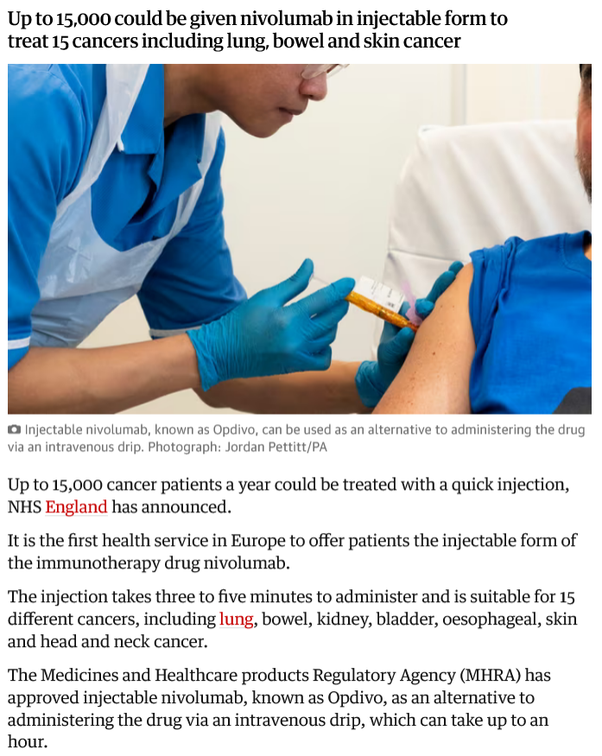
I also read, on my bus trip here, that the UK has been making “anti-cancer injections” available to the public for addressing about fifteen common varieties of cancer. It’s a treatment that appears to function like a vaccine by boosting a body’s immune system and training it to recognize cancer cells, to remove them naturally in their early stages. The article was, however, rather skimpy on detail, so I will research it further in depth when I get home.


(Here we go — my appointment was far shorter than I feared.):

Cancer patients in England to be first in Europe to be offered immunotherapy jab

NHS England » NHS Cancer Vaccine Launch Pad


I think simple remedies for complex medical challenges that we struggle with today would also be another feature of a utopian environment.

Other features of an advanced society to me would include, along with many technological advances for assisting with biological issues, transportation, and the provisioning of various resources like education and access to community administration processes for public engagement, would include access to resources permitting one’s development of a meaningful vocation without being distracted by meeting basic survival challenges.

Whatever interests a person might have would be easy for them to explore without encountering numerous barriers preventing them from developing their interests in ways that engage and benefit the public.

For example, I read about an eleven-year-old girl developing a means of testing for lead contamination in water.

While we can celebrate the innovation and ingenuity demonstrated by a remarkable youngster, we often overlook how such a child would have required access to supports not common to most to have been privileged enough to pursue an interest to such a degree that their idea can save lives.

One of the most destructive limitations we place on human potential is the misanthropic attitude many people display, cultivated by an economic system distorted by toxic competitiveness.

A utopic society would have cleansed our collective psychologies of the many mental health maladies that we’ve inherited from centuries of generational CPTSD. The most potent form of utopic boost to our potential as a species is our ability to support one another while possessing the courage to address the psychological dysfunctionalities that hamper our development.

A utopia would be a humanity free from the burden of many of the toxic aspects of human psychology that are the cause of so much pain and suffering on levels that would be considered outlandish in fiction and a bloody horror show of sociopathic stupidity in real life.

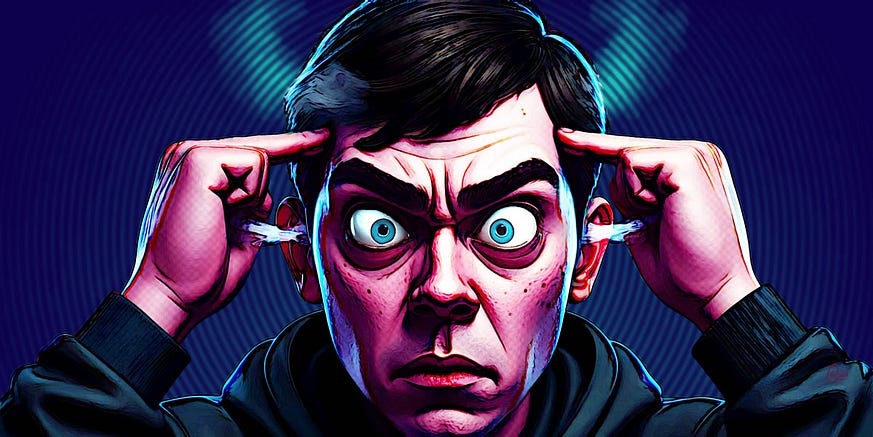
This kind of shit, for example, would not exist in a Utopia because we would have matured enough to acknowledge, first and foremost that this is a treatable medical condition that should disqualify these people from operating in any position of authority. This kind of broken mentality should be considered a socially destructive mental health issue in which the effects are severe enough to warrant mandates for compulsory treatment before being allowed to participate in activities that could be harmful to others.

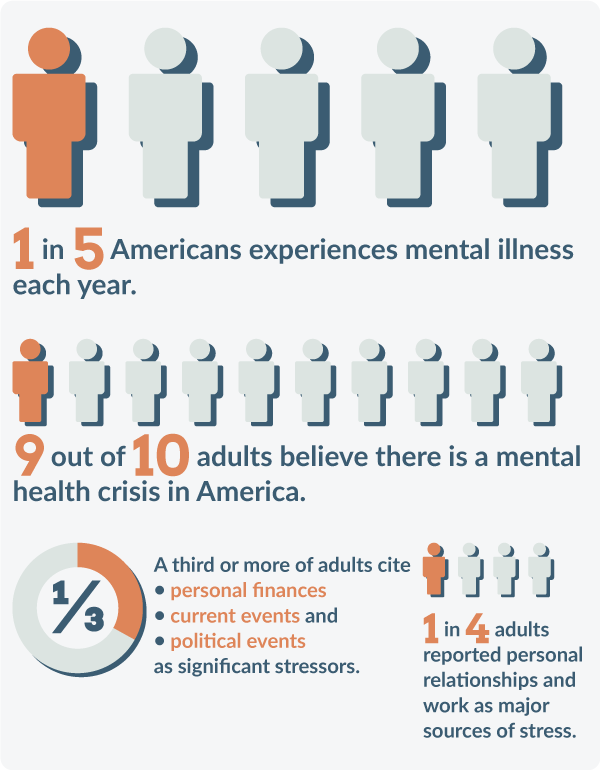
A Utopia would not be suffering from a mental health pandemic affecting one in five people and resulting in a whopping majority (70%-80%) of families being dysfunctional.

Until we can deal with our mental health issues, however, any form of utopia will remain a pipe dream as we allow our species to be consumed by the chaos created by our psychological dysfunctionalities.

When I witness casual examples of people breaking stereotypes, however, such as a male with burgundy nails, I think that although we may be dragging our asses into maturity as a species, at least we can see some subtle signs of progress.

Why does the Justice Department clear homeless camps?

This post is a response to a question posed in its complete format: “What do you think of the Justice Department planning to clear homeless camps and involuntarily hospitalize the mentally ill on the streets?”

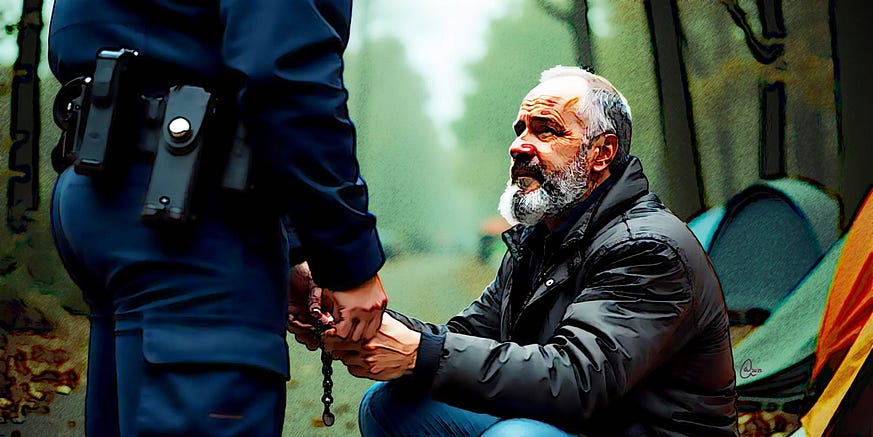
This sounds very much like a typical MAGAt CONservative brain child. It’s precisely what Pierre Poilievre suggests as a solution for Canadian tent cities.

Poilievre promises to let police break up tent cities, arrest occupants

It’s precisely the mindset of MAGAt CONservatives everywhere:

The irony in this thinking is so dense it generates a gravitational field.

“To fix a government failure, we’ll sweep it out of sight so that you don’t have to be visually confronted by government failure. You can wait until it escalates into increasing crime waves that we can use to leverage your fear and elect us to solve the problem we created.”

It is precisely this mindset that births abominations like hostile architecture.

It’s always the same heavy hand that creates problems to give them excuses to indulge in their misanthropic treatment of the vulnerable people they victimize into early graves.

No example of this kind of monstrous thinking is an attempt to solve a problem. It’s an excuse to get off on perverted Machiavellian desires.

Conservative plan to tackle tent cities looks like ‘political theatre,’ experts say

If they could legalize fights to the death among the homeless, they would.

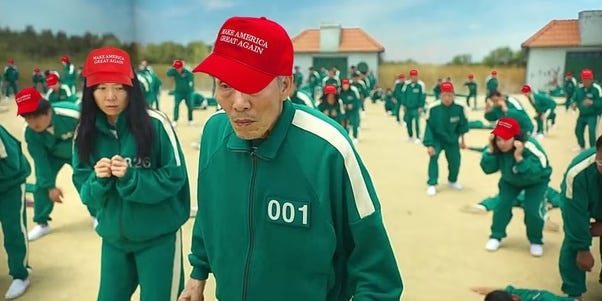
If they could legally implement a Squid Game television show, they would.

Within the misanthropically short-sighted mindset of reactive thinking that MAGAt CONservatives wallow in, the idea is to pretend to solve a non-problem by punishing the victims of systemic problems they create, creating the non-problem.

I am deliberately describing tent cities as a “non-problem” because they’re not the problem, but a symptom of the problem.

To solve problems, one must look to their causes and address those issues before the symptoms of those problems can ever be addressed.

It’s like affixing a bandage on an open wound while expecting to stem the internal bleeding of a patient.

Making matters even more surreal in the incompetence driving these problems is how the MAGAt CONservative mindset fixates on scapegoats that are part of a comprehensive solution, the non-problems they create with their short-sighted and misanthropic thinking.

In this case, PP blames the “lax liberal drug laws” while completely ignoring how their draconian attitudes toward drugs in society have resulted in an entire host of expensive and socially destructive problems, including punishing the victims of horrible policy while creating an underground growth network for criminal enterprises.

One would think decades of failure in an old problem created by the same thinking which made the same criminal incentivizing problems with alcohol bootlegging about 100 years ago would result in some lightbulbs going off within the dimmest of minds. Still, they seem completely inured against learning from their mistakes.

The kind of self-destructive stupidity that CONservatives perpetually indulge in is like a never-ending nightmare of a Groundhog Day repetition.

The MAGAt flavour of CONservatives wonder why their opposition thinks of them as stupid, and they never stop to look in the mirror and ask themselves why they choose reactionary and destructive approaches toward problems in society. It’s not like the information is unavailable or that educating oneself on issues is impossible. They can’t work through their biases to question their logic.

The mentally ill on the streets has been a problem created by CONservatives to begin with, when Reagan shut down institutions and forced them onto the streets. The homeless issue has grown because people who work full-time can no longer afford to house themselves. At the same time, the billionaire class buys up residential property and inflates prices as their government lackeys continue to refuse to raise minimum wage.

Then they whine that reduced birth rates are an existential threat without putting two and two together to realize they created that dynamic with their misanthropic policies.

The self-destructive stupidity is beyond mind-boggling.

MAGAt CONservatives don’t seem to care about solving problems as much as they prefer to focus on destroying the most vulnerable humans on the planet. Ironically, they often cite how much more money Conservatives donate to charities as they indulge in the same overcompensating behaviours that criminals indulge in when they create laws to ban gay marriages or abortions.

The CONservative mindset seems far more driven by hatred of one’s fellow humans than by working together to build a better society for all.

One day, we might be lucky enough to realize that the mentally ill are not those coping with life on the streets, but are those who walk among us, spreading hatred and voting to destroy lives, only to find the consequences mean destroying their lives as well.

If aging feels like things get worse, how can we deal with living 200 years?


This post is a response to a question posed in its complete format: “If older generations tend to get fed up with the following generations, and feel that people are stupider, societal values, music, culture and everything else is worse, how could humans ever deal with living to be 150 or 200 years old?”

This question is based on a flawed presumption and a form of projection because “older generations” is a monstrously huge brush comprising hundreds of millions worldwide.

That number of humans don’t think alike, and they certainly do not all “get fed up with etcetera generations.” However, people who employ broad brushes when making judgments about people they don’t know are also exhibiting precisely the mindset that disparages people and renders broadly negative judgments about “things getting worse.”

Thinking in these negative terms and judgments is often a means of rationalizing one’s negative attitude. By believing age leads to negative judgments, one is permitting oneself to develop one’s negative judgments.

The reality, however, is that many people remain “young-minded” and optimistic throughout their old age and consequently live happier and longer lives.

Here are some examples of people who remained optimistic throughout their long lives:

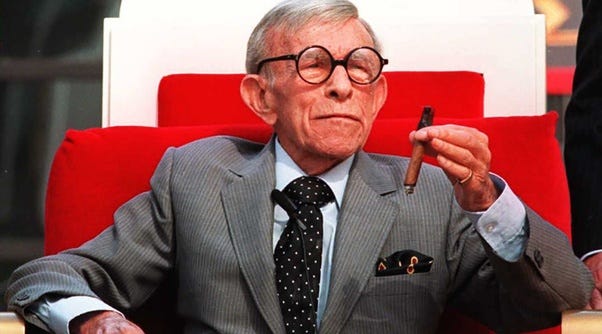
George Burns 1896–1996

Grandma Mose — Anna Mary Robertson Moses — September 7th, 1860 — December 13, 1961

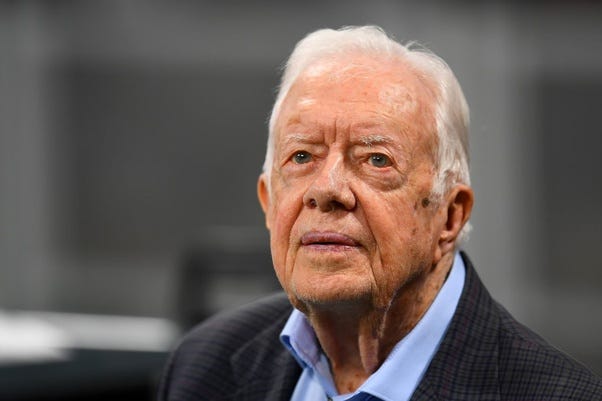
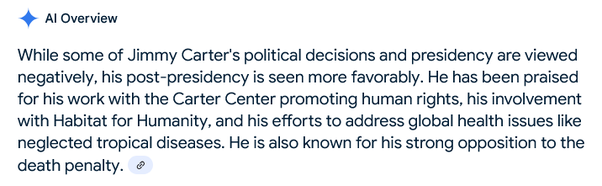
Jimmy Carter — October 1, 1924 — December 29, 2024


After having pissed away valuable time on another post dealing with toxic incels whining about how unfair life is that they don’t get to control the women they impregnate, I’ve arrived at this question with the attitude that people choose to believe the world is getting worse because they’re not able to control every aspect of it. That frustration wears them down over time, and they develop a negative attitude toward life and people in general.

I was a child during the “Dawning of the Age of Aquarius,” and was a preteen during the flower power generation with love-ins, and an optimistic view of a hopeful future.

Then came the 1980s, when people’s mindsets appeared to change from an open-minded view of society to a rather cynical and dispirited view based on a self-centric model of getting what one could for oneself, even at the expense of others. It seemed the era of sharing and caring was vanishing.

Throughout it all, I still maintained my somewhat naive but hopeful view that we would recover the community spirit I remember being moved by, while reminded of it each night, as the television stations shut down their programming for the evening, with the Brotherhood of Man song, “United We Stand, Divided We Fall.”

Although I have perceived, throughout the last forty-five years, since the beginning of the 1980s, a general increasing separation between people, many changes have distracted my mind from it. I could sense it occurring, but I mostly ignored it as I went along with it while focusing on the developing technologies and learning to leverage skills and knowledge to carve out a sustainable career for myself. I was caught up in my optimism for a hopeful future for myself, and became increasingly introverted and isolated from interpersonal interactions and a community I could rely on.

Since that was taken from me, maintaining optimism has been quite a struggle. Still, I understand on a deeply visceral level how succumbing to negativity is quite much like drinking poison. The intensity of my experience has made it abundantly clear that a destructive mindset also harms one’s physical health. It creates a feedback loop of self-destruction, which allows one to wallow in broadly negative views toward life in general.

I believe that insight clarifies that living 150–200 years (which no human has ever done) depends on one’s frame of mind and maintaining an optimistic outlook.

If people develop such a negative perception of life that they believe everything is perpetually worsening, they don’t live as long as they otherwise could. Our attitudes toward life constitute a life-shortening way of ensuring we don’t have to cope with hopelessness.

This is part of the reason optimism has increased in importance for me, particularly since I still find myself venting against the prevalence of negativity we see every day and almost everywhere we look.

I can accept that much negativity exists in this world, but I don’t have to accept enduring it, so I get carried away with challenging it. I’ve gotten quite sick and tired of the rampant cynicism. I would like to see a resurgence of hope filling my senses like it did when naive hippy optimism of peace, love, and tree-hugging do-gooders captured public attention, even if it may have mainly been performative or just acting out against previous dark periods in human history, like the Second World War.

I want to believe we’ve arrived at a form of “peak darkness,” and a crossroads in our future as a species and a civilization where we can change course and restore hope to protect our longevity. The alternative is to allow ourselves to succumb to oblivion because we cannot survive an existence sustained by cynicism.

To that end, I do what I can to find examples of young people who give me hope for our future because, with each generation, we have both Kyle Rittenhouses and Greta Thunbergs, just like we have had for generation upon generation before them.

We must choose whether we want long lives of optimistic hope or shortened lives of cynical darkness.

Perhaps I’m just on a high from Canada’s recent election and getting the good news today about Australia following suit. Still, I think — or at least can start feeling some hope that the MAGA madness may finally reach its breaking point. It’s impossible to know if we’re experiencing a sea-change or a temporary lull in the degradation of our values. Still, I’d prefer to adopt an optimistic belief in our future than a cynical one because that’s too toxic a burden to endure. We may still require a world war to break this century’s “MAGAt fever,” or we may have learned something from our history, at least enough not to have to turn our world into a humongous bowl of ashes and regret before we finally start making hopeful and community-minded decisions to grow together instead of tearing each other apart.

At any rate, life may suck but feeling sucky about it only makes it suckier. Even if life sucks, thinking optimistically about a positive future at least makes the suckiness easier to deal with, and that’s why I equate long life with attitude and posted a few well-known examples of people who we can all learn something from.

In short, it’s not about “older generations” but about “old minds.”

Temet Nosce

Where is heaven for you?


This post is a question twofer of responses to two questions initially posed on Quora as written here.

It’s in the same general area where “Utopia” exists.

It’s right next to “Avalon,” which isn’t far from Valhalla and just around the bend from Asgard and down the road from Shangri-la, but more than a stone’s throw from Agartha while one can easily get lost on their way if they get distracted by the gold in El Dorado and miss their left turn at Alfheim. Try not to stay too long admiring the great fields of Elysium, or you’ll never leave. Be sure to avoid the talking snakes if you take the shortcut through the Garden of Eden, and carry a flashlight or gas lantern if you cross Thule. Agartha can get a bit warm if you fall into a deep chasm, so be sure to have spare clothing and have a spear or sword on hand to defend yourself against errant knights while crossing the lands of Camelot.

At any rate, if you make it to Cockaigne, you’ll find anything you need, which should help you if you have to climb Mount Olympus and travel through Arcadia.

Otherwise, keep your compass pointing upward toward hope; eventually, you’ll reach heaven.


Question 2: Is it okay to believe in ancient gods?

If you need permission from others to choose your beliefs, then your issues involve your self-image and self-confidence.

If you already believe fantasies can be real and magic is, then you’re not that different from much of the rest of the world, sadly.

That you ask if it’s okay to believe what you want to believe speaks to a lack of confidence in your beliefs, and that means you’re not sure if that’s what you should believe, and you’re hoping some confirmation by others will help you decide what to believe.

That may be a valid strategy for getting confirmation when lost. Still, it also shows you’ve allowed your beliefs to arise from wandering about without paying attention to the path you’ve taken. Your mind has wandered in an aimless direction, and now you’ve arrived at a place of wondering where you are.

You might want to retrace your steps to understand better why and how you arrived at the place of belief preceding what’s popular today. That you’re aware of earlier paradigms shows you’ve done some investigation into your beliefs. You’ve been curious to learn for reasons that have meaning for you.

Choosing to rest on a particular set of beliefs is just that. You may find your curiosity compelling you to investigate further.

In any case, the ability to choose to adopt or discard any belief at any moment is an exceptional reason to pay attention to how and why one chooses either way, because failing to do so leads to the sort of loss of self you’re experiencing now.

Ultimately, your beliefs are yours to do with what you will. They are “tools” — “useful implements” that allow you to maintain a consistent heading of self-discovery. The more authentic they are as an expression of profound insight into oneself, the more genuine they become as beliefs.

Good luck on your journey.

When did humans become so judgmental and predatory?

This post is a response to a question posed in its complete format: “What happened to us, where and when did the human race decide to become so judgmental and predatory, what happened to the old fashioned sense of community?”

wut?

Here’s a rule of thumb about reality: Noticing something for the first time doesn’t mean that thing hasn’t been around for a long time.

It only means that your mind has clicked something into focus that had previously been on the periphery of your vision.

You are not unaware that wars have been waged practically everywhere on the planet throughout human history.

You are not unaware that hatred of very many forms, including racism and misogyny, along with sex and gender bigotries, have existed for centuries and have been a part of our story since the dawn of human civilization.

The only thing that has changed is our ability to tune it out because we are now in an information age.

We can no longer retreat into the comfort of ignorance while lying to ourselves that the suffering of those we have been overlooking is not caused by our inability to face the harsh truth about humanity. We are a psychologically damaged species, and the sooner we can face that, the sooner we can learn to heal ourselves and our species.

We haven’t “gone wrong,” because we are awakening to realities we have had the luxury of ignoring. We cannot heal ourselves until we accept the truth about ourselves, and that’s a harsh and bitter pill to swallow.

We are undergoing the first and most necessary step in our healing, awareness of our broken nature. We must first accept that we are suffering as a species, and this time of awakening is a necessary part of the process.

We cannot mature as a species if we cannot accept that we have been struggling, and the only way to end the struggles is not to ignore the suffering but to acknowledge its existence.

One in five people is suffering from a visible form of mental health issue. A whopping majority 70%-80%) of families are dysfunctional.

We cannot ignore these statistics and pretend there is nothing wrong with humanity.

We can only learn to embrace our broken selves and work together to help each other heal.

There is no other path to a better world.

The sooner we accept that, the sooner we can progress toward achieving a better world for everyone.

It is true, however, that our focus on community has taken a beating as our community boundaries have expanded beyond quaint notions of imaginary lines dividing us into becoming a global community.

The challenge is acknowledging that our community is no longer a geographic boundary but a global one in a much larger and inaccessible community among the stars.

Most people embrace the potentiality of exploring beyond our current home and wonder if we can join a broader community of life. We must first unite as a community in our house before the universe can open its arms to accept us as a species among the stars.

Looking past our limitations, we may find the synergy we need within the community to manifest our aspirations to travel the stars.

There is something better ahead to hope for, but we cannot ever reach it without acknowledging what is holding us back, and that begins with the state of our psychological health as a species.

In short, nothing “has happened to us” that has not been happening all along; we are only learning to understand how we must face these issues together as a community.

Why try to control natural emotions?

This post is a response to a question posed in its complete format: “If emotions are natural, why do we spend our whole lives trying to control them?”

Well, that’s your mistake right there.

To control your emotions requires letting them flow freely.

“Controlling” your emotions requires you to let go of control over your feelings.

If that sounds counterintuitive to you, it’s because it is.

“Controlling” your emotions requires understanding them. The best way to understand your feelings is to observe them through someone else’s eyes.

Let them flow through you and watch how they affect you. Learn to spot your thoughts as they affect the intensity of your emotions.

A breathing technique you can use to help you disengage from your emotions involves taking a deep breath while drawing your arms inward toward your chest. Curl your hands into a tight fist as you imagine yourself “collecting your emotions into your chest” and then hold your breath momentarily. Then expel your breath as you open your arms and stretch them outward to expel as much air as possible while envisioning those emotions leaving your body.

Generally, when emotionally overwhelmed, they also recall situations that have stimulated those emotions at other times.

So, getting angry to the point of being overwhelmed by one’s anger is a process of recalling and “gathering all of those prior moments of anger” and rolling them up into a ball that can propel one’s anger to its natural conclusion, either by being spent or by allowing oneself to act out in destructive ways.

That emotion demands release; sometimes, the only way to release it is to empower it beyond one’s instincts to restrain it.

In other words, you already have a natural response of restraining your emotions. At the same time, your body fights to expel them, and that creates more anxiety and stress, becoming a feedback loop on your feelings.

If you have noticed how your emotional intensity always resolves itself, you will have also noticed that once it’s spent, you undergo a period of introspection. That’s the process you already naturally undertake to learn how to control your emotions. Sadly, in most cases, it often accompanies regret over allowing one’s emotions to explode out of control.

By training your mind to disengage from your emotions as you experience them, you will find they have less control over your reactions. You can watch them build up and be expended while identifying the triggers that tweak them to their extremes.

By identifying those triggers, you scour your memories for the moments in your life that brought them to the surface, which allows you to develop some objectivity about events that occurred in your past.

The next time you experience an associated emotion, you will find it’s not quite so intense once you’ve worked through previously unresolved issues.

Please keep in mind this is not a magical solution to managing emotions but a path, a skill, and a discipline to master over time so that you have the power you need over your feelings to reign in the destruction they can have on your life.

Good luck.

Can empathy be overdone and detrimental?

This post is a response to a question posed in its complete format: “Can a person be highly empathetic and think empathy can be overdone and in many cases detrimental to better outcomes? Can being conscious of empathy and in control of your emotions be called for to create more realistic circumstances?”

No. You’re conflating empathy with other unrelated characteristics such as sympathy or pity.

Empathy is a complex phenomenon, more adequately described as an additional sense, not entirely unlike intuition or your other five senses. It’s a blend of cognitive parsing, information gathering, and processing, adding a layer of intellectual stimulation to our understanding.

There are three types of empathy: “affective empathy” (or “emotional” — feeling what someone else feels), “compassionate empathy” (recalling one’s feelings from similar situations and re-experiencing the emotion), and “cognitive empathy,” (intellectually identifying the emotions and connecting them to stimuli to comprehend the context in which the feelings are expressed).

The people most prone to being overwhelmed by an empathetic response to stimuli, often referred to as “hyper-sensitive,” struggle to discern between original feelings generated within and feelings they pick up from external stimuli. Their empathetic natures are primarily derived from the emotional form of empathy, akin to a radio tuned into a station while the volume is set to maximum. It can be overwhelming to find oneself tuned into powerful signals.

It can take a lifetime to cope with one’s sensitivity, primarily because of a lack of social support for such sensitivity. More often than not, highly sensitive types tend to be targeted by bullies because they are perceived as easy victims who are also usually shunned by their peers. This lack of support can lead to feelings of isolation and exacerbate the challenges that sensitive individuals face in society.

These have been socially acceptable attitudes toward highly sensitive people, while many still doubt that empathy is genuine and is not a personality dysfunction. The first of these two questions is an example of misunderstanding empathy on that disparagement vector.

The second question, however, points toward a somewhat effective solution or means of coping with one’s sensitivity. Learning to discern between one’s natural feeling and those one receives from others on a subliminal level is crucial to maintaining one’s composure, if not sanity.

On the upside, once one learns to master the all-too-rare skill of self-awareness, they discover they possess a “superpower” and become “human lie detectors.” It can be frightening to learn that they are talking to a stranger who almost instantly knows their deepest secrets and more about them than they know about themselves.

Empaths who have mastered their emotional regulation and awareness skills also learn to conceal their awareness of others, as they generally don’t want to create enemies who are intimidated by them. Making matters more complicated is that one’s empathetic sensitivities are not infallible and can often be mistaken about other people. Much of this judgment error is due to unresolved personal growth issues. In essence, what I referred to as a “superpower” is more about “power over oneself” rather than over others.

Highly empathetic people tend to be the most honest because they must learn to be honest with themselves to maintain their internal equanimity. Living with the lies one tells oneself is much harder to do when one’s cognitive dissonance escalates rapidly, much more so than for those with diminished sensitivities to empathy.

The two other forms of empathy, “cognitive” and “compassionate,” generally complement affective empathy, but there may be cases where they don’t. I don’t know of such cases, nor see how that’s possible. Still, I’m not a professional who has spent a lifetime studying the manifestations of empathy in thousands of patients and volunteers.

Emotional regulation is otherwise a skill that anyone can benefit from, regardless of their sensitivities or empathetic capabilities.