How Much of Political Messaging Relies on Public Bias?

This post is a response to a question posed in its complete format: “Are politics and marketing highly dependent upon, and structured around, the inability of the masses to think logically, act responsibly, and go beyond surface thought; especially go beyond surface thought?”
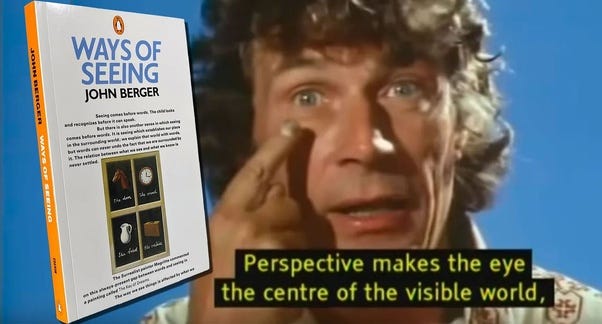
“All Publicity Works Upon Anxiety.”

John Berger’s “Ways of Seeing” was an excellent introduction to my young mind as an art student in the early 1980s, helping me become more consciously aware of the then-daily bombardment of thousands of messages. It’s been decades, so I vaguely remember it, but I recall being repeatedly reminded of it over all this time. That suggests some “staying power” in my mind, with value over time. The book and/or the four-part documentary series created from it are both worthwhile experiences.
All four episodes have been combined into a single 2-hour YouTube presentation.

“We never look at just one thing; we are always looking at the relation between things and ourselves.”

The numerous concepts this short volume addresses introduced me to the layers of meaning in the images we encounter. The venue, the presenter’s intent, and the state of mind we bring to the viewing experience all coalesce into a unique perception we create for ourselves.

We are bombarded daily by thousands of images, according to the observations made in the early 1970s. I imagine the then-massive number I don’t quite recall at the moment (and am too lazy to scrub through the video to find it) has mushroomed by orders of magnitude since.

Marshal McLuhan challenged presumptions about media and its consumption.
We learned to think strategically about the messages we consumed.
His maxim, “The Medium is the Message,” gained him some notoriety among the media-savvy.

Then came “SEX” on a Ritz Cracker;

I’ve referred to a “we” requiring a definition. I think it was implied in “media-savvy” because it relates to awareness of what we are expected to believe and why it is essential to accept what is desired of us.

To be “media savvy” means being aware of the content of the ideas we consume and of how we choose which ideas to consume.
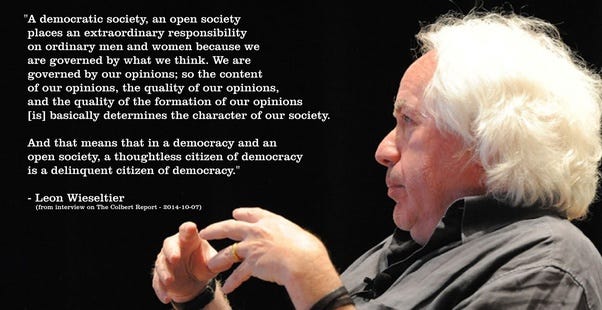

All Communication is Purposeful

We communicate not out of a compulsion to occupy idle time,
not even necessarily for social entertainment,
at least not when we go beyond the most superficial levels.
We communicate with one another because we must to survive.

Without communication, we would not be here today to examine our communication.

Who benefits most from what we believe?
It seems less about the people and more about benefiting those who have benefited most from a predatory system.

The above examples are from popular social discourse, about forty years ago and below is an example of current popular discourse:

(I refer to this example above as “popular” because it represents strategic messaging to serve a communication function of industry within the broader context of a culture structured around industry, economics, and consumption.)

The strategic manipulation of messaging is prevalent throughout society, in every domain, from interpersonal dynamics to international relations.

Whatever humans evolve into, some form of socially cohesive network of “shared perspectives” will perpetually question our experiences and compose new narratives to correct our collective perspectives.

Many of us do so with earnest and deep commitment to learning. Most will spare what time they can through highly structured days, allowing minimal opportunity for reflection.

We won’t stop thinking and talking about our experiences because we can’t. Willful ignorance may take centre stage from time to time, but it eventually gets the hook to exit left as it’s booed off the stage.

If the story doesn’t touch grass and meet reality, the people eventually figure out we’ve all been played for suckers by ever bigger games of power, and we find ourselves repeating history as ever-expanding dominions of power promise unity and deliver submission.

The barrage of imagery, sounds, videos, and merch-oriented stories has become increasingly overtly political. Factions grow around concepts and issues, not geography or physical commerce, but in the world of ideas, of how we think, how we see the world, and how the world looks back at each of us.

What do we want?
Certainly not chaos?

Chaos invariably leads people to one incontrovertible conclusion: for communication to succeed, there must be a relationship of trust. Without trust, there can only be chaos.

Choosing trust is a binary decision about life and what that means to each of us, from micro to macro scales, now encircling the globe.

Trust Means Accountability:

One hundred years ago, our circles of trust were local and lifelong.
Today’s global reach with casual effort was unimaginable then.

Where we end up one hundred years from now is provocative to contemplate. Some form of examination of the information we consume will continue for as long as some similar form of abstract thinking persists.

How Aware Are We Today?
Or, how much awareness can our general public sustain without inviting chaos?

What do we reeeeeally know about what’s going on around us?
Well, that’s easy, chaos.

Changes are occurring everywhere while everyone competes for resources and integration into the general machinery of social production.

We know how power structures coalesce to construct universal narratives about the acceptable social order we are encouraged to support, while our own needs are increasingly neglected.

We know that some messages aim at social disruption, whereas others aim at social cohesion.
What we do as a society to facilitate cohesion after a half-century steady diet of failed promises.

I’m reasonably sure most of the public knows, or is becoming aware of, the apparent disarray in our politics. How dependent is this massive economic superstructure on our willing participation?

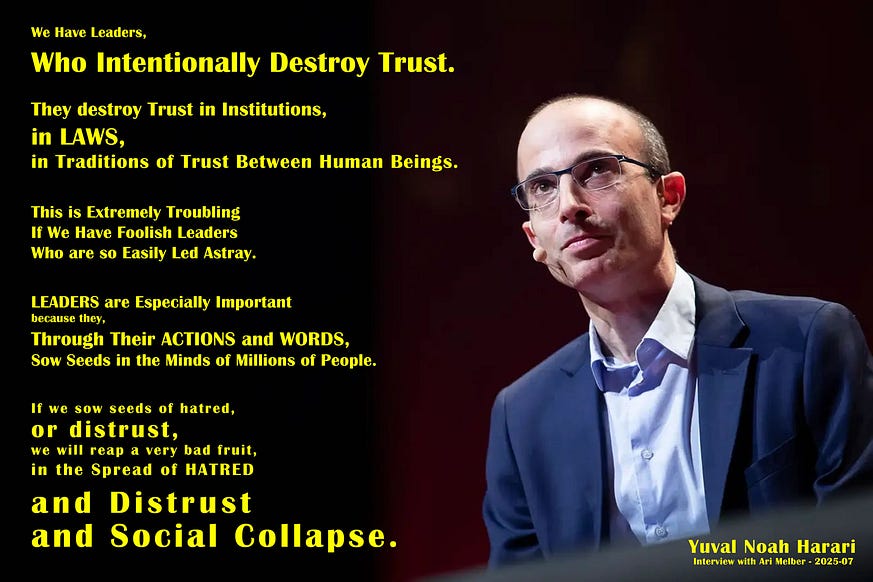
We must have leaders we can trust who will represent the needs of the many over the few who benefit most from a corrupted system gone askew.
When did humans become so judgmental and predatory?

This post is a response to a question posed in its complete format: “What happened to us, where and when did the human race decide to become so judgmental and predatory, what happened to the old fashioned sense of community?”

wut?

Here’s a rule of thumb about reality: Noticing something for the first time doesn’t mean that thing hasn’t been around for a long time.

It only means that your mind has clicked something into focus that had previously been on the periphery of your vision.

You are not unaware that wars have been waged practically everywhere on the planet throughout human history.

You are not unaware that hatred of very many forms, including racism and misogyny, along with sex and gender bigotries, have existed for centuries and have been a part of our story since the dawn of human civilization.

The only thing that has changed is our ability to tune it out because we are now in an information age.

We can no longer retreat into the comfort of ignorance while lying to ourselves that the suffering of those we have been overlooking is not caused by our inability to face the harsh truth about humanity. We are a psychologically damaged species, and the sooner we can face that, the sooner we can learn to heal ourselves and our species.

We haven’t “gone wrong,” because we are awakening to realities we have had the luxury of ignoring. We cannot heal ourselves until we accept the truth about ourselves, and that’s a harsh and bitter pill to swallow.

We are undergoing the first and most necessary step in our healing, awareness of our broken nature. We must first accept that we are suffering as a species, and this time of awakening is a necessary part of the process.

We cannot mature as a species if we cannot accept that we have been struggling, and the only way to end the struggles is not to ignore the suffering but to acknowledge its existence.

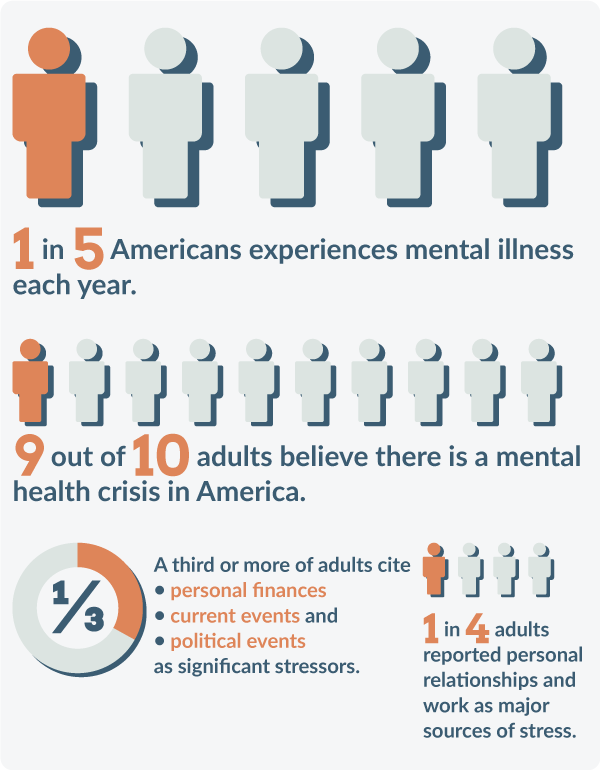
One in five people is suffering from a visible form of mental health issue. A whopping majority 70%-80%) of families are dysfunctional.

We cannot ignore these statistics and pretend there is nothing wrong with humanity.

We can only learn to embrace our broken selves and work together to help each other heal.

There is no other path to a better world.

The sooner we accept that, the sooner we can progress toward achieving a better world for everyone.

It is true, however, that our focus on community has taken a beating as our community boundaries have expanded beyond quaint notions of imaginary lines dividing us into becoming a global community.

The challenge is acknowledging that our community is no longer a geographic boundary but a global one in a much larger and inaccessible community among the stars.

Most people embrace the potentiality of exploring beyond our current home and wonder if we can join a broader community of life. We must first unite as a community in our house before the universe can open its arms to accept us as a species among the stars.

Looking past our limitations, we may find the synergy we need within the community to manifest our aspirations to travel the stars.

There is something better ahead to hope for, but we cannot ever reach it without acknowledging what is holding us back, and that begins with the state of our psychological health as a species.

In short, nothing “has happened to us” that has not been happening all along; we are only learning to understand how we must face these issues together as a community.

Why try to control natural emotions?

This post is a response to a question posed in its complete format: “If emotions are natural, why do we spend our whole lives trying to control them?”

Well, that’s your mistake right there.

To control your emotions requires letting them flow freely.

“Controlling” your emotions requires you to let go of control over your feelings.

If that sounds counterintuitive to you, it’s because it is.

“Controlling” your emotions requires understanding them. The best way to understand your feelings is to observe them through someone else’s eyes.

Let them flow through you and watch how they affect you. Learn to spot your thoughts as they affect the intensity of your emotions.

A breathing technique you can use to help you disengage from your emotions involves taking a deep breath while drawing your arms inward toward your chest. Curl your hands into a tight fist as you imagine yourself “collecting your emotions into your chest” and then hold your breath momentarily. Then expel your breath as you open your arms and stretch them outward to expel as much air as possible while envisioning those emotions leaving your body.

Generally, when emotionally overwhelmed, they also recall situations that have stimulated those emotions at other times.

So, getting angry to the point of being overwhelmed by one’s anger is a process of recalling and “gathering all of those prior moments of anger” and rolling them up into a ball that can propel one’s anger to its natural conclusion, either by being spent or by allowing oneself to act out in destructive ways.

That emotion demands release; sometimes, the only way to release it is to empower it beyond one’s instincts to restrain it.

In other words, you already have a natural response of restraining your emotions. At the same time, your body fights to expel them, and that creates more anxiety and stress, becoming a feedback loop on your feelings.

If you have noticed how your emotional intensity always resolves itself, you will have also noticed that once it’s spent, you undergo a period of introspection. That’s the process you already naturally undertake to learn how to control your emotions. Sadly, in most cases, it often accompanies regret over allowing one’s emotions to explode out of control.

By training your mind to disengage from your emotions as you experience them, you will find they have less control over your reactions. You can watch them build up and be expended while identifying the triggers that tweak them to their extremes.

By identifying those triggers, you scour your memories for the moments in your life that brought them to the surface, which allows you to develop some objectivity about events that occurred in your past.

The next time you experience an associated emotion, you will find it’s not quite so intense once you’ve worked through previously unresolved issues.

Please keep in mind this is not a magical solution to managing emotions but a path, a skill, and a discipline to master over time so that you have the power you need over your feelings to reign in the destruction they can have on your life.

Good luck.

How do atheists think this brief existence is all there is?

This post is a response to a question posed in its complete format: “How do atheists think this brief existence is all there is? Don’t you have a yearning in your heart that there must be something over the rainbow?”

That’s not exactly how that works.

This brief existence is all there is for this thing we call “ego.”

This thing we call “ego” is far from being “all there is” and is, in effect, as relevant to the universe as a speck of dust on our planet. The problem here isn’t the insignificance of ego but the ego’s addiction to being (or being perceived as) relevant beyond its existence.

There is much, much more to existence beyond the human ego, but as soon as each life ends, so too does that frail construct that demands immortality for itself on the sole basis of simply recognizing its own existence.

What we should be doing with human egos is learning how to train them to focus on the lives they get so that the benefits of existence are maximized for themselves and through others because that’s the only way for the ego to validate itself within the context of its limited existence.

Pissing away one’s life by catering to delusions of egotistical immortality is the most toxic form of grooming for one’s ego that invariably metastasizes it into a cancerous tumour for human society.

Whatever may exist “over the rainbow” is not for the human ego to experience.

This existence is all there is for the human ego.

The sooner the human ego can embrace that, the sooner it can grow to appreciate a gift that can vanish at any moment for any reason. Appreciation for the finiteness of one’s existence is precisely the point of a limited existence. There is no other way to transcend this limitation.

As an atheist, how do I rid myself of clinging remnants of religion still existing in me?

This post is a response to a question initially posed on Quora, and can also be accessed via “https://divineatheist.quora.com/As-an-atheist-how-do-I-rid-myself-of-clinging-remnants-of-religion-still-existing-in-me-8

You don’t in the same way you don’t get rid of scars. They’re a part of you for life.

The injury may no longer affect you, but you will live with a reminder of it until you die.

That’s just life.

There is no point in fighting with yourself over “clinging remnants,” especially when they can still be helpful as shields against the perpetual assaults of believers.

Being aware of your “clinging remnants” gives you deeper insights into the effects of religion on a person’s mind and helps you to develop an objective perspective of yourself while improving your ability to help someone else when they’re struggling with the impact of their conditioning.

Being aware of “clinging remnants” helps you to be more aware of other forms of conditioning or manipulations like gaslighting because you’re more attuned to the subtle implications of words and their meaning.

Whatever may be clinging today may drop off over time to be forgotten while other remnants you were unaware of begin to crop up and occupy your attention. This is a natural part of the healing process that helps you to develop deep insights into the tangled web of confusion that religion weaves into one’s consciousness and unconsciousness.

This deconditioning process is a valuable experience in developing self-knowledge and awareness of oneself in depths many never achieve. They may irk you for a long time, and even for the rest of your life, but you will find moments where their presence allows you to perceive events or a situation on levels of subtlety that surprise you how people can miss what appears evident to you.

The most important goal is not to fight against the remnants but to develop an objective perspective of them. Understanding one’s sensitivities is like a vaccine against being conditioned in other areas and ways by different types of bad actors one encounters.

Good luck.