How much does insufficient time contribute to a lack of invention?

This post is a response to a question posed in its complete format: “To which degree is not having enough time, and being relatively busy, contribute to most people not being able to come up with new ground breaking ideas, make new inventions, or even making novels, manga etc.?”

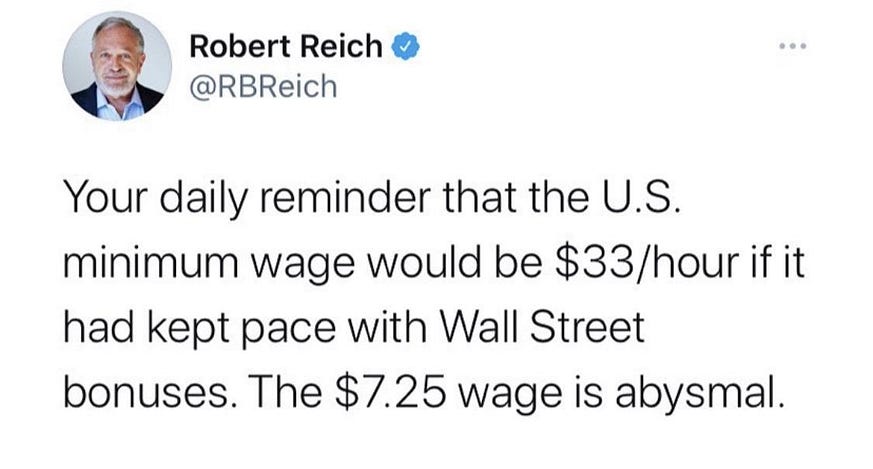
Many answers are the typical soporifics based on the presumption that today’s economics are “normal.” There is no accommodation for the dysfunctional state of economic affairs people live with today.

People can conceptualize how one income earner per family was the norm 50 years ago. Still, they can’t imagine the math well enough to understand the differences between then adequately and now when a two-income family can barely make ends meet.

During the heyday of the middle class and the economics of a time we’ve lost, blue-collar labourer dad could earn enough from his low-skilled job to afford a mortgage, a relatively new vehicle, and an annual vacation for himself, his wife, and their two-and-a-half kids.

That’s just a pipe dream which no longer exists for the average citizen, particularly not when a large contingent of full-time employees can’t afford stable housing.

Unskilled labour means being unable to afford to live. In the U.S., one needs two full-time jobs to afford to rent a cheap private suite. Shared accommodation is the only way to make ends meet. Consolidating incomes to meet basic survival needs has become the norm.

One job is no longer enough to survive on.

Forget investing in one’s future.

Income mobility has all but vanished.

Everyone today has been living with a supplemental income in a gig economy while learning to monetize every waking moment to feed and clothe themselves for so long that it’s become a normalized existence.

There’s no time left for a social life, let alone any entrepreneurial initiative. Topping that challenge off, no disposable income exists to permit investments in education or capital purchases to allow expansion. One must scrimp and save while sacrificing meeting sleep and nutritional requirements to cobble together something of a hope for building a better future.

It’s insane, and no one knows any better because the period in which trillions have been stolen from the working class has happened so slowly that one would have to understand what starting from scratch then was like compared to what starting from scratch today is like.

How unfortunate for me but fortunate for those who will listen. The difference between then and now is nightmare and day.

Getting a job that would not only pay for living expenses and a social life while having plenty left over to bank and save for an education was a matter of a decent paying labour job during summer break from school and a part-time job during the academic year. Even with those financial burdens, there was still plenty of disposable income to afford a very healthy social life. A concert back then, for example, didn’t cost a week’s worth of pay but half of a shift for one night’s work — a movie cost less than one hour’s worth of labour. A movie night out now is an entire day’s worth of labour.
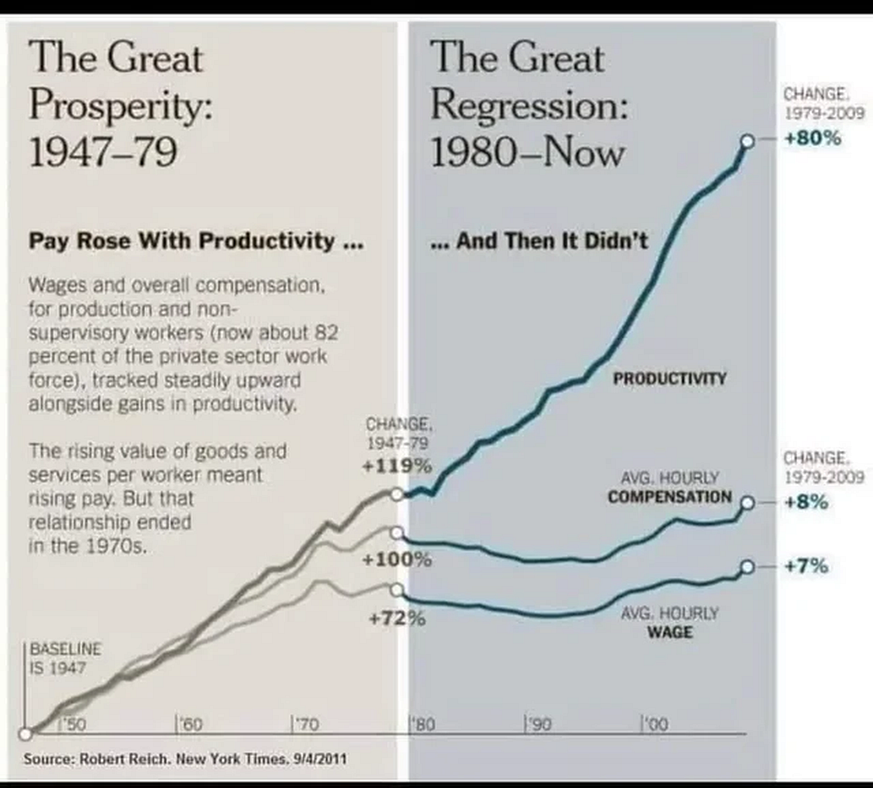
I think it’s essential to stop counting numbers on the level of an abstraction like money and start counting the increasing costs we’ve been enduring based on our time because that’s the most valuable commodity each of us has.

It’s much easier to ignore the costs we’ve been increasingly enduring without matching increases in our income when they’re treated like abstractions. If we were to look at how much time has been stolen from our lives, I’m pretty sure the guillotines would be out in full force right now.

The problem with factoring economic changes based on dollar figures is that it allows the victim-shaming mindset we see displayed by so many sycophants for the wealthy to assert their nonsense positions with righteous indignity.

They can remain utterly oblivious to reality and the delusional nature of presumptions autonomically adjusted to a dysfunctional economy while failing to account for the severe impact on one’s time that has been stolen from the working class.
It’s been slightly over ten years ago now that I had my life destroyed by a nuclear bomb being dropped on it, not because of anything I did but because others assumed their fraudulent righteousness permitted the devastating assault. That was a severe lesson in the extent to which overcompensating behaviour can become a destructive force in society — that I intend to share in more detail but not here because it’s a distraction from the point of this answer.

At any rate, I can unequivocally state that if that had happened to me when I first started carving out my niche for a professional future almost 50 years ago, it would have been a relatively minor event in my life. I would have recovered within a couple of years and been well on my way to having put that traumatic nightmare in my rearview mirror.

Instead, I’ve struggled to regain my footing for over ten years. The life I had is gone and unrecoverable.
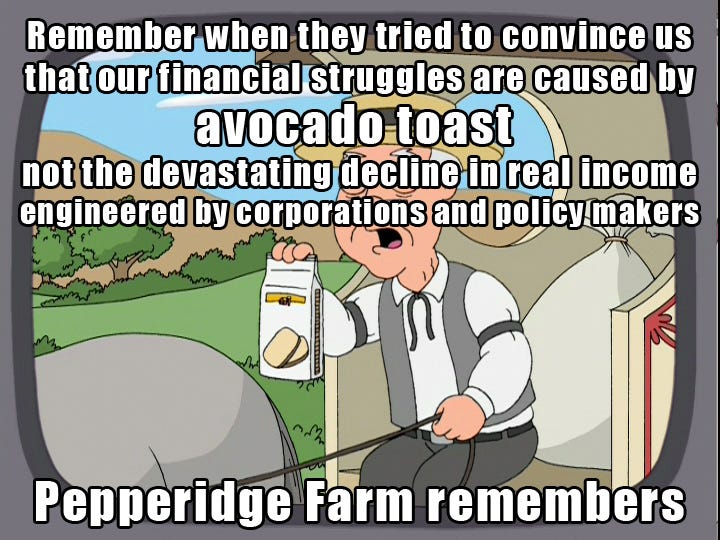
Instead of making small bits of progress on the road to recovery, I’ve been enduring an increasing degradation in my quality of life as I find bits of it and my dignity being slowly stripped from me every day, not because of my bad decisions or because of anything I’ve done to warrant this nightmare, but because others choose to pile on their abuses atop the mountain that weighs me down.

For example, I’m currently scrimping to put together enough of a buffer in my economics to afford a minor upgrade to a graphics card that will allow me to become more efficient and competitive in the marketplace while allowing me to work at resolutions that can secure income. It’s funny how an obscure specification such as image resolution can hinder success, but that’s our world today. Forty years ago, such a minor upgrade would have been, at most, a couple of months of saving up spare cash to pay cash for the upgrade. I’m saving to afford an additional monthly payment for an 18-month commitment.

The world we live in today is characterized by a lifestyle I first became familiar with in art school with the dynamic of patrons. Relationships between artists and their patrons financed art production in the Middle Ages. Today’s equivalent to that in the high-tech world is an “incubator.” For general entrepreneurs, it means a guest appearance on Shark Tank to hope a capitalist can see a parasitic profit relationship from your initiative by doing nothing but assume control over your enterprise and collecting cash for your efforts.
The alternative for the little people is to turn to the government to find themselves herded through an infantilization process and vetted to identify the value to be extracted from them by financial enterprises that have developed relationships with pseudo-government entities called “Stewardship.” They are intended to provide business development services but don’t do anything beyond setting you up to be bilked by predatory lenders from whom they get a cut.

In my case, I went along with the puppy mill program with a naive attitude that I could trust a government-aligned agency to tell me the truth about my options. I went along with the program to develop a concrete plan for recovering my entrepreneurial income within a couple of years with a product idea and niche that would generate over $100 thousand per year working for myself without needing support staff.

A simple demand loan of less than $15,000 would have been sufficient to get my life back on track. I discovered early on that it wasn’t even on their radar for a support option. As it turned out, the $10,000 in financing I was promised was not even close to possible by the time I had completed their program.

I was informed at the outset that I was eligible for a grant that would have made financing possible. At the end of my programs for creating my business and financial planning documents, I asked what had happened to the grant. I received crickets as a response and then was insulted with condescension by someone who’s never been an entrepreneur and nothing more than a bookkeeper.

The fact that I had progressively managed to succeed on my terms for over 25 years and that I had proven I knew what I was doing when I provided an advanced business plan in greater detail than they expected or had ever seen through their program was irrelevant. (Most people I met in the rudimentary courses I was herded through were quite naive about business processes. I found myself contributing value on a level that augmented the instructors’ efforts — and in which they expressed a sincere appreciation because it increased class engagement).

Everything, every entity, and every stage in society is rigged at every level from a predatory perspective to drain value from anyone unlucky enough to have to rely on their “altruistic” roles in society. It’s become a game of indentured leveraging, not unlike the days of gladiators who would agree to a couple of years in the arena getting beaten and stabbed to get themselves out of debt.

Had I been living through the same economy as when I started, I would not have even needed to rely on external support. I would have had sufficient disposable income from a typical labour job to use my initiative to climb out of this nightmare of a hole I’ve been dumped into — within only a few years.

The short answer to the question posed after this long-winded rant is that it is to EVERY degree that the little people no longer have a hope of income mobility. The ideas, inventions, and initiatives still exist. It’s the resources we once had that have vanished from the landscape. It’s the disposable income that we could rely on to improve our lives that no longer exists.
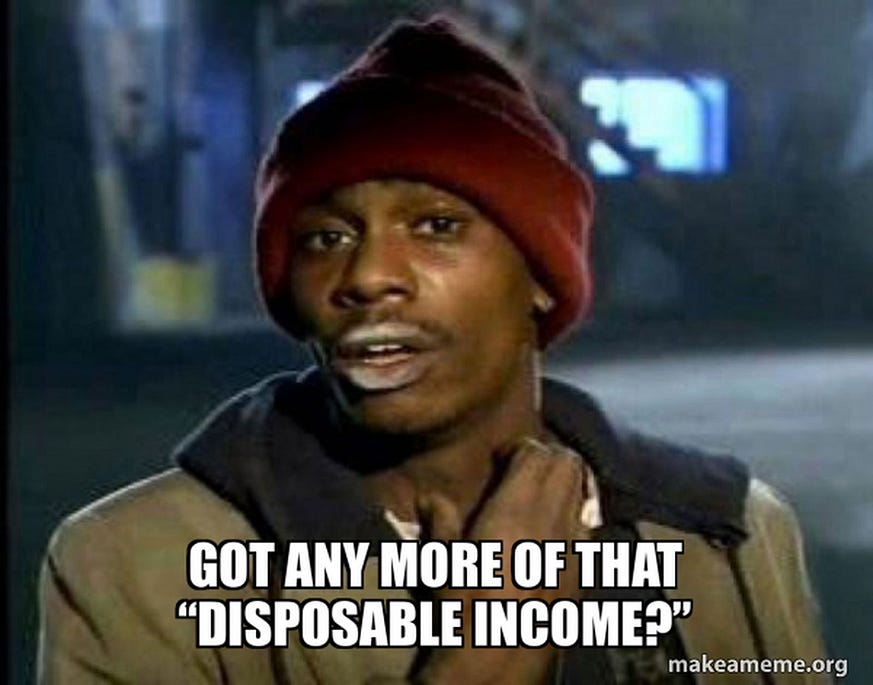
That is the most motivationally destructive assault the wealthy have perpetrated upon us, and I would not be able to restrain myself in the presence of many of the sociopathic assholes who are playing games with our lives. While increasing their hoards to historic levels of obscenity, they parasitically drain our value from us.

The dynamics of today’s economy are enraging on a level I could never have imagined experiencing, but here we are. I’m now someone who, after a lifetime of being vehemently against capital punishment, endorses precisely that with guillotines for the 1% in our society if they don’t wake up and start taking economic restorations seriously and beginning with supporting UBI.

With UBI, all the repressed creativity withheld from society and human progress will be released into a new era to make our first Renaissance appear like a trial run. We are on the verge of a fully automated society. The only thing holding us back from an explosion of creativity and initiative is the sick competition among the most parasitic among us to become the world’s first trillionaire.

Is there something wrong with taking benefits?

This post is a response to a question initially posed on Quora, and can also be accessed via “https://www.quora.com/Is-there-something-wrong-with-taking-benefits/answer/Antonio-Amaral-1

Only a working-class member of society can pose this question because the little people are perpetually shamed when they take more than they need. This guilt may have begun in our early history while struggling for survival as tribal units, where scarcity was an omnipresent threat due to our level of development and not a consequence of the corrupt politics defining our world today.

If one tribe member took more than they needed, then it was apparent to all members that they all suffered. Greed was naturally restrained at that level, and like all traditions and attitudes inherited from our history, guilt-shaming people for taking more than they need has been passed on throughout the generations.

It’s been an effective means of encouraging people to consider the needs of others. Still, society is no longer plagued with the existential threat of scarcity by our physical incapacity to meet our needs. The threat of scarcity has transformed from a physical limitation to an entirely artificial construct created by the powerful in society to leverage the lion’s share of benefits to themselves. Scarcity has been transformed into a systemic issue enabled by politics, gluttony, and greed. Taking more than one needs at a local banquet no longer results in someone dying of hunger. However, we can still recognize and react viscerally to someone who gorges themselves to the point of vomiting up their overconsumption.

We don’t react that way with the wealthy, whose overindulgence is invisible to most because it manifests as an economic abstraction — numbers in a system characterized by intricate mathematical gymnastics. We don’t react that way to the Walton family underpaying their people and cutting back on staffing to the degree where the few employed are overworked and so radically underpaid that they need government subsidies to survive. We envy their successes and reward them with more benefits.

There isn’t a wealthy person on the planet who doesn’t take advantage of every benefit they can.

They do that as a matter of course and as a matter of pride. Donald Trump has bragged about circumventing his tax responsibilities, and the people cheer him for his success while envying it and wishing they could do the same.

We’ve created a double standard in a society where the privileged few are rewarded for taking advantage of benefits they don’t need while victim-shaming those who rely on benefits they desperately need to survive on the bare necessities.

There is something wrong with this picture, but we seem to prefer to ignore it when designing policies and creating legislation that dramatically affects the lives of billions.

Whether your issue with whatever benefits you or those you know may be taking advantage of, I would suggest we’re only playing into the biases corrupting our systems by focusing on what individuals do when availing themselves of benefits, We would all be far better off addressing the issue of benefits from a systemic level because the sentiment resulting from a fixation on what one’s neighbours are spending their food stamp money only enables the billionaires to justify their tax cuts and increase their subsidies.

After all, the legal concept of “lost opportunity cost” was entirely devised by a rich asshole who justified an entitlement to money beyond the tangible losses incurred in a conflict. It’s a legal argument flatly denied to someone who can’t afford to support it in a pay-to-play legal system.

Try not to forget how Elon Musk tried to sue his advertisers on Xitter for abandoning his platform because he felt entitled to the benefit of their advertising dollars.

This particular move is the equivalent of seeking a benefit from being paid for a job from which one has been fired. With this kind of toxic attitude of entitlement to benefits, I don’t think there’s any little person on the planet who should feel guilty about taking a benefit.

If we fix this surreal hypocrisy, we can discuss what is wrong with taking benefits.

Why won’t rich people donate much of their wealth to poor people?

This post is a response to a question posed in its complete format: “Why won’t rich people just donate a tiny bit of all their wealth to poor people?”

Some of them do. MacKenzie Scott, the ex-wife of Amazon founder Jeff Bezos, has donated over $17 billion to charitable causes since 2019. Our problems, however, can’t be fixed by relying on a few donations by the small percentage who care about other human beings beyond themselves.

People need to stop thinking about ways to guilt the few rich capable of feeling guilt into ponying up on behalf of those who don’t care in the least about the poor as long they shut up and die quietly and out of sight.

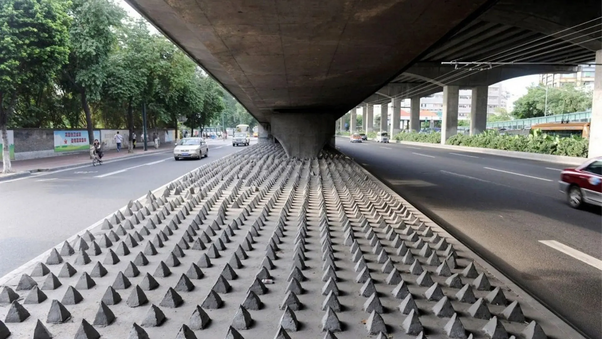
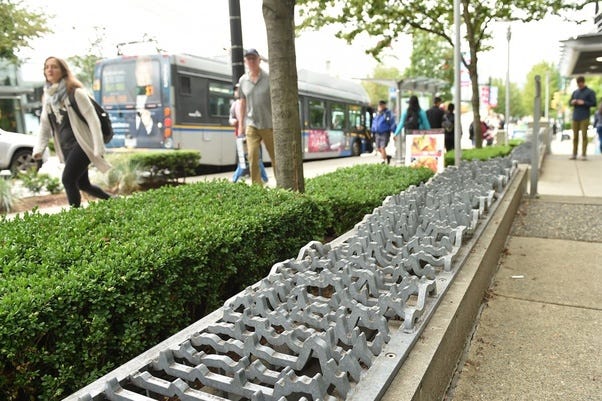
Why do you think “hostile architecture” exists?

A lot of people don’t want to help the poor. 
They want them gone out of sight and out of mind.
They want to blame the poor for creating their conditions of poverty.

They want to think of them as lazy addicts who irresponsibly ruined their own lives.

It’s no different than shaming a woman for her clothes or behaviour for inviting a rapist.

It’s like shaming a mugging victim for paying cash for their drink in broad daylight.

People don’t want to think about why things go wrong for other people because it means dealing with the possibility that things can go wrong for them. If people believed they could also become one of “those people.” many would just give up, while others wouldn’t be able to function past their anxieties.

Although the existence of centibillionaires is a huge symptom of a system so broken that so many poor exist, no one wants to change anything because it means having to do things differently than they’ve become used to.

Look at how impossible it’s been for Americans to adopt a universal metric system — even though it would save them money.

Look at how impossible it’s been for Americans to adopt universal healthcare — even though it would save them money and lives.

People may demand change, but they hate change. Many people prefer complaining about how bad things are to doing something different because they fear change will be worse than what they’ve gotten used to.

My province of BC has had three referendums on electoral reform that would have made our elections more representative of the people. We would have become a more democratic province that more effectively addressed the needs of the people if the people could vote for what they want rather than vote against a change they don’t understand. Even worse, the change is easy to know if one makes a small effort to educate themselves, but they don’t and won’t understand something until they’ve lived it. When people are unsure, they consistently vote to maintain a corrupt status quo instead of voting to change it.

Americans are going to continue voting for corrupt leaders until they realize their lives are at so much risk that the choice is no longer “change or continue suffering” but “change or die.”

That’s where we are right now… or at least, those who refuse to read the writing on the wall will eventually figure out that’s the case when they start seeing the suffering around them can no longer be denied. They will change only when they become more afraid of maintaining a destructive status quo than the change they can’t understand until they’ve made their change.

Rich people won’t give up their wealth, even in part to sustain a failing system until it fails so badly that they start running and hiding for their lives from the mobs who are angry enough to repeat history. They won’t change what they’ve gotten comfortable with, even if it means they’ll end up more prosperous.

This is why “woke” is such an important concept these days — because we are at the stage where a lot of people are sick and tired of screaming “Wake up!” to people who insist on ignoring the threat they’ve become to our future.

The bullying Nazis among us still think they can play their bullying games endlessly while laughing at the “librul” tears they imagine are being shed out of frustration without realizing those tears are being shed because of what comes after those tears… the mourning of having to do what could have been avoided.

The few wealthy people cannot, through donating portions of their money, fix what’s broken.

The system needs to change on fundamental levels enough to force the greedy sociopaths to acknowledge the critical importance of maintaining a universally sustainable social contract. They need to understand the benefit of giving up some of their money to pay back into a system that allowed them to become rich in the first place.

Allowing a small number of elite few to grow hoards is not how to develop a sustainable economy or lift people out of poverty.

People like Musk know this. They don’t care because they see themselves as entitled to rule over the rest of us like we were herd animals.

Eventually, someone like Musk will push society far enough for the guillotines to come out and put his head on a pike. He doesn’t believe that’s what he’s inviting into his life. He thinks he is untouchable… just like Trump thinks he’s untouchable — that no one would dare do the unthinkable.

Suppose Trump decides to start a war with Canada, and NATO steps in. In that case, the chances of an American military officer putting a bullet in his head on the brink of launching a nuclear attack against a long-time partner becomes a very real possibility. Just because he’s the “commander in chief” doesn’t mean he has carte blanche to do whatever he wants. Everyone has limits. That’s just life. We must acknowledge that and protect them for everyone, for all our sakes.

We don’t know right now what those limits are and what it will take to cross that one bridge too far… but if or when it does happen, there will be chaos in the streets. We’ll be spending the next hundred years dealing with profound regret while armed with microscopes to examine in micro-detail how it could be that we allowed this nightmare to go on as long as it did.

We will be kicking ourselves with the kind of regret that will change us forever in ways that will horrify us deeply if this happens again. We should be paying attention to how the German people have had to cope with their recovery from the madness that overtook them. We should be learning from history, but 76 million people voted for a repetition, while another 80 million said they didn’t care enough to do anything different but pretend it wasn’t their problem to solve… so they made it their problem and everyone’s problem.

Meanwhile, it’s unfair to the few wealthy who are generous and care about humanity to put the onus on them alone to solve the problems we all have a responsibility to solve.

If that means we have to start punching Nazis to get them to develop enough humility to behave like human beings, then we need to start swinging as if our lives depend on it because they do.

Nothing will change until we take this dystopia seriously enough to deal with the threats we face in the form of hatemongers who feel themselves entitled by God to rule this world.

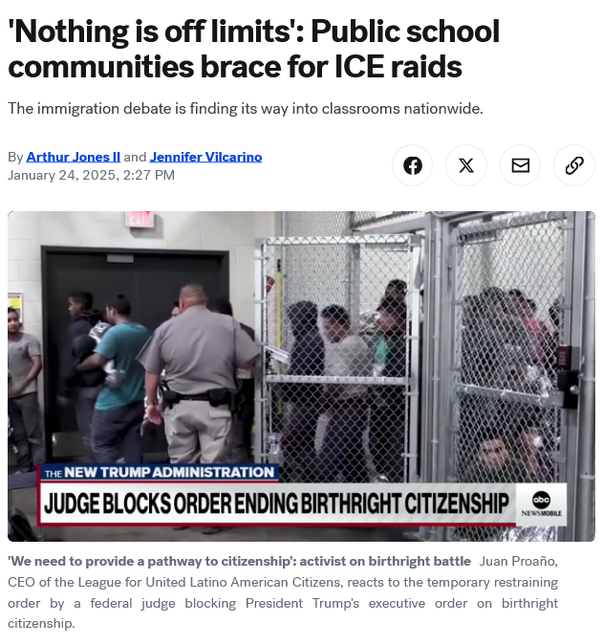
If there’s one thing we can learn from Luigi Mangione, it’s how overwhelming this problem is and how overpowering the enemy is. They’re not taking any breaks now that they’ve been given the keys to transform the landscape radically. They’re putting the pedal to the metal, and if it means running over millions of homeless people with a bulldozer, then so be it.

They don’t care about the poor. They are happy to destroy the easily victimized among us.

Why do you think they’re starting with schoolchildren?