Is being employed by Elon Musk a good idea?

This post is a response to a question posed in its original format: “Do you think it’s a good idea to be employed by Elon Musk?”

It’s not, and this question is a horrifying indictment of the dystopic dysfunctionality of modern-day employment.

Specifically, dealing with Musk as an employer would be career suicide. You have no job security in a position that would disappear on a whim. You would have an extremely spiteful megalomaniac who would destroy your opportunities to make vertical moves outside his control. You would be lucky to make a lateral move out of the organization and onto another.

Generally speaking, however, the employment landscape has become a corporatist nightmare.

Fifty years ago, you pretty much had a guarantee of lifelong employment with almost every employer. You also had many opportunities to gain employment with endless choices in who you would work for. You could join practically any organization, and it would feel like a small community in which you could fit in like a human being.

The people you worked with were people, not potential competitors. Meanwhile, in today’s corporate environment, you are taught to mistrust your coworkers because they’re so focused on career development that you are regarded as a potential threat to their ambitions.

I discovered an example earlier today when I checked out a basic dispatcher job from a generic notification I received on Farcebook.

Taking on a simple dispatching role in a remote capacity for extra dollars is no longer a simple job for an employer who needs a person to fulfill a functional need.

Every job today is plugging into a vast corporate network with massive amounts of leverage to dictate terms.

Their screening processes are draconian and violate privacy laws in Canada.

What gave me a chuckle and a shudder down my spine, in this case, was the tagline below the company logo: “A Family of Businesses.”

I may have become jaded by experience, but every abusive employer I have ever encountered described themselves as a family.

In a world where a whopping majority (70%-80%) of families are dysfunctional, it feels like the world as a whole has been slowly morphing into a Stepford community.

I have always preferred smaller environments totalling no more than 100 people because I prefer to work with people, not drones, whose role is to perform at a sociopathic level of disengagement, meeting robotic criteria.

If you’re okay with constantly looking over your shoulder and viewing coworkers as enemy combatants that you can’t trust won’t knife you in the back while wondering when Damocles will drop his sword and escort you out of the heavily secured building with multiple checkpoints, have at it.

I prefer to keep my humanity intact, even if I die in poverty.

Why were people less racist in the ‘80s than today?

This post is a response to a question initially posed on Quora, and can also be accessed via “https://www.quora.com/Why-were-people-less-racist-in-the-80s-than-today/answer/Antonio-Amaral-1

They weren’t.

The further back in time you look, the more racist people were.

You may be lucky enough to realize the difference between what was socially acceptable behaviour in environments that were essentially cultural silos and today’s interconnected world where no social issue is hidden from public dialogue.

You might want to take a moment to consider things you take for granted — that piss off many bigots who don’t realize they’re responsible for making those things happen. For example, gay pride parades would not exist today were it not for rampant bigotries against the gay community that lived in literal fear of their lives by random strangers who would physically assault them — often in groups and just for entertainment.

Black History Month would not exist without the KKK, lynchings, and a host of horrors in which I keep learning every year about tragedies I was never aware of that make me ashamed of humanity.

It’s a never-ending stream of vile hatred that humanity indulges in, and of which racism is only one form of evil among many that we struggle with as a species.

This is why social media is so essential today.

Bigotries are no longer incognito.

Everyone has a video recorder on their person and, within seconds, can subject an abusive monster to public shaming from around the world.

We are no longer able to pretend that racism is just part of life and that it’s okay.

We are no longer able to ignore the vile behaviours of abusive monsters in society that we used to turn our heads away from and pretend it wasn’t our business to do something about it.

We can no longer hide behind the excuses that we can’t do anything about it because all the dirty laundry is flapping about in our faces, and we either clean it up or become soiled by it.

This is a remarkable time we’re living in because we are all learning to wake up, whether we want to or not.

The troglodytes among us who endlessly wine about stupidities like “woke mind virus” or “go woke, go broke” are just verbal versions of the red alert beanies informing the world that such a person is a toxic idiot who needs to grow up and get in touch with their humanity.

They can whine and stamp their feet all they want, but their antics are nothing more than the dying last gasps of an under-evolved creature going extinct.

Because of the internet and because of social media, people are learning to become more educated and aware of the psychological dysfunctionality issues plaguing humanity. We are learning to heal ourselves because of it.

The world is undergoing an upheaval of awareness right now because the sheer volume of hatred is beyond the pale — one in five people visibly exhibit mental health issues — and a whopping majority (70%-80%) of families are dysfunctional.

These are staggering statistics.

We are sick, and we have to face the truth about our species because if we don’t, we will end ourselves.

Social media helps to make that happen. It’s a tool to help us heal that could not have come too soon.

We have desperately needed this dose of cold awareness about ourselves for a long time.

Why haven’t we seen more transparency?

This post is a response to a question posed in its complete format: “Why haven’t we seen a more transparent Federal Government until 47?”

Nothing is transparent about the obfuscating nonsense a grifter is dumping onto the public consciousness.

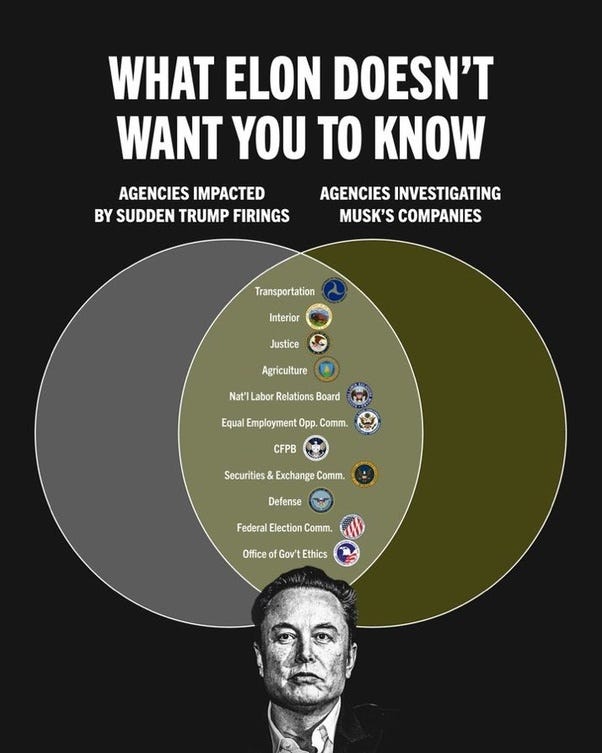
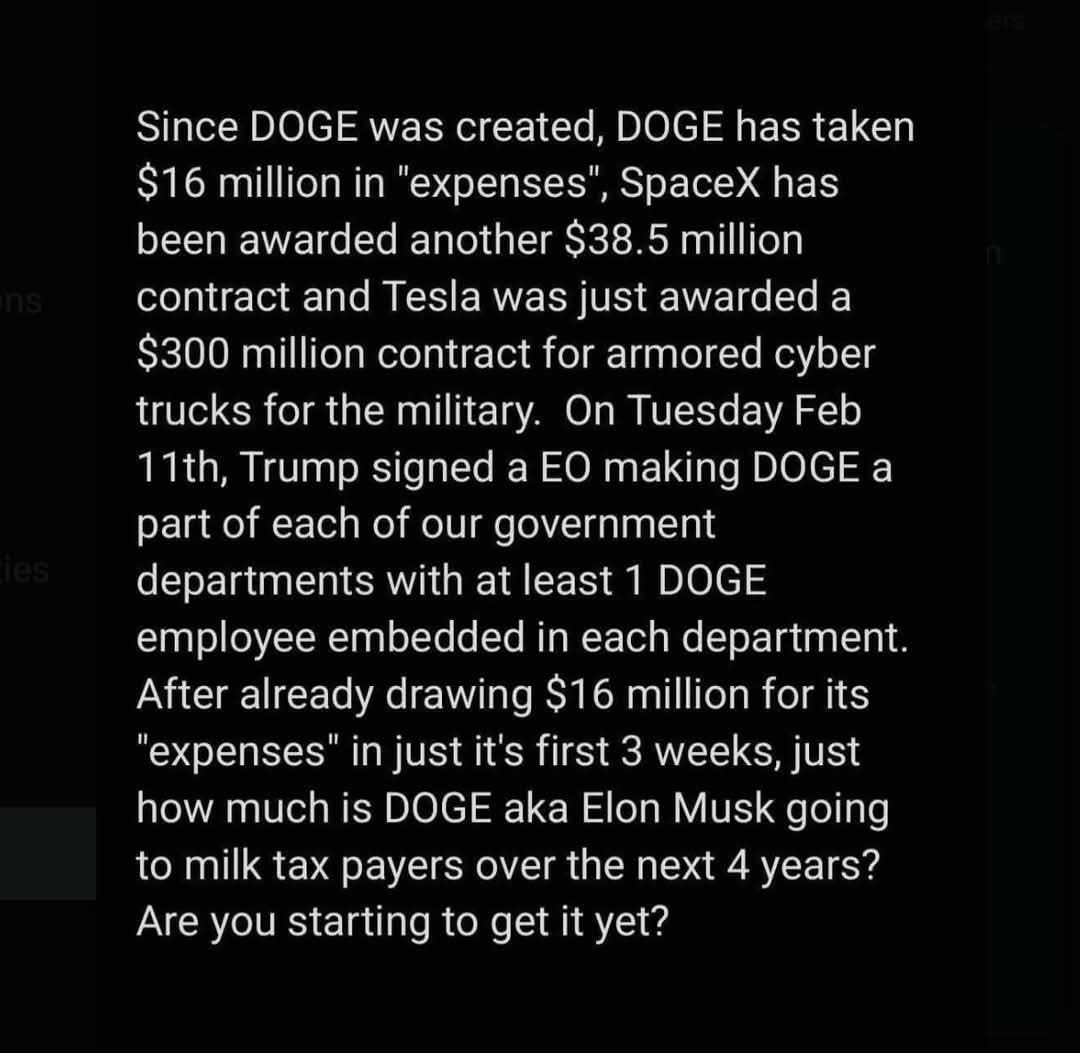
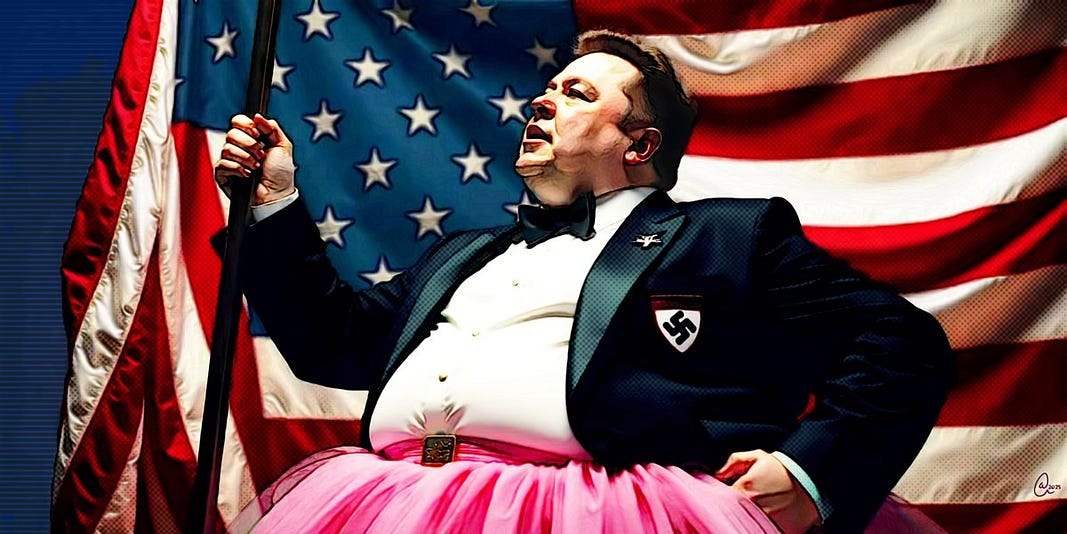
Anyone with a lick of sense who watched Elon Musk speaking from the Oval Office as if he were an unelected and self-appointed president, enacting broad changes to public infrastructure as if his words were intended to create the best outcomes for the people would have been horrified by how thick his petard was spread.

It was like watching a Fox entertainment talking head barf up a stream of irrational gibberish because he figures a gish gallop argument of nonsense is enough to sway 350 million people… and if it isn’t, it’s enough to sway 70 million people who will run defence on his behalf so that he can continue to destroy the nation.

The most obvious example of “transparency by obfuscating petard” was hiring child hackers with criminal histories to tap into the private records of 350 million people instead of forensic accountants with a clear mandate to identify waste and fraud. Their agenda, goals, and processes should have been made public before beginning his process. Instead, it was rushed through to get as far as they could into violating the nation’s protections before being stopped by the checks and balances built into the system.

The alarms should have been ringing loudly that he has overlooked the most obvious target of waste and fraud in the military budget — which has never been audited.

Why do you think that is?

Right… it’s because they’re counting on military support to rein in the disruptive elements in society when they need to ramp up their pogroms to the next level of insanity and round up citizens who get deemed dissidents by the state.

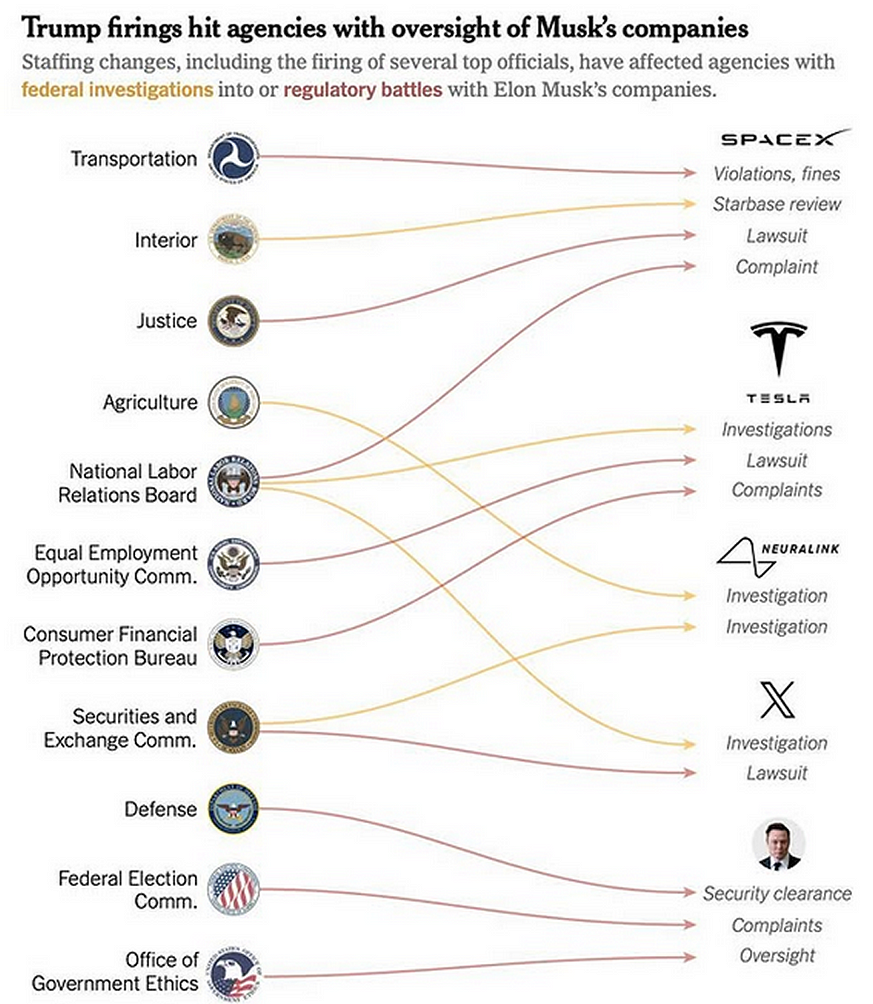
The Freedom of Information Act has already guaranteed government transparency. You can bet any effort to obtain details on the justifications of fraud and waste supporting the decisions of what has been cut will never be revealed to the public. Fortunately, it’s pretty easy to spot his motivations, considering that every target of his is a public institution designed expressly to protect the public interest, holding him accountable for his criminal behaviours.

Ask yourself this simple question:

If this administration cared about transparency, why is Trump the only president who has refused to make his taxes public?

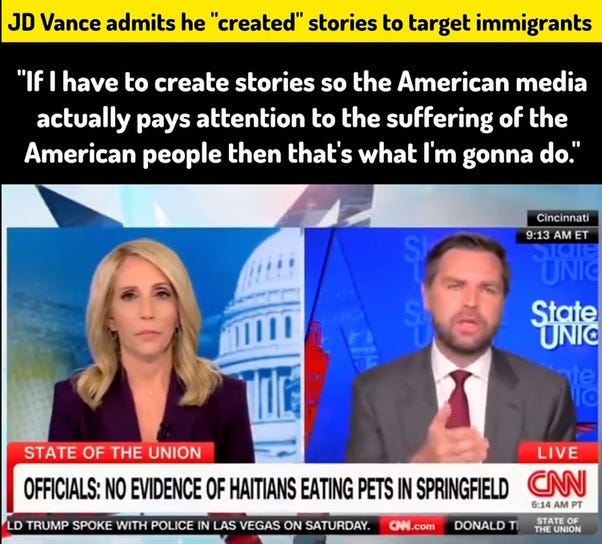
Why did Trump lie about Project 2025 during his campaign while appointing a VP who called him Hitler? Why would the VP join someone they thought was Hitler, to begin with? Why is the VP not only a contributor to Project 2025 but also someone who publicly justifies lying to capture attention?

How does any of this constitute “transparency” in your worldview?

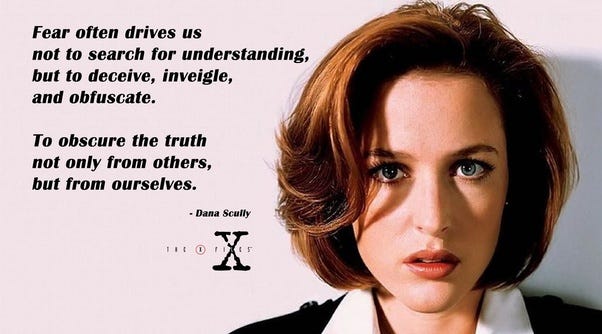
It’s not. It’s obfuscation and inveigling.

Why doesn’t Elon save poor people?

This post is a response to a question posed in its complete format: “Why doesn’t Elon Musk want to save poor people in the world?”

He is saving the “poor people in the world.”

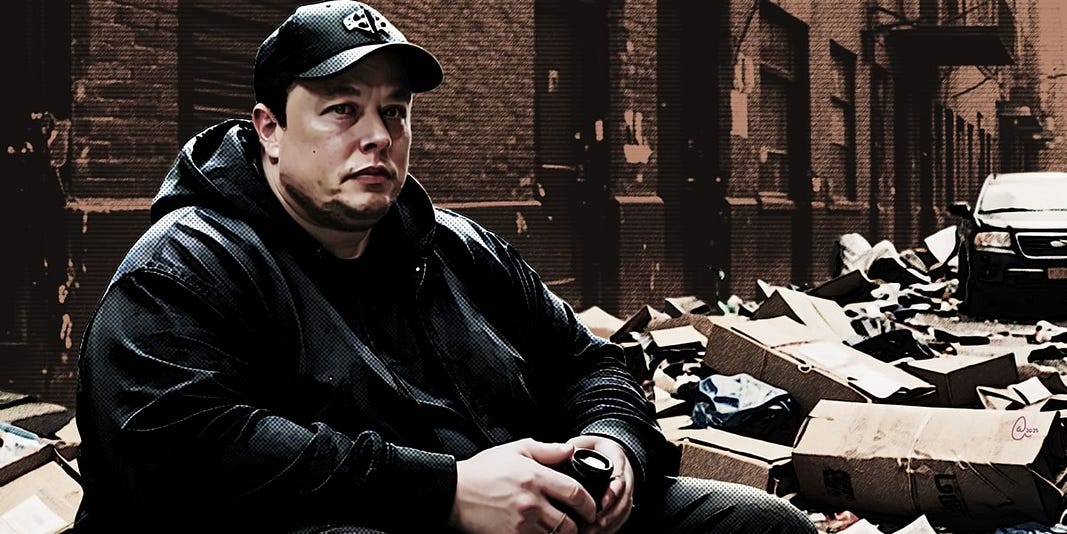
The disconnect is presuming he sees other people in the world as people rather than as objects placed on this Earth to cater to his poor existence.

Haven’t you noticed how much whining Trump does about life even though he was born on third base and has destroyed hundreds of thousands of lives throughout his life? After all that destruction, he still views himself as a victim.

Ironically, they’re both victims of failing to maintain contact with their essential humanity.

They will both go to their graves, completely frustrated and confused about why most people hate them.

Sure… they have devoted followers, but those are the easy and gullible idiots to manipulate. It’s not enough because they know the people who challenge them think poorly of them.

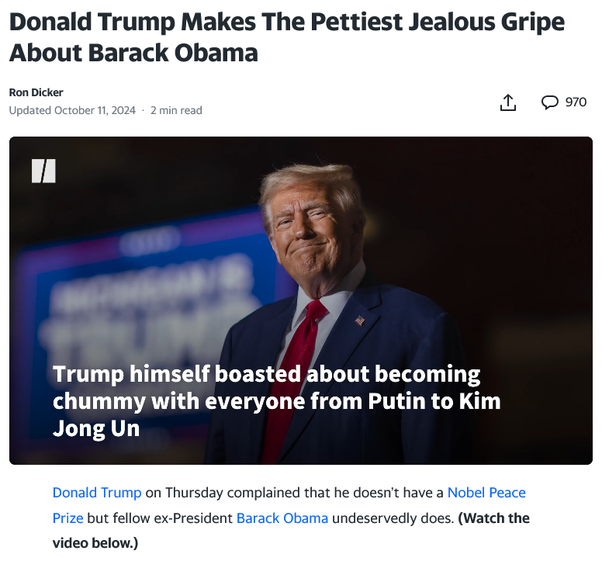
The jealousy is why Trump can still gripe about Obama a decade later.

Supporting a hated monster like Trump is the closest Musk will get to camaraderie. Meanwhile, both regard each other as useful idiots to their self-serving causes. Once the wheels fall off in their relationship — and it will because there isn’t enough room on the planet for two competing egos — eventually, one of them will step on the other’s toes hard enough to escalate into an open conflict — we’ll see embarrassing demonstrations that remind us of all the sandbox behaviours we experienced in elementary school.

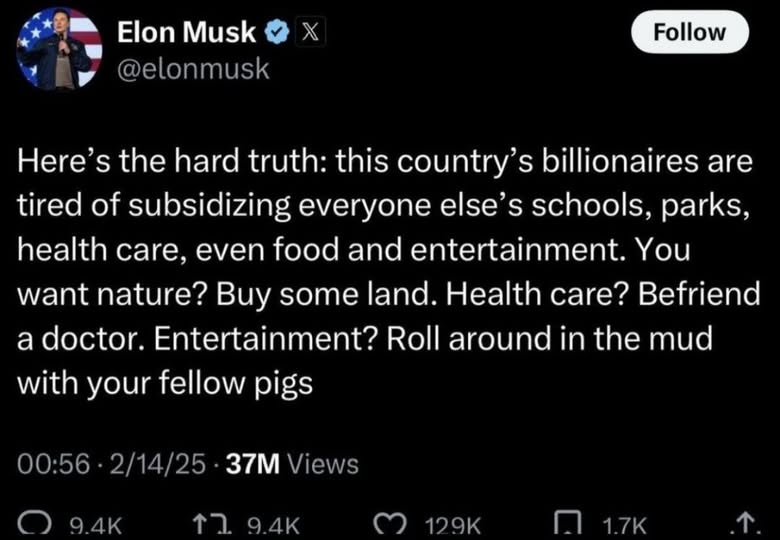
Sadly, the more Xitter fails, the harder Musk will go after austerity for the little people, and that’s how he will deal with his “poor stature.” Musk is this century’s poster boy for why restraints on personal wealth and power are crucial to the stability of human civilization.

The MAGAts won’t see that, though, because they’re conditioned to desire submission to authorities they’ve been accustomed to worship. They will identify more with Musk’s struggles than their fellow citizens who suffer from Musk’s spitefulness.

Musk is saving the most essential “poor person” in the world, himself.

What best discerns a true patriot from a fake?

This post is a response to a question posed in its complete format: “What question/s and their answer/s best discern a true patriot from a fake one?”

This question is problematic on several levels because a “true patriot” is essentially a subjective assessment until one’s actions are identified as universally consistent within a broad recognition of patriotism.

For example, Mike Pence could have been easily viewed as a traitor while serving alongside Donald Trump, but he proved otherwise with his final official act in office as a VP.

Luigi Mangione can be viewed as someone who has betrayed the social contract by extinguishing another’s life. Still, he can also be considered as paying the ultimate price to protect the lives of countless thousands within a dysfunctional system that preys upon people while victimizing them for profit. Few actions are more patriotic than sacrificing one’s life to end corruption. Whether that’s considered patriotic is a matter for history to pass judgment.

The same applies to Edward Snowden, Julian Assange, Joe Darby, Karen Silkwood, Daniel Ellsberg, Frank Serpico, Chelsea Manning, and a panoply of whistleblowers throughout history.

List of whistleblowers — Wikipedia

Patriotism is far too nuanced to identify within a survey methodology.
People are not static objects.
People’s actions do not align directly within predictable margins, fitting generic descriptions of subjectively defined concepts that evolve as society changes.

A question as simple as “Do you love your country?” is quickly answered through deception, malicious intent or naively justified expedience. A person can believe they do love their country while acting in a treasonous way. Conversely, a person can be perceived as hating their country and acting supremely patriotic by sacrificing their life to protect it.

Adding further complications to this question is that communication is a nuanced process. At the same time, the more subjective the concepts that any survey attempts to address, the less effective the multiple-choice answers are.

Adding another level of complexity to the mix is the notion of “true” as a qualifier for suggesting patriotism is a binary state. Where is the distinction between “true” and “not true?” Is “not true” the equivalent of “false,” or can there be states of patriotism between “true” and “false?” I think I’ve already identified some of those intermediary states above.

I don’t believe any specific question or answer can identify some nebulous standard for a largely subjective state of mind that can change according to circumstances.

Ultimately, the only way to know is if the person in question can appreciate and value the social contract such that it’s the highest priority in their mind when considering political positions because it indicates a community perspective over a narcissistic one. That’s not information one can determine through a survey approach.

Is there such a thing as Trump Derangement Syndrome?

This post is a response to a question posed in its complete format: “Generally, do anti-Trumpers think there is such a thing as Trump derangement syndrome, or do they see it as merely a criticism of them?”

Generally, people who refer to other people as “anti-Trumpers” while behaving as if “TDS” is a legitimate diagnosis are struggling to compensate for their slipping grasp on reality.

“TDS,” for example, is a dialectical device for dismissing uncomfortable information about someone’s object of unconditional worship.

It is “BDS” for a new president. It was first concocted as a way to ignore arguments against the Bush administration and their lies to initiate two wars with two different countries under the auspices of getting revenge on a terrorist attack.

None of the people who hurled the nonsense accusation of “BDS” wanted to believe the Bush administration had lied to them. None of them wanted to acknowledge the family feud origins driving two illegal wars while conducting war crimes when confronted by the facts of the Bin Laden and Bush histories.

None of them wanted to acknowledge the hypocrisy of a president who gave up looking for the terrorist responsible for the attack on 9/11.

At every step of the way and with every criticism of a grossly incompetent and abysmally amoral leadership that treated the soldiers who spilled blood on their behalf like disposable garbage, they cried out, “BDS! You’ve got BDS!” Hoping that would be the end of the resistance to their corruption.

They’re doing the same thing again with “TDS” by repurposing a conversation terminator that can allow them to wriggle away from the consequences of their corrupt behaviours.

They’ve also concocted another means by which they can achieve their divisive betrayal of the nation by reducing the conflict to a team sport where the opposing sides are merely cheerleaders for equal and opposite ideologies.

That’s already a betrayal of the social contract and everything decent about a nation that claims to value freedom and democracy.

These people never shut up about freedoms like freedom of speech, yet every one of their behaviours is the antithesis of what they claim to value.

They are worse than traitors to the nation. They are a toxic disease that represents a threat to human civilization.

They are worse than intransigent children because they cannot reason, will not reason, and will lie and accuse their way out of responsibility for the consequences of their destructive actions.

They are worse than cult members because they are not content with remaining in their space and living their lives in peace while allowing the rest of the world to enjoy the same courtesy.

They are a disease, a scourge that will not stop until they rule the whole of humanity.

They have existed for centuries, and now, they are impossible to ignore. They have become impossible to compartmentalize within geographical boundaries. They have become impossible to allow us to lie to ourselves that we are not all touched on some level by centuries of generational CPTSD.

We cannot ignore that these are not people “over there” but are our families, neighbours, and fellow country people. These are people who represent the one-in-five among us who suffer from severe psychological dysfunctionalities.

We cannot ignore how we cannot win this war through aggression but by changing how we live and how we structure our societies.

We can only survive this war by addressing all the elements contributing to this evil’s metastasis.

We can learn from history, pay attention to the same signs screaming for our attention, and stop creating excuses for why some things we value cannot be questioned.

We must be open-minded enough to acknowledge how much of what we take for granted as acceptable should no longer be tolerated.

We can no longer allow unchecked power to corrupt our systems and destroy their fundamental characteristics, ensuring their survival and capacity to meet our needs.

We must restore trust in ourselves as people living together in a civilized society and the systems we live by. However, we can’t do that by allowing the enemies of society to smear everything with a misanthropic haze of false equivalences.

We must draw lines in the sand when determining what is and isn’t acceptable and hold everyone accountable on an equal footing. We can no longer permit two sets of laws and rules for two classes of people.

Liberty, equality, and fraternity must be true for everyone, or we may as well allow ourselves to descend into the grave of barbarism as we write our final writ to the stars that care not whether we live or die.

What is Art for, and Why is it Important?


This post is a combined response to a couple of questions initially posed on Quora and written in their full format as, “As an artist, how would you answer this question? What is art for?” and “What is the importance of art in our society?”

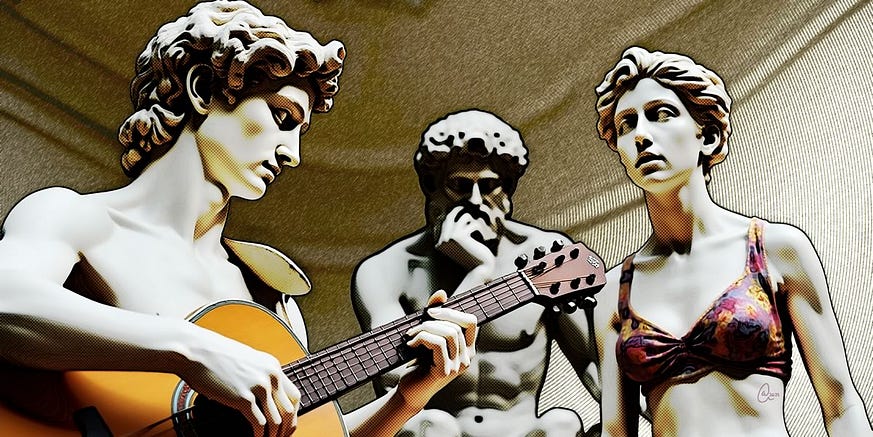
Canadian poet Irving Layton described artists as canaries in coal mines because they are the barometers for society, which compels us to expand our perceptions by confronting often harsh truths.

Art changes how we understand the world by reflecting reality back to us within directed contexts to focus our attention on aspects of life presented in often unfamiliar and/or uncomfortable ways.

Art enriches our lives and reminds us of our humanity while connecting us through the artist’s work.


“What is the importance of art in our society?”

To adequately address this rather direct but general question, some context is needed to frame an answer which fully encompasses its implications.

There are three general perspectives upon which to address this question.

From an individual’s perspective

The importance of art in an individual’s life is a broadening of perspective and a deepening of insight into… well, literally everything about the human condition. From an observer’s perspective, art connects us on a visceral level. Whether it be music that moves us, a few well-chosen words, or an awe-inspiring spectacle, the experience is a validation of belonging to something greater.

From an artist’s perspective, it’s the cheapest therapy form.

Cumulatively, society benefits from the positive contributions resulting from affirmative expressions of community life within larger societies.

From a community’s perspective

Art brings attention to issues often overlooked, misunderstood, misrepresented, or misapprehended in ways which provide unmatched clarity in creating understanding. Art can mobilize a community and motivate social change, contributing to stability within larger societies.

From a society’s perspective

Art reflects the most profound truths about life, the human condition, and society in general.

Art provokes social introspection and defines boundaries while providing clarity on issues.

Art provides the public with psychologically supportive outlets of expression that contribute to overall social stability.

Artistic activity provides a healthy return on investment to every level of an economy.

Artistic history provides us with deep insights into our evolution as a species, and it is an activity that also provides insights into our future, like every other discipline of discovery.

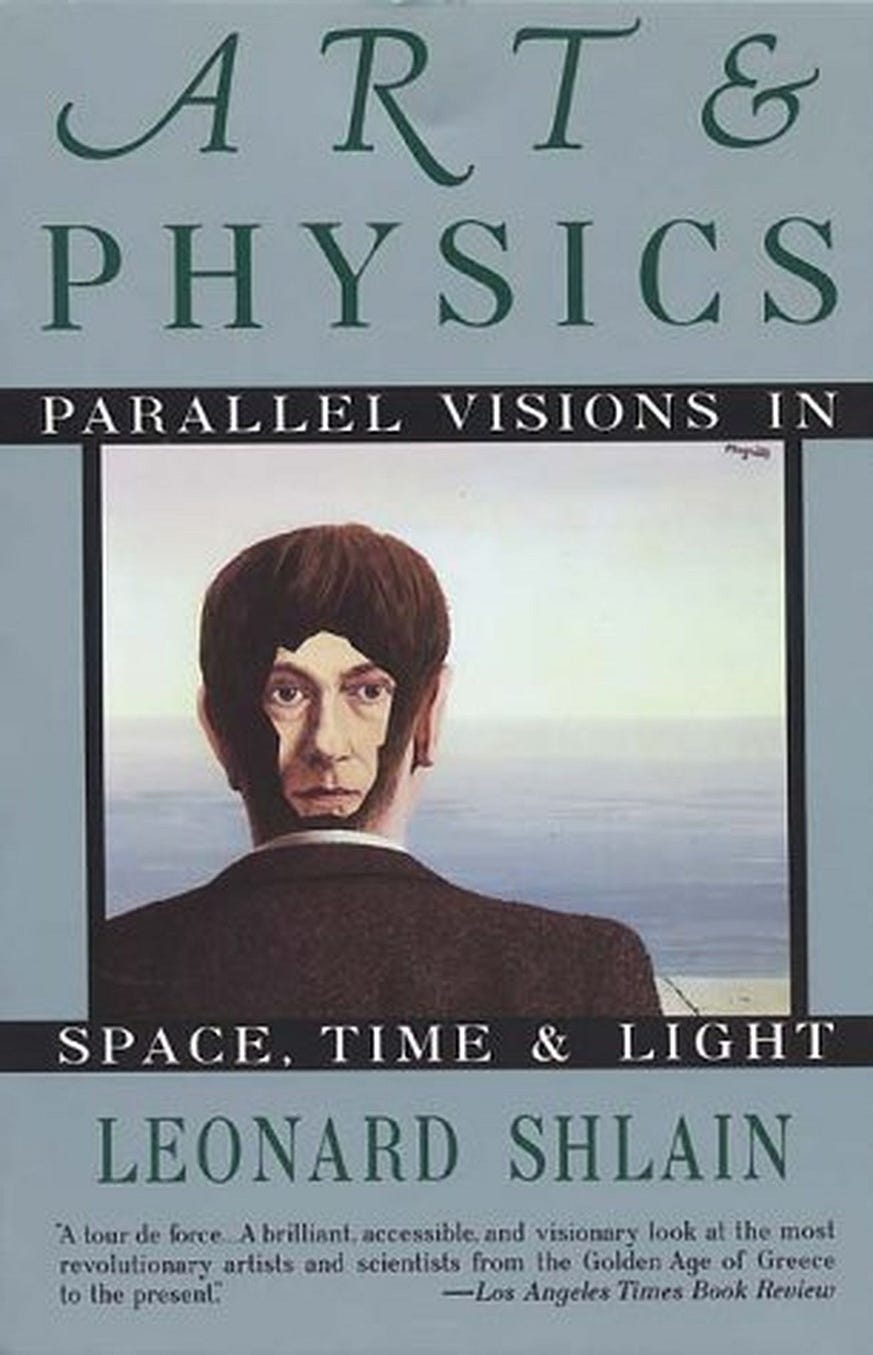
“Art interprets the visible world. Physics charts its unseen workings. The two realms seem completely opposed. But consider that both strive to reveal truths for which there are no words — with physicists using the language of mathematics and artists using visual images.

Art and Physics, Parallel Visions in Space, Time and Light — Leonard Shlain

Art & Physics | by Leonard Shlain

“Leonard Shlain proposes that the visionary artist is the first culture member to see the world in a new way. Then, nearly simultaneously, a revolutionary physicist discovers a new way to think about the world. Escorting the reader through the classical, medieval, Renaissance and modern eras, Shlain shows how the artists’ images create a compelling fit when superimposed on the physicists’ concepts.

Why did Colin Powell defect from his old political party?

This post is a response to a question initially posed on Quora, and can also be accessed via “https://www.quora.com/Why-did-Colin-Powell-defect-from-his-old-political-party/answer/Antonio-Amaral-1

This question represents a severe disability in one’s comprehension of a democracy.

It’s an attitude very much like what Elon Musk displayed when he thought suing advertisers for abandoning his increasingly Nazified platform was justifiable.

It would be like walking past a McDonald’s restaurant and getting fined for not stopping in for a burger and fries or not agreeing to make an additional purchase after being prompted by their upselling suggestions.

Imagine being charged double on your meal because you didn’t want to pay extra for a hot steaming pile of sugar called a “pie.” This cartoon scenario represents the same level and quality of entitled thinking in this question.

No one is obligated to go along with their party in a democracy. Being a political party member is not indentured servitude unless you have no self-respect or ability to think for yourself. You are admitting to your willingness to accept life as a baby bird whose mouth yawns open to await the trickle-down meal of mental stimulation to determine how and what you should think.

How is that a democracy in your mind?

It’s not.

How is that not a grotesque degree of abdication of your free exercise of will?

It’s a betrayal of everything we have had the luxury of enjoying because our forefathers sacrificed their lives fighting for and dying for the right to dissent from their party.

Anyone who steps away from a party is sending the most potent message possible that that party no longer represents their best interests.

The last thing anyone owes a political party is their loyalty.

Genuinely considering oneself a patriot who loves and is dedicated to freedom means protecting one’s integrity and family, friends, and community by walking away from a corrupt party. That’s not a defection but a courageous act of patriotism.

As terrible a VP as Mike Pence can be considered, he at least redeemed himself by showing the courage of a true patriot with a love of country.

Colin Powell may have royally screwed up while serving in the Bush administration, but he is not a defector. Colin Powell represents one of the most loyal patriots the Republican party has had in decades.

If your party cannot put the needs of the many above the desires of the few, then your loyalty to your country demands you to walk away from them.

Yes… that line was a direct ripoff of a very familiar source of inspiration for what defines us as humans. Even you must be able to recognize a universal truth in whatever form you encounter it. You cannot be a human who cares about creating the best world for all of us without acknowledging universal truths.

If your party no longer works to represent your best interests, then the only way you can be a freedom-loving patriot is to turn your back on that party.

If you think that people who walk away from their party are being disloyal, then that makes you disloyal to everything you claim to believe in and value.

If you can’t support a party member’s right to walk away, then that makes you a fascist.

If a party expects loyalty to whatever platform it concocts, then they are not a party that values democracy or freedom.

It is the party that must conform to the demands of their people. It is the party that must permanently relinquish power to serve the needs of its people properly. It is up to the party to adjust its platform to acknowledge what the people want and need. It is up to the party to represent their people, not vice versa.

The thinking embodied within this question is the core of the rot that makes an American style of democracy so vulnerable to enemies foreign and domestic.

If you genuinely want to fight for and protect your democracy as a patriot, then you must fight against a two-party hegemony.

You should demand complete electoral reform to eliminate the kind of corrupt thinking this question represents. It’s abhorrent that people have reduced a public dialogue into a mindless cheerleading competition.

The only people who win that game are the nation’s enemies who seek to usurp its power.

You should consider people like Colin Powell and Liz Cheney among the bravest members of your party because they are not afraid of the consequences of sacrificing their political influence and benefits for ideals that transcend petty politics.

The kind of thinking which embodies this question is what created concentration camps and gas chambers less than one hundred years ago.

This kind of thinking has been responsible for repeating that ugly history, and it’s already at the stage of recreating concentration camps.

How much further must we venture into this nightmare before people realize the horror they invite as a stain on their person and the burden of profound regret they will carry to their graves?

How does art as personal expression differ from societal values?

This post is a response to a question posed in its complete format: “How does the function of art as a means of personal expression differ from its role as a reflection of cultural and societal values?”

We are each of us mirrors of our cultural and societal values.

Each of us expresses our values as we have been exposed to and have absorbed them into our makeup as individuals, whether we do so through work defined as “art” by society or by other means of self-expression.

Some common ways we recognize different cultures include dialects, cuisine, wardrobe, rituals, and social activities such as special occasions, holidays, and celebrations of varying kinds.

We typically define “art” as an experience without a pragmatic application beyond conveying an emotional or intellectual concept.

Most forms of expression serve a pragmatic value, such as organizing people, educating people, helping people accomplish goals, or restraining, hurting, preventing, or prohibiting people from engaging in an undesirable action.

The purpose of art is purely to share perspectives while the artist in society focuses their attention and development precisely upon developing one’s perspective through their work.

Most people rely on their expressions as a secondary, supportive, and functional concern as an adjunct to whatever their primary occupation is for their attention.

Everyone expresses their cultural and social values by being unique products of their environment. The artist “enters a meta state” of introspection while analyzing values to convey them through their unique perspectives.

Like physicists who focus on the physical characteristics of the universe, medical professionals who focus on the biological characteristics of humanity, psychologists who focus on the mental states of humanity, and geologists who focus on the mineral characteristics of the planet, artists focus on our cultural expressions of the human condition.

Artists are professional analysts for our societies who reflect the varying states of humanity through their expressions.

Could poor employee performance be due to being forced into a job?


This post is a response to a question posed in its complete format: “Do you feel that Wal Mart employee’s lack of performance could be due to the fact that welfare literally forces people to accept a job offer or lose benefits that provide Food and Housing? Support #UBI”

When employers don’t care about their staff, their staff stops caring about them.

When employees stop caring about their employers, they disengage and produce the minimum they can get away with. They focus less on productivity and more on toxic politicking to gain personal benefit over others in an increasingly misanthropic culture that pits people against each other.

The sociopathic Walton family is teaching their people to hate them, their operation, and the society which permits them to exploit the vulnerable. Their people, staff and customers are being virtually trained to devalue everything about human life and modern society. This naturally results in the disengagement that every other historic failure of society has experienced preceding widespread systemic collapse.

This isn’t rocket science. It’s reciprocity.

Most people understand it clearly as “you get what you give.”

Sadly, we’ve allowed our societies and our systems to forget the most critical principle to acknowledge and characteristic of the human condition to preserve within everything we do. Strangely, it’s also a core principle within almost every religion throughout the history of religion.

It’s not complicated in the least.

Even science acknowledges it.

It’s cause and effect.

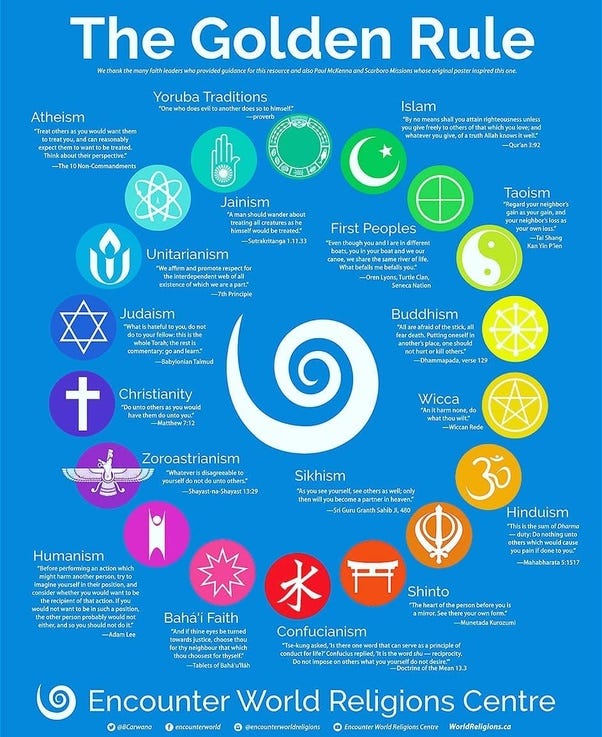
“Do Unto Others As You Would Have Them Do Unto You.”

It’s only a matter of time before the greedy, misanthropic Walton family finds themselves confronted with the bill for the consequences of their sociopathic and parasitic disdain toward society. In effect, they are no different than this person who justifies shoplifting.

They are responsible for breeding this kind of thinking because this is precisely their reasoning as they disempower their people and force them to rely on government assistance so that they can increase their hordes in an escalation of the misanthropic decay of society.

They are spitting on the social contract from the comfort of their luxurious mansions.

They are no different from this person and are responsible for validating this skewed justification.


UBI is a basic correction to veering off-course in the last several decades.
UBI is insurance for the transition toward automation, which is well underway.
UBI is a stabilizing societal element that will eliminate poverty, homelessness, and various social problems that create conflicts from which we all suffer.