Why are people reluctant to call out worthless art?


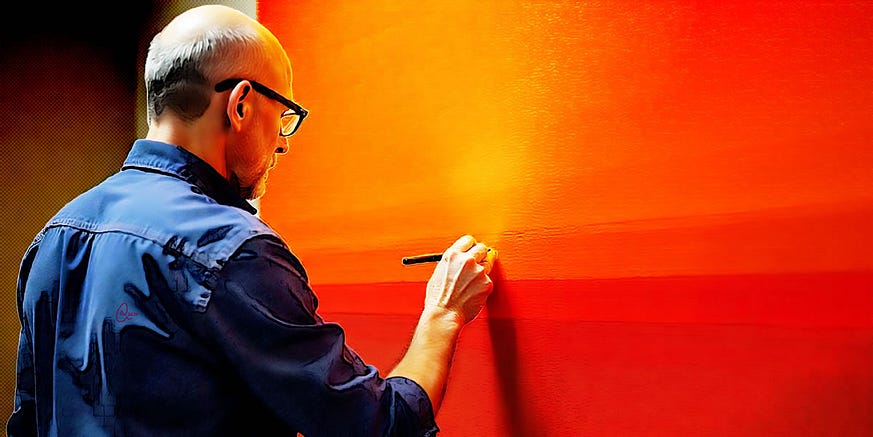
This post is a response to a question posed in its complete format: “Why are people so reluctant to call out “artists” like Mark Rothko for the sheer worthlessness of his ‘art’?”

“Art should comfort the disturbed and disturb the comfortable.”

This is a flawed presumption because people have no problem expressing their views on the arts they encounter.

Of all the vocations humans indulge in, none are exposed to as often to emotionally charged criticisms as the arts, much like how this question seeks validation.

The question is an admission of failing to understand numerous aspects they reject on a visceral level, while depriving oneself of an honest intellectual process of critical analysis.

This is a question ruled by pure bias in the same way all forms of intellectually stunted bigotries are concocted.

This question also reveals a mindset incapable of appreciating Gestalt and is more enamoured by puerile rather than reflective experiences.
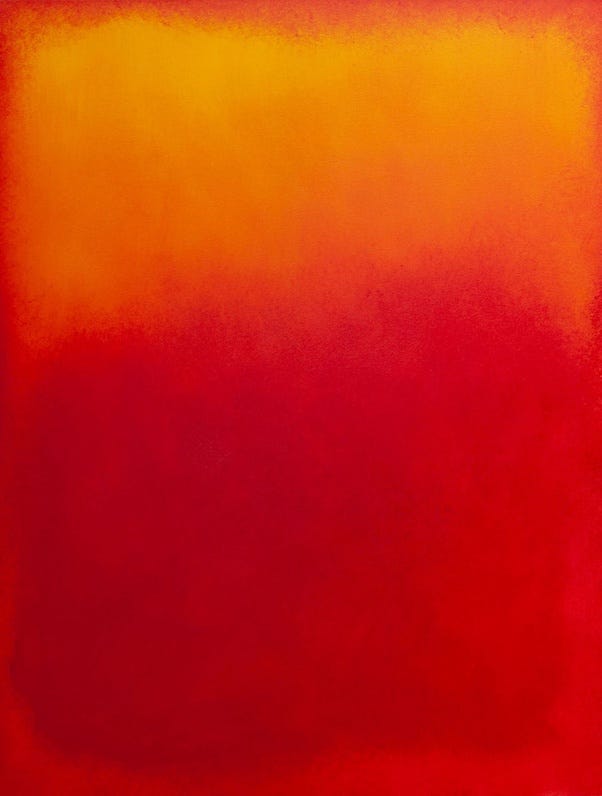
These paintings cannot be judged by their reproductions in a book or onscreen.

They must be experienced in person to apprehend their meaning.


As much as the question seeks to disparage and devalue the valid contribution of a life dedicated to the furtherance of one’s craft and vision — such that their work will be remembered for centuries, in contrast to this puerile critic who will be a long-forgotten example of a juvenile apprehension of what they are intimidated by.

The fact is that your subjective tastes in art do not serve as a universal metric of value. No single individual has that power.

Value is determined by a complex dynamic involving institutions and people with depths of historical awareness that far surpass the childish apprehension of what this question celebrates as a mindset.

One the first bits of wisdom I encountered as an Art student is as follows: “When people say, ‘I don’t know much about art, but I know what I like.’ they are actually saying, ‘I don’t know much about art, but I like what I know.’

This question is an admission of being out of your depth, and you’re freaking out about drowning in being touched by the ineffable. You can’t handle letting yourself go and float freely within the infinite.

This question screams “shallow-thinking and egotistical control freak” to me.

I’m sorry you are struggling with his work. Your question, however, indicates you need to engage with it until you can experience the revelation that will allow you to transcend your intuitively recognized intellectual limitations.

Your visceral reaction to his work is your intuition telling you to focus on something you have been avoiding and repressing within your psyche.

Take these words however you like but try not to ignore how easy it is to call out horseshit when one sees it.

No one has been “reluctant to call him out.” That’s nonsense because no other vocation is nearly as “called out” as an artist’s.

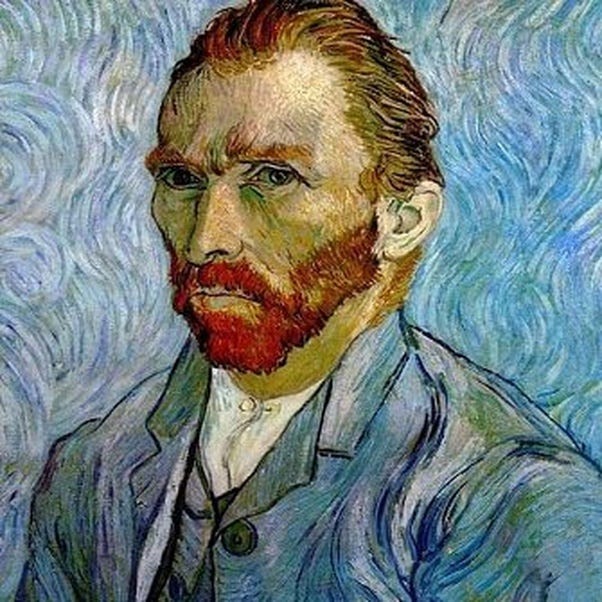
Mark Rothko’s work has not gone without intense criticism. However, it persists, and that persistence determines its value in the same way all artists throughout history have been rejected by their era. Countless artists throughout history have engendered emotional rejections to their work like yours, while a famous one most know of is Vincent Van Gogh.

Do you trust the so-called “theories” in the arts?

This post is a response to a question posed in its complete format: “https://www.quora.com/Do-you-trust-the-so-called-theories-in-the-arts/answer/Antonio-Amaral-1

No, but I always trust my instincts when I encounter dripping cynicism applied to “high falutin’” concepts like “so-called theories.”

I don’t “have to trust” art theories since they are primarily subjective analyses of movements, stylistics, and socio-political contexts applied toward individuals, groups, or random associations between artists sharing aesthetic or subject matter concerns.

Theory in art differs from a science-based theory backed up by testable methods to determine an objective and consistently predictable outcome.

They’re not meant “to be trusted” but used as a lens or a filter to focus one’s surveying of a landscape.

In the art world, one learns to trust the analysis and the analyst based on the quality of their insight, depth of knowledge, and the strength of their observations.

Art theories are less critical to artists than academics like Art Historians, whose role in society is to contextualize the whole of art production into descriptions reflecting our social evolution through artistic expression.

Most artists could not care less where they fit into the grand scheme of artistic expression within the context of social evolution. They tend to be more concerned with matters that are important to them on a personal scale.

How one feels about issues they encounter is much more artistically motivating than an academic assessment of artistic context within the creative product.

My initial response to this question was, “What are you talking about?” and that turned out to be a good prompt for me to find a theory as a basis for answering this question.

I know art theories exist from my experience in art school, but I struggled to bring one to mind in any clear focus. Sure, various movements, styles, attitudes, and manifestos vaguely touched the surface of my conscious awareness, but I immediately rejected them as “theories” that relate to the context of this question.

I found this article to be an interesting and concise representation of “art theories” that distinguishes them from scientific theories to assist with making a point in my answer. After getting this far, I find it serves less as a function for contributing to my answer than as a helpful guide for a layperson to consider when assessing a piece.

The fact that I find this a novel summation for contextualizing one’s art-viewing experience reinforces how little concern I place on art theories when considering the pieces I produce.

https://might-could.com/essays/what-makes-good-art/#:~:text=There%20are%204%20main%20theories,ve%20never%20heard%20of%20them
Four Theories for Judging Art

https://might-could.com/essays/what-makes-good-art/#:~:text=There%20are%204%20main%20theories,ve%20never%20heard%20of%20them

For the most part, art production is a process of burying oneself in the fundamentals of artmaking more so than it is about where in the vast spectrum of historical context a piece should occupy. That is my bias, of course.

Art theories are a non-existent concern when working on a piece, whereas composition, shape, balance, colour, line, and tension are foremost in my mind.

All this leads me to ask, “What are you talking about?”

Your profile doesn’t provide much context, but it has several hallmarks for being a troll profile — such as being less than one month old and sparse in detail. Unlike my similar experiences with answering questions on Quora, I won’t mute and block you, but I’m sure I will remember the red flag this question left me with.

Perhaps you have been somewhat affected by a confluence of insecurity and psychological abuse by a pretentious asshole in the arts. Sadly, there are many, as this seems to be a field of endeavour that functions like a magnet for egotistical types.

I suggest focusing more on what moves you to create and less on what others might have to say because their input is often more about them than you or your work.

Good luck.

Should an artist have a day job?

This post is a response to a question initially posed on Quora, and can also be accessed via “https://www.quora.com/Should-an-artist-have-a-day-job/answer/Antonio-Amaral-1

An artist has more justification for surviving on their activity in society than most any other vocation.

Setting aside the mechanics of bias and economic pragmatism, the reality is that almost no other general field of employment engages the producers in their field the way art production does.

IOW. Almost no other field, in and of itself, engages people to eat, think, and breathe their work 24/7/365 as the arts do.

Sure, there are individuals within almost every profession who are as dedicated to succeeding in their chosen career. Most, however, are not interested in their activities for the sake of the activity itself.

For example, someone like Elon Musk developed a reputation early for being a workaholic. His motivation, however, was never the work itself but the material benefits he would derive from it. Many, if not most, executive-level people work at least 60 hours per week — which defines the word “work” rather loosely by contrast because “work” essentially involves social interaction. Both worlds of work and socialization are combined into one.

That’s not the case with artists unless one is a musician in a band, dancer, actor, or performer — an artist who produces their product as part of a group or troupe.

Visual artists, writers, and sculptors generally work alone and in isolation from the world — which works for that personality type. There are many more introverts in the world than many extroverts believe is the case. Writing code is another activity that demands solitude to be productive, for example, and this transformation into an information technology economy has been a boon for many.

Since writing code can also be considered an activity that produces creative output — such as designing and developing apps and sites — it can also be a vocation in which one receives their recompense on the result of their efforts within the products they create.

However, this also reinforces my point because many app designers/developers also live in poverty. The corporate machinery employs those who have become disengaged from the creative process in coding to such a degree that their motivation is job security, not creative output.

Artists should be free to create because the value of the arts to society is core to our humanity. One cannot master their artistic skills if they have to work at a job that chews up most of their time. Creativity requires as much dedicated focus as any profession and arguably provides more lasting value to society than most functional robot roles within dehumanizing institutions.

The issue is not “should an artist have a day job?” because most artists do many different things to survive and fit as much time for art as they can in between. The lucky few develop enough of a body of work to create opportunities to survive on their creative output alone but without any accompanying wealth. Most adjust well to poverty if they can concentrate on creative production full-time.

The attitude in this question is troublesome because it represents an unfortunately common toxic attitude of people who disrespect the arts on a fundamental level with an attitude that they should enjoy the arts for free. They want their cake and to eat it, too.

This is the second question I’ve seen posted on Quora within the last couple of weeks, which seeks to disparage the arts with a sociopathic disdain for the vocation. It’s an attitude that every artist endures throughout their life… and struggle with the disgusting mistreatment of people who are okay with benefitting from the artistic product but hate paying for it.

In my case, it’s very personal because I’m in the middle of a lawsuit against my own family for stealing work of mine and benefitting from it for decades while, if they had compensated me fair market value for it ten years ago, I would have recovered from an assault on my life. Instead, they chose to hire a crooked lawyer who has aided and abetted them in their crime while counselling them to commit perjury and deny me my lawful payment.

My attitude towards people who display such disgusting disrespect for the arts has evolved to become very unpleasant to deal with as a consequence of sustained encounters.

In my youth, when I was more able to respond to such sociopathic depravity with some humour, I would say that despite what is said about “that other profession,” the arts are the oldest profession.

After all, without the creative vision inherent within all of us as thinking and emoting human beings, we’d still be hanging out in caves.

Oh… and for the record (I’m not going put any effort into digging up this particular stat, but I will undervalue what I remember about it), for every dollar invested in the arts, society benefits by two dollars. Insofar as government investments go, it’s at the top of the list of best investments. Why do you think the wealthy class begins storing their value in artwork once they’ve reached a threshold of wealth where they need to put their money somewhere? Where better to put one’s money than in a 10 million dollar painting by Robert Rauschenberg that is guaranteed to be worth twenty within a decade?