Why should I contribute to society?


This post is a response to a question posed in its complete format: “Aside from it being a moral duty, why should I contribute to society?”

As a reason to contribute to society, a “moral duty” represents a form of coercion which garners the absolute least that one will contribute. Referring to contributions made to society as a “moral duty” creates the perception that it’s like paying a tax. You do it because you have to.

That’s the best way to get the worst attitudes and the least value in contributions from people.

Paying it forward” is a far better way to frame contributions to society because it serves as a reminder of how one has benefited from society and the contributions of others as part of a shared community.

Another context that can help to imbue the concept of contributing to society with motivational meaning is as a team. As members of a species, we are all members of the same “team” in the sense of our challenge to maintain survival. This perspective is why I chose the concept of a bucket brigade to illustrate the idea of working together to put out a fire.

Understanding the difference in perspective between one who feels they “should” versus feeling like one “can” will clarify the attitude we should be cultivating in society to encourage contributions back to society. When a person feels like they’re a valued member of a supportive community that enables their members to achieve their best potential, it cultivates an attitude of gratitude that prompts people to think positively of what they can do in return for their community.

Think of it like gift-giving during the holidays, where people go to great lengths to impress someone with a special gift they know will be meaningful to the recipient, versus the sentiment people demonstrate when put in as minimal an effort into their gift as they can get away with to meet an expectation from someone they don’t care about but feel an obligation to gift them something.

To do what one “should do” invites the minimum effort to meet a bar of expectations set by the lowest common denominator and is characterized in the best of terms as an apathetic form of disengagement from one’s community. Why give something to society when you don’t value it?

Conversely, when one feels closely connected to a community that has cultivated gratitude within their mindset, they want to give as much as they can afford to adequately express their appreciation for what they value receiving from their community.

To do what one can, rather than what one must, is to be motivated by a natural desire to contribute out of a spirit of reciprocity.

This is why the social contract is crucial to our health as a society and why community development is an essential mindset for leaders to adopt and cultivate within society. Community members who feel they belong to a larger dynamic and are valued for their contributions are engaged and self-motivated to do what they can to improve life for everyone else.

They understand and value the meaning of the words, “We are all in this together.”

This sentiment is the glue that will keep society from collapsing into chaos during the most troubling times.

This sentiment is the glue that has given humanity the grace to survive and prosper to such a degree that our short presence here will be as lasting into the future as hundreds of millions of years of a planet dominated by dinosaurs has been to date within a fraction of the time they existed.

When one feels connected enough to something, they have no problem going out of their way to contribute as much as they can afford because they believe their giving is its own reward. They derive pleasure and fulfilment from giving to their community. They will go to great lengths to contribute as much as possible to their society because giving transcends moral duty.

Some people will give to causes, for example, because they want receipts to lower their tax burden through the benefit of deductions.

Other people give to cancer research, for example, because they have been personally affected by the issue. Giving as much as they can afford is a way of coping with the issue by acknowledging a loss or a deeply impactful experience. Giving is rewarded by a cultivation of hope within oneself.

Many people volunteer their time in contributions to a cause because of the social connections they create and benefit from on an intangible level. Giving energizes one’s spirit through interpersonal interactions and cultivates the interconnectedness that defines a core need for the human condition.

In all self-motivated cases, one’s contributions are made without considering moral implications because those are justifications which devalue the experience.

In all cases, people give in greater abundance and more honestly of themselves when internally motivated by intangible and intrinsic benefits than by material and extrinsic ones.

Understanding why one would want to contribute to society out of an internally motivated reason is far more crucial to the value of one’s contributions than meeting an arbitrary degree of obligation.

Understanding how one has benefited from the efforts of those who came before us and how we are each linked in a centuries-long chain of humans collectively contributing to an aspirational future for all of humanity is how to convert an obligation into a desire.

When we are disconnected from our humanity and community as humans, we lose sight of the value of our contributions to an evolving whole.

Learning to appreciate our distinctive differences between individuals and celebrating those differences while embracing the uniqueness of their contributions is how we can justify giving the best of what we can to those who will come after us and allow us to be remembered as individuals who each gave our best to make their lives better.

Cultivating this community spirit of belonging is how we survive our challenges, such as those we are struggling through today. Our connection to community allows us to cope with and overcome being inundated by the toxic influences of those who lack appreciation or reverence for the sacred nature of what we collectively benefit from.

Encouraging the creation of connections between us results in a superior form of morality that organically emerges in society to endure throughout our existence on this planet more successfully.

There is no valid reason why you “should” give back to society. However, without a desire to give back to society, you have lost out on one of the most valuable sentiments a human can experience, which is core to our development as healthy humans living fulfilled lives.


Bonus Question: How do you accept the fact that no one loves you?

Learn how much more important it is to love yourself and life than to be loved.

No two people or living creatures love in the same way.

Love is not about receiving but about giving.

If you want to be loved, get yourself a dog and/or a cat, or several.

If you can love what you do each day, it can sustain you enough to allow other forms of love to make their way into your life.

Good luck.

If aging feels like things get worse, how can we deal with living 200 years?


This post is a response to a question posed in its complete format: “If older generations tend to get fed up with the following generations, and feel that people are stupider, societal values, music, culture and everything else is worse, how could humans ever deal with living to be 150 or 200 years old?”

This question is based on a flawed presumption and a form of projection because “older generations” is a monstrously huge brush comprising hundreds of millions worldwide.

That number of humans don’t think alike, and they certainly do not all “get fed up with etcetera generations.” However, people who employ broad brushes when making judgments about people they don’t know are also exhibiting precisely the mindset that disparages people and renders broadly negative judgments about “things getting worse.”

Thinking in these negative terms and judgments is often a means of rationalizing one’s negative attitude. By believing age leads to negative judgments, one is permitting oneself to develop one’s negative judgments.

The reality, however, is that many people remain “young-minded” and optimistic throughout their old age and consequently live happier and longer lives.

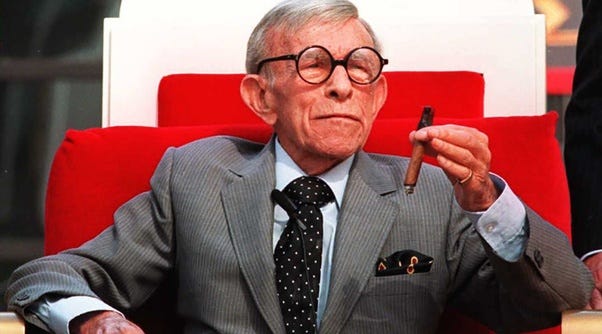
Here are some examples of people who remained optimistic throughout their long lives:

George Burns 1896–1996

Grandma Mose — Anna Mary Robertson Moses — September 7th, 1860 — December 13, 1961

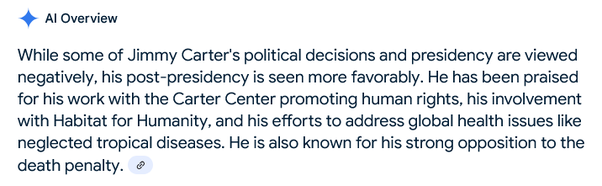
Jimmy Carter — October 1, 1924 — December 29, 2024


After having pissed away valuable time on another post dealing with toxic incels whining about how unfair life is that they don’t get to control the women they impregnate, I’ve arrived at this question with the attitude that people choose to believe the world is getting worse because they’re not able to control every aspect of it. That frustration wears them down over time, and they develop a negative attitude toward life and people in general.

I was a child during the “Dawning of the Age of Aquarius,” and was a preteen during the flower power generation with love-ins, and an optimistic view of a hopeful future.

Then came the 1980s, when people’s mindsets appeared to change from an open-minded view of society to a rather cynical and dispirited view based on a self-centric model of getting what one could for oneself, even at the expense of others. It seemed the era of sharing and caring was vanishing.

Throughout it all, I still maintained my somewhat naive but hopeful view that we would recover the community spirit I remember being moved by, while reminded of it each night, as the television stations shut down their programming for the evening, with the Brotherhood of Man song, “United We Stand, Divided We Fall.”

Although I have perceived, throughout the last forty-five years, since the beginning of the 1980s, a general increasing separation between people, many changes have distracted my mind from it. I could sense it occurring, but I mostly ignored it as I went along with it while focusing on the developing technologies and learning to leverage skills and knowledge to carve out a sustainable career for myself. I was caught up in my optimism for a hopeful future for myself, and became increasingly introverted and isolated from interpersonal interactions and a community I could rely on.

Since that was taken from me, maintaining optimism has been quite a struggle. Still, I understand on a deeply visceral level how succumbing to negativity is quite much like drinking poison. The intensity of my experience has made it abundantly clear that a destructive mindset also harms one’s physical health. It creates a feedback loop of self-destruction, which allows one to wallow in broadly negative views toward life in general.

I believe that insight clarifies that living 150–200 years (which no human has ever done) depends on one’s frame of mind and maintaining an optimistic outlook.

If people develop such a negative perception of life that they believe everything is perpetually worsening, they don’t live as long as they otherwise could. Our attitudes toward life constitute a life-shortening way of ensuring we don’t have to cope with hopelessness.

This is part of the reason optimism has increased in importance for me, particularly since I still find myself venting against the prevalence of negativity we see every day and almost everywhere we look.

I can accept that much negativity exists in this world, but I don’t have to accept enduring it, so I get carried away with challenging it. I’ve gotten quite sick and tired of the rampant cynicism. I would like to see a resurgence of hope filling my senses like it did when naive hippy optimism of peace, love, and tree-hugging do-gooders captured public attention, even if it may have mainly been performative or just acting out against previous dark periods in human history, like the Second World War.

I want to believe we’ve arrived at a form of “peak darkness,” and a crossroads in our future as a species and a civilization where we can change course and restore hope to protect our longevity. The alternative is to allow ourselves to succumb to oblivion because we cannot survive an existence sustained by cynicism.

To that end, I do what I can to find examples of young people who give me hope for our future because, with each generation, we have both Kyle Rittenhouses and Greta Thunbergs, just like we have had for generation upon generation before them.

We must choose whether we want long lives of optimistic hope or shortened lives of cynical darkness.

Perhaps I’m just on a high from Canada’s recent election and getting the good news today about Australia following suit. Still, I think — or at least can start feeling some hope that the MAGA madness may finally reach its breaking point. It’s impossible to know if we’re experiencing a sea-change or a temporary lull in the degradation of our values. Still, I’d prefer to adopt an optimistic belief in our future than a cynical one because that’s too toxic a burden to endure. We may still require a world war to break this century’s “MAGAt fever,” or we may have learned something from our history, at least enough not to have to turn our world into a humongous bowl of ashes and regret before we finally start making hopeful and community-minded decisions to grow together instead of tearing each other apart.

At any rate, life may suck but feeling sucky about it only makes it suckier. Even if life sucks, thinking optimistically about a positive future at least makes the suckiness easier to deal with, and that’s why I equate long life with attitude and posted a few well-known examples of people who we can all learn something from.

In short, it’s not about “older generations” but about “old minds.”

Temet Nosce

Where is heaven for you?


This post is a question twofer of responses to two questions initially posed on Quora as written here.

It’s in the same general area where “Utopia” exists.

It’s right next to “Avalon,” which isn’t far from Valhalla and just around the bend from Asgard and down the road from Shangri-la, but more than a stone’s throw from Agartha while one can easily get lost on their way if they get distracted by the gold in El Dorado and miss their left turn at Alfheim. Try not to stay too long admiring the great fields of Elysium, or you’ll never leave. Be sure to avoid the talking snakes if you take the shortcut through the Garden of Eden, and carry a flashlight or gas lantern if you cross Thule. Agartha can get a bit warm if you fall into a deep chasm, so be sure to have spare clothing and have a spear or sword on hand to defend yourself against errant knights while crossing the lands of Camelot.

At any rate, if you make it to Cockaigne, you’ll find anything you need, which should help you if you have to climb Mount Olympus and travel through Arcadia.

Otherwise, keep your compass pointing upward toward hope; eventually, you’ll reach heaven.


Question 2: Is it okay to believe in ancient gods?

If you need permission from others to choose your beliefs, then your issues involve your self-image and self-confidence.

If you already believe fantasies can be real and magic is, then you’re not that different from much of the rest of the world, sadly.

That you ask if it’s okay to believe what you want to believe speaks to a lack of confidence in your beliefs, and that means you’re not sure if that’s what you should believe, and you’re hoping some confirmation by others will help you decide what to believe.

That may be a valid strategy for getting confirmation when lost. Still, it also shows you’ve allowed your beliefs to arise from wandering about without paying attention to the path you’ve taken. Your mind has wandered in an aimless direction, and now you’ve arrived at a place of wondering where you are.

You might want to retrace your steps to understand better why and how you arrived at the place of belief preceding what’s popular today. That you’re aware of earlier paradigms shows you’ve done some investigation into your beliefs. You’ve been curious to learn for reasons that have meaning for you.

Choosing to rest on a particular set of beliefs is just that. You may find your curiosity compelling you to investigate further.

In any case, the ability to choose to adopt or discard any belief at any moment is an exceptional reason to pay attention to how and why one chooses either way, because failing to do so leads to the sort of loss of self you’re experiencing now.

Ultimately, your beliefs are yours to do with what you will. They are “tools” — “useful implements” that allow you to maintain a consistent heading of self-discovery. The more authentic they are as an expression of profound insight into oneself, the more genuine they become as beliefs.

Good luck on your journey.

How can I motivate myself and feel less miserable?

This post is a response to a question posed in its complete format: “Sometimes I cry inside myself that I’m not like other intelligent people in my school and it hurts me every single day. I want to do my best but it just feels hard and my motivation dies off quickly. How can I motivate myself and feel less miserable?”

You joined Quora about three years ago and appear to have only two questions, including this one. The other question is about the lack of support and apparent abuse you endure from your parents.

It seems you are dealing with some intense emotional struggles that you do not deserve. However you perform in your academics and to improve yourself and achieve your goals, your parents have a moral obligation to be supportive.

Since they are not, you get saddled with the doubly hard challenge of finding your way through life’s confusing mess.

It’s not fair to you, but it may help you to understand how utterly broken most of the world is. We live in a world where a whopping majority (70%-80%) of families are dysfunctional.

You are not alone.

You can overcome your challenges.

A few things to consider while struggling to make something worthwhile of your life include;

  1. Focus on doing what you love doing. By investing your energies into something that brings you joy, you can create successes that will help you develop the confidence and motivation to succeed in other areas of your life.
  2. Find people who can empathize with your struggles — mainly because they endure similar struggles. Develop friendships with them to experience the emotional support your parents cannot give you.
  3. Read and read a lot to experience life through different eyes and learn to understand the complexities of life and its struggles through perspectives different from your own. Learn from what other minds have to teach you, and you will find strength within that you cannot feel now.
  4. Get a pet, if you can — a dog or a cat that can fill your heart with unconditional love and give you a reason to carry on through your toughest challenges.
  5. Spend as much time as you can with nature to feel that you belong here and to something much greater than the box of sorrow you have been given to bear.
  6. Know that nothing matters more than your ability to grow and change and adapt to an increasingly chaotic world undergoing a dramatic change that is pushing all of us to our limits. If we can survive this period of change, we will find a much friendlier world awaiting us on the other side of these challenges.
  7. Believe in yourself even when you make mistakes. Indeed, feel good about recognizing your mistakes because they are lessons you have succeeded in learning. It is much worse to make mistakes without identifying them as mistakes. It means you will repeat them like banging your head against a wall and hurting yourself even more.
  8. Allow yourself to see your parents as human beings like all other human beings. All of us have been damaged in some form or another by life, and it is a consequence of having undergone generations of struggle to emerge from a darkness of barbarism.
  9. Whatever you do, if you approach it with honesty, you are doing your best. You don’t have to try to do your best. You will always do your best if you are honest with yourself about what you do. Expect nothing more from yourself than complete honesty because knowing yourself matters most in your life. Knowing yourself is where you will find the strength to endure all the many challenges your life has in store.

I wish you all the best in your journey through this madness called “life.”

Temet Nosce

How do you deal with people who belittle you?

This post is a response to a question posed in its complete format: “How do you deal with people who belittle you and try to sound like they’re smarter than Einstein?”

I think it’s important to separate how one feels about the language a person uses to communicate with others and their expressions of intent.

If one is being condescending, it’s generally quite clear in their word choices and the subject they focus on when conveying their thoughts.

In other words, instead of focusing on the subject, they focus on the person, which, in this case, would mean you.

In a communication dynamic, a person’s estimation of a relative degree of intelligence between oneself and the other results in a subjective interpretation of the other’s intent. In other words, when people feel insecure and conversing with someone whose language choices are intimidating, they can often misinterpret the other’s intent.

They may feel that person is choosing “big words” to puff themselves up when that’s not their intent. It would be a misinterpretation of another’s actions due to one’s insecurity. It is important to separate one’s feelings from the interaction to ensure one’s reading of the dynamic isn’t coloured by one’s biases.

They may not be condescendingly treating them and merely use language they are most comfortable with when attempting to communicate with someone else. (As someone who has been accused of using pretentious language myself, I appreciate the opportunity to explain how my language choices are primarily intuitive and from an attempt at being as accurate in my communications as possible. I cannot speak differently any more than I can change my vanishing hair. It’s just who I am. Every one of us has a natural style of communication that works for each of us, and it doesn’t mean you have to “read between the lines” to ascertain what I “really mean.” — This brings to mind a favourite song of mine by The Animals, “Don’t let me be misunderstood.” –

)

Often, a person isn’t “trying to sound like they’re smarter than Einstein” but instead chooses words they believe are the most accurate representations of their thoughts.

As mentioned above, their focus is the key to spotting the difference. If they focus their responses on you as a person while choosing obtuse language to try to confuse you, then you know they are being condescending.

It might help to know that when someone is condescending, they also convey their intimidation through the discussion. They may feel that the effort spent in communication is not worth their time, or their goal is to make themselves feel better at your expense. In such a case, you will know that whatever information they have to convey could be more credible.

A naturally intelligent and well-informed person is usually happy to share their insights with others in an agnostic manner — as long as the other party is respectful in their attitude.

You can see that everywhere here on Quora. Some brilliant people here patiently explain simple concepts in great detail because they want to share what they have learned. Sharing is caring in this context.

When a person behaves condescendingly, they’re not interested in sharing or caring about others and let that be known in many different ways, while condescension is just one.

Another example of disparagement is providing hints of insights and then turning the tables on the person they’re speaking to, informing them that they should know the rest, and filling in the conceptual gaps on their own. If they can’t, they imply something is wrong with their victim’s character.

If you are uncertain whether someone is condescending, the most effective strategy is playing dumb.

Seriously.

It may sound counter-intuitive, but it works as a strategy.

Straight up, ask them what they mean with a confused expression to make it clear you’re not following their words and piecing them together in a way that makes sense to you. Be sincere in wanting clarification, and that will allow them to reflect on their attitude.

By playing dumb, you can defuse their defence mechanisms. You can encourage them to re-evaluate their communications in ways where their internal defences are not on alert to bring out condescension as a dialectical weapon to (pre-emptively) defend themselves.

This means that condescension and abusive attitudes are generally all born of insecurity on their own, and they often occur through subconscious responses to the person they are interacting with.

That person may not realize they’ve been condescending or abusive, and playing dumb is like knocking the wind out of their defence sails.

If they can be assured you’re not a threat, they are forced to re-evaluate their communications and make an effort to focus on the subject at hand.

Ultimately, by playing dumb, you may gain their trust and develop a valuable pipeline to an insightful source of information.

If playing dumb doesn’t work, then you know their information isn’t worth the effort to parse. They’re too caught up in their egotism to share their insights and are best left alone.

I hope this helps.

Cheerz

How do atheists view the concept of being born again?

This post is a response to a question initially posed on Quora, and can also be accessed via “https://divineatheists.quora.com/How-do-atheists-view-the-concept-of-being-born-again-60

I remember someone I once trusted approaching me for relationship advice.

I don’t remember the specific complaints registered against him by his then-recent ex, but I remember how he tried to convince her that he had changed overnight.

The next day after she ended her relationship, he returned to her and claimed he had changed.

After relating that to me, I tried to explain to him that’s not how change works. One doesn’t change oneself like they change their clothes, most certainly not overnight.

That wasn’t my best approach to helping him overcome his anxiety. He outright rejected what I tried to get him to understand. I believe that was the last conversation he and I ever had.

However, His attitude toward change stuck with me as I struggled to understand that thinking. I thought of it as chillingly superficial and worse as it appears to be an attitude which fits within the mindset that justifies telling people what they want to hear.

Everything about how a certain mindset perceives the world around them is based entirely on optics, and their behaviours are mere performances designed to elicit desired responses from their audience.

It left me feeling cold, and I’ve learned to understand how severe a red flag that is. I wish I hadn’t been such a slow learner in this regard because I could have saved myself a world of hurt if I had fully considered the implications of that behaviour then.

At any rate, the notion of undergoing a transformative experience had always intrigued me as I deliberately sought paths and methodologies for transcending limiting ways of being. From a very young age, I was aware that I was conditioned into being what I conceptually rejected but required something tangible to transform my desire for change into actual change.

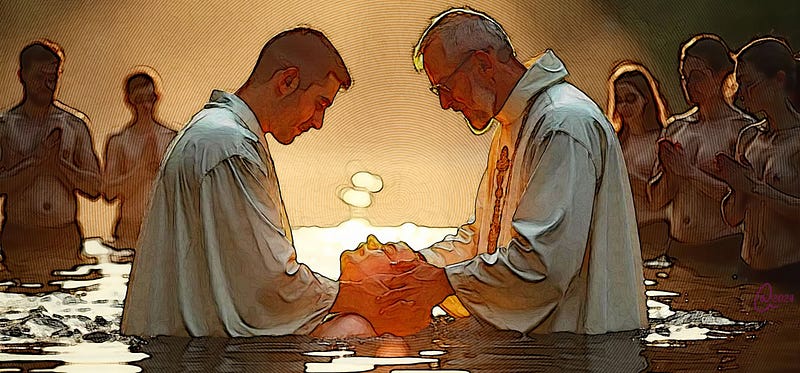
Symbolically, the notion of being “reborn” is a ritualized performance in which people present themselves as if they had changed from committing to a belief system and being “remade” by that commitment itself.

People who have undergone such a ritual sincerely think they have transformed into a better version of themselves. Their exclamations, however, have more often been expressions of hopeful anticipation rather than observable reality.

Their subsequent behaviours and fundamental attitudes remain the same. From an outsider’s perspective, the only change visible was the compass setting they prioritized.

Although some stick with their new compass setting over the long haul, many returned to being who they always were while dismissing a temporary compass setting as one they outgrew and was no longer relevant to them.

Some remained within their faith but regarded it with their “old eyes” and treated their entire relationship with their beliefs and community as a game of optics. Others moved on as they acknowledged their experience as helpful but not enough to commit to it for a lifetime. I found this latter group more authentic in their journey of discovery. The clarity of direction or need they expressed as they described their choices through fogs of confusion they struggled to dispel always made them feel more human to me. In contrast, I found those who appeared to skim through emotional turmoil somewhat confusing. I didn’t know how to interpret their responses to emotional struggles. I must have envied them as I could never respond to my own in similar ways and often wished I could have. It seemed to make life easier for them.

These “performers at life” always made me feel cold, though, and it’s taken me a long time to understand why.

Understanding how a proportion of our population lives through a shallow lens may be conceptually easy to grasp superficially, but that’s not a satisfying apprehension of the phenomenon. One inevitably finds oneself mystified by its manifestations while wondering why they feel put off in ways they don’t quite understand. It can be a harrowing journey to fully grasp the implications of such a life on a visceral level for those whose feelings run deep.

Another example was an individual who had been married for about six years and who I had gotten to know as a close couple who seemingly shared everything. Conversations with either always involved extolling the virtues of the other and never was an unkind or critical word shared. I thought they were a remarkable example of a successful couple until the husband informed me they were getting divorced.

Their separation appeared as if life sped forward at super-speed for them because it all took place within a couple of weeks — from agreement to the formalized documentation of divorce. There was no emotional turmoil I could detect in the husband, as the ex-wife had already left, and I had no means of gauging her condition. In his case, however, I was more shocked at his ability to move on than I was at their separation.

For him, it was as if nothing of note had happened in his life. I couldn’t fathom that, particularly after having endured my periods of extended angst over far shorter and more superficial commitments. I remember envying his ability to rebound from what would have been at least a year or two of turmoil for me.

I didn’t realize until later that his personality was characterized by subtle paranoia and mistrust toward others on mostly innocuous levels. I first noticed that aspect of his character after he described a business venture I found myself intrigued by and expressed how much I liked it. His response became immediately cold and protective of it. He clarified that I had no place in his venture even though I had not expressed such desire or intent.

I remember switching the conversation at that point and inquiring about his ex-wife, and I was curious to know if she was doing well. His response was mainly dismissive, but he let the cat out of the bag by indicating that the reason for their divorce was his unfaithfulness.

The ability to move on quickly from a profoundly emotional experience had often been a source of admiration for me. That was before I understood the costs of such a state of being — to both themselves and those they inevitably victimize.

I don’t think he was ever capable of connecting deeply with anyone, and I didn’t understand, even then, how profound that was. I knew it was essential for me, and I accepted how that might not be for others. I didn’t think of it as a toxic dysfunctionality — even though I should have known better after having experienced it with many others so often throughout my life.

From a ritualistic perspective, there can be some benefit to undergoing a formalized process that symbolically represents change and, more importantly, a desire for change. However, it’s all done for optics more than acknowledging the necessity of change and its role in one’s personal growth.

I always have felt this way, but I never understood how that attitude itself, on my behalf, was present even as a child when I underwent my first confession. It wasn’t conducted in a booth but in an empty classroom on a chair across from the minister. We were in full view of each other without obstruction, and he asked me to speak.

I struggled to find words while suppressing a broad smile as I found the experience entirely superficial. After all, how could I possibly be exonerated of guilt over actions I may have taken that were considered sinful by simply uttering them to this stranger? At the age of eleven, the most egregious sin I could think of was masturbation, and I suppose that might have been why I struggled to suppress a broad smile.

Within a belief system that purports to provide adherents with pathways for growth, I can understand and support the prescriptive manner of formalizing rituals to celebrate that growth. The shortfall in converting subjective experience into an objectively procedural system is that it fails to account for individual differences. It is a process that cannot account for or mitigate abusive misuse.

Much like the reporting systems across all social media, the symbolic ritual of change is a tool that can be weaponized for personal gain. The emphasis on optics is a form of corrupt thinking which overlooks the critically ineffable in favour of supporting shallow expedience.

The concept of “being born again” is just a formalized process of stripping profundity from life in favour of optics because we do not, as a whole, value depth in a world that has industrialized human existence and reduced the human condition to the level of a disposable commodity.

We have evolved into an increasingly dehumanized existence while being led by institutions that claim to represent higher states of being. Our only hope for reclaiming our existence as human beings capable of achieving our potential is completing our transformation into a fully automated society. It will only be once we cross this threshold that human beings will be free of the superficial trappings of optics made necessary by the industrialized herding of our species. The function of symbolic optics is an inherent limit to our potential as individual beings within what we refer to as “civilized society.”

I believe the concept of “being born again” should be viewed with great suspicion and mistrust because it reflects nothing of an individual’s inner world or the foundation of their character.

It can, however, be a practical means of applying a metric for identifying differences between that standard and one’s words and deeds to triangulate a more accurate picture of one’s internal world.

Is leader authenticity a matter of integrity?

The original question this article responds to in its complete format is as follows: “Is leader authenticity a matter of integrity? Should leaders behave similarly across different contexts and situations? Provide a specific example to explain your position.”

Authenticity IS integrity.

I often cringe when I read “Should” so-and-so do, be, or say such-and-such because that implies an externally imposed expectation.

One “should” do, be, or say whatever is required to accomplish or achieve whatever one seeks to accomplish or achieve by meeting externally defined expectations. That’s about it. All other motivation is derived from establishing and maintaining an inner equilibrium in which one can exist in a state of balanced compromise between the demands of the world and the needs of the self.

Authenticity is determined by a matching of one’s words and deeds. If someone is going to live an authentic life and be an authentic person, they’re not fulfilling an external expectation. They’re living in consistent alignment with who they perceive themselves to be.

Their ability to consistently maintain their authenticity while acknowledging the impact of their behaviours on others is how they are deemed to have integrity by others who make that determination about them.

One doesn’t decide to have integrity as if it’s an accoutrement to their lives. One chooses words and deeds that maintain one’s inner balance with one’s external self to be an authentic person with integrity.

A leader is just an ordinary person who lights a path or blazes a trail others can follow.

Some leaders are incredibly toxic and take people who follow them down dark paths that are absent of integrity.

I would argue that the most influential leaders we have in the world today are primarily psychopathic monsters who bleed their followers dry while being responsible for setting our world on a trajectory toward oblivion.

Followers are just as important as leaders within a leader/follower dynamic. Without followers, a leader is a solitary traveller.

The challenge we have in this world today is that those who seek leadership should have something other than followers. At the same time, too many followers must learn to distinguish between leaders who can elevate and inspire them to achieve their best and those who lead them to their slaughter.

An authentic person with integrity behaves consistently with their values across all domains, contexts, and situations. That’s what authenticity means. Be, say, and do what is right and good for you without compromising the balance permitting you to remain whole as a human being with your own functioning identity.

Integrity means others can trust you to be consistently authentic and that you will sacrifice whatever is necessary to maintain your authenticity of self.

Leadership means others recognize and value one’s consistency enough to derive value from it in whatever capacity brings them to a state of internal equilibrium.

Should followers be too broken to value integrity, so will their leaders.

Temet Nosce