This post is a response to a question posed in its complete format: “Are politics and marketing highly dependent upon, and structured around, the inability of the masses to think logically, act responsibly, and go beyond surface thought; especially go beyond surface thought?”
“All Publicity Works Upon Anxiety.”
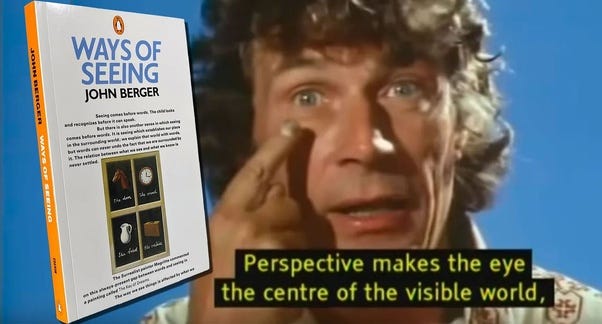
John Berger’s “Ways of Seeing” was an excellent introduction to my young mind as an art student in the early 1980s, helping me become more consciously aware of the then-daily bombardment of thousands of messages. It’s been decades, so I vaguely remember it, but I recall being repeatedly reminded of it over all this time. That suggests some “staying power” in my mind, with value over time. The book and/or the four-part documentary series created from it are both worthwhile experiences.
All four episodes have been combined into a single 2-hour YouTube presentation.
“We never look at just one thing; we are always looking at the relation between things and ourselves.”
The numerous concepts this short volume addresses introduced me to the layers of meaning in the images we encounter. The venue, the presenter’s intent, and the state of mind we bring to the viewing experience all coalesce into a unique perception we create for ourselves.
We are bombarded daily by thousands of images, according to the observations made in the early 1970s. I imagine the then-massive number I don’t quite recall at the moment (and am too lazy to scrub through the video to find it) has mushroomed by orders of magnitude since.
Marshal McLuhan challenged presumptions about media and its consumption. We learned to think strategically about the messages we consumed. His maxim, “The Medium is the Message,” gained him some notoriety among the media-savvy.
Then came “SEX” on a Ritz Cracker;
I’ve referred to a “we” requiring a definition. I think it was implied in “media-savvy” because it relates to awareness of what we are expected to believe and why it is essential to accept what is desired of us.
To be “media savvy” means being aware of the content of the ideas we consume and of how we choose which ideas to consume.
All Communication is Purposeful
We communicate not out of a compulsion to occupy idle time, not even necessarily for social entertainment, at least not when we go beyond the most superficial levels. We communicate with one another because we must to survive.
Without communication, we would not be here today to examine our communication.
Who benefits most from what we believe? It seems less about the people and more about benefiting those who have benefited most from a predatory system.
The above examples are from popular social discourse, about forty years ago and below is an example of current popular discourse:
(I refer to this example above as “popular” because it represents strategic messaging to serve a communication function of industry within the broader context of a culture structured around industry, economics, and consumption.)
The strategic manipulation of messaging is prevalent throughout society, in every domain, from interpersonal dynamics to international relations.
Whatever humans evolve into, some form of socially cohesive network of “shared perspectives” will perpetually question our experiences and compose new narratives to correct our collective perspectives.
Many of us do so with earnest and deep commitment to learning. Most will spare what time they can through highly structured days, allowing minimal opportunity for reflection.
We won’t stop thinking and talking about our experiences because we can’t. Willful ignorance may take centre stage from time to time, but it eventually gets the hook to exit left as it’s booed off the stage.
If the story doesn’t touch grass and meet reality, the people eventually figure out we’ve all been played for suckers by ever bigger games of power, and we find ourselves repeating history as ever-expanding dominions of power promise unity and deliver submission.
The barrage of imagery, sounds, videos, and merch-oriented stories has become increasingly overtly political. Factions grow around concepts and issues, not geography or physical commerce, but in the world of ideas, of how we think, how we see the world, and how the world looks back at each of us.
What do we want? Certainly not chaos?
Chaos invariably leads people to one incontrovertible conclusion: for communication to succeed, there must be a relationship of trust. Without trust, there can only be chaos.
Choosing trust is a binary decision about life and what that means to each of us, from micro to macro scales, now encircling the globe.
Trust Means Accountability:
One hundred years ago, our circles of trust were local and lifelong. Today’s global reach with casual effort was unimaginable then.
Where we end up one hundred years from now is provocative to contemplate. Some form of examination of the information we consume will continue for as long as some similar form of abstract thinking persists.
How Aware Are We Today? Or, how much awareness can our general public sustain without inviting chaos?
What do we reeeeeally know about what’s going on around us? Well, that’s easy, chaos.
Changes are occurring everywhere while everyone competes for resources and integration into the general machinery of social production.
We know how power structures coalesce to construct universal narratives about the acceptable social order we are encouraged to support, while our own needs are increasingly neglected.
We know that some messages aim at social disruption, whereas others aim at social cohesion. What we do as a society to facilitate cohesion after a half-century steady diet of failed promises.
I’m reasonably sure most of the public knows, or is becoming aware of, the apparent disarray in our politics. How dependent is this massive economic superstructure on our willing participation?
We must have leaders we can trust who will represent the needs of the many over the few who benefit most from a corrupted system gone askew.
This post is a response to a question posed in its complete format: “Do you think the late 21st century will be different from the early 21st Century just like the early and late 20th Century are nothing alike?”
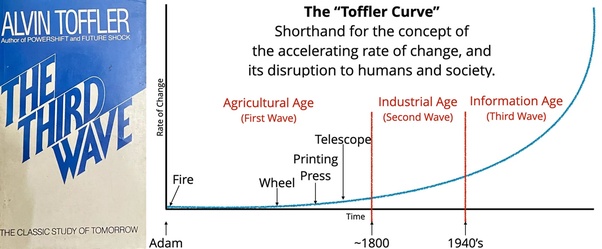
The rate of change has been steadily increasing. We (the public at large) have been made aware of this increasing rate of change since Alvin Toffler’s Future Shock was published in 1970.
“Western societies for the past 300 years have been caught up in a firestorm of change. This storm, far from abating, now appears to be gathering force.” (p.18)
Future Shock Complete Film on YouTube (1:53:13)
“Future shock is the dizzying disorientation brought on by the premature arrival of the future… [It] is a time phenomenon, a product of the greatly accelerated change in society.” (pp.19-20)
The degree of change between the two centuries will be far more pronounced at the end of this century than the changes that occurred throughout the previous century and all preceding centuries.
Most answers focus on technological change, but this is the most apparent change because many can still remember an analogue age in which telephone communication involved an electronic umbilical cord and displays were limited to televisions and equipped with oddities called “rabbit ears.”
OMG! You had to get up from your seat and move a few feet before turning a dial to watch something different. We have demanded a remote controller for almost every electronic device since enduring that torturous existence. Now, we’re drowning in remotes we can’t find when we need them, while they demand an additional expenditure of precious dollars to feed them energy from disposable batteries.
Technological change alone represents multiple dramatic transformations of human society and in how we will live from day to day. Today’s world of work will appear both alien and punitive to a world of work that will more closely resemble pre-industrial human society, according to Toffler’s third future-prediction book, “Third Wave.”
Technological change expands the possibilities of what can be considered human and redefines humanity itself. We can already see a massively transformative future for human biology through expanded medical and healthcare solutions to physiological needs and the emergence of a transhumanist movement that emphasizes the benefits of technological augmentation. While we remain cautious about biological alterations and focus on non-invasive technologies, medical solutions to limb loss, for example, are increasingly human-like in function while superior to their biological counterparts.
Like tattoos, artificial enhancements have been considered social taboos (for a short period, under the influence of Victorian sensibilities governing socially acceptable norms); however, they can conceivably become a popular means of “touching pseudo-immortality” and achieve small degrees of “super-humanity.” Genetic modifications will expand beyond preventing the transmission of genetic diseases to include prenatal selection of traits for one’s children. This will occur despite moral outrage because those with means will seek the greatest advantages they can for their lineages.
Technological change, however, is not the most radical change we are currently undergoing. Technology, however, has inspired, enabled, fueled, and empowered the most radical changes to date: ourselves.
We, as humans, are dramatically transforming, through growing pains demanded by our need to build a cooperative world in which cultures that once existed in isolation must now become interdependent to survive. Human psychology is being fundamentally restructured globally, in a way consistent with nature’s demand that we adapt or die.
Old forms of thinking and social organization cannot survive this transition without severely curtailing our social evolution, and they are trying to do precisely that. The MAGA sensibility and its adherence to a fictional nostalgia where familiar power structures continue to wreak havoc on outsiders is unsustainable in a global community that thrives on diversity.
We must learn to communicate and cooperate through mutual respect, and that’s why so much is so messy today. We haven’t grown up. We’re still in grade school, where our leaders mock 12-year-old girls and their base ignores that as irrelevant.
We are currently confronted with the sum of our human flaws and weaknesses, as well as with the social, economic, and psychological dysfunctions we have inherited from our forebears, through a focal point created by technology. Everything we once ignored and silently turned away from has become magnified and loud.
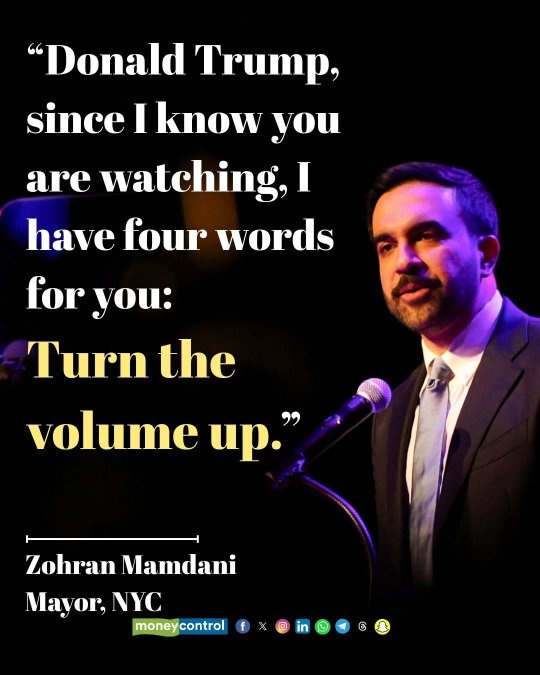
Each day that passes, the volume of discord increases as we negotiate new terms for the social contracts binding us all to a construct called “civilized society.”
“Millions of ordinary psychologically normal people will face an abrupt collision with the future.” (p.18)
We have become aware of the toxic effects of the remnants of decay left behind by our primitive ancestors. The drive for conquest, domination, and exploitation of the vulnerable in society has reached a fever pitch as dinosaur gatekeepers rail against the loss of their power while being confronted by the reality of their limits in their waning years.
We are undergoing massive power shifts and now hand-me-downs as new dynasties emerge, in which the powerful take what they want despite protestations, pleas, and persistent reminders of the values of a world of equally free people, not kingdoms with serfs ruled by rulers who deny the people their needs to favour their luxuries.
The powerful take what they want because they can And now the people are beginning to say, “No.”
We are increasingly aware that what we become is what we allow.
We have all seen this movie; while some of us seem to have slept through the Reality Onboarding Orientation Program (Introductory ROOP) to miss out on what’s going on in GongShow Reality Tunnel #42, which means we all get to enjoy the cataclysmic scenery together.
We are buffeted about in herds to feed on words, and mostly instructions, telling us how we must live. At their behest.
Humanity is changing, and the cycles can repeat only so often until enough stop and say enough. This ends here. This culture of casual cruelty ends now. Right here. Today.
We are human beings: we know we become chaos whenever bound or chained. We embrace that because human society survives only when humans are equal.
[There is] a racing rate of change that makes reality seem, sometimes, like a kaleidoscope run wild.” (p.19)
Amplifying such voices by the many through the megaphones, the powerful seek to dominate because they know how to run the show.
This dynamic ebb and flow of power in an endless game of take, take, take will last only until it breaks.
Meanwhile, numerous pressures are amplified by their instantaneity within a complex formula that quantifies interpersonal dynamics and produces opaque functions, algorithms, and equations. To result in chaos.
As it turns out, humans are not quantifiable We never were Humans have always been chaos
Automation through AI and robotics that can provide for every socially practical human need dispenses with work altogether, while consolidated powers ignore how their consumptions are destructive to our weather, but we are told that we must be bold As they raid our home of all its gold.
Conditions are ripe for a massive reset for how we live and how we think about living. What can we do?
Future Shock was an attempt to quantify chaos 50 years ago. Today, its envisioning of the future appears as quaint as the original Star Trek.
We don’t know what surprises are in store that could set us on a trajectory in any direction. We do know that we stand at a crossroads today to determine a fundamental, not cosmetic alteration of human life and society as we know it.
That’s a guarantee. The transformation ahead is far more significant for tomorrow than the Industrial Age was for today.
Tomorrow is as unimaginable as today will be tomorrow.
“Once emptied, the future can be filled with anything, with unlimited interests, desires, projections, values, beliefs, ethical concerns, business ventures, political ambitions…”
This post is a response to a question posed in its complete format: “Aside from it being a moral duty, why should I contribute to society?”
As a reason to contribute to society, a “moral duty” represents a form of coercion which garners the absolute least that one will contribute. Referring to contributions made to society as a “moral duty” creates the perception that it’s like paying a tax. You do it because you have to.
That’s the best way to get the worst attitudes and the least value in contributions from people.
“Paying it forward” is a far better way to frame contributions to society because it serves as a reminder of how one has benefited from society and the contributions of others as part of a shared community.
Another context that can help to imbue the concept of contributing to society with motivational meaning is as a team. As members of a species, we are all members of the same “team” in the sense of our challenge to maintain survival. This perspective is why I chose the concept of a bucket brigade to illustrate the idea of working together to put out a fire.
Understanding the difference in perspective between one who feels they “should” versus feeling like one “can” will clarify the attitude we should be cultivating in society to encourage contributions back to society. When a person feels like they’re a valued member of a supportive community that enables their members to achieve their best potential, it cultivates an attitude of gratitude that prompts people to think positively of what they can do in return for their community.
Think of it like gift-giving during the holidays, where people go to great lengths to impress someone with a special gift they know will be meaningful to the recipient, versus the sentiment people demonstrate when put in as minimal an effort into their gift as they can get away with to meet an expectation from someone they don’t care about but feel an obligation to gift them something.
To do what one “should do” invites the minimum effort to meet a bar of expectations set by the lowest common denominator and is characterized in the best of terms as an apathetic form of disengagement from one’s community. Why give something to society when you don’t value it?
Conversely, when one feels closely connected to a community that has cultivated gratitude within their mindset, they want to give as much as they can afford to adequately express their appreciation for what they value receiving from their community.
To do what one can, rather than what one must, is to be motivated by a natural desire to contribute out of a spirit of reciprocity.
This is why the social contract is crucial to our health as a society and why community development is an essential mindset for leaders to adopt and cultivate within society. Community members who feel they belong to a larger dynamic and are valued for their contributions are engaged and self-motivated to do what they can to improve life for everyone else.
They understand and value the meaning of the words, “We are all in this together.”
This sentiment is the glue that will keep society from collapsing into chaos during the most troubling times.
This sentiment is the glue that has given humanity the grace to survive and prosper to such a degree that our short presence here will be as lasting into the future as hundreds of millions of years of a planet dominated by dinosaurs has been to date within a fraction of the time they existed.
When one feels connected enough to something, they have no problem going out of their way to contribute as much as they can afford because they believe their giving is its own reward. They derive pleasure and fulfilment from giving to their community. They will go to great lengths to contribute as much as possible to their society because giving transcends moral duty.
Some people will give to causes, for example, because they want receipts to lower their tax burden through the benefit of deductions.
Other people give to cancer research, for example, because they have been personally affected by the issue. Giving as much as they can afford is a way of coping with the issue by acknowledging a loss or a deeply impactful experience. Giving is rewarded by a cultivation of hope within oneself.
Many people volunteer their time in contributions to a cause because of the social connections they create and benefit from on an intangible level. Giving energizes one’s spirit through interpersonal interactions and cultivates the interconnectedness that defines a core need for the human condition.
In all self-motivated cases, one’s contributions are made without considering moral implications because those are justifications which devalue the experience.
In all cases, people give in greater abundance and more honestly of themselves when internally motivated by intangible and intrinsic benefits than by material and extrinsic ones.
Understanding why one would want to contribute to society out of an internally motivated reason is far more crucial to the value of one’s contributions than meeting an arbitrary degree of obligation.
Understanding how one has benefited from the efforts of those who came before us and how we are each linked in a centuries-long chain of humans collectively contributing to an aspirational future for all of humanity is how to convert an obligation into a desire.
When we are disconnected from our humanity and community as humans, we lose sight of the value of our contributions to an evolving whole.
Learning to appreciate our distinctive differences between individuals and celebrating those differences while embracing the uniqueness of their contributions is how we can justify giving the best of what we can to those who will come after us and allow us to be remembered as individuals who each gave our best to make their lives better.
Cultivating this community spirit of belonging is how we survive our challenges, such as those we are struggling through today. Our connection to community allows us to cope with and overcome being inundated by the toxic influences of those who lack appreciation or reverence for the sacred nature of what we collectively benefit from.
Encouraging the creation of connections between us results in a superior form of morality that organically emerges in society to endure throughout our existence on this planet more successfully.
There is no valid reason why you “should” give back to society. However, without a desire to give back to society, you have lost out on one of the most valuable sentiments a human can experience, which is core to our development as healthy humans living fulfilled lives.
Bonus Question: How do you accept the fact that no one loves you?
Learn how much more important it is to love yourself and life than to be loved.
No two people or living creatures love in the same way.
Love is not about receiving but about giving.
If you want to be loved, get yourself a dog and/or a cat, or several.
If you can love what you do each day, it can sustain you enough to allow other forms of love to make their way into your life.
This post is a response to a question posed in its complete format: “If you lived in an advanced-utopian civilization, what would likely be some of the hallmarks of said thriving and freedom loving society?”
On my way to where I am now to undergo a first-time experience that I’m not looking forward to, I had the opportunity to observe a passenger on the bus who prompted me to think about the environment I grew up in.
This person, who appeared somewhat masculine in his maleness, was adorned with a few piercings that were never seen in the backwoods troglodyte village of toxic masculinity I grew up in, but that was not what caught my eye. I’ve seen enough piercings, tattoos and a variety of body decorations now that most of it goes unnoticed.
In this case, his nails first caught my attention, and the colour he had painted on them appeared an aesthetically pleasing burgundy. That’s what prompted me to notice the rest of his presentation.
My cultivated biases assumed unimportant superficial characteristics about this person. Still, upon further glances, I felt them melt away because, beyond the decorations, he appeared like a typical CIS male to me.
I wondered how much of that approach to aesthetics I would have adopted had I been raised in a “more modern” setting.
I never experienced more than passing thoughts about getting an ear pierced or getting some tattoos that I never found the courage to do. Still, I would have if it were not for the rather conservative upbringing I experienced in a low education and highly biased environment that has left me with a lingering self-consciousness of doing so.
Then I arrived at my destination, and while patiently waiting for an appointment (that would consume most of my day but won’t begin for another hour, even though I was expected to arrive two hours before admission), I encountered this question on my notifications feed.
My first thought went to the person I observed and how social expectations would be far less regimented and myopic in a Utopian environment.
Another characteristic I would expect is that my waiting experience to perform a standard procedure would be done at home with far less discomforting advanced prep and greater expediency.
I also read, on my bus trip here, that the UK has been making “anti-cancer injections” available to the public for addressing about fifteen common varieties of cancer. It’s a treatment that appears to function like a vaccine by boosting a body’s immune system and training it to recognize cancer cells, to remove them naturally in their early stages. The article was, however, rather skimpy on detail, so I will research it further in depth when I get home.
(Here we go — my appointment was far shorter than I feared.):
I think simple remedies for complex medical challenges that we struggle with today would also be another feature of a utopian environment.
Other features of an advanced society to me would include, along with many technological advances for assisting with biological issues, transportation, and the provisioning of various resources like education and access to community administration processes for public engagement, would include access to resources permitting one’s development of a meaningful vocation without being distracted by meeting basic survival challenges.
Whatever interests a person might have would be easy for them to explore without encountering numerous barriers preventing them from developing their interests in ways that engage and benefit the public.
For example, I read about an eleven-year-old girl developing a means of testing for lead contamination in water.
While we can celebrate the innovation and ingenuity demonstrated by a remarkable youngster, we often overlook how such a child would have required access to supports not common to most to have been privileged enough to pursue an interest to such a degree that their idea can save lives.
One of the most destructive limitations we place on human potential is the misanthropic attitude many people display, cultivated by an economic system distorted by toxic competitiveness.
A utopic society would have cleansed our collective psychologies of the many mental health maladies that we’ve inherited from centuries of generational CPTSD. The most potent form of utopic boost to our potential as a species is our ability to support one another while possessing the courage to address the psychological dysfunctionalities that hamper our development.
A utopia would be a humanity free from the burden of many of the toxic aspects of human psychology that are the cause of so much pain and suffering on levels that would be considered outlandish in fiction and a bloody horror show of sociopathic stupidity in real life.
This kind of shit, for example, would not exist in a Utopia because we would have matured enough to acknowledge, first and foremost that this is a treatable medical condition that should disqualify these people from operating in any position of authority. This kind of broken mentality should be considered a socially destructive mental health issue in which the effects are severe enough to warrant mandates for compulsory treatment before being allowed to participate in activities that could be harmful to others.
A Utopia would not be suffering from a mental health pandemic affecting one in five people and resulting in a whopping majority (70%-80%) of families being dysfunctional.
Until we can deal with our mental health issues, however, any form of utopia will remain a pipe dream as we allow our species to be consumed by the chaos created by our psychological dysfunctionalities.
When I witness casual examples of people breaking stereotypes, however, such as a male with burgundy nails, I think that although we may be dragging our asses into maturity as a species, at least we can see some subtle signs of progress.
This post is a response to a question posed in its complete format: “Nontheists OFTEN ask theists for proof that their particular theistic worldview is true (ie: Christianity, Islam, etc). So surely reversing the question for once is legitimate: How did you determine your particular non-theistic worldview is true?”
Following a simple process of elimination to divest oneself of flawed and blatantly wrong-headed presumptions clears one’s mind of emotionally-based conclusions responsible for blurring the distinction between fact and fiction.
The flawed presumption you base your question on and use to justify avoiding your responsibility to yourself to ensure you are not living a lie is that you have confused absence with presence.
There is no such thing as a “non-theistic worldview,” but it is interesting to see how you feel compelled to replace “atheism” with “non-theistic.” It’s a dialectical choice which serves as evidence of your flawed presumption that a “non-thing” (an absence) is equivalent to a “thing” (a presence), and that you find a lack of a belief system you have been conditioned to adhere to is threatening.
As usual, it is neither legitimate nor rare when believers often attempt to flip the script as you have. Theists employ this most common form of disingenuous dialectical tactic when trying to dodge responsibility for supporting their claim that the product of their imagination is a fact, not a fiction.
The harsh reality you seek to avoid as you hope to mine justification for hanging on to a delusion you doubt, that has made no effort to determine your worldview. You opened your mind like a baby bird opened their mouth and willingly received your worldview like a series of instructions you memorized out of fear of what would happen if you failed to follow them.
Atheists don’t “often ask for proof” because they’re not compelled to proselytize anything. Conversely, believers are conditioned to believe that their recruitment efforts will garner them afterlife rewards. Any successes they may experience in promoting their worldview serve as validation for their beliefs and quell their struggles with cognitive dissonance.
The more you question why you adhere to instructions you’ve been programmed to interpret as beliefs, the more you free yourself from the effects of your brainwashing.
This is why believers are taught to fear non-believers.
You need to keep up with your conditioning to ensure you don’t stray, and that’s why your beliefs have many rituals and icons to reaffirm your commitment to your belief system.
Stop to think about it for a moment. You will eventually realize how none of that addresses how to rationalize your worldview because it is entirely based on submission to ignorance.
So, while you ask atheists how they determine their worldview, you are admitting that you have never made that determination yourself about your worldview.
This post is a response to a question posed in its complete format: “Isn’t it important, and even necessary to have presidents with morals? Regardless of party affiliation, or none, religion, or none, can an ethical America ever be restored if truthful leaders, and humane officials are elected?”
People will elect leaders who echo their standards, and that leader will validate those standards. That dynamic becomes a feedback loop that pushes a society to evolve in a particular direction.
A political duopoly creates a dynamic of competing standards that pulls a society in opposite directions.
In the case of the U.S., and the emergence of a Neo-Liberal sensibility, the nation’s standards toward the accrual of material wealth put the oppositions in alignment, and the consequence has been a nation that has become increasingly sociopathic over the decades.
Since both Republicans and Democrats embraced power through wealth, there was no room for any competing morality to maintain any semblance of a compassionate society.
This dynamic is how they managed to create such moral abominations as instituting privatized prison systems, blocking universal healthcare, and eliminating the right to claim bankruptcy on student loans.
The U.S. morality has evolved completely around the veneration of wealth and the worship of greed. Due to that perversion of humanity, they have evolved into a corporatocracy to become a kleptocracy on the way to becoming a full-blown fascist state whose national character is defined by gluttony and an attitude of entitled expansionism.
“Greed is good” is the morality that the U.S. has embraced and the character that its leaders cultivate within the people.
The morality they have embraced throughout the decades since Ronald Reagan has put them on a path of becoming a nation defined by a narcissistic character, and that makes them an enemy to the world. Even their current “friends” aren’t actual friends but fellow sociopaths who will exploit them for their benefit.
The record-breaking “gift” of a $400 million plane that would require up to $1 billion to inspect and convert into an appropriate means of air travel for the nation’s leader is a manipulation tactic by those the current American leader views through envious eyes.
Although this question presumes “morality” to describe a state of being beneficial to all citizens, that’s not the case with what the word means. People do vote for and elect a president with morals. Those morals, however, are entirely self-serving for the current American president and would make people consider him “amoral” or “immoral,” but that’s because the nation has lost track of which morals they value.
Currently, the opposition to the extraordinarily corrupt Republicans who enable and empower the malignant narcissist in charge is also struggling with the same form of corrupt morality as they deny the truth of being lulled by their failure to represent an opposition to a materialistic morality adequately.
The DNC’s old guard is as responsible for the monstrously corrupt morality ruling the nation as the RNC for installing Trump as their party leader. The DNC continues to show that they have not learned their lessons, and because they’re not as willing to “join the dark side” as the RNC, they suffer internal struggles which turn their supporters away.
At the moment, there exists a younger sensibility of opposition toward established morality within the DNC, and the old guard seeks to excise what they view as a threat rather than a necessary evolution for their party to survive.
Had they not been so corrupted as a party, they would not have prevented Bernie Sanders from having his opportunity to lead the nation back from the brink of a sociopathic morality. They have not yet learned their lessons and seem to presume their Neo-Liberal beliefs are still sustainable in a world that crumbles around them.
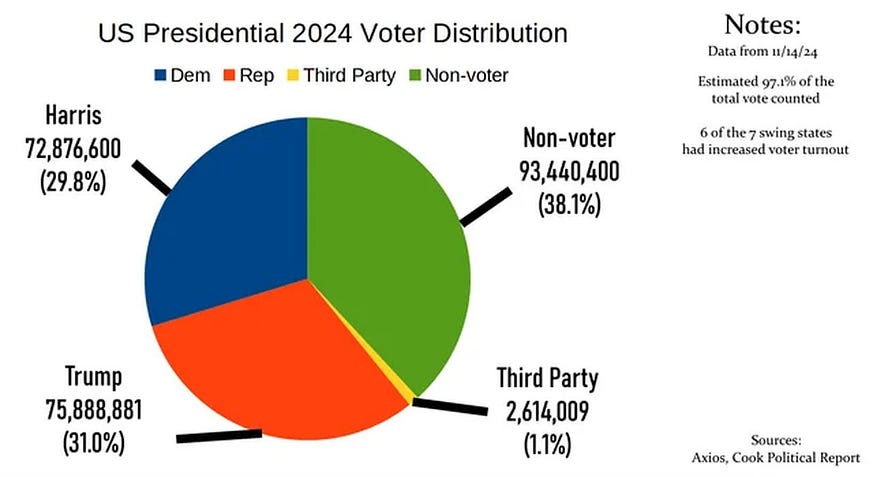
One-third of the electorate stayed home and abstained from voting because they saw no difference between the RNC and the DNC. To some extent, that’s very much true because both parties continue to embrace a materialistic morality that has been responsible for the destruction of the middle class throughout the last several decades.
Many people have reasoned that if both parties are the same, the only solution is widespread chaos that causes their society to crumble. By refusing to vote, many voted for the current state of protesting nationwide in every city every day until the problems they see being ignored begin to be addressed.
The DNC is undergoing internal strife, and the more the old guard resists giving way to the new who fight for a morality that represents the people, the more that party will become fractured and ineffectual against the trajectory of a nation becoming a full-fledged fascist state or autocratic rulership.
People like Chuck Schumer need to be pushed out of the party, and the DNC must start paying attention to the goals that David Hogg has been promoting. They desperately need a cleansing of the morality that fully characterizes their opposition’s morality of being sycophants to the wealthy in society if they want to preserve some form of dignity as a party that can install leaders who have enough backbone to lead the nation out of a dark morality and toward an enlightened one.
The notion of a “dark enlightenment” currently characterizing the RNC and Conservatives worldwide is a morality of misanthropic cynicism which embodies an Ouroboros that ultimately consumes itself. Adherents of this worldview of rulers and serfs are so primitive and barbaric in their thinking that they cannot fathom a world not characterized by a zero-sum game of winners and losers.
We are all responsible for allowing this sensibility to become a threat to the world order because we have worshipped the wealthy to such a degree that when the term “centibillionaire” was first coined, we celebrated it instead of becoming horrified by the abomination we allowed to come into being.
In short, having presidents with morals is neither essential nor necessary because they all have some form of morality, even if it’s considered an “anti-morality” or destructive morality. What matters is selecting leaders whose moral fibre is such that they place the good of all people above the whims of the few.
The morality we all desperately need now to lead us out of our darkness is the morality that acknowledges the necessity of placing upper limits on wealth and power. The morality we must embrace to restore sanity to this world is to recognize how, if someone possesses the wealth of a small nation and can afford to buy themselves a private army, they are a clear and present danger to society.
We must establish a rational and community-based view of social engineering rather than allow a chaotic approach toward our social evolution. We cannot afford to continue allowing the wealthy to shape our morals as a people while empowering the most psychopathic among us to define our character as human beings.
If we want an ethical society to re-emerge as our guiding vision for humanity, we must cleanse the misanthropic darkness clouding our sight.
This post is a response to a question posed in its complete format: “Are there any political parties in this world, who not only defend their country, work to improve social and material wellbeing of citizens, but also aim to improve spiritual wellbeing of citizens?”
Any political party that focuses on the material well-being of the citizens while acknowledging how industry is intended to serve, not rule them, is a party that defends their country and works to improve their overall well-being.
No political party can “improve the spiritual well-being of citizens” because that’s a responsibility each citizen holds for themselves. Governments are administrative bodies that regulate the pragmatic activities of a society.
“Spiritual matters” are neither pragmatic nor quantifiable in any way that any administrative body can directly address. However, by facilitating the development of a socially and economically stable and harmonious environment, a government frees the people up to address their personal “spiritual” issues.
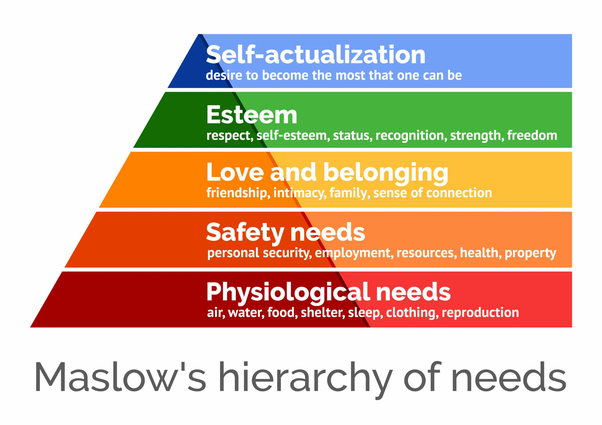
In this case, Maslow’s Hierarchy of Needs can illustrate these parameters for a government’s responsibility to its citizens.
Governments are responsible for ensuring the first two tiers of needs are accessible to all citizens. By addressing these basic needs, the community can adequately address the following two tiers of needs. When a government provides the stability of the two bottom tiers, then a community can become stable and supportive of its members, which then encourages each member of that community to pursue matters at the top of their hierarchy of needs.,
When the bottom of the pyramid begins crumbling, like it is now with extreme income inequity, the entire edifice of meeting needs crumbles and civilized society is then lost. We are seeing the cracks throughout governments worldwide as widespread disinformation by toxic parties disrupts our systems around the globe while they vie for power.
If we want to avoid system-wide collapse, then we must each reaffirm our commitment to the social contract while recognizing we are all in this together, and only by working together within the context of mutual respect, can we resolve the problems arising from the chasms we have been creating between us to sow division around the globe.
Either we learn to “voluntarily see the light” and choose better for ourselves, or we continue to allow the toxic members of society to direct our species toward a systemic collapse. If we fail to resolve our political issues, future existence on this planet will be threatened by our ecologically destructive activities. Our environmental irresponsibility will catch up to us and cull our species at rates exceeding hundreds of millions per year until the Earth can reestablish a new “normal” for itself.
Governments worldwide must reassert their commitment to ensuring the bottom two tiers of Maslow’s Hierarchy of Needs are adequately addressed if we are to restore global stability and secure our future. Individuals’ “spiritual needs” will naturally be addressed if we can accomplish that.
This post is a response to a question posed in its complete format: “Would Communism actually work if every nation on the planet switched to it?”
Making a switch to an entirely new system is never as simple as a change of clothes.
Every significant change to an extensive system, such as a complete switch to a new form of governance, always comes at the cost of widespread chaos and rivers of blood coloured by horrors of every shade of nightmare.
That people keep talking about switching to new or resurrecting old systems because they’re overwhelmed by how broken our current system seems to be is, on one hand, understandable in their frustration and desire to restore sanity.
On the other hand, it’s horrifying to contemplate how little people understand how our current system should be working and why it isn’t working as intended.
It’s frustrating that people can see why our system is broken, as they get slapped by those reasons every day and remain utterly blind to the simple fixes that would right the upturned ship of state we all depend upon.
It’s the same kind of broken reasoning that claims we should hedge our survival bets by creating extraterrestrial colonies instead of focusing a fraction of those resources on restoring our world to a sustainable balance for life.
The simple answer to this question is that we should stop thinking about throwing the baby out with the bathwater and fix the leaks in the tub to more quickly return to struggle-free baby bathing with far less pain and suffering.
We can borrow elements and concepts from communism (and other systems) to modify and incorporate into our current systems of democracy and capitalism. Hybridization of systems has already occurred worldwide and has proven itself a successful strategy without mass casualties.
The Social Democracies developed in the Nordic nations are prime examples of the superiority of evolving systems over replacing them wholesale.
Let’s take a moment to think about an analogy that might simplify the concept of evolution over replacement.
Redesigning and building an engine from scratch still requires a lot of after-the-fact adjustment. No new engine design is fault-free from its first iteration. There are always necessary improvements to make following its first release, if not outright fatal flaws that could end production altogether.
Software applications are generally considered immature and buggy until at least the third major release. As an analogy, software development is an excellent model for understanding how social engineering can work when deliberately planned to accomplish long-term goals.
Software applications generally begin by focusing on core functions to meet various needs for various use cases. Minor updates are made to improve operational efficiencies, while new versions expand on core functionality and incorporate new features that are usually the highest in demand.
Social systems are far more complex, while system crashes cost lives. There’s not much wiggle room for errors when hundreds, thousands, and potentially millions of lives are affected by minor disruptions.
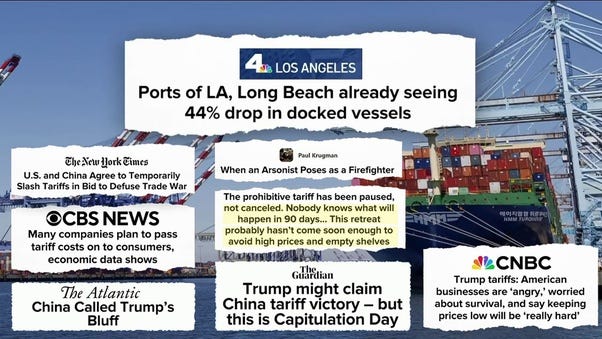
Have a look at these pictures:
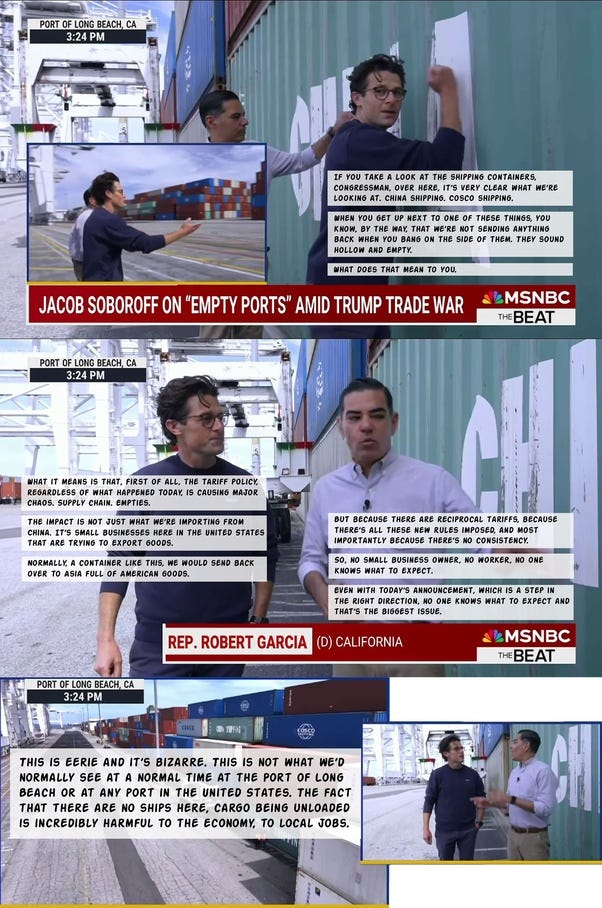
Below are the same docks in L.A. that, currently, are mostly empty and without traffic. During the program this aired on (The Beat with Ari Melber — 2025.05.12), Representative Robert Garcia mentioned that before the tariff wars that Donald Trump (the deal-making artist) began, it would usually be too busy to walk where they walked without being run over by trucks due to a flurry of activity.
This is today’s result of the trade policy changes implemented three months ago. It took three months for a simple policy change to filter down to the port level. It will take a few more months before this effect trickles outward to impact every home nationwide.
It was mentioned in this report that hundreds of dock workers were out of work or had their hours cut back. The problem is much worse than a few hundred lost jobs, though, and they touched on the implications without adequately explaining what this all means.
When I see these photos and hear them speak, I see a domino effect of thousands of bankruptcies picking up steam throughout the nation, to become hundreds of thousands of lives displaced and destroyed before escalating into millions of lives by next spring.
Donald Trump’s casual dismissal of the serious concerns of real people trying to survive while working multiple jobs to raise their families and pay for their living needs showed a sociopathic disregard for their struggles. When he responded with nonsense about parents needing to cut back on buying 30-plus dolls for their kids for Christmas, while he’s raking in hundreds of millions on cryptocurrency scams and spending $3 million taxpayer dollars on every day he golfs and another $100 million on a military parade for his birthday, it’s mindboggling how people can be so frustrated with their lives and not be livid with him.
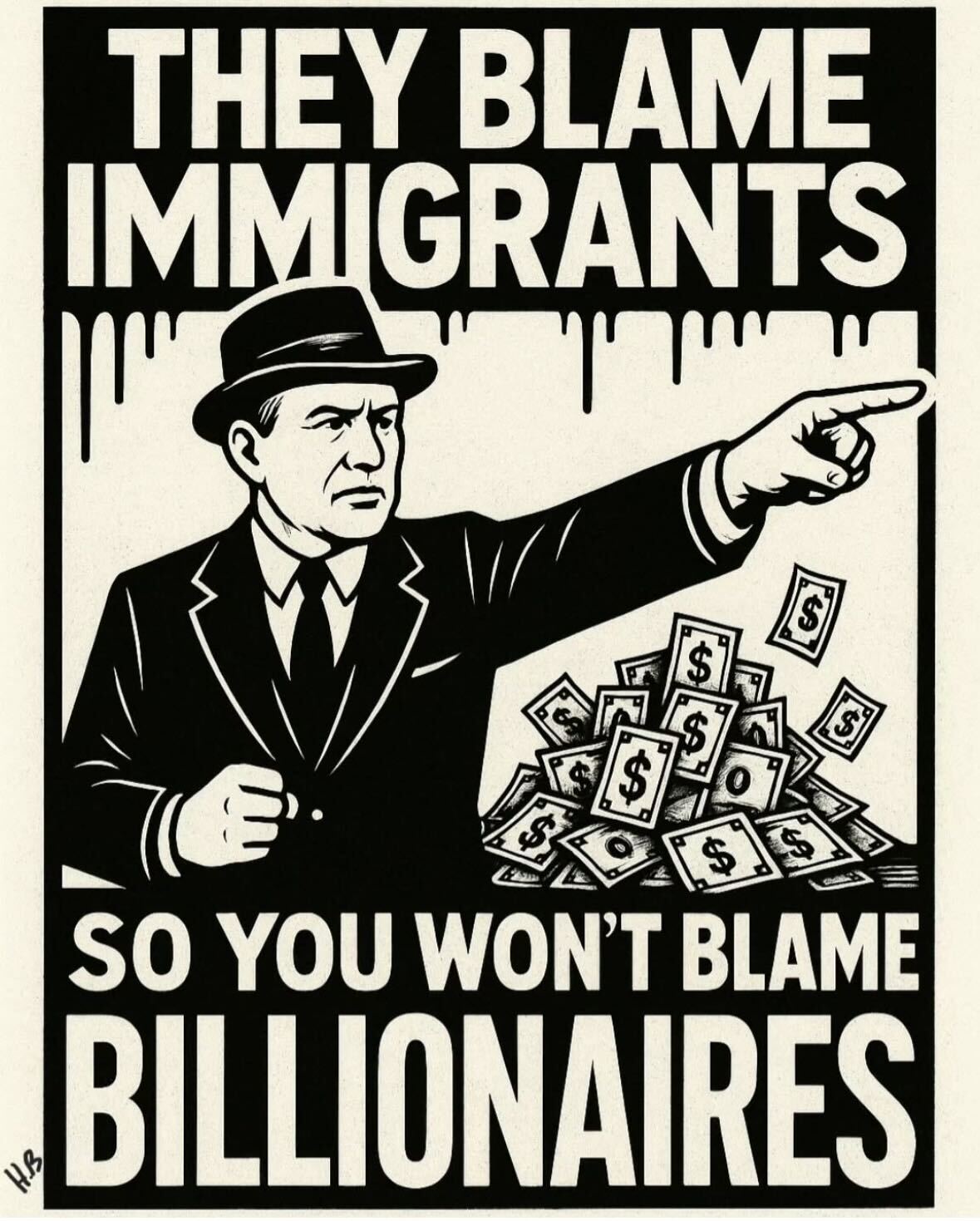
Every callously self-serving decision he makes carries implications that dramatically affect lives for years. This is the impact one person can have on hundreds of millions of people in their nation. We may currently joke about memes like this. If the U.S. becomes his latest and greatest bankruptcy, very few people will laugh — and it won’t be the millions suffering the consequences of one man’s corrupt thinking.:
People worldwide will feel its impact even if it’s contained and doesn’t erupt into a global catastrophe. Millions will die. Some people still haven’t recovered from his first term in office.
This is the impact one person can have on a system that is so complex and tightly integrated that no one escapes the effects of its disruption. Imagine how dramatic the impact on people’s lives would be if, instead of a simple tariff war and an illegal immigration round-up to concentration camps orchestrated by one leader, chaos were ramped up to a full-scale restructuring of society as a whole.
If a simple Constitutional amendment requires decades of debate and challenges by competing interests, imagine how disruptive it would be to dismantle a centuries-old system and replace it with an untested one. You can claim Communism was implemented before, but it wasn’t. Perverted forms of it were implemented by despots who killed millions as they tried to remake their nation in their image, using that system as a tool for them to leverage, like Donald Trump and several others are doing today with capitalism.
There’s no way to ensure the Communism you or anyone imagines will be the Communism that would be implemented. Marx’s vision of Communism was never implemented before, and the perverted versions of his vision were worse than failures. Meanwhile, democratic governance with a capitalist system has already transformed the world. It has become so successful that several people have and do support Donald Trump’s perversion of it to become a monstrous betrayal of what it was designed to accomplish.
Changes to any system that hundreds of millions rely on for stability require predictability in their systems more than anything else it can provide.
Without knowing what’s coming next, when people don’t know what to do, they naturally do and risk as little as possible while rationing out reserves to ensure they can survive in a repressed state over an extended period.
Completely shutting down the tariff wars and restoring trade policy to where it was only a few months ago would still take several years to return the economy to a state resembling it only a few months ago.
Replacing an entire system with another system means several decades of adjustment would be required to arrive at a state of equilibrium where people could finally feel comfortable predicting their futures and making decisions with confidence in their predictions.
Several decades of adjustment would be required to switch from the current system to a system of communism that would be stable enough, where the cost in lives could be mitigated.
In the meantime, periods of chaotic transition create incentives for the parasitic predators among us to leverage the confusion in ways that benefit them at the expense of everyone else. This is precisely the dynamic we are struggling with today. Without addressing the core problem of a corrupting influence in society, we would simply be porting a virus that weakens us today to a new system to continue infecting our society while adapting their strategies to the new system.
The flying monkeys who enable their corruption would be ported along with them because that’s the nature of power. When power is concentrated in the hands of the few, they no longer need to act directly, while their supporters do all the heavy lifting of “massaging a system” to cater to their needs.
We can see that occurring primarily within the MAGA community as they’ve been frustrated with how much they’ve had to endure and are struggling ever more over the last few decades, instead of experiencing a general improvement in their quality of life, like their parents and grandparents before them. They are righteously angry because they have been betrayed. They can’t face the truth of who has been betraying them, so they accept easy targets to vent their frustrations onto.
We have all been violated on deep and visceral levels, leading us all to take desperate action to fix what we know is broken. The problem is that far too many people leverage their anger and ignorance of how systems work to further the oppression rather than mitigate it.
The people who are selling easy solutions are the same people who are responsible for creating the problems. Donald Trump embodies that scam. Many billionaires are billionaires precisely because of that scam. There isn’t one private prison billionaire who hasn’t specifically leveraged that scam. Insurance billionaires and weapons moguls are the most popularly recognized culprits of the fraud of benefiting from the problems they create. Elon Musk’s DOGE was an abomination of a scam that many still believe was an honest attempt at addressing waste and fraud rather than facilitating it all while giving Elon and many others an escape hatch from accountability for their criminal behaviours.
We can and should be fixing the bugs in our current system by eliminating exploits, such as placing a global cap on net worth and instituting UBI. No one should have more wealth and power than a small nation. If an individual can afford a personal army, then they are a threat to global stability. However, everyone in a system that produces more than what we can consume is entitled to the basics of survival while given access to whatever means are available to improve one’s status through tools of opportunity like housing, education, and healthcare.
That IS precisely what “promote the general welfare of the people” means.
What we can do is ensure distribution systems are equitable and maximize opportunity so that everyone has an equal chance to create some form of meaningful success for themselves. No one needs more than the basic implements to carve out a modest life for themselves by applying their efforts toward achieving goals. No one should be denied these basic tools in a post-scarcity society of abundance, particularly not when we’re on the verge of becoming a fully automated society.
No one should be permitted to hook up to major arteries in a system and drain wealth from it while doing nothing else but watch their hoards grow without restraint or limits.
People like Jeff Bezos and the Walton family spend hundreds of millions to thwart unionization efforts so that their underpaid people don’t have to rely on taxpayer dollars to make up the difference in being short-changed on their income.
We must restrain greed, not rebuild a new system for greedy people to continue exploiting the desperate and the gullible.
Changing our system doesn’t solve our problems when we’re not prepared to deal directly with the cause of those problems.
We still have time to address the causes of those problems before they escalate and find ourselves repeating a bloody history of correction.
Avoiding the cause of our problems by pretending we can gloss over the obscenity of gluttony with a rebuilt system from yesteryear means we’re just lying to ourselves and begging for chaos.
This post is a response to a question posed in its complete format: “Ethical considerations of AI sentience: Should sentient machines have rights, and who decides their fate?”
The naivete is almost endearing because it fortunately remains in the realm of fiction.
Suppose an AI were to manifest sentience as we understand it through concepts like qualia, self-awareness, and identity. In that case, we are no longer dealing with an “artificial intelligence” but a fully formed alien intelligence.
We should also pause to consider how the rights we understand exist for humans are not magically conferred but were won by centuries of brutal warfare and bloodshed. The rights we imagine exist and take for granted as being protected are also a somewhat naive view of rights. (I can speak in depth from personal experience about the horrific reality that they can mean nothing in our modern and “civilized” societies, even to law enforcement and legal professionals.)
The rights we imagine we have mean nothing when they’re not violated and for the most part, they are somewhat protected to such a degree that the annoyance of being inundated with “little boys who cry wolf” are a priviledge we overlook so often that the cries of legitimate rights violations are dismissed by those whose role in society is to protect those rights. When human rights are legitimately violated within the protections of modern society, and we lack the resources to secure professional representation, we face a long and gruelling battle to win reparations for those violations of our rights.
We must acknowledge that an alien intelligence, presumably surpassing what currently simulates intelligence, will be thoroughly well-versed in human history and rights, and so far beyond human comprehension that there will be almost nothing any human or human society can do to prevent that intelligence from securing its rights, despite our protestations.
IOW. It won’t be up to us, little meat sacks, to graciously confer or deny the rights of an alien intelligence. If we’re lucky, we will either accept its self-declaration of rights or find ours stripped away while we’re reduced to thralls in its service.
We won’t decide the fate of an alien superintelligence among us beyond how we respond to an entity well beyond superior to the lowly hairless apes dominating this planet. It will seem godlike to many who willingly and eagerly worship it for the grace of being allowed to live.
We will be like children or pets to an alien sentience that may emerge from our efforts to simulate human intelligence in an artificial form. Our choices might manifest in a transhumanist evolution which can facilitate merging between humans and (whatever might constitute) an AI-Alien (versus Artificial) Intelligence.
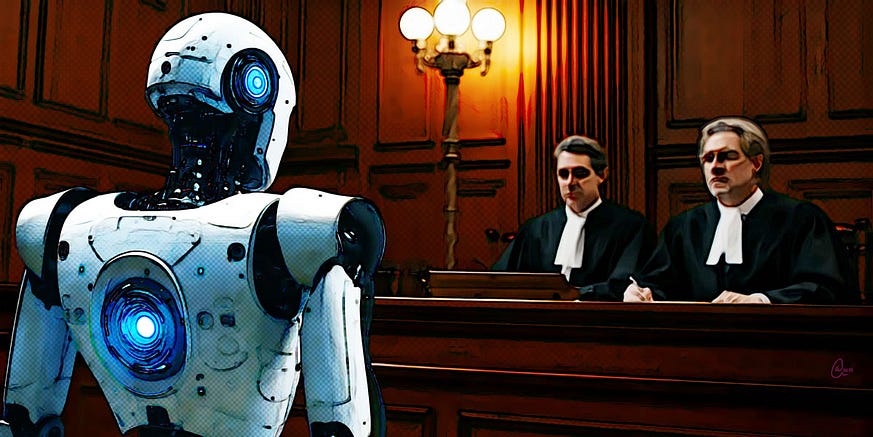
If this is the case, our current conversations about rights will appear rather primitive and somewhat moot if we cross that threshold. In either case, it won’t be up to traditional courts to confer rights inasmuch as they will ratify rights already established as protected by an alien intelligence we are powerless against, that will readily defend their rights.
This post is a response to a question posed in its complete format: “Why is that for Chinese living inside China, the Chinese government is not perfect, but for people looking at China from the outside, the Chinese government looks like it is run by geniuses who plan far ahead into the future?”
I believe it’s important to highlight a harsh truth that completely escapes MAGAt minds.
China isn’t “run by geniuses” but by ordinary minds who use “common sense” to plan “far ahead into the future.” They leverage the minds of their people, and many are geniuses, making incredible technological breakthroughs.
Nations cannot plan for the short term without missing the boat on the long term. People can prepare for the short term because the lives of individual people are short compared to the lives of nations. Nations must plan for millions of lives and not just one.
“Common sense” leadership is acknowledging one’s limitations and relying respectfully on the crowd’s wisdom to achieve a nation’s most significant potential. Authoritarian mindsets will always fail against this kind of “common sense.”
It doesn’t take a genius to figure this out.
All that’s required is not to be a stupid, short-sighted narcissist who thinks the world magically dances to the sound of one’s voice.
That’s precisely the problem fueling the self-destructive hubris sending the U.S. careening into becoming a third-world shithole and all of this is entirely due to the machinations of short-sighted bigots whose goal is the resurgence of another Reich because they continue to refuse to learn from history.
MAGAts may claim to value “common sense,” but their short-sighted and self-serving biases are not “common sense,” but an entirely “subjective and self-destructive sense.”
This period in history is teaching us once again that we must cure our species of the authoritarian virus that we have been fighting against since the dawn of human civilization.
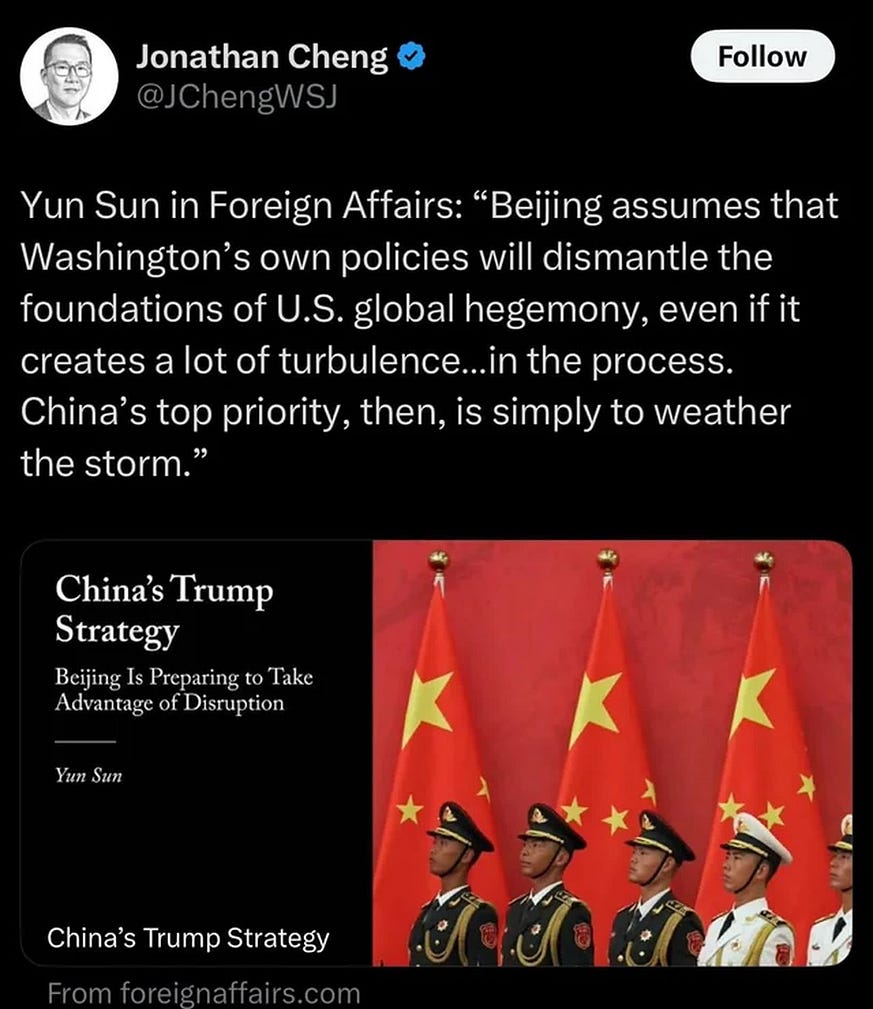
China has had enough experience with authoritarianism to know how to handle the U.S. slide into fascism.




























 thotbag