What strategies could eliminate extreme poverty?


This post is a response to a question posed in its complete format: “What are the most promising innovations or strategies today that could sustainably eliminate extreme poverty within the next generation?”

Thank you for the A2A, Faux-Bill. It is well beyond obvious that you are not the OG Bill Gates but a pretender. Whatever motivates you to disguise yourself as him and pose questions that he never would in such a forum is rationalized as a strategy for gaining attention that you believe you would not otherwise get.

I don’t believe questions like these require the kind of “celebrity boost” you’ve attached to them because I’m sure many people are thinking about these issues. Many politicians sadly believe people’s thoughts on these issues are irrelevant to their societal role. Nothing could be further from the truth because most of the world’s citizens sincerely desire an end to unnecessary strife across the globe.

Only the most psychologically scarred members of society wish harm to people on the other side of the globe or in the dingiest parts of their cities.

Even though people know this is a fake profile and that many would overlook this question based on precisely that, some people will still step forward and offer their views. Their answers support what I just said about people wanting to see change for the better, particularly when it is within our means to eliminate extreme poverty today.

Sadly, many politicians fail to comprehend that we are in this together, and that together means all of humanity must work toward common goals, such as eliminating poverty for it to happen. Even worse is that success requires our politicians to play the role of leader in society in earnest rather than as a performative lark to disguise their motivations for personal gain.

Far too few view their role beyond the boundaries of gamesmanship within the local jurisdiction of interpersonal dynamics of cliques, such as those commonly found in high school environments. They perform for each other and to the public at large. At the same time, their functional contributions are limited to shuffling game pieces in a subsection of the larger gameboard of their political community. Forget about communities elsewhere. That would constitute effort in thinking about and doing something about something elsewhere that isn’t directly connected to the influential factors governing their daily lives. Indirect connections don’t factor into their minds.

Here’s an obvious example of the complexity of dynamics that not enough people consider in their thoughts about how to improve our world and address issues like extreme poverty on the other side of the globe:
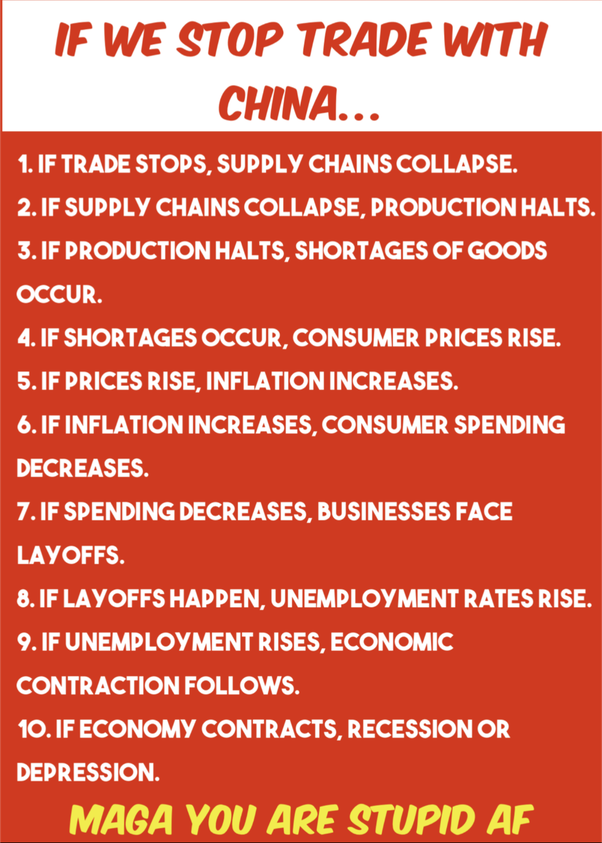
In this simple description of consequences, ten interconnected steps are outlined to arrive at the fundamental message that closing a door to a trading partner out of spite hurts oneself more than it hurts the trading partner.

China’s economy will contract briefly as it adjusts to a new reality. Americans, however, will suffer more in the long term because this attitude of bullying one’s partners closes off many doors of opportunity.

The same is true with the global tariff tirade and betraying a long-standing alliance with a supportive partner. Isolationism hurts the isolationists more than it hurts anyone they reject, and that’s where we’re at when considering issues of extreme poverty on the other side of the globe.

It is, unfortunately, too easy to rationalize how those problems “over there” are not one’s concerns here, but the reality is that poverty exists here as well. It’s just an arguable point about which is the easiest to ignore.

As you can see from the variety of answers given to this question and the variety of questions similar to this one, along with all the many other answers given to those questions, people want to solve this problem.

This brings us to the core problem at the heart of why the problem identified within this question persists.

The sad reality is that the core problem is YOU, Bill.

You and the existence of centibillionaires in today’s world are the reason why extreme poverty persists.

I understand how easy it is to rationalize your business successes as justification for having superior insights that can function like a paternalistic entity that can guide the little children of humanity toward a brighter future. I understand your rationale for the sheer capitalization required to provide the world with ecologically superior toilets. Still, you already know how you managed to distribute millions of life-saving nets in underdeveloped environments only through synergy. You relied on many people to rally behind your cause and donate whatever small amounts they could to solve a serious problem affecting millions of lives.

You made that happen, not with your capitalization but by leveraging some of your resources, connections, and celebrity status to mobilize people worldwide to provide a simple solution to a destructive problem.

Suppose you and the rest of the world sincerely desire an end to extreme poverty. In that case, there is only one solution, which begins with triage to stem the bleeding of resources that could collectively resolve the problem instead of exacerbating it, as has been the case due to extreme economic disparity.

The most successful way we have been in eliminating poverty worldwide as a society and a species has been through the massive growth of the middle class, as we experienced following the Second World War, FDR’s New Deal, and the development of unions.

By empowering the middle class with disposable income, we boosted economic performance along many vectors that were also boosted by force multipliers, which spread outward in orders of magnitude beyond what is possible today with coalesced wealth.

The existence of centibillionaires has made the goal of eliminating poverty impossible because this historically destructive concentration of wealth creates poverty through a contraction of available economic resources once wielded by hundreds of millions of people.

You know this. At least, the real Bill Gates does… as does every billionaire around the globe.

You cannot become a billionaire and be oblivious to how your concentrated wealth is a deprivation of wealth for others.

None of you is blind to this.

Since it’s taken decades of erosion of the gains that took a capitalist system decades of growth to achieve the highest level of poverty elimination, reversing that damage would mean decades of effort we don’t have the luxury of taking without experiencing a system-wide collapse.

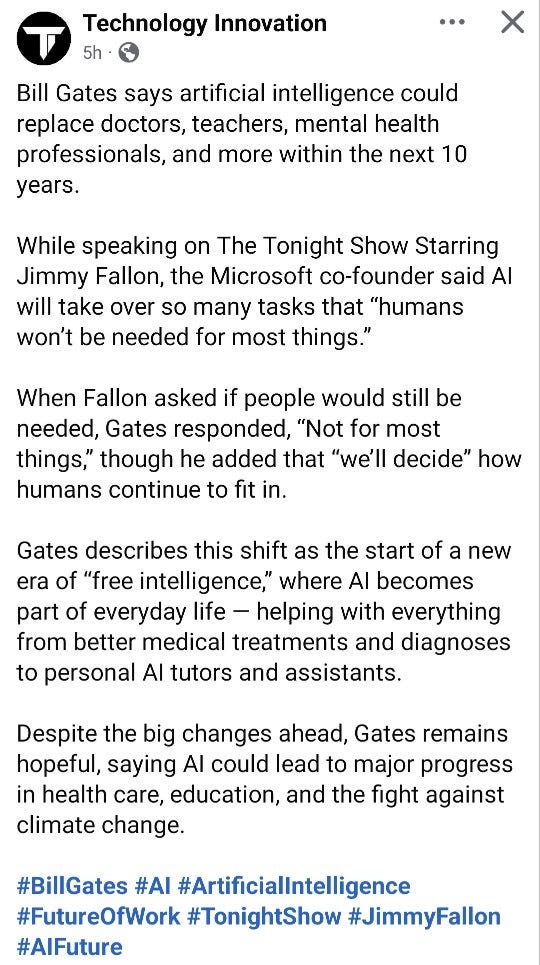
We need bold efforts and fundamental changes to the economy and structure to meet a rapidly changing employment dynamic. We have no choice but to retool our economy before an increasingly rapid transformation toward fully automated societies where most production is performed in dark factories.

Suppose we don’t institute bold changes today. In that case, the transition will result in massive numbers of collateral damage that will be responded to with system-wide chaos because people will not shut up and die quietly as they find themselves starving for food and made homeless. When people have nothing left to live for after having their means of survival stripped from them, they become radicalized to such a degree that they are like cornered animals and will bring much destruction to the world before they exit it.

We need to reverse course on the corrosion done to our economies through the problem of wealth disparity yesterday. This should not be a debate today; if you were the real Bill Gates, you know this.

There isn’t a single billionaire who doesn’t understand this. You are all also hedging your bets while, like every cowardly politician who doesn’t want to risk their comfortable positions, none of you want to be the first to acknowledge what needs to be done. Your reticence is understandable because your community is primarily dominated by sociopathic thinking. It would behoove you to remind your peers that each passing day this nightmare of disparity remains unaddressed is a day closer to the massive unrest that brings out the guillotines.

This brings us to the core concern driving this question.

Which strategy is the most effective resource to invest your attention?

What singular and most expediently implemented solution can effectively stave off and resolve the growing pressure leading to widespread chaos?

That’s easy, and you already know the answer… if you were the real Bill Gates.

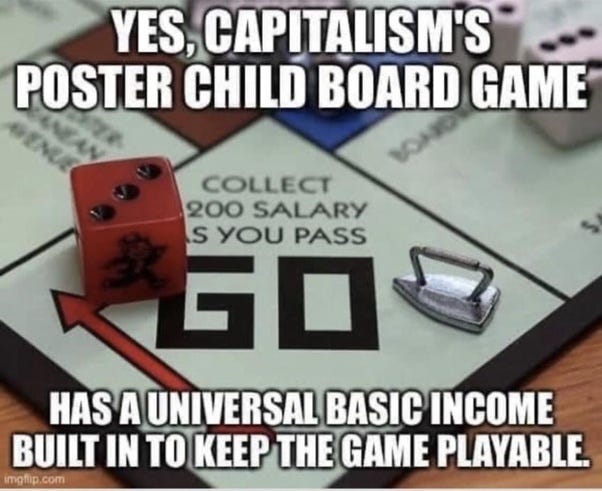
Reset capitalism like a Monopoly board.
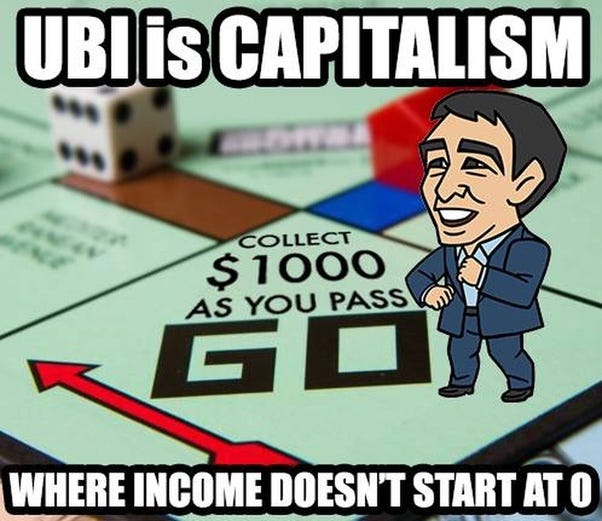
There’s been enough testing to know this is THE solution to restore economic justice and dramatically impact poverty worldwide.

You already know this.

The only real issue at stake is the best means of implementing it.

Here’s a link introducing the various issues to consider with costing strategies that can be discussed earnestly. These are just details to work out. The result, however, is a stable economy that can eliminate poverty worldwide while eventually making performative forms of altruism moot.

However, every one-percenter should champion this solution in principle in earnest today, particularly if they want to avoid the chaos that risks them losing everything.

How to Calculate the Cost of Universal Basic Income (Hint: It’s Not As Easy As You Might Think)


Update:

How did great inventors get ideas for their inventions?

This post is a response to a question posed in its complete format: “How did great inventors manage to come up with the ideas of their inventions? Currently, even people who are smarter than the average are hardly able to do the same.”

Think about the last time you had an idea you thought was an excellent solution to a problem you were dealing with. Do you remember feeling frustrated with that problem and fixated on that problem while hoping a solution would present itself so that you didn’t have to deal with that problem again?

My guess is that almost no one goes through life without this experience. It may be true that you haven’t, but the odds are excellent that you will at some point in your life.

”Great inventors” are no different in this regard. They ponder issues, identify problems, and think about ways to devise solutions to those problems. The only difference is the kind of problems they solve.

Suppose you can solve one of the numerous problems facing the development of nuclear fusion as an energy source. In that case, you can be considered a genius for accomplishing that relatively small contribution to a more significant problem. If you can solve all the “little problems” that comprise the more substantial problem of nuclear fusion energy generation, you will become known throughout history as a “Great inventor.”

The only difference between the two is one’s problem-solving capacity. Some people are undeniably much better at solving certain classes of problems than others, but that doesn’t negate the value of the contributions of those who solve only one or a few aspects of a more significant problem because their solutions can contribute to the development of ideas that solve many problems at a time — including the much more substantial problem.

People of all levels of intelligence, from under-average to average to above-average to geniuses, contribute toward solving the massive problem of human evolution. All contributions are valuable, while people like Einstein are rare and always will be.

What we should be focusing on in society is to learn how to recognize budding geniuses and support them in their development so that they can maximize their contributions to society by achieving their potential.

Sadly, we live in a world which penalizes the gifted while wallowing in our crab psychology by the wilfully ignorant among us who drag down those whose gifts they envy. That’s a much bigger problem for society to resolve, and it will require all eight billion of us to recognize how severe that problem is.

In reality, Einstein-level geniuses may be rare, but they exist among the population at rates as high as one in every thousand humans. In a world of eight billion people, that means we have eight million Einsteins living among us whose genius is being pissed away because we don’t know how to create systems that encourage them to achieve their potential.

Our system is so corrupted by toxic forms of competition that we see in our politics how people forego their critical thinking skills or any form of objective analysis to select the most competent leaders to lead us into a brighter future. We choose monsters who would destroy us all and fill their pockets with money that will be useless to them if they succeed.

If we sincerely wish to live in a world that encourages great inventions by inventors, we must stop rewarding maliciously self-serving and destructive ignorance.

Why work if you can live on benefits?

This post is a response to a question posed in its complete format: “What’s the point of working if you can live through getting “benefits”?”

You’re asking the wrong question.

Instead, you should ask, “What is the point of living like a lazy slug who accomplishes nothing and does nothing to make themselves feel good about themselves or their lives?”

That’s what you’re implying with your question.

You imply a false dichotomy between living one’s life based on laziness rather than doing what motivates them or submitting themselves to an abusively dehumanizing existence as a disposable cog to make someone else rich while struggling with one’s self-respect.

Life isn’t a choice between working and not working. It’s a choice between employment as a wage slave or generating an income for oneself based on doing what matters to them and which motivates them to be excited about their lives.

Employment used to be a motivator when the income generated enough to go well beyond meeting basic needs and into enough disposable income to invest in one’s future.

That’s no longer the case.

Employment today is the equivalent of a lifetime of dog-paddling in an ocean until one gets too tired and drowns.

That’s not a life. That’s a lifetime prison sentence.

What’s the point of struggling in poverty until you die to make someone else wealthy when you can be much happier and less stressed while doing what you love?

Bonus Question:
Should there be a universal basic income to address economic inequality?

UBI doesn’t address the issue of economic inequity, and it isn’t intended to.

UBI provides economic stability and gives people room to make the best choices for themselves without having a desperate need to survive leveraged against them.

UBI frees people from the pressures of meeting basic survival needs enough to escape oppressive working conditions. The consequences of businesses losing the leverage of economic desperation to create downward pressure on wages can more easily permit upward pressure on wages.

This change in a negotiating dynamic contributes to a reduction in economic disparity, but it doesn’t address it head-on.

How can a society allow everyone to succeed?

This post is a response to a question posed in its complete format: “How would you design a society where everyone has the opportunity to succeed?”

Until Ronald Reagan and Margaret Thatcher, humanity was well on its way to perfecting that democratic society in which everyone had a reasonable opportunity to achieve class mobility and a basic form of success that permitted a life of dignity with what was characterized as the “American Dream.”

A mortgage on a house with a surrounding picket fence, a vehicle, a family with 2.5 kids and an annual vacation wasn’t only possible but virtually guaranteed to anyone who made the effort to earn it.

They betrayed the entire middle class around the world to curry favour from the wealthy who have long desired a return to a barbaric age of kingdoms with rulers and disposable serfs.

We failed to modernize the one institution that has proven itself the greatest threat to the goal of an egalitarian society, industry.

Almost every other entity in society is a democratic body. Corporations, however, are holdovers from a medieval structure of rigid hierarchy fraudulently appointing members to an inner circle of power, allegedly based on merit, while elevating those who support their corrupt application of power.

We can repair this mess of corruption with only a few fixes, but one of the most important and most easily overlooked solutions will be a difficult challenge to implement. It will (and has been) meet(ing) massive resistance by those who most adamantly refuse to give up their power, as it involves restructuring how corporations exist and do business in society.

We can quickly implement numerous initiatives today, such as UBI, Universal Healthcare, and Universal access to education, that will have long-term implications leading toward much more stable societies that can guard against corruption.

Other initiatives, such as a global cap on personal net worth and restructuring industry into democratic institutions, are potentially much more disruptive to society. We are, however, fortunate to find ourselves amidst a radical transformation into full automation throughout every level of society. This transformation will allow us to restructure political systems while increasingly democratizing society and flattening global power structures.

The only way to ensure society can facilitate opportunities for everyone to succeed is to flatten power and spread it across the globe to the people. At this stage in our history, our existence faces an existential threat due to the corruption of disproportionate power running rampant throughout society. It may be the case that we will have to rely on historical inspirations to repair the damage the wealthy class has done to society and make reparations for their betrayal of the social contract.

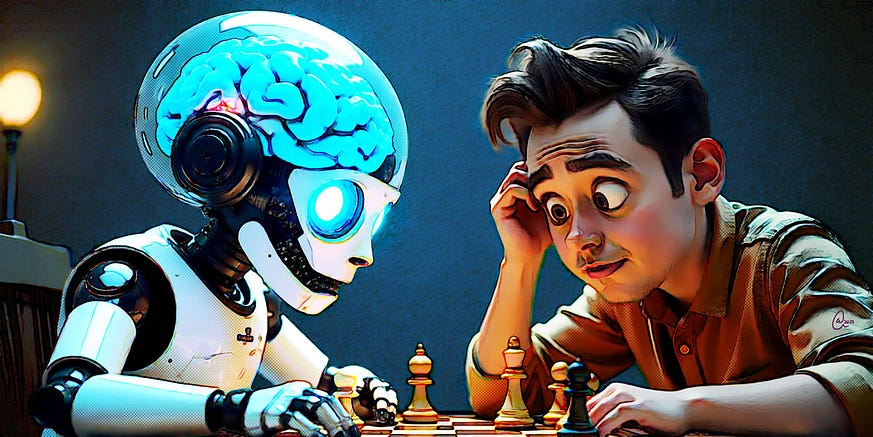
Can AI surpass human intelligence?


This post is a response to a question posed in its complete format: “Can AI surpass human intelligence? If so, what are the risks and benefits?”

The problem with this question is that it presumes humans possess only one form of intelligence or that intelligence exists in only one form.

That’s not the case at all.

An AI already surpasses the human capacity for numeric intelligence, but emotional intelligence is entirely outside its capacity… for example.

Then there are other forms of intelligence that we still don’t understand and barely recognize. Cultural intelligence and curiosity are also forms of intelligence displayed by humans that we’ve some understanding of, albeit limited, as we’ve only recently (less than 40 years) come to recognize these capacities as forms of intelligence, which are still disputed in some circles.

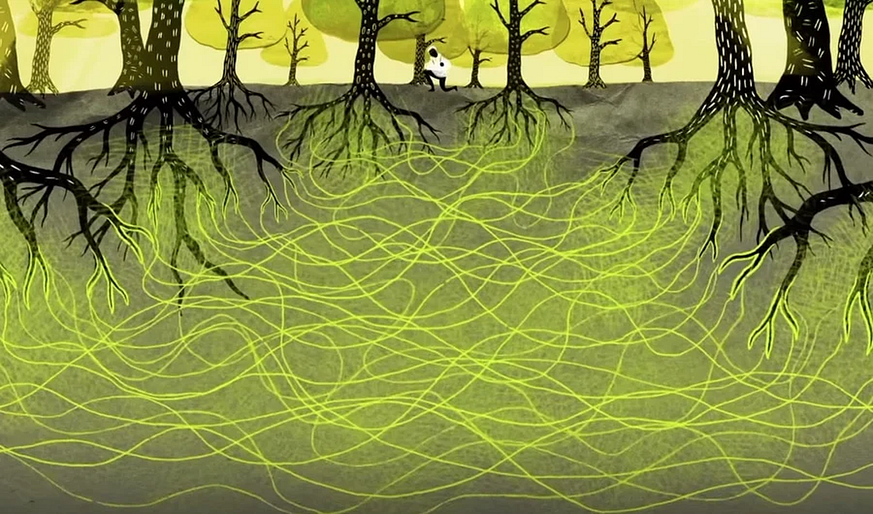
The forms of intelligence we discover in nature make matters more complicated, such as trees communicating among each other using a limited vocabulary transmitted through their root structures.

The intelligent fungus has gained public recognition as a unique phenomenon, capturing attention and spawning a popular video game, with the second season of its television adaptation set to be released. (After the first powerhouse season, I am looking forward to that one.)

At any rate, what we will likely discover as AI evolves, and whether it presents itself as a self-aware entity, are entirely different forms of intelligence.

We still don’t fully understand intelligence, so it’s rather presumptuous to pit forms of intelligence against each other, like comic book characters, to see who would win.

It’s impossible to predict who would win if we can’t identify all the forms of intelligence available to either party and the context in which their “combat is waged.”


Bonus Question: Is ChatGPT capable of understanding emotions or empathy?

Answer: Sure… in the same way your potato peeler understands potatoes, even though it may sometimes confuse them with carrots.

How do we deal with Fox media lies?

This post is a response to a question posed in its complete format: “How do you deal with a family member who believes everything that Fox News says?”

I remember as a kid how futile it was to explain to my parents that wrestling on television was fake.

They would point to the blood they saw and use it to prove it was real.

It didn’t matter in the least what was said to them or what was pointed out as an obvious ploy or staged athletic move; they refused to acknowledge the truth of the fraud the rest of us kids saw in the wrestling performance.

Making matters more convincing that it wasn’t an argument worth pursuing was how their agitation quickly escalated into anger if we persisted past the point of their capacity for maintaining patience with their annoying children. We learned that once we detected visible signs of anger, it wasn’t worth the effort to push them any further. By that point, the conversation had escalated into a frightening experience.

We eventually gave up and decided there was no harm in letting them believe whatever they wanted to believe.

Fox is an entirely different matter because its effect on their audience has contributed to a nightmare affecting the world.

I suggest one does not bother addressing the issue with one’s family because even if one succeeds in helping them accept reason, that victory has little impact on the severity of the problem Fox poses in society.

Addressing Fox as a threat to national stability and security is essential. There could be several approaches to addressing this problem, and one of them could be an aggregated accounting of behaviors exhibited by Fox adherents, collected by family members to construct a compelling argument for affecting legal change and influencing the media as a whole for the benefit of society.

My view on news media in society is that there is no justification for consolidated enterprises serving a profit motive. The Fourth Estate is a critically important entity within a democratic society that must be capable of earning and maintaining the public trust. That is impossible when their mandate is to serve the billionaires who are the existential threat to our democracies that we now face.

Let us take a page from the peer review process applied within the scientific community, ensuring integrity throughout the science discipline and the scientific community.

Matching the scientific community’s level of granularity in self-policing is as simple as breaking up large news media enterprises into community-based and locally-owned operations.

The more numerous the entities that represent the Fourth Estate, the more able they can become in ensuring the public is well served with a diversity of perspectives that can achieve a far more objective delivery of information than is possible through the lens of a billionaire who controls the dissemination of information with a self-serving agenda.

Funding for individual operations could be coordinated through a crown corporation that provides administrative services, such as an access point for advertising and a payment system modeled on existing systems, like Medium, where payments are distributed based on readership and engagement. Graduated access levels could be permitted, and stories can be assessed on a scale of widespread need for distribution versus content catering to niche markets. Public and subscription-based funding could support a system for disseminating critical information to broader audiences, ensuring everyone can access news crucial to their lives.

How can we have infinite growth on a finite planet?

This post is a response to a question initially posed on Quora, and can also be accessed via “https://www.quora.com/How-can-we-have-infinite-growth-on-a-finite-planet/answer/Antonio-Amaral-1

It’s not possible.

We have two options for maintaining growth, and one isn’t so much about preserving growth as it is about shifting to new growth areas through a lifecycle management strategy.

The (conceptually) simple model (but prohibitively expensive strategy) for unlimited growth is expanding to an extraterrestrial existence where we can justify an ever-expanding population and theoretical market.

This strategy, however, is not as linear as some may want to make it out to be. Sure, movies filmed on Earth will be consumed by lunar, asteroidal, and Martian colonies, theoretically supporting unlimited growth in those niches. Entirely different markets, however, will need to be created to meet the needs of off-planet living.

Massive resources will have to be shifted toward small markets, making products prohibitively expensive in ways that restrict extraterrestrial expansion.

For example, bone density loss is a dramatic medical issue for an off-planet existence. About one to two percent of bone loss occurs monthly in space, whereas that figure applies to an annual bone density loss for people of advanced age on Earth.

That’s a dramatic biological hurdle to overcome and represents a tiny issue in the vast array of issues humans would have to overcome to sustain off-planet colonies. Making matters more complicated is that colonists face different biological challenges in each environment, from asteroids to lunar to Martian to Venusian cloud colonies.

Adaptation to each environment represents significant investments in biological issues, while the simplest solution is to transition humans from biological to mechanical forms. Convert humans into cyborgs.

Suppose people struggle with tattoos and body modifications today. In that case, one can imagine the sociological implications of leaving our humanity behind to live in a desolate environment without a healing embrace of nature.

So much for option one of unlimited growth.

Option two is riding the wave of technological change and managing technology lifecycles. Unlimited market growth would be achieved by pivoting from end-of-cycle industries to emerging industries that supplant them.

It would be like planning an economy around growing an industry that creates old-style typewriters with an expected lifecycle while anticipating the advent of electronic typewriters with a finite lifecycle that anticipates computers, etc., while hopping from one end-of-cycle industry to another emerging sector.

This is problematic for two reasons, one is that it would be impossible to anticipate computers while still at the stage of an Underwood Typewriter. At that stage, anticipating IBM Selectrics might be possible because that’s a linear progression of technology.

The advent of computers, however, was an unpredictable and utterly disruptive technology.

That’s where we’re at with AI. We have no idea where it will take us, nor how its integration into other technologies like robotics will transform the marketplace.

Unpredictability is also a significant issue in the energy sector because we have many options. Many are in the early stages of implementation with evolutionary hurdles to overcome. Many are in a nascent development stage that shows promise but are still not ready for commercial applications at any scale. We also have high hopes for transformative breakthroughs like fusion energy, for which we don’t know when we will achieve viability.

All this makes planning a perpetually growing economy much like lassoing and riding a tornado like a bucking bronco.

The second and more challenging reason this is problematic is that it doesn’t involve logistics but politics. We can see how that dysfunctionality fails to work in today’s world. The fossil fuel industry is well aware of the environmental damage it does, and how much of a threat it is to biological life on this planet. Yet, no significant energy organizations are spearheading incubation efforts to fund alternative energy initiatives.

They all maximize profits with existing (and predictable) methods while offloading risk to smaller operations they can assess for leveraging a predatory appropriation strategy.

They won’t invest in breakthrough technologies until someone else can achieve market success on their initiative.

Taking this risk put Elon Musk on the global radar of being perceived as a real-life Tony Stark with Tesla Motors.

The reality of today’s world is somewhat predictable on a macro scale in that society is undergoing a massive transformation on fundamental levels.

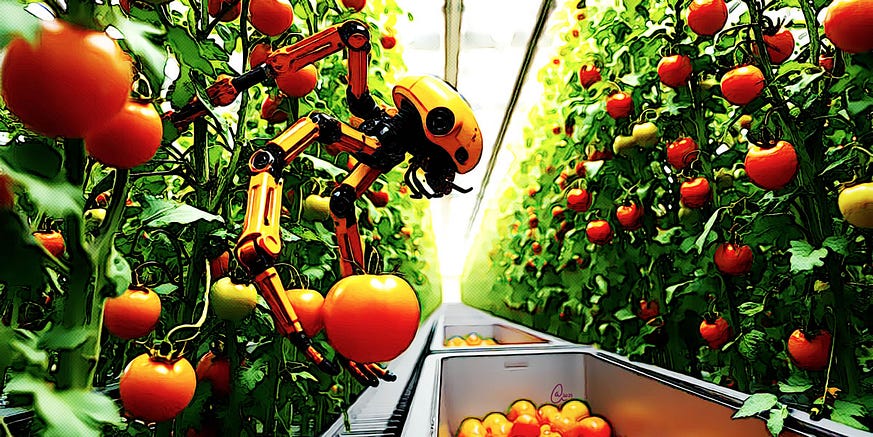
Dark factories are already springing up where all the production work is automated. On-site work like construction is well on its way to being performed by humanoid and other specialized function robots.

Transportation and delivery industries will also be shedding human labour. Stores and shopping malls may continue existing, but fewer humans will be available for assistance while technological solutions replace humans, even at the cashier level. Shoppers will be able to walk into a store because they’re bored and feel like going for a walk to pick up some coffee and snacks from shelves and walk straight out the door with their products in hand as the store sensors record product information and deduct the cost of the products automatically from one’s account.

All necessary physical services will be performed through automation solutions.

This will radically transform the economy in ways where people will create trade relationships for customized products and services on a more minor scale that focus on developing interpersonal relationships rather than supplying generic consumables.

This will become an era of transformative creativity. People will choose to purchase highly unique rather than mass-produced products for market niches that can be addressed through small-scale production processes.

We will transform from a market economy relying on endless growth into one that balances high-volume generic production and customized artisanal products.

We will have more time to focus on social interaction and community development initiatives (which will positively affect our self-governance efforts). Because survival will no longer depend on a servant relationship with an employer, we will see a more egalitarian society based on a much more valid basis of merit than the subjective favouritism characterizing today’s corrupt autocratic corporate culture.

The notion of infinite growth will naturally recede from priority status to an antiquated model of unsustainable development corroding our social fabric.

Infinite growth will eventually become irrelevant, while sustainability and balance will become priority values.

Is space itself a potential intelligence?


This post is a response to a question posed in its complete format: “Should consciousness, like its physical body, be created from stardust? Wouldn’t that mean that space itself is a potential intelligence?”

I began by answering this question by referencing “Integrated Information Theory.” While refreshing my mind with concepts derived from this theory, I was inspired to ask ChatGPT a question:

My Question: Does “intelligent fungus” — i.e., fungus demonstrating forms of intelligence- contain structures analogous to neuronal microtubules in the human brain?

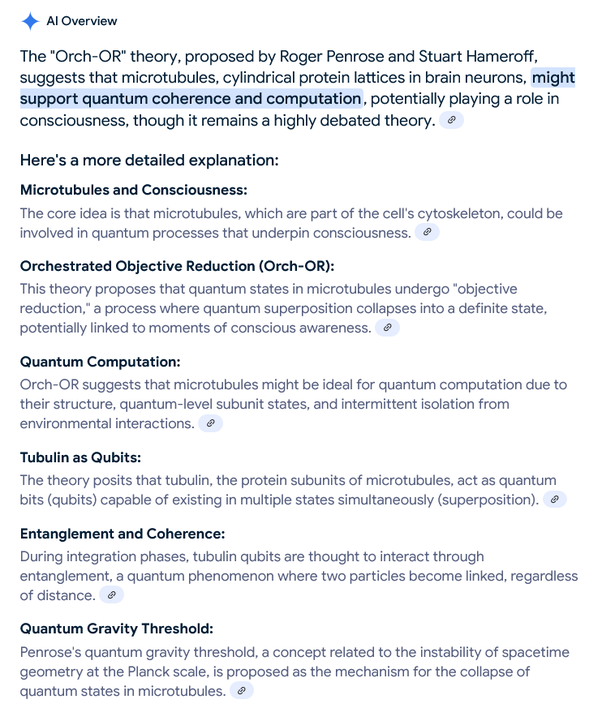
ChatGPT’s answer confirmed something I suspected: a relationship between manifestations of forms of consciousness that may create the bridge between the notion of IIT as pseudo-science addresses the “hard problem” of consciousness — IE., the physical manifestation of processes that provide a conduit, environment, or system which permits consciousness as we’ve learned to recognize it emerge in areas alien to the human experience of consciousness:

ChatGPT Answer:

Fungi are fascinating organisms that exhibit complex behaviours and adaptive responses, which some researchers describe as “intelligent” in a biological sense. While fungi don’t have neurons or a nervous system, they do possess structures that bear some functional resemblance to neuronal microtubules in the human brain.

Key Structural Similarities:

  1. Hyphal Networks and Mycelium: The branching filaments (hyphae) that comprise a fungus’s mycelium form a dense, interconnected network that transmits chemical and electrical signals. This network structure is somewhat analogous to neural pathways in the brain.
  2. Electrical Signaling: Research has shown that fungi generate electrical impulses across their hyphal networks, similar to how neurons transmit signals via action potentials. These impulses seem to follow patterns akin to neural signalling, suggesting a form of information processing.
  3. Cytoskeletal Elements (Including Microtubules): Fungal cells contain microtubules, part of the cytoskeleton that helps transport organelles, nutrients, and signalling molecules within the cell. While these microtubules are not identical to those found in neurons, they perform comparable intracellular transport roles.
  4. Information Processing and Memory-Like Behavior: Studies have shown that mycelial networks can adapt to their environment, alter growth patterns based on past experiences, and even exhibit “decision-making” behaviours — potentially exploiting their cytoskeletal structure for intracellular communication.

Key Differences:

  • Unlike neurons, fungal microtubules are not specialized for rapid electrical signal transmission.
  • The patterns of electrical activity in fungi appear slower and more decentralized than those seen in neural networks.

Emerging Research:

The study of fungal intelligence is still evolving, with growing interest in how fungi exhibit complex behaviours, solve problems, and respond to environmental stimuli. Some researchers have even likened mycelial networks to a “biological internet” due to their extensive communication capabilities.

In short, while fungi don’t have a direct analog to neuronal microtubules, their hyphal networks, electrical signalling, and cytoskeletal transport systems show surprising parallels to certain features of neural communication.


All of this makes me wish I had the foresight to enter a professional field more focused on understanding the external universe rather than focusing on developing the internal awareness necessary to overcome the negative conditioning I received as a child.

At any rate, I don’t want to avoid answering this question; I’m trying to be as direct as possible, but in essence, what you refer to as “stardust” is more of a poetic reference than it is a literal description of constituent physical components comprising the universe.

Quantum Foam

On a subatomic level, we’ve identified something we call “quantum foam”:

“Quantum foam (or spacetime foam, or spacetime bubble) is a theoretical quantum fluctuation of spacetime on very small scales due to quantum mechanics. The theory predicts that particles of matter and antimatter are constantly created and destroyed at this small scale.”

Neural Microtubules

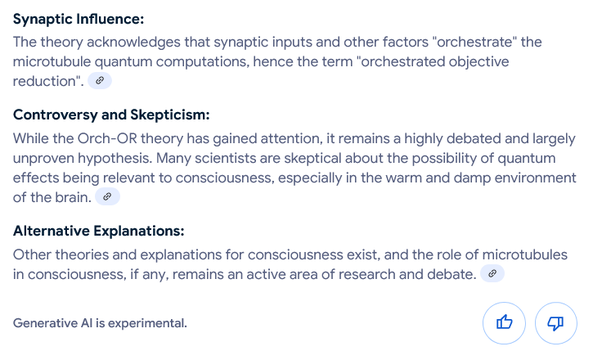
We have also identified “microtubules” in the human brain’s physical construct. — The importance of these microtubules is that they may solve the “hard problem” of consciousness but remain an unproven hypothesis:

Microtubules are also important throughout life, for the neuron to maintain its proper shape, to support axonal and dendritic transport, and to accommodate shape changes such as alterations in dendritic morphology that may correspond with cognitive plasticity even in old age.


In short, and in a roundabout way, it appears the answer to your question may be “yes” — all of space, and by extrapolation, it could be that our universe is a conscious construct — or a construct of or for consciousness.

For some, this revelation would support the notion that “we exist” (our physical manifestations as we know them) in a “simulation” (of sorts). Life may be a video game, but we don’t get to respawn. Once we burn through a character, that’s the end of it.

Simulation Hypothesis

https://en.wikipedia.org/wiki/Simulation_hypothesis

If life is a videogame with no respawns, then life is even more precious than what we take for granted. If we get only one life, it means everything to this short life; then we must make it count for something.

Temet Nosce

What is believing in a higher power you don’t know?

This post is a response to a question posed in its complete format: “What is it called when you believe in a higher power but don’t know what it is?”

It is a paternalistic instinct we are born with and inculcated during childhood socialization, and is called “wishful thinking” for adults.

There are many “higher powers,” at least when contrasted against whatever “powers” a human being has.

None of those higher powers are a replacement for one’s parents, no matter how much one wishes theirs were not so toxic. The sad reality is that such wishful thinking is a byproduct of centuries of generational trauma.

If you’ve ever noticed how well-adjusted people are from loving families, you’d have realized how much natural self-confidence tempered by humility they exude. All that is required to develop that maturity is a parent who understands love and expresses it honestly, even when it’s most arduous and demands the most brutal honesty with oneself by admitting one’s shortcomings to one’s children.

This attitude and desire are biologically driven instincts with the essential elements guiding them. These are built into the brain’s hardwiring in the prefrontal cortex, from which a sense of justice and balance within the universe is derived.

“What is particularly interesting about these findings is that they suggest that the sense of justice is not something learned through experience or socialization but rather something built into the brain. This is consistent with the idea that certain moral principles are universal across different cultures and societies, such as the idea that it is wrong to harm others or that honesty is a virtue. These moral principles may be rooted in how the brain processes information about social interactions and relationships.”

Sense of justice discovered in the brain

Is there something wrong with taking benefits?

This post is a response to a question initially posed on Quora, and can also be accessed via “https://www.quora.com/Is-there-something-wrong-with-taking-benefits/answer/Antonio-Amaral-1

Only a working-class member of society can pose this question because the little people are perpetually shamed when they take more than they need. This guilt may have begun in our early history while struggling for survival as tribal units, where scarcity was an omnipresent threat due to our level of development and not a consequence of the corrupt politics defining our world today.

If one tribe member took more than they needed, then it was apparent to all members that they all suffered. Greed was naturally restrained at that level, and like all traditions and attitudes inherited from our history, guilt-shaming people for taking more than they need has been passed on throughout the generations.

It’s been an effective means of encouraging people to consider the needs of others. Still, society is no longer plagued with the existential threat of scarcity by our physical incapacity to meet our needs. The threat of scarcity has transformed from a physical limitation to an entirely artificial construct created by the powerful in society to leverage the lion’s share of benefits to themselves. Scarcity has been transformed into a systemic issue enabled by politics, gluttony, and greed. Taking more than one needs at a local banquet no longer results in someone dying of hunger. However, we can still recognize and react viscerally to someone who gorges themselves to the point of vomiting up their overconsumption.

We don’t react that way with the wealthy, whose overindulgence is invisible to most because it manifests as an economic abstraction — numbers in a system characterized by intricate mathematical gymnastics. We don’t react that way to the Walton family underpaying their people and cutting back on staffing to the degree where the few employed are overworked and so radically underpaid that they need government subsidies to survive. We envy their successes and reward them with more benefits.

There isn’t a wealthy person on the planet who doesn’t take advantage of every benefit they can.

They do that as a matter of course and as a matter of pride. Donald Trump has bragged about circumventing his tax responsibilities, and the people cheer him for his success while envying it and wishing they could do the same.

We’ve created a double standard in a society where the privileged few are rewarded for taking advantage of benefits they don’t need while victim-shaming those who rely on benefits they desperately need to survive on the bare necessities.

There is something wrong with this picture, but we seem to prefer to ignore it when designing policies and creating legislation that dramatically affects the lives of billions.

Whether your issue with whatever benefits you or those you know may be taking advantage of, I would suggest we’re only playing into the biases corrupting our systems by focusing on what individuals do when availing themselves of benefits, We would all be far better off addressing the issue of benefits from a systemic level because the sentiment resulting from a fixation on what one’s neighbours are spending their food stamp money only enables the billionaires to justify their tax cuts and increase their subsidies.

After all, the legal concept of “lost opportunity cost” was entirely devised by a rich asshole who justified an entitlement to money beyond the tangible losses incurred in a conflict. It’s a legal argument flatly denied to someone who can’t afford to support it in a pay-to-play legal system.

Try not to forget how Elon Musk tried to sue his advertisers on Xitter for abandoning his platform because he felt entitled to the benefit of their advertising dollars.

This particular move is the equivalent of seeking a benefit from being paid for a job from which one has been fired. With this kind of toxic attitude of entitlement to benefits, I don’t think there’s any little person on the planet who should feel guilty about taking a benefit.

If we fix this surreal hypocrisy, we can discuss what is wrong with taking benefits.