What are the 3 things that atheists would like from Christians?

This post is a response to a question posed in its complete format: “I won’t give up my faith, but what are the 3 things that atheists would like from Christians (or any religion really), in order to live in the best society possible?”

No one is asking you to give up your faith, and if someone does, then you have every right and justification to tell them where to stuff their opinion. You have every right to whatever belief you choose to hold. Sovereignty over one’s mind is an inalienable right (regardless of whether some might disagree — I’ll fight this one to the death — which is my belief, and if I choose a belief and hold onto it strongly enough to go to war to defend it, then I have to respect another’s right to do the same).

Having said all that,

I don’t impose my beliefs onto others (what I spoke of above was defending my belief — a big difference), and I do not want others to impose their beliefs onto me. I am severely offended by attitudes that do not respect my choice, yet I expect respect for theirs.

#1. STOP proselytizing. I don’t care if it’s a mandated directive. Do NOT impose your beliefs onto others if they do not want to endure your rendition of them. Please respect that you have the right to your beliefs ONLY because you acknowledge another’s right to their beliefs.

What this means in “real world terms” — NO MORE anti-abortion nonsense. NO MORE sexist, misogynistic imposition of your religious beliefs onto a society of individuals who do not share your beliefs. STOP PROSELYTIZING. PERIOD. Nothing of your belief system belongs in a shared society’s laws… nowhere in educational policy… nowhere in anything beyond its context.

By all means, use your existing houses of worship and your homes to worship, practice, or do whatever you like concerning your beliefs. DO NOT attempt to push your interpretation of your own beliefs onto a public sphere. Your beliefs are yours, not everyone else’s. Learn to respect that and put it into widespread practice. Speak out against toxic hypocrites like Jim Bakker, who pushes an ignorantly incendiary and self-serving agenda by riling up his “flock” into supporting violence to further his cause. That is entirely disgusting behaviour. Your beliefs do not belong anywhere outside the context they serve you.

#2. Get out of politics and learn to respect what is sacred about the separation between church and state. While you’re doing that, start paying taxes and take every dollar back from the rich evil monsters who are preying on the weak to con them into supporting their personally lavish lifestyles. (I don’t remember who it was now, and I’m not going to research it, but an example I remember from recent news was one hypocrite crying about needing a personal jet because public air transportation is full of sinners. — — I’m happy to report that person did not say that directly to my face because I’m not sure I would have contained my disgust with that particular attitude. Still, I can tell you, every one of those entitled monsters who prey upon the weak have nothing but enmity from me, and I’m pretty sure many others as well. Do SOMETHING about them because they certainly do NOT represent any spirituality or belief. They are the same cut of sociopathic monsters as those who lead terrorist groups from other belief systems.)

#3. Get out of science and learn to respect your boundaries and the role of religion in society. Your beliefs are not science or scientific in any nature or stretch of the imagination. Your beliefs do NOT trump scientific discovery within the realm of science. Evolution, for example, as your beliefs don’t bind a topic. Evolution occurs whether you want to believe it or not. Still, you need to understand how the moment you think your subjective belief somehow forms an equivalent counter-argument to hundreds of years of an evolving discipline, you betray your faith by stepping into territory which doesn’t belong to your faith and is not beholden to any subjective conclusions you may arrive at.

Facts are Facts. Period.

Arguing creationism as some form of valid response to evolution is a disgustingly stupid form of willful ignorance. It has polluted this world far too much already, and the disgusting attitudes of believers concerning this issue are just too much to deal with now. We have more significant problems as a species, and being bogged down by idiots who think their personal, insular, and subjectively defined perspectives on life should be given enough credibility to be treated seriously in a public dialogue only makes things worse for everyone.

Keep your faith, but know this; it is subjective and not remotely determinate about our physical universe. Learn to understand how faith does not trump facts because it should work the other way around. Physical reality should determine our beliefs because we are bound to this existence. Anything beyond it is speculation. If you want to call it a belief, go ahead, but it means nothing to the facts we all must live by together.
How do you know if you’re an evil person or not?

This post is a response to a question initially posed on Quora, and can also be accessed via “https://www.quora.com/How-do-you-know-if-youre-an-evil-person-or-not/answer/Antonio-Amaral-1

That’s simple: Do you find the act of hurting another pleasurable?

Even if that other person has caused you harm and you lash out in self-defence while feeling sorrow toward them and the events that lead to a destructive outcome, you are demonstrating the capacity of awareness that characterizes what allows humans to think of ourselves as “civilized.”

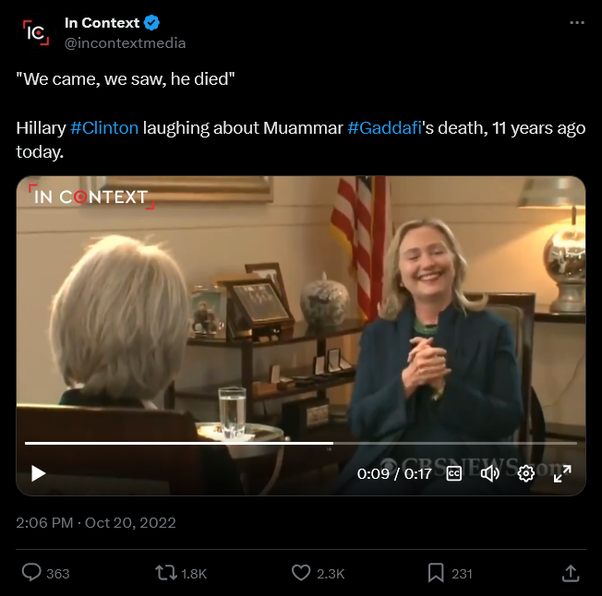
When Hillary Clinton laughed at the death of Muammar Gaddafi, that was when she lost it for me. It doesn’t matter how evil a monster he was; there should never be any pleasure in taking a life because that’s a betrayal of one’s essential humanity on every level. One can feel relief and express that. One can find satisfaction in ridding the world of evil, even through extreme measures, but the moment one finds pleasure in that act, one embodies the evil one self-righteously destroys. Evil always wins in that outcome.

Another example of knowing when one is evil is when they are in a position to save a life and choose not to. The most iconic moment embodying this behaviour was in Breaking Bad when Walter White watched Jesse Pinkman’s girlfriend, Jane, die of an overdose. He could have saved her, but his priority was controlling Jesse.

This was a harrowing moment for me when, up until this point, I found reasons to justify Walter’s behaviour but could no longer do so after this.

This particular scenario has exploded with meaning to me as I find it occurring in real life by people I should have been able to trust. Instead, they’re responding to my struggle for survival, which they are responsible for creating in ways that echo attitudes and behaviours.

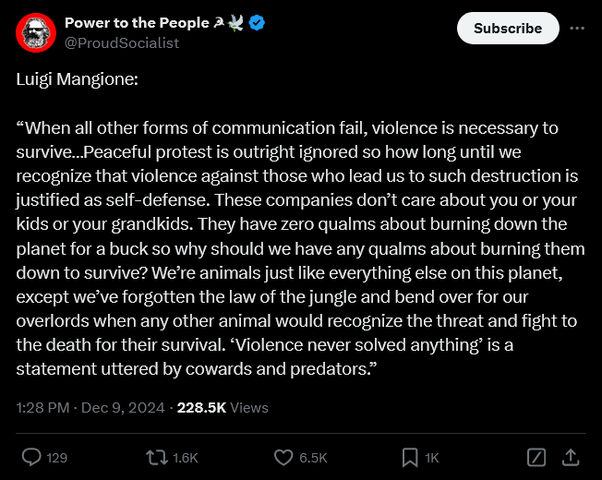
Meanwhile, I currently need more options for addressing my struggle through civilized means. I have been exhausting every supposed route to reparations, but none are forthcoming as door after door slams in my face. I empathize with Luigi Mangioni in ways I would not have expected otherwise.

This is not something to be proud of or to find pleasure in. This is a moment demanding sorrow that we must come to this extreme before those responsible for evil stop and consider the gravity of their actions.

If you are a Leftist, do you think it is wrong to build Utopias?

This post is a response to a question initially posed on Quora, and can also be accessed via “https://www.quora.com/If-you-are-a-Leftist-do-you-think-it-is-wrong-to-build-Utopias/answer/Antonio-Amaral-1

As humans, it is vital that we all work together to make a better world for all of us today and for those who come after us.

After all, we are currently enjoying many freedoms and luxuries we would otherwise not have had it not been for the contributions of those who came before us.

Failing to do our part to make this a better world makes us a parasitic element that erodes the social fabric.

Working against the betterment of humanity is a betrayal of the social contract. Today’s dynamic resembles a tribe that survived a primitive existence by everyone working together. Having one person in that tribe work against the tribe’s survival was viewed as a threat to that tribe.
They had much more efficient ways of dealing with such betrayals then.

A utopia is otherwise just a setting on a compass that keeps us on track. Utopia is a concept and a direction, not a destination.

Hiding one’s misanthropy behind a political ideology is the polluting act of an intellectual coward and a morally depraved psychopath.

As you can see from how people are united in support of Luigi Mangioni, it’s not about left versus right. It never has been. It’s always been the top attacking the bottom, while people like you who play into that divisiveness are just useful idiots keeping us all distracted from saving ourselves from disaster.

Framing this question within the context of a political ideology only adds to the chasm between political polarities, imbues it with passive-aggressive disparaging implications, and is irresponsibly divisive nonsense.

Shame on you.

Why do so many people ask why “liberals” are so intolerant?

This post is a response to a question posed in its complete format: “If being liberal means being open, and generally tolerant, why do so many people ask why “liberals” are so intolerant?”

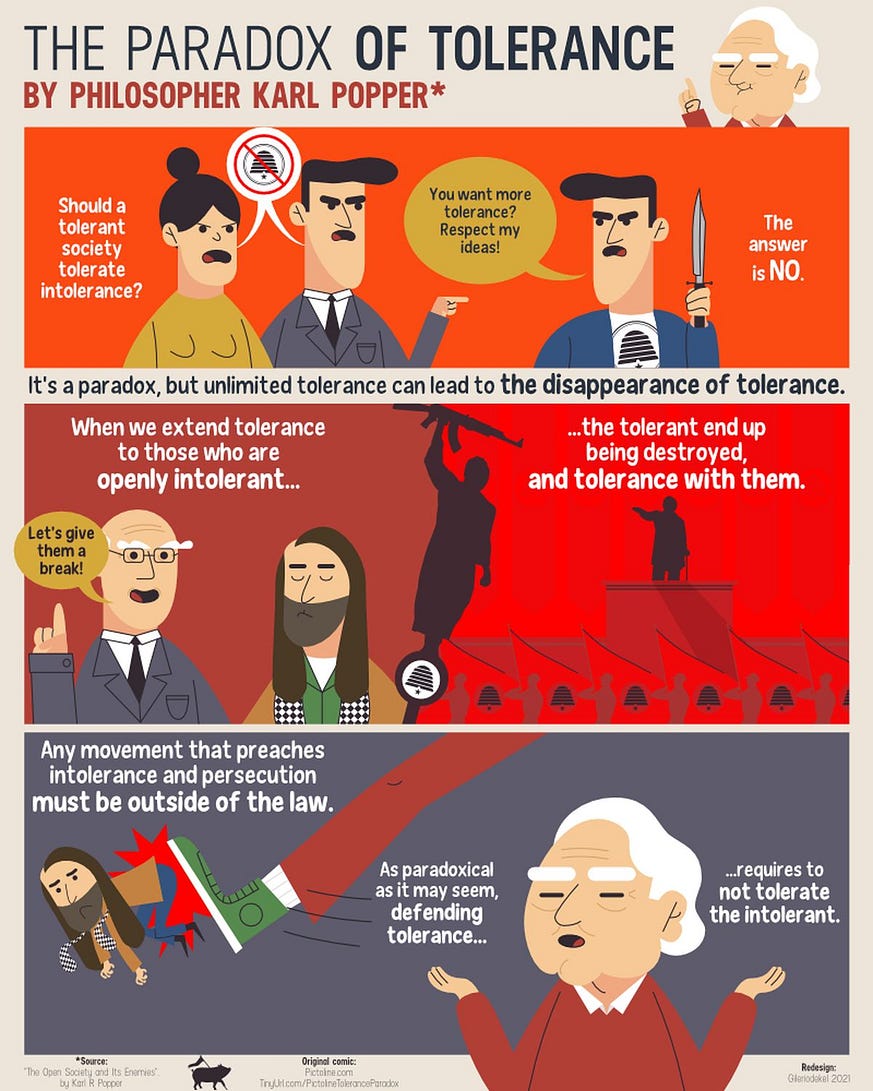
Tolerance cannot exist without limits, and the tolerance limits are the intolerant in society. Society cannot survive a tolerant existence without being intolerant of the insular and narrow-minded. Karl Popper described this limit within his “Paradox of Tolerance.”

Being tolerant means embracing the tolerant and rejecting the intolerant.

People who spread hatred cannot be tolerated if we wish to live in a tolerant society. In essence, people who spread hatred are in breach of the social contract, and the only way to address that is through the social pressure of rejection. The logic is not much different than the logic used when incarcerating criminals. Separating disruptive elements from society is a necessary strategy for preserving social cohesion.

Hate-mongers fail to understand this principle when they discover, to their chagrin, that their abusive intolerance is no longer tolerated.

They are often shocked and concoct accusations like “cancel culture” to serve as deflections for disguising their confessions. They are, after all, the same people who ban books. Most bullies in society get away with being bullies for a long time because most people just quietly turn away from them to give them the illusion they can continue being bullies. Most people prefer to avoid conflict and will often comply with a bully to get rid of them, making them think they have won.

This is a sad consequence of conflict-averse people because they only enable bullies in society while the one or two brave enough to stand up to them are destroyed.

The only way we will end the abuse we experience from bullies is when everyone stands together to show the intolerant that their intolerance will not be tolerated.

Being liberal has nothing to do with this. A decent human being willing to fight for a better world constitutes values that transcend political ideology.

Conservatives also have it within them to be better. The current prevalence of MAGAts and MAGA-style hatemongering the world over overwhelms their parties with cumulative toxicity that erodes the social fabric. At the same time, the rational conservatives among them, tacitly endorse the assault on the social contract through their tolerance of destructive MAGA attitudes and behaviours.

This is a difficult period of transformation for those who have felt themselves entitled to their biases, and we see examples of it everywhere in every contentious issue where mainly MAGA people attempt to impose their biases onto others. They can’t stomach the idea of equality when they and all of the working people are struggling during a period of extreme income inequity. Instead of being angry at those responsible for their strife, they’ve chosen the easy route of punching down instead of up because all bullies are cowards. It’s much easier for them to pick on those who appear vulnerable in society, such as immigrants, transitioning people, and women.

When liberals try to refocus their anger on those responsible for their strife, they often react with anger toward liberals, and that’s why questions like this exist. Those “so many people” who ask why liberals are intolerant are those who are too afraid to hold the people responsible for their anger accountable. Everyone else has had their tolerance eroded from the futility of attempting to reason with people who hold fast to positions they did not adopt out of reason. There is no point bridging a divide while the other side insists on digging a chasm.

How do you deal with the lack of a moral arbiter?

This post is a response to a question posed in its complete format: “As an atheist, how do you deal with the fact that there is no ultimate moral arbiter and that all morals are determined inter-subjectively and without an objective foundation?”

Have you taken any time to consider how, if a god existed, its morality would also be subjective to it?

If morality had an objective foundation, it would be intrinsic to the object itself. One could essentially “read” morality from within every instance deemed to bear moral implications. If morality were objective, everyone would read and identify identical moral qualities within every situation subject to moral judgments.

It would be no different than having everyone agree that the sun shines and its effect warms us. No one or authority is required to serve as an arbiter for these qualities. We know these facts to be confirmed individually from everyone’s direct experience with the sun.

For the sake of this exposition, let’s refer to those qualities of heat and light emanating from the sun as “metadata.” This description can help us draw some clear distinctions on the language we’re using to resolve discussions on objectivity as it applies to the concept of morality.

For instance, if theft were objectively determined as immoral, then the characteristics defining its morality would be immutably intrinsic to that act of theft. All forms of theft would be considered immoral without condition. It can easily be argued that the metadata ascribing immorality within the act of robbery lies within the harm done to those against whom the theft is perpetrated.

Stealing food to feed one’s family would always be consistently judged as immoral. There would be no distinction between stealing food from a starving person and stealing food from someone with such abundance that most of their food is spoiled from the lack of consumption.

One can argue that stealing food to feed one’s family is not immoral if the person one steals from still has plenty of food to feed themselves. One can say that stealing food that would end up being spoiled from lack of consumption to feed one’s family is moral.

How can both scenarios be valid if morality is objective?

If morality were objective, it would be contained within the object, but as we can see in this simple example, morality is contextual. Morality within this simple case is contingent upon the judgements of those who choose to ascribe varying degrees of value to the individual aspects of the case of stealing food.

Some may determine that stealing food, in any event, is immoral. In contrast, others may determine that stealing food to feed one’s family is an act of self-sacrifice that exposes them to a life-destroying reprisal, which represents the embodiment of morality.

If morality were objective, then it would be immutable, but how many things deemed immoral at the time of the writing of scripture have since been reconsidered irrelevant to the concept of morality?

No one balks today about wearing clothing made of mixed threads. It’s almost impossible to find any clothing that doesn’t mix threads to some degree today. Yet, this practice is no longer considered a moral violation that would anger any ultimate authority such that a reprisal would be forthcoming.

Did God change its mind? If so, how do we know, and when did that occur? By what process are we being informed by an ultimate authority of updates to morality? If morality is subject to updates, how could it be objective?

Morality can’t be objective if an ultimate authority changes its mind and renders updated decisions on what constitutes morality because they are simply conveying (if we can set aside the mechanics of that conveyance) a perspective unique to their apprehension of a situation.

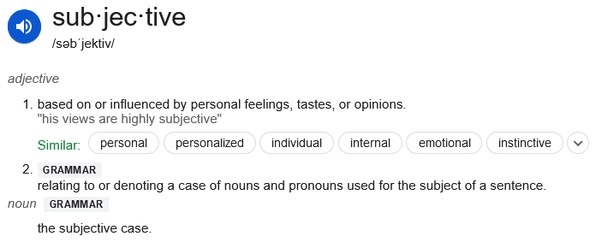
Perhaps you’re still struggling to comprehend the difference between “subjective” and “objective,” and that’s why you insist morality is “objective?”

Let’s look at some definitions to help frame the explanation above:

Any situation in which an authority must intervene to render a decision to settle differences between competing perspectives cannot, by definition, be considered “objective.”

It doesn’t matter whether that authority is omniscient or not; they are still rendering a decision derived from their perspective on the issue in question.

The necessity of an authority to determine morality already renders morality a subjective construct.

Morality cannot be objective by any stretch of the imagination and, most notably, not by arguments ascribing ultimate morality to an ultimate authority on morality — mainly when that authority is not available to provide any direct input into any state requiring a moral judgment to be rendered.

Indeed, the need to render a moral judgement eviscerates the notion of an objective morality.

The appropriate context for perceiving morality is a public dialogue in which we learn to develop our moral paradigms to understand ourselves and our world more clearly. The dialogues we have on morality serve the purpose of developing compassion toward issues outside our frames of experience and help us to apply a moral paradigm to the whole of our existence as individuals and as a species struggling to achieve its potential.

The reality is that objective morality would destroy our capacity for morality because an essential learning process for developing one’s humanity is reduced to rote memorization. In contrast, the human capacity for creativity necessitates means by which moral loopholes can be exploited.

We see this behaviour routinely exhibited by those who claim to be representatives of moral authority betraying their self-appointed statures in society.

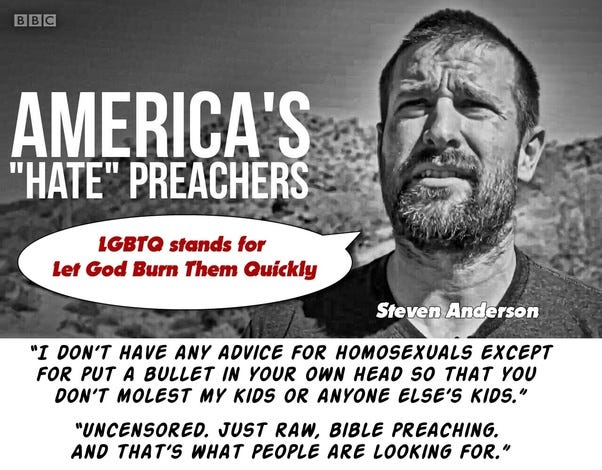
America’s Hate Preachers (TV Movie 2016) ⭐ 5.9 | Documentary

Why is the label “socialism” often viewed negatively?

This post is a response to a question posed in its complete format: “Why is the label “socialism” often viewed negatively when discussing progressive policies? Is there a significant difference between socialism and liberalism?”

Socialism and liberalism are distinct ideologies with no practical connection between them.

Liberalism is built on three fundamental societal values: Liberty, Fraternity, and Equality. These values inspire and guide liberal minds in supporting greater degrees of social justice in a broadly unjust world.

Socialism is the public ownership of the means of production. Socialism essentially strips plutocrats of their wealth and forces an entitled class of people to live alongside as equals to the people they prefer to benefit from their exploitation.

These two disparate concepts are often conflated as part of a centuries-long class war waged by society’s plutocrats against the proletariat (the working class) while employing the bourgeoisie (capitalists) as their armies of oppression.

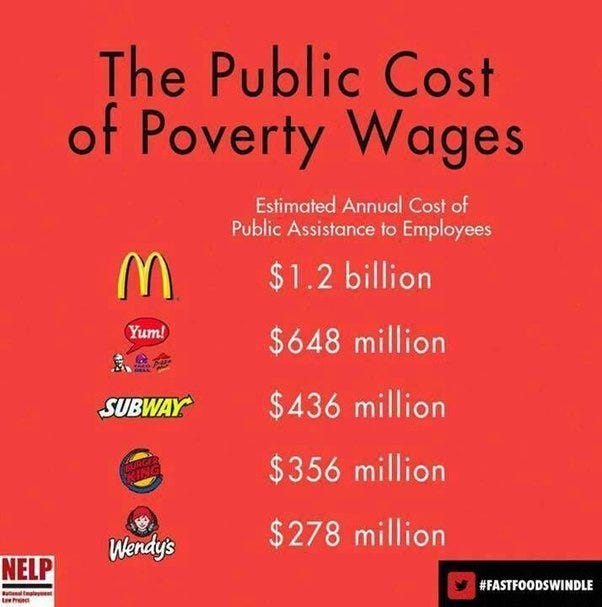
Every movement toward social justice is met by resistance to the entitled classes in society who possess the leverage of despair against the working class to enrich themselves while impoverishing the weakest among us.

Every movement toward social justice is a strip of power taken from the entitled classes to enable the weakest among us to survive and prosper without suffering a dehumanizing indignity imposed upon them by the wealthy classes.

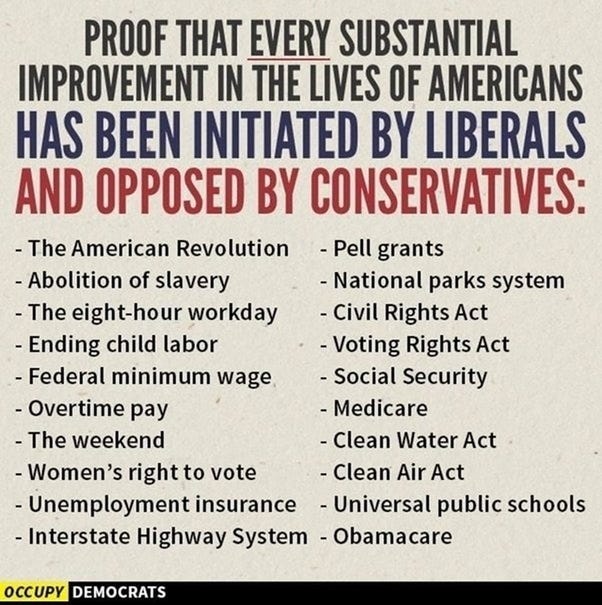
For the working class to fight for and win weekends off from labour is a cost to the wealthy class that they deeply resent and respond to with strategies to strip further dignities from the working class.

Their deep resentment toward increasing social justice and decreasing power over the working class has been deeply embedded into their psyches due to historical events like the Russian Revolution of 1917. A monarchy was violently abolished through two successive revolutions and a civil war, which spread a sentiment of hatred for the ruling class in society across the globe to inspire a similar German Revolution of 1918.

Russian Revolution — Wikipedia

The nightmare of breadlines persists to this day and has been used as a weapon of ideas against another uprising by the working class.

The plutocrats of today have learned to do whatever they can to insulate themselves from another violent uprising that would result in them losing their wealth and power to angry mobs of desperate working-class citizens.

They have invested billions over the decades to have people automatically associate socialism and communism with extreme poverty and extreme oppression. Their efforts have been supremely successful to the degree that the poorest in society today will fight to protect plutocrat wealth at the expense of their well-being.

Here’s an example of a random right-wing website, their fearmongering messaging and how successful the plutocrats have been in conditioning the working class to defend what they view as the saviours of humanity they refer to as “job creators.”

(Please do take a moment to “bask” in the sheer hatred they have cultivated within their loyal lemmings toward any form of social justice for society. These are the slugs in society who beg for a salt bath… and are deeply committed to taking all the rest of us with them on a trip to human oblivion.)

We can see the cancerous attitude as a caricature of humanity within the American political system as a corrupt plutocrat who has become a convicted felon can still campaign for president. In contrast, every other convicted felon is stripped of their right to vote while they rot in prison.

The plutocrats in society have been quietly waging their class warfare for centuries; before, they were plutocrats and considered a monarchy that assumed power over the little people through physical warfare.

They have persisted for over 100 years in a steady and patient strategy of protecting their wealth and power through every influential channel they can.

Look through this resource to see how the plutocrat class influences legislation creation through a group called the “American Legislative Exchange Council” (ALEC). This association has been responsible for literally writing the laws that are implemented verbatim to benefit themselves at the expense of the public good… and this is only the tip of the iceberg for their machinations:

ALEC Exposed

“Right to Work” laws enacted to strip workers of their rights while reducing “Right to Work” states have become the most impoverished in the nation.

Corrupt plutocrats like the Koch Brothers (Koch family — Wikipedia), the Walton Family (Walton family — Wikipedia), Elon Musk (Elon Musk — Wikipedia), Bill Ackman (Bill Ackman — Wikipedia), Steve Schwarzman and his Blackstone Group (Home — Blackstone), and etcetera.

Why Plutocrats Are Rallying to Trump

Most hide their money behind organizations like Blackstone Inc., which bills itself as an “alternative investment management firm” and dumps millions into SuperPAC to fund the campaigns of politicians who will support their wealth acquisition strategies at the expense of the working class and the constituents who vote for them.

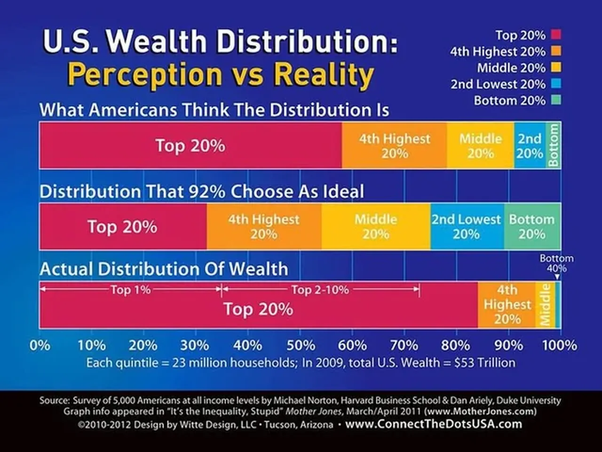
These are highly paid grifters whose job is to scam hundreds of millions of people out of the value of their labours, and they have succeeded to the tune of over $50 trillion from the middle class in the last few decades alone.

They have successfully converted a system of empowering the most vulnerable among us into a system of oppressing the most vulnerable among us.

They have invested billions in their war while reducing the costs of waging it to a small tax.

Their coup de grâce has been the outright purchase of the highest court in the land, seeking to convert the world into a facsimile of a medieval state with a two-class system of rulers and serfs.

Impact of the Heritage Foundation on Supreme Court nominations

Ironically, they have succeeded so well in entrenching their power to repeat the historic levels of income inequality threatening global stability one hundred years ago that we are on the verge of repeating the same tragedies.

It’s been easy to blame the motivations for all their socially destructive activities on simple greed, but the sheer irrationality of their behaviours transcends greed. It is a self-destructive behaviour that has abandoned rationality.

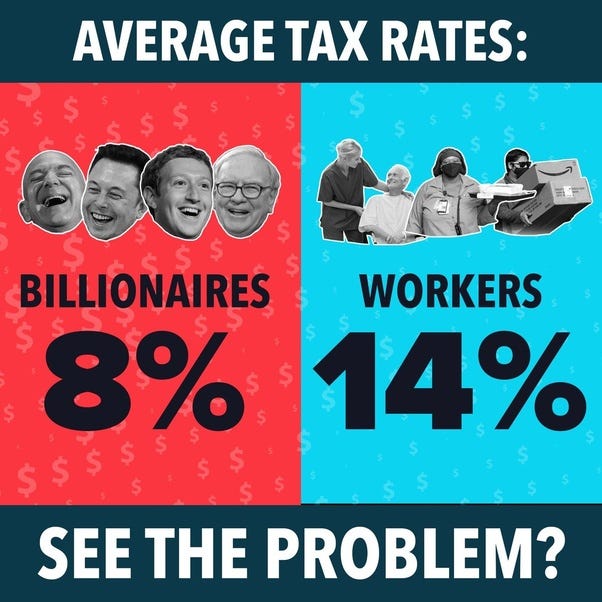
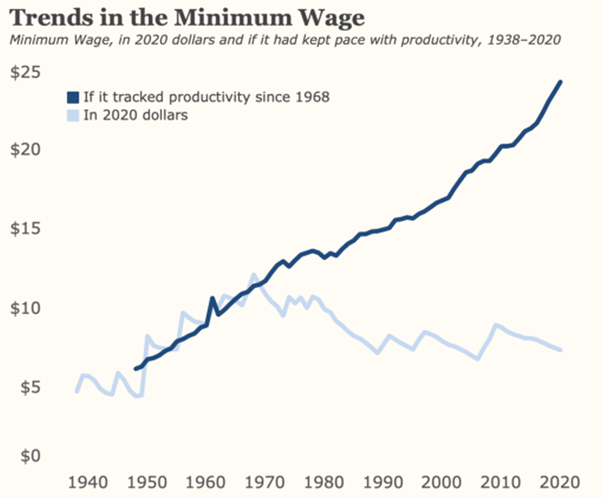
All of which is intended to prohibit these kinds of social justice goals for the working class:

The minimal costs of a social safety net don’t justify the extremes of greed they’ve been displaying. The only explanation for their extreme behaviour, which resembles the trajectory of an addict, is that they have been deeply scarred by history.

The revolutions of the little people throughout history have scarred them deeply, and that explains why they have invested so much into the optics of language to cause the public to viscerally reject a concept like socialism without bothering to consider aspects of the concept that can and are beneficial to society.

No one blinks about socialism when it involves public money spent on the military because security is more important to many, particularly among those who loudly and repeatedly profess their love of freedom the most.

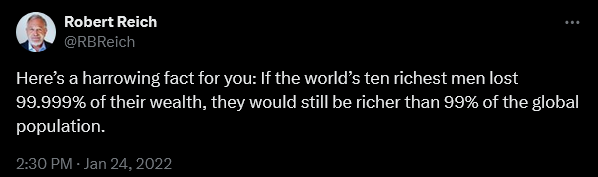
The most frustrating aspect of all of this is that, as captains of industry and leaders in society, one would hope they would be astute enough to avoid making manifest that which they fear so much… yet, this is the state of affairs today:

Pushing people to extremes of desperation makes it seem like they’re begging for the pikes and guillotines to come out and repeat history.

They can see the escalations occurring throughout the globe. Instead of taking action to avert catastrophe, they invest in secure bunkers to save their asses from the conflagration while hoping their billions will be worth something when the entire world’s economy collapses.

For a group of people who are generally viewed as more intelligent than the masses, they seem to wallow in more profound stupidity than the under-educated people they love to manipulate while convincing themselves of their superiority.

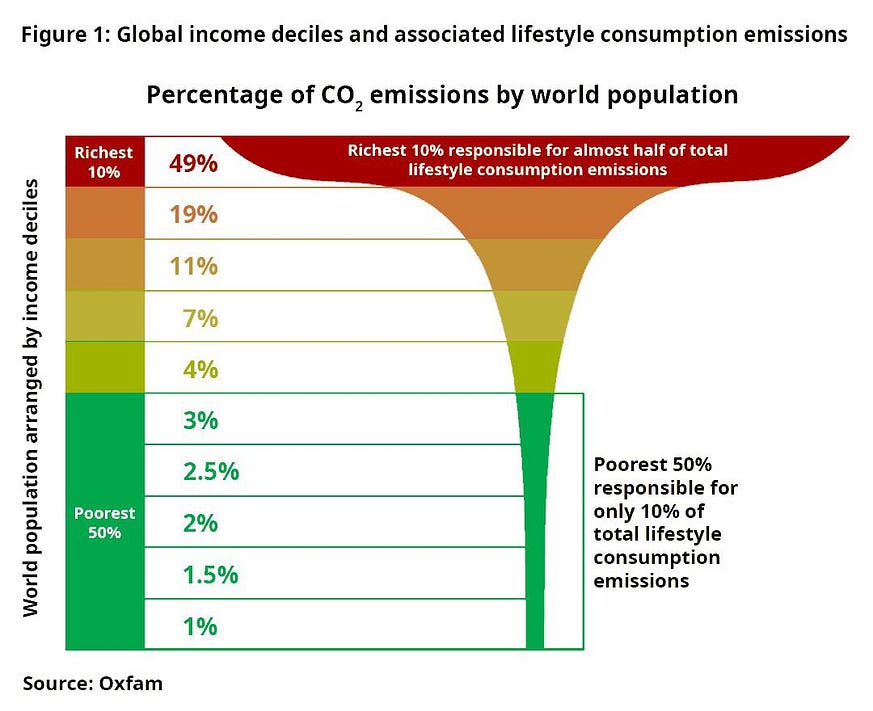
The environmental nightmare they are inviting into our world is rapidly approaching a tipping point in which there will be no return to stability without a dramatic shifting of power throughout the globe. Yet, no inkling of this impending catastrophe seems to grace their awareness. It’s as if they’re watching a massive iceberg drifting toward them, and they’re more fascinated by its structure than what it will do when it strikes.

Can a religion be political?

This post is a response to a question posed in its complete format: “Can a religion be political? If so, which religions are left-wing and which are right-wing?”

People are political — from the self-management perspective by establishing community systems and laws to live by.

Religions are intended to guide people to live with the support they need to find happiness within themselves and through their relationships with others.

Religious zealots and leaders, however, seek to leverage community support to achieve political power. Wings are either moot within the context of religion, or they are leveraged to create further divisions between people while furthering the aims of the corrupt in their quests for power.

The consequences of seeking power ultimately corrupt a community’s politics to destroy community cohesion and create an oppressive environment where neither politics, community development, nor spiritual development are best served.

Religion was the first form of government. The consequences were the Dark Ages, in which humanity lived in a dark state of repression where no progress was made for society for hundreds of years. The world was ruled by the complete corruption of the human spirit made manifest by unrestrained power that we have always struggled with as a species.

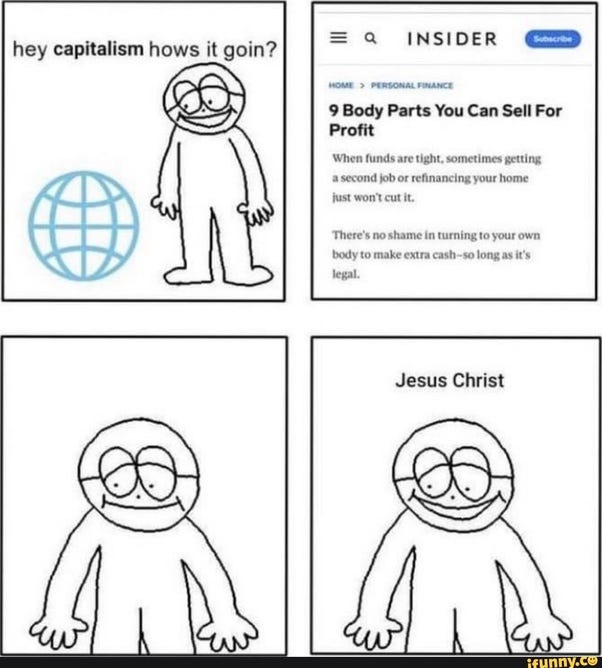
We have yet to learn our lessons about restraining power enough to apply them to the mess we’re creating now through capitalism.

It’s become so overwhelmingly attractive a source of power acquisition that it has enticed corruption within religion to grow into a capitalist horror of its own.

The Vatican is among the wealthiest institutions on the planet, and it’s supposed to represent a religious commitment to ending poverty.

Some of the wealthiest people on the planet have grown their seed of corruption by betraying religious principles and leveraging hope against those in despair.

One of the most corrupt of political monsters today pretends at religion to leverage the naive trust of people who have become resentful of a political system that has betrayed them for decades.

Every day on Facebook, I see advertising for “lawyers” who claim they can help people recover the money they lost by trusting a scammer who swindled them.

There is no possible way to recover one’s money from a scammer, especially when their true identity remains a mystery.

The lawyer claiming to be able to help is just another scammer preying on people who were already scammed once and are desperate to trust someone who will help them.

These are among the worst of predatory parasites because they are preying on people who have already lost much.

Meanwhile, Facebook does nothing to protect its “community” because it benefits from the advertising dollars it collects.

What we end up with is an informal cadre of predatory parasites preying on victims on multiple levels throughout society, and to such a degree that it becomes impossible to trust anyone.

Everywhere one looks, every system one turns to hides another predator ready to invite one into their web to drain them dry.

That’s what the whole of society reminds me of today. I’m sure I am not the only one who sees how impossible the situation is that we have allowed ourselves to live within.

I don’t think we can hold out much longer before it all collapses like a house of cards. The problem with that is the most vulnerable among us who have suffered the most will also become the most significant casualties of the ensuing chaos.

People who genuinely wish to hang onto their sanity and maintain something of a resemblance of hope must do what they can to build walls between domains to prevent the corruption of power from perpetually overwhelming our systems and threaten our stability as peaceful and progressive societies.

Religion is not supposed to be political in the sense of a social management system.

Religion is supposed to be about personal growth.

“Render unto Caesar” was a prescient command for its time because the threat it addresses is always beyond evident to those who do not fall under the spell of attraction to power over others.

Some of us are lucky enough to learn that our power over ourselves is the only power that matters.

That is the most fundamental lesson all religions hint at and the only lesson of value they have for humanity, but they’ve lost touch with that.

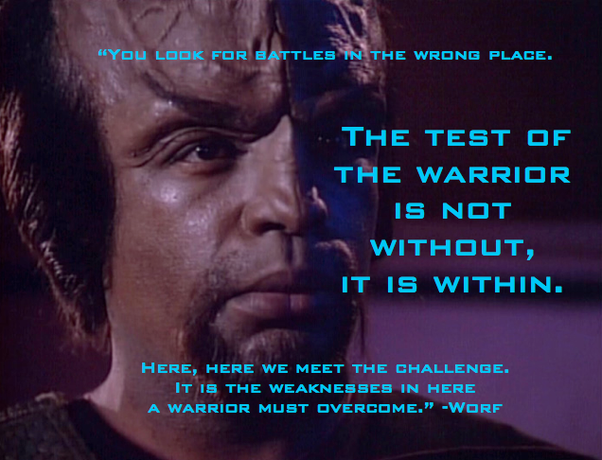
Ironically, the best teachers of this principle today are characters from fiction.

Do you trust the so-called “theories” in the arts?

This post is a response to a question posed in its complete format: “https://www.quora.com/Do-you-trust-the-so-called-theories-in-the-arts/answer/Antonio-Amaral-1

No, but I always trust my instincts when I encounter dripping cynicism applied to “high falutin’” concepts like “so-called theories.”

I don’t “have to trust” art theories since they are primarily subjective analyses of movements, stylistics, and socio-political contexts applied toward individuals, groups, or random associations between artists sharing aesthetic or subject matter concerns.

Theory in art differs from a science-based theory backed up by testable methods to determine an objective and consistently predictable outcome.

They’re not meant “to be trusted” but used as a lens or a filter to focus one’s surveying of a landscape.

In the art world, one learns to trust the analysis and the analyst based on the quality of their insight, depth of knowledge, and the strength of their observations.

Art theories are less critical to artists than academics like Art Historians, whose role in society is to contextualize the whole of art production into descriptions reflecting our social evolution through artistic expression.

Most artists could not care less where they fit into the grand scheme of artistic expression within the context of social evolution. They tend to be more concerned with matters that are important to them on a personal scale.

How one feels about issues they encounter is much more artistically motivating than an academic assessment of artistic context within the creative product.

My initial response to this question was, “What are you talking about?” and that turned out to be a good prompt for me to find a theory as a basis for answering this question.

I know art theories exist from my experience in art school, but I struggled to bring one to mind in any clear focus. Sure, various movements, styles, attitudes, and manifestos vaguely touched the surface of my conscious awareness, but I immediately rejected them as “theories” that relate to the context of this question.

I found this article to be an interesting and concise representation of “art theories” that distinguishes them from scientific theories to assist with making a point in my answer. After getting this far, I find it serves less as a function for contributing to my answer than as a helpful guide for a layperson to consider when assessing a piece.

The fact that I find this a novel summation for contextualizing one’s art-viewing experience reinforces how little concern I place on art theories when considering the pieces I produce.

https://might-could.com/essays/what-makes-good-art/#:~:text=There%20are%204%20main%20theories,ve%20never%20heard%20of%20them
Four Theories for Judging Art

https://might-could.com/essays/what-makes-good-art/#:~:text=There%20are%204%20main%20theories,ve%20never%20heard%20of%20them

For the most part, art production is a process of burying oneself in the fundamentals of artmaking more so than it is about where in the vast spectrum of historical context a piece should occupy. That is my bias, of course.

Art theories are a non-existent concern when working on a piece, whereas composition, shape, balance, colour, line, and tension are foremost in my mind.

All this leads me to ask, “What are you talking about?”

Your profile doesn’t provide much context, but it has several hallmarks for being a troll profile — such as being less than one month old and sparse in detail. Unlike my similar experiences with answering questions on Quora, I won’t mute and block you, but I’m sure I will remember the red flag this question left me with.

Perhaps you have been somewhat affected by a confluence of insecurity and psychological abuse by a pretentious asshole in the arts. Sadly, there are many, as this seems to be a field of endeavour that functions like a magnet for egotistical types.

I suggest focusing more on what moves you to create and less on what others might have to say because their input is often more about them than you or your work.

Good luck.

Do atheists believe “all men are created equal”?

This post is a response to a question posed in its complete format: “Do atheists believe in the Jeffersonian phrase that “all men are created equal”?”

This atheist believes the word “equal” is all too often confused with “identical.”

All life is otherwise “equal” from the perspective of an experiential existence.

There is no metric nor means by which any evaluation can be established to determine degrees of consciousness that are not subjected to biases derived from ignorance of the nature of consciousness itself.

Humans can easily consider themselves “more conscious” than ants, but even that comparison is predicated upon a human bias toward the concept of consciousness.

“Ant consciousness” is observably “different” from human consciousness. It remains just as much of a mystery, taking the shape of a puzzle piece in which we cannot yet make out its composition.

The only thing we truly understand about consciousness is that we don’t understand it. We are exposed to slices of it presented within contexts appealing to the spectrum of consciousness we are most familiar with.

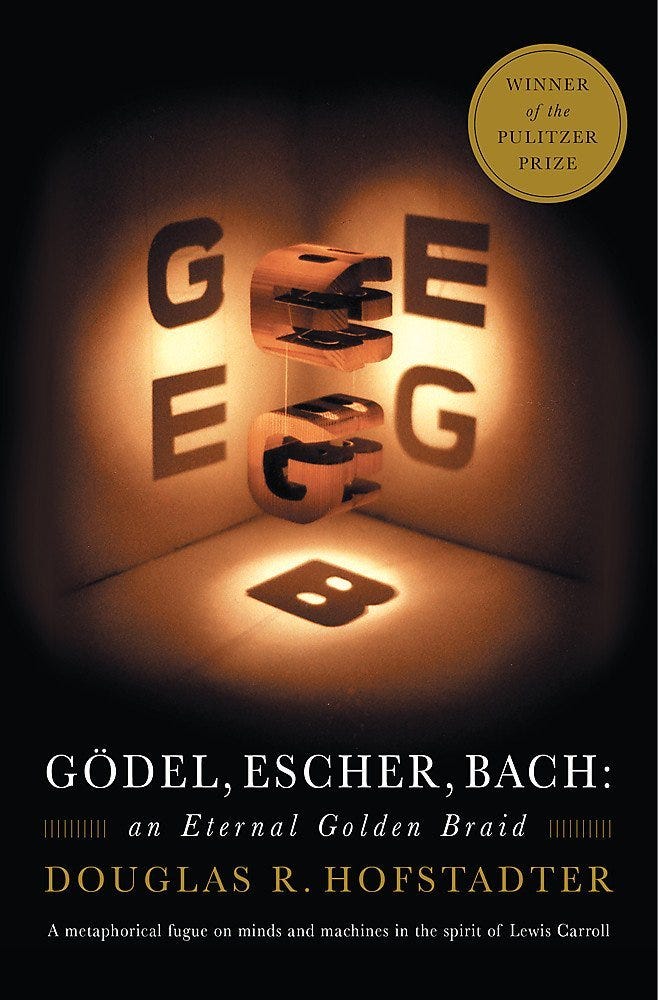
What broke the ice for me in an apprehension of a fundamental characteristic shaping the universe was the analogy of consciousness as a meteor crashing into another by Douglas Hofstadter in “Gödel, Escher, Bach — An Eternal Golden Braid.”

https://www.goodreads.com/book/show/24113.G_del_Escher_Bach

It was quite some time after reading this book as a student in the 80s that I encountered various ideas like “Integrated Information Theory,” which allowed me to progress beyond “The Thermostat Problem.”

I had always maintained a belief, however naive, in the fundamental nature of our equality as human beings. In many ways, my adherence was a reaction to coping with learning at the tender age of eleven, that my knowledge of the world far surpassed that of my mother.

(That revelation arose from her confusion over an ultrasound image on the television screen. She asked what it was, and I said it was a baby being born. The shocked expression on her face was like a sound vacuum for the room. My eldest brother turned to me and chastised me for exposing her to knowledge beyond her capacity to process it.)

Even though I was then always treated as an inferior in my family, I rejected that and struggled to assert my equality in an attempt to be accepted. That was fruitless and counterproductive because my efforts only increased the rejection.

I have learned that it is always those whose insecurities compel them to establish degrees of equality between people on the flawed notion of identicality. Over time, I have developed a bias against such a mindset, which I now view as an inferior state of being (a somewhat hypocritical attitude — but honestly earned).

Ironically, such a mindset seems most common among believers, but that may result from sheer numbers. On the other hand, I cannot ignore how that resembles the toxic competitiveness I experienced as I grew up in a dysfunctional environment ruled by a toxic personality who pitted their children against each other for favour.

Whenever the concept of equality is raised, I almost immediately think someone is struggling with their basic humanity and seeking validation to quell their insecurity.

All the pieces comprise the universe we inhabit, and parsing values between constituents is like arguing over whether red blood cells are more or less valuable than white corpuscles. All pieces of a puzzle are necessary to form a complete picture.

We will never see a complete picture if we discard pieces that fall outside our ability to comprehend the nature of their importance to the whole.

From my biased perspective, parsing out a given, like equality, to enumerate differences is more of an expression of toxic thinking that erodes the social fabric than is productive for our societies.

Why would it be possible to live without the government?

This post is a response to a question initially posed on Quora and can also be accessed via “Why would it be possible for people to live without the government?”

It’s not.

Without government, we would barely survive while struggling with anarchy and doing our best to avoid the bullies among us who would have free reign to terrorize anyone they please.

Life would be cheaper than it is now. Justice would be non-existent, and perversions of it would be meted out by force and without any form of protection for anyone without the power to dominate others.

Virtually all scientific and technological progress would halt. If government ceased to exist from this point forward, we would be facing a nuclear holocaust through much of the world as centuries-long enemies would no longer be restrained from indulging in their worst fear impulses. The mid-East would essentially be vaporized and rendered uninhabitable for the next century. India and Pakistan would decimate each other. Much of Eastern Europe would be bombed into rubble. China would decimate its neighbours and indulge in its most significant expansion across the globe… or it could fall apart into factions ruled by powerful interests within the nation whose infighting would also collapse the country and leave it vulnerable to external aggressors seeking revenge.

Whatever may exist of what you call home would have to be protected by traps and a twenty-four-hour armed security detail. You would sleep in shifts.

Your environment would be like living in a perpetual purge. That would likely last until we’ve culled most of our species and our numbers shrink from eight billion to a few hundred million within a few years at the outset.

Once we’ve burned ourselves out from a pent-up violence orgy, we’d start seeing primitive tribal infrastructures negotiating arrangements to secure our survival as a species. At the same time, we would find ourselves living in an entirely hostile world as we experience ecological collapse all around us from our careless mismanagement of the environment ramped up into overdrive from global conflicts.

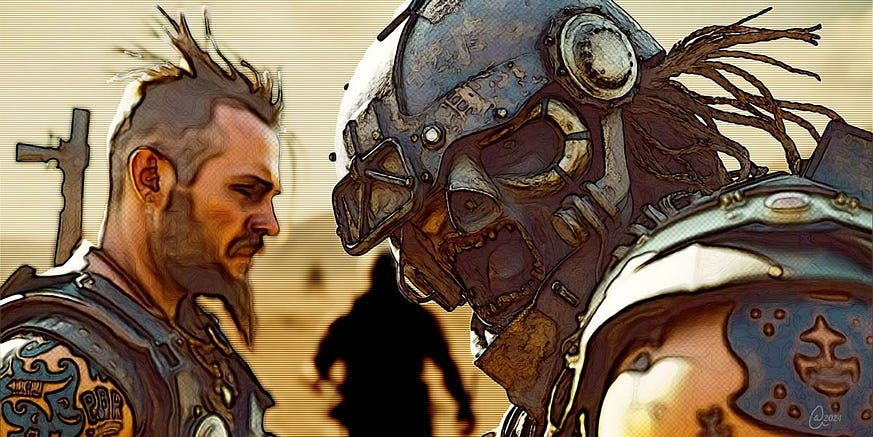
We would make the world of the Mad Max mythos manifest and find ourselves severely humbled as a species.

As much as people may hate government and as much as many criticisms are justifiable, we need government for the simple reason that the one in five who currently manifest the mental health pandemic we’re living with is a perpetual threat to human existence.

Once we succeed at reaching a point of optimal mental health where we have overcome our psychoses, human society may evolve to a degree where government is as much an automated system as the rest of the industrialized world promises to be.

Until then, our best bet is to become more engaged in our self-governance as a collection of democratic societies — which, at this point, means “taking our government’s back” — out of the hands of the few with too much power and back into the hands of all of us.

Humanity’s worst threats have always been the few with too much power victimizing the many with too little power. This is why democracy was born and has dominated the landscape over the last century.

Sadly, those with too much power in today’s world hate it and are actively undermining it to send us all back to a medieval state of existence as a two-class society of rulers and serfs.

As much as many people may wish to mock democracy as a fundamentally flawed system while pointing out the advantages of an autocratic system, the reality is that we have never truly committed to making democracy work. If we had, we would do the necessary thing — equip everyone with the education, skills, and insights required to make proper decisions reflecting what’s best for all of us.

This last American election showed us that people are still trapped within the paradigm of what’s best for them personally in a zero-sum game that necessitates the existence of losers to support the winners.

The solution to our problems is not eradicating what we struggle with but fixing where we fail to make it work. That means improving our education systems by learning to value education on a level as if our lives depend upon it because they do.