You don’t in the same way you don’t get rid of scars. They’re a part of you for life.
The injury may no longer affect you, but you will live with a reminder of it until you die.
That’s just life.
There is no point in fighting with yourself over “clinging remnants,” especially when they can still be helpful as shields against the perpetual assaults of believers.
Being aware of your “clinging remnants” gives you deeper insights into the effects of religion on a person’s mind and helps you to develop an objective perspective of yourself while improving your ability to help someone else when they’re struggling with the impact of their conditioning.
Being aware of “clinging remnants” helps you to be more aware of other forms of conditioning or manipulations like gaslighting because you’re more attuned to the subtle implications of words and their meaning.
Whatever may be clinging today may drop off over time to be forgotten while other remnants you were unaware of begin to crop up and occupy your attention. This is a natural part of the healing process that helps you to develop deep insights into the tangled web of confusion that religion weaves into one’s consciousness and unconsciousness.
This deconditioning process is a valuable experience in developing self-knowledge and awareness of oneself in depths many never achieve. They may irk you for a long time, and even for the rest of your life, but you will find moments where their presence allows you to perceive events or a situation on levels of subtlety that surprise you how people can miss what appears evident to you.
The most important goal is not to fight against the remnants but to develop an objective perspective of them. Understanding one’s sensitivities is like a vaccine against being conditioned in other areas and ways by different types of bad actors one encounters.
This post is a response to a question posed in its complete format: “Do atheists believe in the Jeffersonian phrase that “all men are created equal”?”
This atheist believes the word “equal” is all too often confused with “identical.”
All life is otherwise “equal” from the perspective of an experiential existence.
There is no metric nor means by which any evaluation can be established to determine degrees of consciousness that are not subjected to biases derived from ignorance of the nature of consciousness itself.
Humans can easily consider themselves “more conscious” than ants, but even that comparison is predicated upon a human bias toward the concept of consciousness.
“Ant consciousness” is observably “different” from human consciousness. It remains just as much of a mystery, taking the shape of a puzzle piece in which we cannot yet make out its composition.
The only thing we truly understand about consciousness is that we don’t understand it. We are exposed to slices of it presented within contexts appealing to the spectrum of consciousness we are most familiar with.
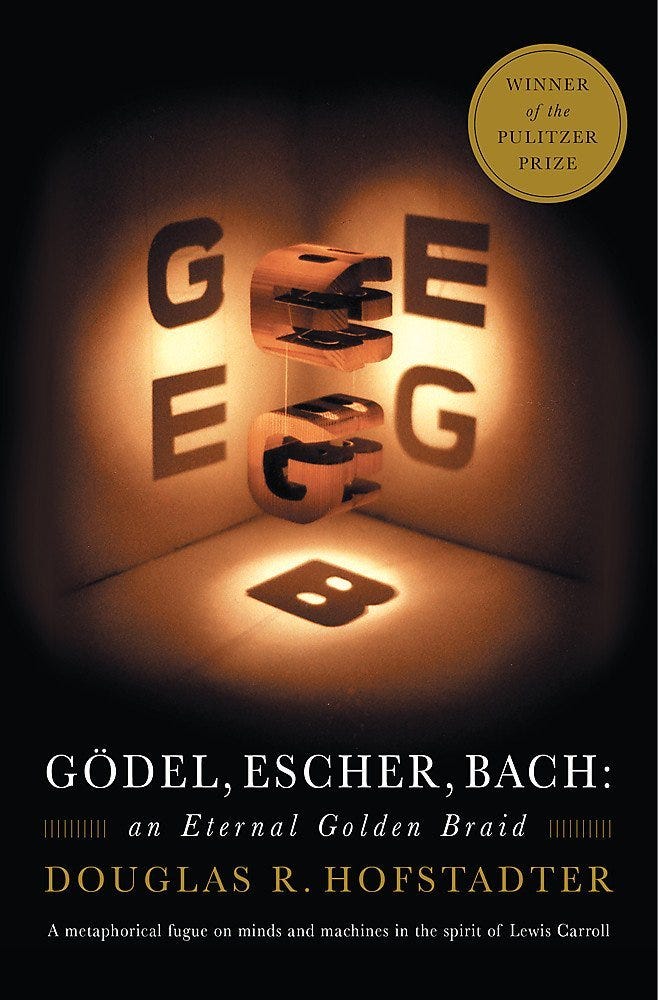
What broke the ice for me in an apprehension of a fundamental characteristic shaping the universe was the analogy of consciousness as a meteor crashing into another by Douglas Hofstadter in “Gödel, Escher, Bach — An Eternal Golden Braid.”
It was quite some time after reading this book as a student in the 80s that I encountered various ideas like “Integrated Information Theory,” which allowed me to progress beyond “The Thermostat Problem.”
I had always maintained a belief, however naive, in the fundamental nature of our equality as human beings. In many ways, my adherence was a reaction to coping with learning at the tender age of eleven, that my knowledge of the world far surpassed that of my mother.
(That revelation arose from her confusion over an ultrasound image on the television screen. She asked what it was, and I said it was a baby being born. The shocked expression on her face was like a sound vacuum for the room. My eldest brother turned to me and chastised me for exposing her to knowledge beyond her capacity to process it.)
Even though I was then always treated as an inferior in my family, I rejected that and struggled to assert my equality in an attempt to be accepted. That was fruitless and counterproductive because my efforts only increased the rejection.
I have learned that it is always those whose insecurities compel them to establish degrees of equality between people on the flawed notion of identicality. Over time, I have developed a bias against such a mindset, which I now view as an inferior state of being (a somewhat hypocritical attitude — but honestly earned).
Ironically, such a mindset seems most common among believers, but that may result from sheer numbers. On the other hand, I cannot ignore how that resembles the toxic competitiveness I experienced as I grew up in a dysfunctional environment ruled by a toxic personality who pitted their children against each other for favour.
Whenever the concept of equality is raised, I almost immediately think someone is struggling with their basic humanity and seeking validation to quell their insecurity.
All the pieces comprise the universe we inhabit, and parsing values between constituents is like arguing over whether red blood cells are more or less valuable than white corpuscles. All pieces of a puzzle are necessary to form a complete picture.
We will never see a complete picture if we discard pieces that fall outside our ability to comprehend the nature of their importance to the whole.
From my biased perspective, parsing out a given, like equality, to enumerate differences is more of an expression of toxic thinking that erodes the social fabric than is productive for our societies.
The implication of this question, mainly since an anonymous profile posed it, is that atheists do so out of malice.
That’s not the case at all.
Although some atheists may indulge in malicious dialectics to stir up anxiety within believers, that’s not typical of most atheists. Barry Hampe pointed out that it’s often a response to provocation from believers, while several other respondents indicated matter-factly that it’s a truth as they see it.
It goes deeper than simply asserting what appears evident to non-believers. Often, believers need to question their presumptions, and that’s precisely what the querent does by posing this question.
Telling a believer that God is not real forces them to either wallow in defensive denial (which disarms their provocation) or shakes their psyche enough to prompt them to question why someone would say something like that. This question represents the latter, which indicates, by my bias, the first inklings of doubt in one’s position. After all, we live in a world where every major religion claims to represent the “one true truth.” No rational person can accept how all are correct in their presumption — especially not after centuries of warring against each other for ideological dominion.
Often, the goal is not malice but an attempt to assist believers in expanding their perceptions beyond the box they’ve been conditioned to secure themselves within. In this regard, saying God isn’t real is a bit of a counter-provocation from a motivation opposite that of a believer who seeks homogenized thinking to validate their own.
I’ve begun asserting that if a God does exist, then it’s nothing like any human mind has ever imagined or could comprehend. Every religion has completely misunderstood and mis-imagined whatever might constitute Godhood. This is based on the reasoning that human minds are incapable of understanding something which would, by necessity, be so far beyond complex that we can’t grasp it on any level more significant than an eyelash mite can grok the body it lives on.
We may consider ourselves an intelligent species, but our metrics are self-serving. The universe is vast and complex beyond our comprehension. We may have unlocked many secrets, even enough to grasp the fundamental nature of its structure within the context of our perceptions. Still, we have no clue what may exist outside our perceptual fields — directly or in conjunction with technologies extending our perceptual capacity.
I’ve been thinking this particular approach might achieve some success with believers because the scriptures themselves already familiarize them with the notion of God being beyond human comprehension.
By reinforcing this particular piece of authoritative insight within the prevailing concepts of godhood, we can expand believer perceptions beyond the limits they have consistently shrunk over the centuries.
Our scientific investigations have forced them to retreat, shut down, and shut out threatening information. They’ve dug into the notion that science has been deliberately eradicating the foundations of their existence. They have reacted to this by negating everything which contradicts their biases. Everything scientific is perceived as an enemy. This phenomenon characterized much of the operative psychology within this last election.
As someone who perceives religion as a cancerous threat to our existence as a species (primarily due to the tribalist component of religious bias), I think the solution lies not in the rejection of a believer’s need to believe but in an expansion of their perceptions. By reminding believers that they don’t have definitive answers, explanations, or anything beyond their wistful imaginations to define a god that exists purely within their imaginations, they can begin looking outward instead of shutting down.
Learning to accept the necessary limitations of humanity validates a natural ignorance of godhood because it is ignorance shared by all humans. In this way, the atheist threat to their beliefs is mitigated.
Personal insecurities are also mitigated within an expansive tribe comprising all of humanity.
Our struggle with believers is born of piecemeal geographies and tribal borders hinging on being authoritatively definitive about each tribe’s perspective on the nature and shape of god. The common ground, however, lies in accepting how none of them can be accurate because humans cannot apprehend godhood — by the very definitions of “God” as established by their scriptural authorities.
By encouraging their minds to accommodate and embrace possibilities rather than allow them to be set like hardened plaster into myopically formed sculptures, the often violent competition between tribes can be mitigated. They’re all too focused on establishing a supremacy of authority within a definitive shape, boundary, and finite nature to an insular concept of godhood.
Opening their minds to accept how all are wrong instead of fighting over who is right in a “Might makes right” fashion may encourage them onto a path to the peace and love they often declare characterizes their belief systems.
In short, for believers, atheists may say, “God isn’t real,” but you can interpret that to mean, “Your vision of a god isn’t real.” You have nothing beyond your imagination and the force of your personality to support your contention that God is real. It’s a lie, and you know it.
Most atheists are open to evidence, but we’re also astute enough to understand how our primitive ancestors had no clue what lay beyond their limited geographical explorations and, much less, beyond our planet.
Even believers today no longer believe God hurls lightning bolts from the sky by hand or hides the sun from humanity when disappointed with us. We know no God sends hurricanes to our homes to punish us for mixing fabrics or eating shellfish. Most believers know this as well — and it’s usually the religious leaders who manipulate the gullible with lies for personal enrichment. Perhaps believers should choose new spiritual leaders who won’t lie to them and will open their doors to shelter them during a storm.
Perhaps it’s time to start looking outward to possibilities instead of lying to oneself and others about the products of one’s imagination and searching earnestly for a real god.
If all religions can admit to each other that they don’t know anything substantive with any certainty, then perhaps they can build bridges between each other instead of lobbing bombs. If that’s possible between belief systems, then it’s also possible for atheists and agnostics to join them in an honest endeavour toward solving life’s mysteries.
People have given incredibly poignant answers to this disgusting question, but you don’t care what they have to say. It’s all just rhetoric to you. It means nothing to you because you don’t have to personally deal with the reality of being denied access to life-saving treatment.
Your fake profile name already suggests you’re only interested in pushing buttons and watching the left get triggered.
The suffering of others holds no weight for you unless it becomes a part of your experience.
That’s just how you are… but that’s not what’s so disgusting about this question.
It’s horrifying that you’ve been so broken that you’re okay with contributing to the murder of innocent women… but that’s also not what’s disgusting about your question.
Have you noticed how all the answers aren’t actually about abortion?
They’re all about saving lives and explaining how important it is to have access to healthcare.
But you don’t care about that, just like you don’t care about the lives you’re responsible for ending with your attitude toward abortion.
No.
Your question proves you revel in all that.
You are okay with women dying because you believe that’s justice.
It’s just righteousness to you that they die.
At least that’s what you want to believe even though you struggle to accept that, and your doubt shows through the cracks in an attempt at an innocent facade in your question.
You ask why people on the left are obsessed with abortion, but they’re not.
Not one of these answers shows an obsession with abortion.
They show concern for life.
Don’t you find it strange that the alleged “pro-life” people who are supposed to value life don’t value it at all?
Yet, somehow, they have focused on forcing women to undergo a full birth in all cases because they hate abortions… while they claim to be defending a child’s life — as they ignore living children dying every five seconds due to preventable causes. (That’s at least ten-to-fifteen children that will have died in the time you spent reading this answer.) You blatantly lie about caring about life, and you lie in this question about who’s doing the obsessing over abortion.
It’s not the left who’s obsessed with abortion.
You “pro-lifers” have been obsessed with abortion since Roe v. Wade was instituted.
Once that protection for women was instituted — and to be clear, it was instituted to protect women from dying unnecessarily — the American left stopped thinking about abortion. Women were getting the treatment they needed… so there was no point in having to think about it any longer.
The anti-abortion crowd didn’t stop thinking about it, though. They became even more obsessed with it and hunkered down on a fifty-year strategy to repeal the law and ban abortion.
Throughout all that time, they’ve never bothered to learn why abortions happened. They have maintained precisely the same depraved attitude you demonstrate within this question.
You sincerely believe abortion is just another form of contraception, and worse, you don’t care what the reality is. You mock the nightmare of having to undergo an abortion procedure while comparing it to the contraception you’re also blocking access to.
You’re obsessed with women who undergo abortion procedures because you believe they’re trying to weasel their way out of unwanted pregnancy… and you assume that’s not supposed to be permitted… even if they’re rape victims and not the whores you want to believe they are.
That’s what makes you evil… your hypocrisy, your iniquity, and your insistence that your disparaging fiction is reality without caring in the least about the horrifying experiences women suffer through as you gleefully kill them with your indifference.
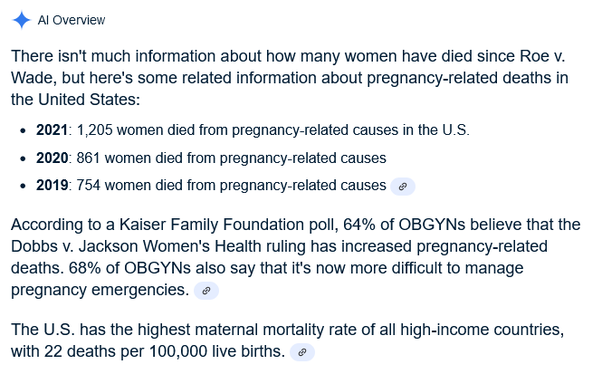
That’s right… you are a murderer, just as if you pulled the trigger on a gun to end their lives by your hand. Your support of denying women the life-saving treatment they need means you have, according to this quick AI summary, been responsible for the unnecessary deaths of almost two thousand women as a consequence of your obsession with abortion.
Your obsession with abortion is responsible for almost the number of lives lost on 9/11.
You’re worse than a terrorist because you behave as if you are protecting lives instead of destroying them and committing manslaughter with your depraved ignorance.
No one on the left is obsessed with abortions, but you already knew that. You want to wipe your hands clean of the evil that you and your ilk have been perpetuating… you know what you’re doing is wrong, and you’re having fun with it… and that’s what makes this question and you so inhumanly disgusting.
I remember someone I once trusted approaching me for relationship advice.
I don’t remember the specific complaints registered against him by his then-recent ex, but I remember how he tried to convince her that he had changed overnight.
The next day after she ended her relationship, he returned to her and claimed he had changed.
After relating that to me, I tried to explain to him that’s not how change works. One doesn’t change oneself like they change their clothes, most certainly not overnight.
That wasn’t my best approach to helping him overcome his anxiety. He outright rejected what I tried to get him to understand. I believe that was the last conversation he and I ever had.
However, His attitude toward change stuck with me as I struggled to understand that thinking. I thought of it as chillingly superficial and worse as it appears to be an attitude which fits within the mindset that justifies telling people what they want to hear.
Everything about how a certain mindset perceives the world around them is based entirely on optics, and their behaviours are mere performances designed to elicit desired responses from their audience.
It left me feeling cold, and I’ve learned to understand how severe a red flag that is. I wish I hadn’t been such a slow learner in this regard because I could have saved myself a world of hurt if I had fully considered the implications of that behaviour then.
At any rate, the notion of undergoing a transformative experience had always intrigued me as I deliberately sought paths and methodologies for transcending limiting ways of being. From a very young age, I was aware that I was conditioned into being what I conceptually rejected but required something tangible to transform my desire for change into actual change.
Symbolically, the notion of being “reborn” is a ritualized performance in which people present themselves as if they had changed from committing to a belief system and being “remade” by that commitment itself.
People who have undergone such a ritual sincerely think they have transformed into a better version of themselves. Their exclamations, however, have more often been expressions of hopeful anticipation rather than observable reality.
Their subsequent behaviours and fundamental attitudes remain the same. From an outsider’s perspective, the only change visible was the compass setting they prioritized.
Although some stick with their new compass setting over the long haul, many returned to being who they always were while dismissing a temporary compass setting as one they outgrew and was no longer relevant to them.
Some remained within their faith but regarded it with their “old eyes” and treated their entire relationship with their beliefs and community as a game of optics. Others moved on as they acknowledged their experience as helpful but not enough to commit to it for a lifetime. I found this latter group more authentic in their journey of discovery. The clarity of direction or need they expressed as they described their choices through fogs of confusion they struggled to dispel always made them feel more human to me. In contrast, I found those who appeared to skim through emotional turmoil somewhat confusing. I didn’t know how to interpret their responses to emotional struggles. I must have envied them as I could never respond to my own in similar ways and often wished I could have. It seemed to make life easier for them.
These “performers at life” always made me feel cold, though, and it’s taken me a long time to understand why.
Understanding how a proportion of our population lives through a shallow lens may be conceptually easy to grasp superficially, but that’s not a satisfying apprehension of the phenomenon. One inevitably finds oneself mystified by its manifestations while wondering why they feel put off in ways they don’t quite understand. It can be a harrowing journey to fully grasp the implications of such a life on a visceral level for those whose feelings run deep.
Another example was an individual who had been married for about six years and who I had gotten to know as a close couple who seemingly shared everything. Conversations with either always involved extolling the virtues of the other and never was an unkind or critical word shared. I thought they were a remarkable example of a successful couple until the husband informed me they were getting divorced.
Their separation appeared as if life sped forward at super-speed for them because it all took place within a couple of weeks — from agreement to the formalized documentation of divorce. There was no emotional turmoil I could detect in the husband, as the ex-wife had already left, and I had no means of gauging her condition. In his case, however, I was more shocked at his ability to move on than I was at their separation.
For him, it was as if nothing of note had happened in his life. I couldn’t fathom that, particularly after having endured my periods of extended angst over far shorter and more superficial commitments. I remember envying his ability to rebound from what would have been at least a year or two of turmoil for me.
I didn’t realize until later that his personality was characterized by subtle paranoia and mistrust toward others on mostly innocuous levels. I first noticed that aspect of his character after he described a business venture I found myself intrigued by and expressed how much I liked it. His response became immediately cold and protective of it. He clarified that I had no place in his venture even though I had not expressed such desire or intent.
I remember switching the conversation at that point and inquiring about his ex-wife, and I was curious to know if she was doing well. His response was mainly dismissive, but he let the cat out of the bag by indicating that the reason for their divorce was his unfaithfulness.
The ability to move on quickly from a profoundly emotional experience had often been a source of admiration for me. That was before I understood the costs of such a state of being — to both themselves and those they inevitably victimize.
I don’t think he was ever capable of connecting deeply with anyone, and I didn’t understand, even then, how profound that was. I knew it was essential for me, and I accepted how that might not be for others. I didn’t think of it as a toxic dysfunctionality — even though I should have known better after having experienced it with many others so often throughout my life.
From a ritualistic perspective, there can be some benefit to undergoing a formalized process that symbolically represents change and, more importantly, a desire for change. However, it’s all done for optics more than acknowledging the necessity of change and its role in one’s personal growth.
I always have felt this way, but I never understood how that attitude itself, on my behalf, was present even as a child when I underwent my first confession. It wasn’t conducted in a booth but in an empty classroom on a chair across from the minister. We were in full view of each other without obstruction, and he asked me to speak.
I struggled to find words while suppressing a broad smile as I found the experience entirely superficial. After all, how could I possibly be exonerated of guilt over actions I may have taken that were considered sinful by simply uttering them to this stranger? At the age of eleven, the most egregious sin I could think of was masturbation, and I suppose that might have been why I struggled to suppress a broad smile.
Within a belief system that purports to provide adherents with pathways for growth, I can understand and support the prescriptive manner of formalizing rituals to celebrate that growth. The shortfall in converting subjective experience into an objectively procedural system is that it fails to account for individual differences. It is a process that cannot account for or mitigate abusive misuse.
Much like the reporting systems across all social media, the symbolic ritual of change is a tool that can be weaponized for personal gain. The emphasis on optics is a form of corrupt thinking which overlooks the critically ineffable in favour of supporting shallow expedience.
The concept of “being born again” is just a formalized process of stripping profundity from life in favour of optics because we do not, as a whole, value depth in a world that has industrialized human existence and reduced the human condition to the level of a disposable commodity.
We have evolved into an increasingly dehumanized existence while being led by institutions that claim to represent higher states of being. Our only hope for reclaiming our existence as human beings capable of achieving our potential is completing our transformation into a fully automated society. It will only be once we cross this threshold that human beings will be free of the superficial trappings of optics made necessary by the industrialized herding of our species. The function of symbolic optics is an inherent limit to our potential as individual beings within what we refer to as “civilized society.”
I believe the concept of “being born again” should be viewed with great suspicion and mistrust because it reflects nothing of an individual’s inner world or the foundation of their character.
It can, however, be a practical means of applying a metric for identifying differences between that standard and one’s words and deeds to triangulate a more accurate picture of one’s internal world.
The first place to start is to give up the notion that being “right” or “wrong” matters more than being accurate, informed, and knowledgeable.
“Right” and “wrong” are egotistical expressions that either stroke one’s sense of self or dismantle one’s self-confidence. Neither is helpful to oneself, others, or the issues at play.
As I often find myself checking out profiles to gain context into the querent’s mind, I did so with yours and am pleased to discover that you’re already on the right track.
Fundamentally, we’re all fumbling about in the dark and clueless, even about things we think we know. The worst thing we can do is believe we are “right” because that perspective contributes nothing to one’s growth and kills one’s ability to explore beyond that point.
No matter how “right” we might feel about something or how complete we think our knowledge of something, there is always something to learn about it that will be new to us. There is always a different perspective on that thing that we have not yet encountered.
If we could all adopt the perspective of being clueless, our world would experience far fewer conflicts because people would be more open to the perspectives of others.
Unfortunately, we live in a world built upon the foundation of exploiting insecurity at all levels throughout society — whether selling hair products or climbing corporate ladders. Insecurity has been weaponized as a tool of manipulation for personal gain over and above benefiting society as a whole.
We have never been more fortunate than we are today when confronted by the limits of our knowledge and understanding. Solving the problem of being unsure about one’s position means simply whipping out one’s means of accessing a comprehensive knowledge base to conduct basic research to verify if one’s position contradicts facts.
There is no real point in engaging with others to determine if one’s compass setting on knowledge is on true north by triangulating it with the settings of others because one is just engaging in an egotistical fencing match at that point. Online “debates” are often more about egotistical masturbation than they are about deriving an objective apprehension of issues to determine pragmatic resolutions.
Sharing information obtained through research efforts is far more rewarding and less prone to conflict over subjectively defined notions of being “right” or “wrong.”
One can still certainly derive flawed conclusions on matters, but that’s also a function of incomplete information that may be deemed “wrong.” Adding to one’s information base is less about determining “right” or “wrong” and more about ensuring the completeness of knowledge in a subject domain.
Knowing the difference in a dynamic with someone else on this level is essentially determined by whether or not the critic of one’s knowledge adds to one’s information base or disparages one’s person as a reaction to the information conveyed.
To directly answer your question, after all the verbiage I packed into this long-winded answer, is that you will know by the content of your critics’ arguments.
You can always deem yourself “not wrong” if the other party adds nothing to your position. If they can add valuable information to expand your knowledge base, you can still consider yourself “not wrong” while learning to be “more right” by their contribution.
This is how you can preserve your superior perspective of evolved humility by remaining confident in being clueless.
Congratulations on achieving a higher level of awareness than most of us monkeys ever attain throughout our very challenging lives.
Another way to word this question would be, “Why do people not share the nothing they have to share?”
How does that work out for you?
It sounds kind of silly, doesn’t it?
It probably makes no sense to you that it’s your question in different words. That would be because you don’t understand how atheism is literally nothing.
Atheism is the disbelief of the claim that “God exists” or “God is real.”
This atheist is perfectly happy if you’re happy believing whatever it is that you believe — anything which helps you live your life peacefully and productively is positive.
There is no need to hear how or why that belief works for you because it’s your belief, and no one would truly understand how or why that belief works for you. Even other believers who hold beliefs similar to yours would have their reasons and find unique benefits to their beliefs that will differ on some levels, even if they appear the same on others.
Humans are all unique, no matter how alike they may be. That’s the function of individual perception and cognitive features of life, such as an ego.
Good for you. You’re happy.
That’s all this atheist cares about.
The details you may want to share are generally too alien for me to appreciate, so your efforts merely contribute to a divide between us rather than building a bridge.
The reason for that is when people share their beliefs, they’re also sharing their insecurities with those beliefs, and sharing is a way of harvesting validation.
By sharing your beliefs, you are merely showing this atheist that you don’t really believe what you claimed to believe while demonstrating an expectation of me adopting a paternalistic response, patting you on the head, and telling you what a good person you are.
I would have already assumed that about you before you began speaking. This atheist prefers to think of people as good by default until they prove otherwise.
Starting with a cynical form of misanthropy is just an unhealthy way to live.
At any rate, if you were to ask me what I believe, I would have to choose from among a gazillion slides running through my mind to pick one and talk about that one microscopic portion of what comprises things I believe and why I believe what I believe. I would have to do that because most such questions don’t seek in-depth insight but a soundbite answer like, “Yep. It sure is a nice day today.”
That’s not a discussion about beliefs. That’s just chit-chat — small talk.
Serious discussions about beliefs should last hours at minimum, or they’re not serious discussions about beliefs. They’re idle chatter and empty noise to fill silent moments that often make many uncomfortable.
Silence can be far more golden when simply sharing space with someone without requiring temperature checks to ensure no overheating is occurring underneath one’s notice.
At any rate, disbelief in a god creature is nothing by contrast to something that comprises an affirmative belief in the existence of a god creature.
That’s what makes your question appear silly.
What is the point of telling people one lacks belief in a god creature, particularly when so many believers find that so offensive they spend all of their free time demonizing non-believers?
This atheist sees no value in telling people things in person that would add stress to their day.
I’m okay with openly expressing my views online because no one’s day is interrupted by my words. People choose to read them.
Topping matters off to make your question appear even more silly is that a government employee is responsible for serving all citizens, regardless of their faith or beliefs. If they were to share their personal beliefs openly, they would inevitably offend someone.
I am sure you are well aware of the bloody conflicts that have been occurring non-stop around the world for centuries between people of different belief systems. For a government employee to openly share their beliefs with the random people they serve would be doing a disservice in general to the public they are supposed to be serving as a representative of a nation with a secular umbrella welcoming all faiths.
This all boils down to the fact that no one is trying to keep anything away from anyone as a government employee. They are performing their duties as expected by not imposing their views on others.
Government employees who step outside their role as representatives of a government that welcomes and protects all beliefs are being derelict in their duties and should get fired for doing so.
Some even face legal battles for insisting their beliefs dictate how they are to perform their duties, and that is how it all should be for people who want to live free.
This post is a response to a question posed in its full format as follows: “Why are there so many degenerates in this world that lack a moral compass, namely in 1st world countries where most learn this by the family that raised them, school, sports, being in public, etc?”
The problem with this question is that it’s impossible to construct an objective answer to address its core concern. This question is more of an emotionally driven complaint than a question.
The reason is that it’s built upon subjectively defined presumptions like “degenerate” and “morality.” Neither of these concepts has any objective metric to identify differing degrees of degeneration or morality between any two random people.
Adding to the subjective complexity, universally accepted standards for the definitions of these terms do not exist.
What can be deemed “degenerate” to one person is celebratory to another. What is viewed as “morality” to one person is heinous to another.
Making matters even more complicated is that a word like “degenerate” constitutes a value judgment. Regarding its use, what that person views as “degenerate” is already a visceral rejection of the object of their judgment. There is no wiggle room for the interpretation of an individual’s value. No description of the specifics of the behaviour in question leads to the value judgment of “degenerate” because “lacking a moral compass” is just as subjective a judgment as “degenerate.”
This question is an example of circular reasoning permitting no room for objective examination nor any means by which one can identify alternative conclusions to the objects of such visceral criticism.
The only way to address this question is to search one’s memories for emotional reactions one may have had that can dredge up conclusions about different experiences one can align with the question based on a similar degree of emotional intensity governing one’s biased findings.
This style of generic language relies upon the subjectively defined feelings of others to function more like a dog whistle than a critical analysis of the issues in question.
This kind of “loose language” is a breeding ground for bigotry to evolve in a landscape characterized by pure emotion and which lacks grounding in any shared physical reality.
For example, if someone were to mug someone else and witnesses talked about the event while sharing similar emotions and a similar view of the event in question, they could quickly dredge up a similar degree of emotional intensity to this question. Their views would be predicated upon a shared experience, while their particular reactions to the event would be grounded in a shared physical reality.
In the case of this question, that shared reality exists only within the realm of individual imagination and dredged-up memories of different events. Here’s a generic dialogue of an imaginary sharing of emotional intensity to highlight this dynamic:
First Person:“I was supremely pissed at this one thing this one person did. Be as angry as I am about this thing you didn’t experience.”
Second Person:“I didn’t experience what you experienced but let me tell you, I also got supremely pissed about this other thing that you didn’t experience, but because we’re both supremely pissed, we share a common ground of agreement.”
First Person:“So, you agree that we both have good reason to be supremely pissed to the point of sharing a mutual hatred for something?”
Second Person:“Yes. We both hate something very much.”
First Person:“What do we hate together?”
Second Person:“How about that thing over there? It’s pissing me off right now that I’m in a sour mood.”
First Person:“I agree. Let’s both hate that thing. That way, we can forget what we hated separately and find camaraderie in a shared hatred for something else.”
This dynamic is how bigotry spreads throughout a population to function like a transmissible disease.
This is why language choices are crucial for objectively apprehending the realities we react to.
Allowing another person’s subjective responses to dictate one’s attitudes toward a subject abdicates their free will and subordinates their opinions to whoever demonstrates the most significant force of personality.
This is the process by which identity politics emerges.
This is precisely the dynamic that Donald Trump has built his political collateral upon.
It is a means by which critical thinking is killed, and people like Rupert Murdoch capitalize on it as a vehicle for personal enrichment at the expense of the social contract.
This is why we have “so many degenerates in this world who lack a moral compass.”
This post is a response to a question posed in its full format as follows: “Do atheists believe in fate, good and evil, or some other supernatural beliefs? Like do some atheist believe in alien life?”
This question embodies the problem with the notion of belief among believers.
Believers often need help understanding the difference between knowledge and belief. Blurring the distinction between two different but similar concepts makes it challenging for them to adopt a third option between their binary perspective on life.
To a believer, one either believes or does not believe.
Knowledge isn’t even a factor in their perceptions because knowing, to them, is just another form of belief. Belief supersedes knowing because one cannot know if their prayers are being heard by a “Father Cosmos,” so they must have faith that he is listening. This places an undue burden on the concept of belief that breaks its meaning in their minds.
They have no choice but to relegate knowledge to a subordinate relationship with belief because belief is everything to a believer.
Ironically, they have no problem with aspects of belief that require little to no consideration, such as “suspension of disbelief” because that occurs autonomically while engrossed in an entertaining fiction, as does “disbelief” when it applies to every belief system that isn’t theirs.
The notion of belief being subordinate to knowledge is like heresy, which induces a fear of straying, resulting in an eternal punishment for failing to adhere to their faith. This is why they often suffer crises of faith due to excessive cognitive dissonance.
The seemingly fearless attitude of atheists placing knowledge above belief attracts believers’ attention to notions of non-belief, like a moth to a flame. Since they fear eternal retribution for disbelief, they view atheists roaming around free to live their lives in terms not too dissimilar from how many people view a convicted felon roaming about freely to campaign for one of the most influential roles on the planet. It’s like witnessing a horrible accident. One would prefer to avert their gaze but cannot as they stand transfixed over the intense drama playing out for their unwilling minds to process.
The cognitive dissonance this generates explains the obsessions believers demonstrate over atheism every day on social media.
We see in this question how they fabricate presumptions about atheists that fit within their cognitive boxes of belief determination.
They cannot think beyond their belief paradigm to interpret reality beyond a binary state. One must either believe something or reject believing something. The meaning behind the concept of disbelief itself is lost on them. It’s like interpreting absence as a form of invisible presence.
To address the presumptions of belief in this question and many like it, one either presents a dismissive response like they would with a persistent child that fails to comprehend nuance but requires something of an answer to quell their curiosity or one burns through several boxes of crayons to bring them up to speed on basic concepts that will fly past their perceptions to leave them even more confused than before answering their questions.
This is the rub with knowledge.
Every question answered that contributes to our overall understanding of ourselves, others, and the universe we inhabit generates dozens of additional questions we never realized were questions before getting that answer we thought we wanted but sometimes regret getting.
To address the basic but flawed presumptions within the questions above, one must judiciously parse the information in ways that ignore large parts of what is implied within the question and attempt to focus on constructing a simplified answer they will understand, just like one does with a child.
For example, “Atheists don’t “believe in” alien life. Atheists know the universe is vast beyond belief, and the existence of life on this planet within a Brobdingnagian (I love this word) ocean of countless planets means the odds are beyond simply excellent that life has emerged elsewhere. We have been getting new evidence supporting that conclusion, such as the discovery of RNA embedded in spacefaring meteorites we’ve examined.”
This answer won’t be interpreted as stated, though. It will be construed as “Atheists believe in alien life.”
The same applies to concepts like “good” and “evil”. We can explain and re-explain repeatedly until the proverbial cows come home that “good” and “evil” are subjective concepts requiring context for meaning. However, their interpretations of these concepts are apprehended as objectively as one would a physical cow within their field of vision.
“Supernatural beliefs” are also subjective constructs that we can explain “exist outside of nature” because that’s what “supernatural” literally means — “beyond nature.” To accept subjectively defined notions as true, one requires belief, and that’s why one interprets these concepts in terms equivalent to knowledge.
To “believe in fate” is to subordinate one’s knowledge derived from empirical experience through an objective lens to a subjective interpretation functioning like a soothing narrative rather than a concrete mystery to resolve. This dilution of one’s senses is essentially the core of the threat to human thinking that religion poses to humanity and that limits our potential as a species.
Chances are excellent that if you have to ask strangers online, you’re already concerned about their reactions.
That should be a huge red flag, especially after reading some of the horror stories in the answers already given.
Your parents have spent a lifetime being who they are and believing what they do.
Their vision for having children was miniature versions of themselves who they could accept may take a different path than they took for themselves but would at least hold the same values they do.
As you may have noticed, religious beliefs are not like most other beliefs people have about different things in life.
Religious beliefs are personal identities, group associations, and a support structure where opportunities in life are found.
They will view their religious beliefs as a prescription for success in life and a symbol of unity within their family. All their children sharing in their beliefs means they will have become successful parents who have given their children their best chances at leading a happy and rewarding life like they feel religion has done for them.
Rejecting their religious beliefs will be interpreted as a rejection of their parenting.
It may not make sense to think of religious beliefs you don’t share on this level in that way. The reactions you will get from them if you insist on having them see you on a different path to self-development, self-discovery, and self-discipline than they took will show you what a wedge in your relationship will feel like.
They may initially show some acceptance because they love you more than their adherence to their beliefs, but that acceptance will grow into a distance between you.
You will eventually discover their open embrace of you, and your accomplishments will be responded to with increasing disinterest.
During periods of conflict, they may claim they no longer understand you and will blame your straying from their beliefs as the cause. They will look for scapegoats to blame and begin criticizing your choice of friends, the school you attend, or the video games you play.
Anything they can use to justify how you are not choosing to betray them willingly, they will weaponize during open conflicts you might have. If you have never experienced open conflicts with them before, you likely will afterwards.
To answer your question directly, it’s okay to be who you are, and it’s even recommended in a world where you will spend your entire life fighting to preserve who you believe yourself to be, but you will have to learn to pick your battles in life, and some are just not worth fighting.
Eroding one of the most important relationships you will ever have is not a battle anyone should take lightly, particularly in a world where a whopping majority (70%-80%) of families are dysfunctional. Suppose you have a happy family life as it currently stands. In that case, you might want to accept how that’s already a treasure beyond what most experience. It may not be worth giving that up to have them accept what you believe in yourself because your assertion could very well end up in your rejection.
You can certainly continue to question your views on religious beliefs, and you should continue to do that for the rest of your life because that’s how you will grow as a person. Understand, though, that it is always a personal journey one takes. As much as one would like to share every intimate detail of that journey with others, it’s impossible with almost every other person one will encounter.
Your personal development journey will always be your journey. The rest of everything you encounter will be about how to get along with the people in your life so that your life isn’t made any more complicated than it already is or will be.
Good luck with your journey through this nuthouse.















 thotbag