Do atheists hate believers? And other Myths

To all my millions of readers (lol) chomping at the bit (double lol), wondering what may have happened yesterday when you didn’t receive a daily missive of my preponderant wizdumb, I have an explanation and an announcement below my typical approach to composing my publications by posting answers to questions on Quora.

Today is a departure from my standard fare in three parts: an answer to a typical Sunday question, an explanation for my derelict behaviour, and a summary of my delusion.

Now, on with the question:

Is it possible that some atheists hate believers simply because they believe there’s a God?— posted on Quora at: https://www.quora.com/Is-it-possible-that-some-atheists-hate-believers-simply-because-they-believe-theres-a-God/answer/Antonio-Amaral-1

Hate the sin, and love the sinner.

Do only believers believe this principle?

I don’t think so. I would argue that atheists uphold this principle better than believers.

Atheists don’t care what people believe because they value their right to disbelieve more than many believers value an atheist’s right to think differently than they do.

After all, believers perpetually impose their beliefs onto others and have been waging wars over beliefs in conflict with other believers for centuries.

Atheists, on the other hand, have had to survive in a world where they would be killed for disbelieving the beliefs held by believers.

Atheists generally find believers’ behaviours most intolerable because they are often intolerant of those who don’t share their beliefs.

If believers stopped trying to impose their beliefs on non-believers and those with different beliefs, there would be no reason for atheists to have difficulties with believers.

There is no point in hating people for what they believe. Hating a person for beliefs they hold is a myopic way of avoiding truths about doubts one is haunted by.

Values are another matter altogether, which warrants concern because they form a foundation for one’s beliefs and the actions they inspire.

Among the many reasons I began my daily routine of publishing long-form articles on Medium, Substack, Patreon, and WordPress was a realization I had about myself after reaching a milestone of about 18,000 answers to questions on Quora. There are a lot of words inside me itching to get out, and I can’t keep my mouth shut. I write because I must.

I didn’t think I could sustain a long-term effort, particularly not one that provides no compensation and likely not for a long time. It’s much easier to stick to a discipline when some extrinsic rewards accompany the intrinsic ones. Nonetheless, even though I have written almost daily for most of my life, I began my sustained writing journey for public consumption nearly a year ago because I wanted to establish that I could find enough inspiration to maintain a long-term writing vocation.

I joined Quora in 2014 to leverage the social media site as part of a marketing funnel for myself in a career as an Instructional Designer. Long story short, I couldn’t continue that particular career for reasons I won’t get into now. Still, I did find myself relying heavily on Quora and in answering questions I believed on some level to be helpful to others, while being a form of therapy for coping with a significantly traumatic experience I’ve been struggling through for much longer than I would have believed at the outset.

Ten years later, I realized I could package my writing into publications of sufficient length that might appeal to an audience, and so that became one of my goals. I also decided to commit to an entire year of daily publishing long-form answers. I managed to reach 314 consistent days on Friday. 

I’ve also been relying on Grammarly to save on efforts to clean up my grammatical sloppiness and have been receiving weekly reports of my performance. Since January 13th of 2017, Grammarly reports processing almost 80 million words I’ve written. I’m also less than 3 months away from a 200-week writing streak achievement badge. (woohoo)
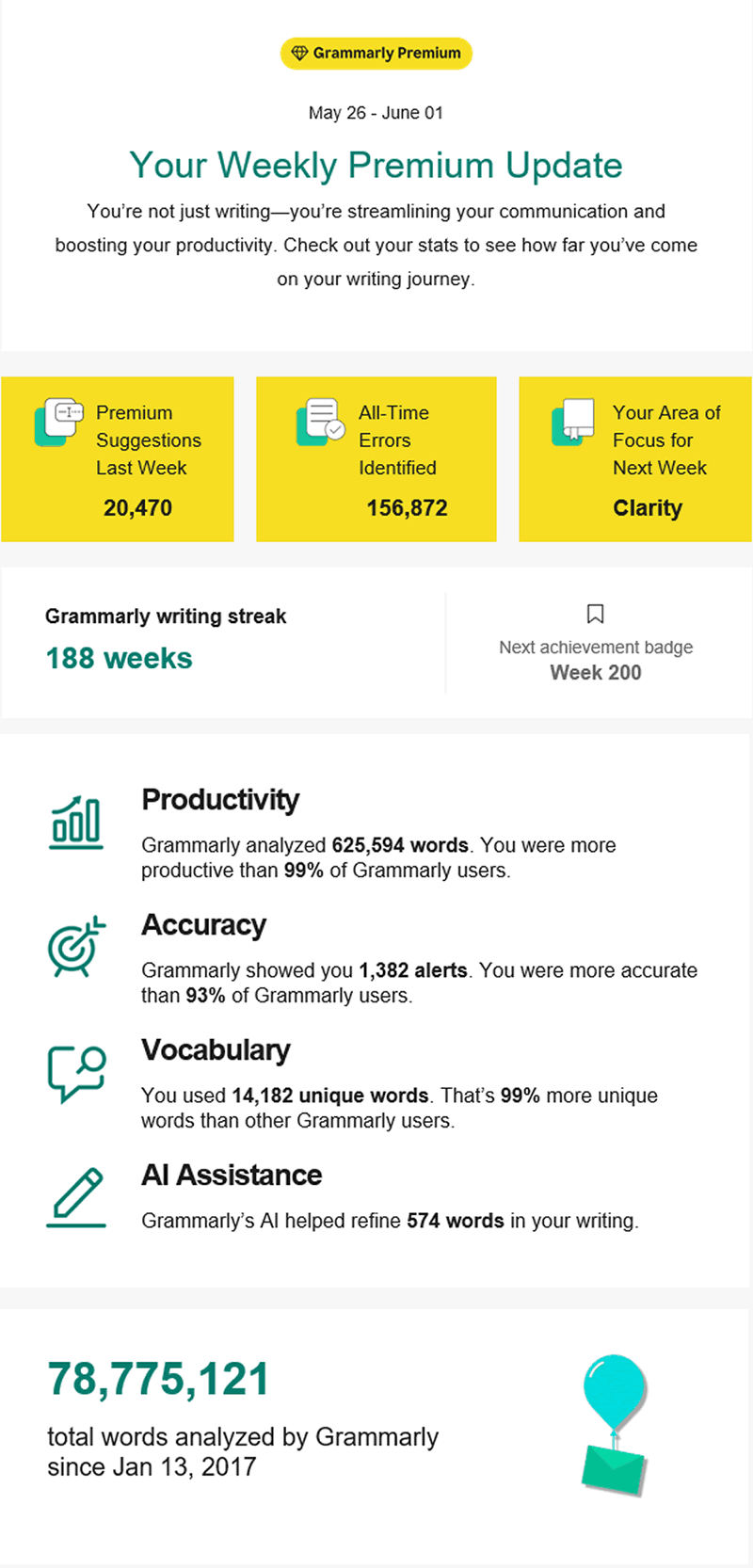
Another reason I gained for continuing my daily publications about 50 weeks into my efforts was an article about someone who experienced new professional opportunities opening up for them on LinkedIn after one hundred days of daily publications. Since I was already halfway there, I figured if I held out long enough, I’d receive a touch of magic myself.

No such luck, but realizing I’ve been writing at a consistent volume of more than 9 million words per year, it eventually sunk into my thick skull that I’m producing enough volume to have written several books by now. Not only have I struggled to maintain my publication schedule while working on other writing projects, but I’ve also been somewhat disappointed by an issue of inconsistent quality in maintaining such a frequent publishing schedule.

I can do better by scaling back on publishing frequency, giving myself time to provide background research to support my content, and providing you, as a reader, with a much richer body of copy to engage your mind and stimulate your imagination.

…And since Saturday was my birthday, I used that as my lame excuse for taking a day off.

At any rate, I’m considering a three-day-per-week schedule — possibly Sundays, Tuesdays/Wednesdays, and Fridays from this point onward.

I intend to focus more in-depth on some ongoing topics, including elaborating on my personal experiences in ways that contribute to the public dialogues on issues of governance, UBI, and the “defunding the police” movement, and of course, including religiosity as I have each Sunday for several months and other topics I am moved by.

I hope you enjoy my more focused approach to long-form writing, and if you prefer shorter pieces, I will continue being an uncensored smartass on Quora: https://www.quora.com/profile/Antonio-Amaral-1/

I very much appreciate your support. Thank you.

Now, onto part 3, where I become an obtuse smartass once again with an answer to another question:

What are some common myths social media tells us?
https://www.quora.com/What-are-some-common-myths-social-media-tell-us/answer/Antonio-Amaral-1

Social media is an ecosystem, not an entity.

As such, social media is the chaos of billions of voices shouting at the universe.

If all of that were to consolidate into encapsulated messages or narratives in concise enough forms to be considered myths, then one would be that we are an ocean of rudderless beings all vying for some form of ascendence, whether individualistic or tribalistic.

We fear death as we revel in it through our rampant destruction of life, as we deny the finite nature of our existence and dream of immortality.

Social media reminds us of our insignificance as individuals on this Earth and as a species in this universe, as the cacophony of voices harmonizes into an anthem proclaiming our relevance.

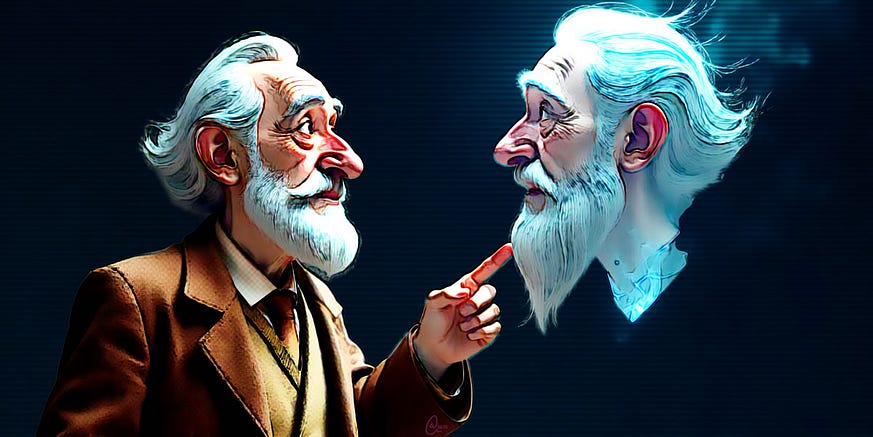
I wish I could provide tangible proof of God.

This post is a response to a question posed in its complete format: “I really wish that I could provide tangible proof of God’s existence to atheists, but I can’t. The best I can do is treat them as I know He would want me to. Does that make me a bad person?”

Why do you need to convince others of your belief?

That’s the question you should be asking yourself.

What a person believes doesn’t make them “good” or “bad.”
What they do, however, is what accomplishes that.

To be a good person in this context is to accept how others do not believe as you do, while you enjoy your life as you please, without feeling compelled to convince others to validate your beliefs by thinking the same as you.

The more you feel compelled to convince others of your belief, the more you demonstrate to the world that you doubt your beliefs.

Atheists would have absolutely no problem with believers if they just stopped trying to convert everyone else into copies of themselves.

There would be fewer wars if people could accept how others do not believe the same things they do.

The real issue here isn’t that you believe something or others believe other things. The core issue is that believers feel compelled to convert others and force them to think as they do.

Have a look at this:

This is how people can live when they’re not oppressed by the beliefs of those who impose them on others. This is how women can have the same rights as men while living as equals in a society of equals.

Now, have a look at what happens when people force others to believe as they do:

This is why the problem isn’t that you believe but that you seem compelled to convince others to adopt your beliefs.

This is where you become an enemy to humanity. This is the slippery slope to making you a bad person.

What can lead you to become a bad person is a desire to make others believe as you do.

If you are concerned about being a bad person, you must stop fretting about how others believe and deal with your toxic need to convince others of your belief. You must ask yourself why you must convince others that your God is real. You must stop caring about others believing differently than you because that is the path to becoming an evil asshole.

If you truly believed what you claim to believe, you would not feel compelled to convince others of the validity of your belief.

If you cannot find recompense within your belief, it’s not an honest belief but an indoctrination.

Do you know what else is compelled to spread and take control of other lives?
A virus. That’s what a virus does.

Is it better to have faith or not?

This post is a response to a question posed in its complete format: “Dear Atheists, do you think its better to have faith, or no faith?”

Believers should learn to understand how various forms of faith exist that don’t require you to check your brain out of service to maintain them.

For example, one can have faith in all the other drivers on the road to mostly observe the rules of the road.

One can also have faith in the referee for your game who is sincerely interested in being objective.

One can also have faith that the person they hire for a job sincerely wants to succeed and contribute to your success.

None of these forms of faith are guarantees against misjudgment but are optimistic expectations that will generally pan out positively. The odds of a negative outcome are far fewer than a positive outcome.

These are forms of faith based on an awareness of the world and an objective understanding of how people generally behave.

We know there are outliers and sometimes disappointments, but for the most part, one’s faith in these conditions is met with positive results.

This is a justifiable form of faith.

What is not a justifiable form of faith that essentially amounts to wallowing in self-serving delusion is believing in the existence of a human-like entity endowed with magical powers seen nowhere else in the universe… particularly when assuming such an omnipotent being of galactic proportions will intervene in the life of something less than a speck of bacteria to it… and most especially in matters of convenience like one’s favourite team winning a ballgame or a parking spot opening up in a timely manner.

Otherwise, it is much better to have enough faith in oneself to ignore the naysayers in one’s life than not because one will never have any hope of realizing one’s goals or dreams without it.

What to say to an atheist.

This post is a response to a question posed in its complete format: “What are some things to say to an atheist that will make them think about their beliefs?”

This question is a sad indictment of believer conditioning.

Very few people think about their beliefs more than atheists, particularly those who have spent a lifetime detangling the nonsense crammed into their brains by the religious conditioning they received since childhood.

If believers want to know what to say to atheists, they must first learn to emulate the humble nature of their Christ and not assume they’re in greater possession of a deeper understanding of their own beliefs. You don’t understand your beliefs as well as you think you do. Your attitude in seeking a way to “make them think about their beliefs” shows you have very little depth of understanding of beliefs you inherited and have swallowed wholesale without putting any effort into understanding them beyond how you should submit to nonsense.

Every day on Quora alone, numerous believers pose questions demonstrating a very underdeveloped and even childlike apprehension of beliefs in general. At the same time, statistics show that atheists are generally better informed on religion than the religious themselves.

Yet… here you are, assuming you have unlocked the universe’s secrets because you submit your entire life to an illusion you can’t prove to yourself is real. You have accepted the words of other believers without questioning them and then have chosen to behave as if following instructions is the same as developing one’s beliefs about life and the universe we inhabit.

The arrogance you demonstrate with your question embodies the reason why religions incite conflict in this world. It is the blind arrogance you demonstrate with your question which shows you have no interest in understanding how others might arrive at their beliefs. You assume the instructions you were fed and followed like an obedient pet constitute a superior set of beliefs.

They don’t.

They demonstrate your incapacity to take ownership of your mind.

They show your willingness to give up everything of your natural identity to submit your entire life to a lie.

Your blind adherence to your instructions demonstrates no understanding of your beliefs but obedience. This is why believers betray their inability to understand what belief means daily on social media.

You should be embarrassed by your question, but you’re not because you sincerely believe you happened to be born into the right family to imbue your mind with the correct beliefs that make your inherited views superior to all other views on the planet.

That’s why religion is toxic. This is why religion is responsible for thousands of years of warfare. This is why religion is a cancer we must cure from human society if we wish to achieve our potential as a species.

If you insist on talking to atheists about their beliefs, then you should emulate the humility of your Christ and approach them with an open mind full of questions and a willingness to learn about your own beliefs. Otherwise, you’ll get the animosity you have already seen in the answers you’ve been given.

Can you trust people who hear the voice of god?

This post is a response to a question posed in its complete format: “Can you trust people who hear the voice of god in their head and demand other people follow the words of their god?”

Sure. You can trust them to live in a world of delusion that creates a barrier between their internal narrative and the shared reality we all live in.

You can trust that they will defend their delusion to an extreme that could dramatically harm people who do not support or challenge it.

You can trust that if you’re not hyper-vigilant about their actions and attitudes, they will eventually devise a justification for doing you harm when you least expect it.

You can trust that if you don’t support their delusions, they will trash-talk you to their peers and give them all the reasons they need to become toxic toward you.

You can trust that they will do anything to affect the laws to ensure everyone submits to their delusions.

You can trust that their moral paradigm is entirely self-serving at the expense of anyone who does not submit to their delusions.

You can trust that if you piss them off enough, they will easily justify actions that can end your life.

You can trust that if they can establish and operate within a community of sufficient numbers, they will do whatever they can to undermine the systems they live within to transform their community into a Gilead nightmare.

You can trust that they view their toxic attitudes and destructive actions through a lens of corrupted righteousness, fueling a war under the guise of being an army in service to their delusion.

You can trust that they will identify the most easily victimized and relentlessly attack them as a recruitment strategy for their delusion as they seek to spread adherence to it like it were a communicable disease.

How can we determine the truth about the existence of God?

This post is a response to a question posed in its complete format: “How can we determine the truth about the existence of God? Should we rely on the beliefs of atheists or believers?”

This question is heartbreaking.

There is not a single thing in your life that you struggle with determining whether that thing exists other than your desire to believe what other humans have told you is true.

No other human has ever had to tell you the sun exists. You can quickly determine that for yourself.
No other human has ever had to tell you mountains exist. You can quickly determine that for yourself.
No other human has ever had to tell you oceans exist. You can quickly determine that for yourself.
No other human has ever had to tell you cold viruses exist. You can quickly determine that for yourself.
No other human has ever had to tell you snow exists. You can quickly determine that for yourself.

Nothing other than supernatural nonsense puts you into a quandary of wondering whether it exists or not.

You might wish to believe ghosts exist but will never see or experience tangible evidence to support any belief because no evidence exists. The same applies to goblins, leprechauns, fairies, angels, demons, the Easter Bunny, and Santa Claus. All of these imaginary beings are products of fiction, in which you will never experience a real-life manifestation of any of them.

It’s not that no one has been looking — quite the contrary. Millions worldwide have been searching for evidence of these phenomena for centuries. There have been television programs for decades with teams of people equipped with the most modern technologies to help them find evidence.

Let’s contrast that against something that was theorized to exist in 1964. A particle officially referred to as the “Higgs Boson” was determined to exist by extrapolating from the evidence that showed a massive gap in our understanding that could only be explained by something the public became aware of as “The God Particle.”

It was named so, not because it bore any relationship to your magical sky daddy, but because it was difficult to find. A physicist by the name of Leon Lederman wrote a book in 1993 called “The Goddamn Particle,” which was an expression of frustration over how difficult it was to find.

Everything about physics on this scale showed that it had to exist, but it couldn’t be found.

It was finally discovered forty-eight years after theorizing that this particle must exist to explain how mass is transferred to other particles like electrons and quarks. The Large Hadron Collider in Switzerland gave us the first proof of its existence. We had no tangible evidence of its existence up until then. We did, however, have tangible evidence of its necessity to exist to explain other phenomena that could not otherwise be explained without it.

IOW, without the existence of the Higgs Boson, much of physics would have just broken down into a jumble that could not make sense, be adequately explained, or avoid being relegated to the same realms of the imagination that the supernatural exists.

Without tangible evidence of its existence, all scientific discovery was at risk of being viewed in the same terms as magic — inexplicable woo.

Physicists set out to find it according to the clues pointing to where it must exist, and that’s where it was found.

No such corollary exists with the god concept.

Nothing in the universe requires god as an answer to an unanswered question.

The only reason you and everyone else who struggles with the concept are hung up on it is that it appeals to your emotional need for the universe to make sense in a paternalistic way… in the very same way, life made sense to you as an infant in the cradle whose parents or guardians ensured you had food in your belly. Life made sense to you as an infant when your diapers were changed to keep you comfortable and warm each day.

Your yearning for God is the desire of an infant wistfully hoping the chaos of life makes sense on some level beyond your comprehension… and that may very well be the case, but it isn’t due to some magical parent who will care for you like an infant in a cradle.

Atheists have no beliefs about god, so turning to atheists to answer questions that are your responsibility to answer for yourself is a disservice to you.

Other believers will tell you what they are desperate to believe is true, while atheists will tell you they don’t believe that nonsense.

This atheist will tell you that if something like a god creature exists, it doesn’t exist in any form that any human has been capable of imagining. Our universe is too vast, alien, and too far beyond human comprehension for us to have the slightest hope of untangling its mysteries enough to know anything with any certainty.

This atheist will also say that every manifestation of god by humans is an extension of their egos and represents the epitome of delusional human arrogance.

This atheist will strongly recommend that you stop wasting your valuable intellect on pining for a cosmic super daddy of the imagination and focus it on trying to detangle the complexity of life on Earth. There is already plenty here for us to figure out on our own, wasting valuable time and effort in pining on something irrelevant to the physical reality we share.

Pinning your hopes and dreams on the existence of a Father Cosmos is an abdication of your agency. It is a way of giving up on your gift of free will that you would expect someone to dictate your life to you instead of rising to the challenge of living your own life. It is a way of running away and hiding from the freedom you have been given, which has been hard-fought and won through bloody sacrifice after sacrifice throughout history for you to benefit from.

Pinning your hopes and dreams on the existence of a magical authority is giving up on yourself and retreating into a darkness of slavery and hopelessness in an existence of oppression made worse by the fact that you would only be serving the most depraved humans on the planet who don’t care in the least about a god beyond how they weaponize that concept against you and steal your life from you to benefit themselves.

This atheist strongly encourages you to live your life for yourself and not for some fantasy peddled to you by a parasite who wants you to believe nonsense because it benefits them at your expense.

What should you never say to an atheist?

This post is a response to a question initially posed on Quora. For answers to additional questions, my profile can be accessed via “https://www.quora.com/profile/Antonio-Amaral-1/

“Atheism is a belief.”

“Atheism requires faith.”

“Atheism is a religion or cult or institution.”

“Atheists are a group which share characteristics or interests or views in common beyond disbelief in a God creature.”

“Atheists have no morals.”

“Atheists reject or hate God or worship Satan or any fictitious creature imagined by theists.”

“Atheists believe in science.” (No one, atheist or otherwise, who understands or has a basic understanding of science “believes in” science. Science is not a matter of faith, so please stop superimposing your insular paradigm onto others.)

“Creationism is an alternative to evolution.” (Also, don’t ever call people, atheists or otherwise, “evolutionists” because that’s just plain ignorance at an incredibly ignorant level of insular stupidity.)

Other statements like “God bless you” are contingent upon an individual atheist’s perspective on the matter. (I’m okay with people expressing positive sentiments in terms they are comfortable with and interpreting them as such.)

Atheists do not, as a whole, hate theists; they want them to stay in their lane and stop pretending like their beliefs trump facts because they don’t. Freedom of religion is the freedom to believe as you wish, not the right to impose your beliefs onto others. I don’t care if you think your interpretation of your scriptures causes you to believe homosexuality is wrong; you’re not God, and you have no right to pass judgment on people for how they were born… oh, and stay out of politics or start paying taxes like everyone else does.

By the way, Jesus wasn’t white, and his views were liberal. He did not support wealth but service to his fellow humans. He was not a narcissist who cared more for himself than the poor. His life was dedicated to peace, not war, nor to becoming wealthy or superior to others. He washed the feet of lepers to show you what that means, so betraying your saviour with your idiotic divisiveness and hatred will only send you to the hell you fear (if your beliefs pan out to be confirmed).

Even worse than simply betraying your beliefs, you make life hell for others — yes, I know, not all religious types are hypocrites. Still, all religious types must call out hate-mongering hypocrites like Steven Anderson, Kenneth Copeland, Jim Bakker, and the Westboro Baptist Church, who all prey upon your fellow believers by feeding on their insecurities. Make an effort to show the world you do believe what you claim to believe by raising a humungous stink over the very many atrocities committed by supposed religious leaders. There is no bloody way any religion can have any claim on morality when the predation of minors is institutionally protected. You must clean out the corruption in your own house first before you can hypocritically claim to care about so-called “unborn babies.” All this hypocritical crap makes people justifiably hate you and everything you claim to believe in — even the innocent ones among you; and worse for you, it makes people run away from your toxicity while eviscerating your credibility in everything you claim to believe.

That should cover most of the broad strokes I can identify from the top of my head (yes, it’s true, my references were Christian because that’s what I am most familiar with, but that doesn’t mean every other form of theist fantasy gets a pass because these sentiments apply to you, too.) We are living in a world characterized by disinformation and hatemongers to disenfranchise innocent people who cannot defend themselves. At the same time, hate crimes escalate as a monstrous hypocrite profits from selling autographed bibles.

(I wrote this five years ago and have been discussing these issues throughout my entire life, and instead of seeing any improvements with your lack of integrity issues, we’re seeing an increase in the kind of hypocrisy that would send chills down the spines of your venerated saviours. It’s horrifying just how little effort religious followers put into holding their leaders accountable for the hate they spread, and you dare to pretend you have a moral high ground. It is this kind of hypocrisy that’s driving people away from you.

If you want to be legitimately viewed as a moral people, then concentrate on feeding children in your schools instead of putting up fraudulent props like your Ten Dogmatic and repetitive Commandments. Kids need nutrition to focus on school and succeed at getting an education, not orders barked at them with threats of eternal punishment. This isn’t supposed to be the dark ages any longer. Those were over 500 years ago.)

All I can say as a summary is, Thank God I live in Canada because Americans are in for one helluva wake-up call over these next four years. What truly sucks, though, is how much of a negative impact you’re going to have on the entire rest of the world as you grapple with your lack of basic human decency.

What are the 3 things that atheists would like from Christians?

This post is a response to a question posed in its complete format: “I won’t give up my faith, but what are the 3 things that atheists would like from Christians (or any religion really), in order to live in the best society possible?”

No one is asking you to give up your faith, and if someone does, then you have every right and justification to tell them where to stuff their opinion. You have every right to whatever belief you choose to hold. Sovereignty over one’s mind is an inalienable right (regardless of whether some might disagree — I’ll fight this one to the death — which is my belief, and if I choose a belief and hold onto it strongly enough to go to war to defend it, then I have to respect another’s right to do the same).

Having said all that,

I don’t impose my beliefs onto others (what I spoke of above was defending my belief — a big difference), and I do not want others to impose their beliefs onto me. I am severely offended by attitudes that do not respect my choice, yet I expect respect for theirs.

#1. STOP proselytizing. I don’t care if it’s a mandated directive. Do NOT impose your beliefs onto others if they do not want to endure your rendition of them. Please respect that you have the right to your beliefs ONLY because you acknowledge another’s right to their beliefs.

What this means in “real world terms” — NO MORE anti-abortion nonsense. NO MORE sexist, misogynistic imposition of your religious beliefs onto a society of individuals who do not share your beliefs. STOP PROSELYTIZING. PERIOD. Nothing of your belief system belongs in a shared society’s laws… nowhere in educational policy… nowhere in anything beyond its context.

By all means, use your existing houses of worship and your homes to worship, practice, or do whatever you like concerning your beliefs. DO NOT attempt to push your interpretation of your own beliefs onto a public sphere. Your beliefs are yours, not everyone else’s. Learn to respect that and put it into widespread practice. Speak out against toxic hypocrites like Jim Bakker, who pushes an ignorantly incendiary and self-serving agenda by riling up his “flock” into supporting violence to further his cause. That is entirely disgusting behaviour. Your beliefs do not belong anywhere outside the context they serve you.

#2. Get out of politics and learn to respect what is sacred about the separation between church and state. While you’re doing that, start paying taxes and take every dollar back from the rich evil monsters who are preying on the weak to con them into supporting their personally lavish lifestyles. (I don’t remember who it was now, and I’m not going to research it, but an example I remember from recent news was one hypocrite crying about needing a personal jet because public air transportation is full of sinners. — — I’m happy to report that person did not say that directly to my face because I’m not sure I would have contained my disgust with that particular attitude. Still, I can tell you, every one of those entitled monsters who prey upon the weak have nothing but enmity from me, and I’m pretty sure many others as well. Do SOMETHING about them because they certainly do NOT represent any spirituality or belief. They are the same cut of sociopathic monsters as those who lead terrorist groups from other belief systems.)

#3. Get out of science and learn to respect your boundaries and the role of religion in society. Your beliefs are not science or scientific in any nature or stretch of the imagination. Your beliefs do NOT trump scientific discovery within the realm of science. Evolution, for example, as your beliefs don’t bind a topic. Evolution occurs whether you want to believe it or not. Still, you need to understand how the moment you think your subjective belief somehow forms an equivalent counter-argument to hundreds of years of an evolving discipline, you betray your faith by stepping into territory which doesn’t belong to your faith and is not beholden to any subjective conclusions you may arrive at.

Facts are Facts. Period.

Arguing creationism as some form of valid response to evolution is a disgustingly stupid form of willful ignorance. It has polluted this world far too much already, and the disgusting attitudes of believers concerning this issue are just too much to deal with now. We have more significant problems as a species, and being bogged down by idiots who think their personal, insular, and subjectively defined perspectives on life should be given enough credibility to be treated seriously in a public dialogue only makes things worse for everyone.

Keep your faith, but know this; it is subjective and not remotely determinate about our physical universe. Learn to understand how faith does not trump facts because it should work the other way around. Physical reality should determine our beliefs because we are bound to this existence. Anything beyond it is speculation. If you want to call it a belief, go ahead, but it means nothing to the facts we all must live by together.

How can a believer provide evidence for God’s existence?

This post is a response to a question posed in its complete format: “How can a believer provide evidence for God’s existence to refute the claim of atheists?”

The real problem here isn’t that you don’t know how to provide evidence for God’s existence but that you see that no evidence exists but still insist your God does.

The lack of evidence should be the cornerstone of your disbelief in the existence of something.

It’s the same reasoning you would use to refuse to make a significant purchase like a vehicle without taking it for a test drive.

Your approach to your God belief is like reading an ad without pictures for a $100,000.00 sports car and sending money to an address in another country while expecting your sports car to appear at your doorstep the next day.

Do you usually make your major purchases without inspecting them first?

Would you recommend buying a house without doing a walkthrough?

Why, then, would you structure your entire life around something you can’t verify?

The best you have is someone else telling you it’s true.

You can invest in some incredibly valuable swampland from me if that’s how you make big decisions for yourself.

The harsh reality you’re struggling with is that atheists make no claims.

Atheists only refuse to buy swampland from an obvious charlatan whose only interest in you is how much money they can siphon from your pocketbook.

Can I say I’m an atheist when I’m agnostic?

This post is a response to a question posed in its complete format: “Can I say I’m an atheist, when I’m actually agnostic? If I say I’m agnostic I’m worried that people will either say that it’s not real, or try to convert me.”

You can say that your beliefs are your own. You have no obligation to share intimate details of your journey with anyone who isn’t a part of your life.

Anyone who presses you doesn’t respect your boundaries, and if that’s the case, tell them whatever they want to hear to get them off your case. They’re not interested in getting to know you as a person because they want to be closer to you but because they’re looking for some information about you that they can use for their benefit.

People in life will ask you questions about yourself only because they’re looking for weapons to use against you.

You cannot trust people who cannot respect your boundaries. Life does boil down to being as simple as that.

The next time you wonder if you’re “allowed to say something” or another about yourself, try to remember how an orange Nazi turd concocts bullshit about himself and others with every sentence spewing out of his lying piehole.

I am certainly not advocating for any “benefits” of becoming a pathological liar because that’s just disgusting. I am simply pointing out that you have no reason to tie yourself up in knots over how you describe yourself to someone else.

The harsh reality is that you could likely spend an entire month describing intimate details about your life and why you arrived at certain conclusions that prompted you to think one way over another. The chances are excellent that 99% of what you say will be lost on your audience. People remember only 20% of what they hear.

Most of what you say about yourself passes through another person’s perceptual filters, and you have no control over how they interpret what you say. The only thing you can do is make your best guess at understanding them well enough to use the right combination of words that will get them close enough to understand something resembling what you want them to know and then hope for the best.

Your thoughts and feelings are your own… and if you’re anything like what I’ve gone through, then one day, you’ll be agnostic within a specific context and then a militant atheist within another context the next day. The following day, you’ll be amenable to believers, and later on that afternoon, after encountering a zealous believer, you’re back to hating religion and thinking of yourself as an anti-theist while thinking atheism itself isn’t firm enough to get the stench of the zealous asshole off your body and cleared from your mind.

The entire point I’m getting at is that human beings are not robots. As much as too many people want to create labels and stuff people into neat little boxes, humans are not that defined in such discrete terms.

Humans are more like water or vapour, constantly shifting in the wind or changing direction and flow depending upon the shape of the land one moves over. Whatever defines you as you is summed up entirely as your collection of memories.

Meanwhile, your memories are not stored like magnetic particles on a hard drive. Your memories are stored in eleven-dimensional space as “signposts” — symbols that your mind unravels as you recall events from your life… and your recollection changes as your state of mind changes.

Humans are more fluid than literal fluids in nature.

The next time someone asks you what you are, tell them you’re human.

The next time someone asks you what you believe, tell them you believe dinner is being served at 6:00.

Unless you find yourself in a long and deeply meaningful conversation with someone who truly wants to know your person, you have no obligation to barf up serial numbers for their mental registration of who they want you to be.

Be you and let the “Nosy Parkers” in your life be confused. That’s a “them problem,” not a “you problem.”

Being worried about how other people will respond to you because you’re trying to be honest with them about trying to figure yourself out is an unfair and intrusive expectation from another person.

You may not feel annoyed enough by such prying yet. If you manage to get on to your senior years, you’ll find yourself pissed off at such a rude and entitled attitude precisely because you have gone through a lifetime of being worried about telling people what you fear might be the wrong thing.

Don’t apologize for being who you are. You will only end up hating yourself for doing that. If someone decides they have a right to push their beliefs onto you, tell them to fuck off. Seriously. If Helen Mirren can endorse this response out of regret for being more polite than she should have been, you should not ever feel guilty about drawing your boundaries with a nosy someone in the harshest of terms.

Now that I’ve gone on this rant, I bet you might remember a half-dozen words… assuming you read any of it with any consideration instead of skimming over it all.

Good luck in navigating through this monkey house we call life. You’ll do fine if you can learn to duck and weave around all the flying feces.

Cheerioz