Would people continue to work with UBI?

This post is a response to a question posed in its complete format: “Would people continue to work if everyone received a universal basic income ($2,000 per month) for the rest of their lives?”

The numerous tests that have been performed bear out that they would, but that’s overlooking the problem with this question and its mindset.

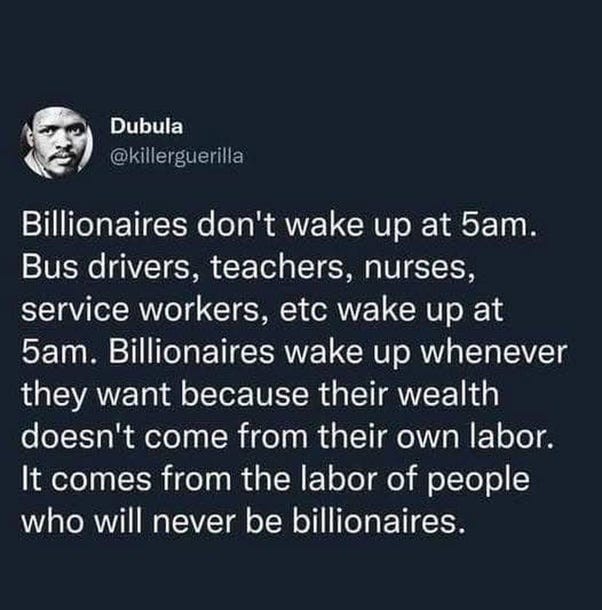
The people who ask this question never bother to consider the percentage of the population that never has to work for someone else to sustain a living income.

The average net worth of the top 0.1% worldwide is around $62 million.

No one in this wealth category must work for an income at any point throughout their lives. Having their money in a low-interest-bearing account would be enough to live on the interest alone and without touching their capital.

0.1% of the population is 8 million people.

Eighty million people worldwide comprise the top 1% of the population, with an average net worth equivalent to the lifetime earnings of most reasonably upper-middle-class workers. No one in this entire group of 80 million people must be employed to survive comfortably.

Every time the question of how people will live once they are no longer forced into an (often abusive) employment relationship (in which abusive employment conditions comprise the primary reason people leave their jobs), the implication is that they will turn into lazy do-nothing slugs.

Meanwhile, 80 million people somehow find ways to keep themselves occupied daily without anyone wondering if they’re lazy layabouts. Even if they are, no one seems to care.

All of the tests performed to determine the viability of UBI involve people who would otherwise be compelled to work in soul-crushing roles while being subjected to people on power trips who should never have any power over other people.

No one who asks this question seems to consider how those 80 million people manage to make it through their lives doing absolutely nothing. No one assumes they do nothing because we see the results everywhere. In fact, without that group of 1% elites, we’d never know the upward mobility that has led to the creation of a centibillionaire class.

The reality that the misanthropes presuming people need to be herded like animals throughout their lives is that without having to piss away most of their lives on basic survival, people would invest their time in themselves and become involved in activities that bring meaning to their lives.

Whether that constitutes “work” or not is a matter of semantics. Many people who would not be required to commute to a daily dehumanizing ritual of functioning like a disposable cog would perform functions in society that many others would find valuable.

Some would devote their lives to becoming successful caretakers for their families, friends, and neighbours in need while adding positive value to their community with basic tasks such as performing chores others could not. They may choose not to devote their time to salaried activities because they would find more significant meaning in helping their community address some fundamental needs capitalists don’t care about addressing. After all, there’s no profit in providing mental health services to those in need.

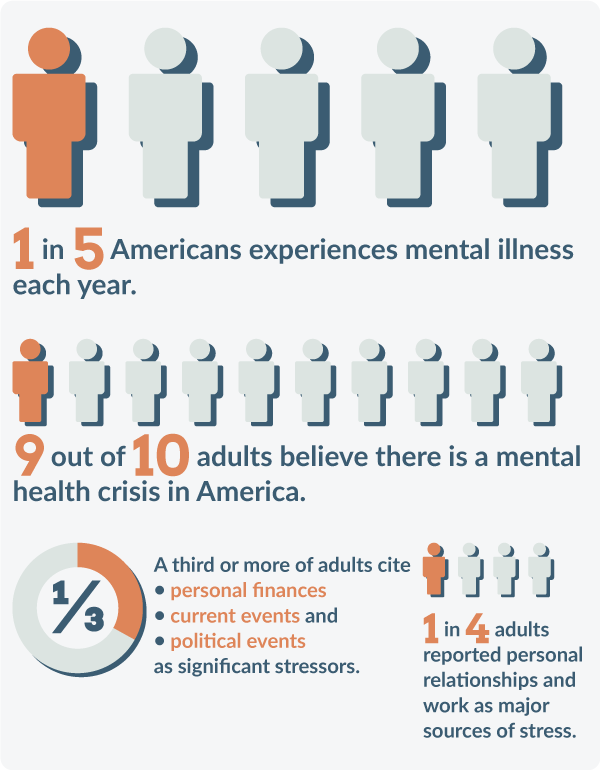
(Meanwhile, we are suffering from a mental health pandemic affecting one in five people. A whopping majority — 70%-80% — of families are dysfunctional. We are a species in desperate need of focusing on our mental health issues.)

People in general would also be much more free to focus on community needs and political dynamics such that when they go to the polls to cast their ballot, they would do so from a perspective of much greater insight into the candidates and the issues than they can currently afford to focus on now while working two jobs to survive at a minimally conscious level.

(How are people supposed to find time to understand the intricacies of nuanced issues if a majority are unclear on how something as simple as how tariffs affect their lives?)

The people who ask this question also seem oblivious to how long and how much effort is required to develop a successful career. Without external resources and funding, creating a successful enterprise takes much more time than it does to create one that’s been heavily capitalized.

Let’s say, for example, you’ve created a special recipe for a unique jam that everyone in your neighbourhood loves. You can get busy and produce perhaps 1000 jars of jam per month, which earns you enough to continue making 1000 jars of product while supporting yourself, and while eventually being able to afford increasing your production slowly over time by being able to expand your operation by reinvesting into it. You can slowly add to equipment and materials and hire assistance on both a production level to increase output volume and a professional level to expand market presence.

Let’s say that your success allows you to create a one-million-dollar per year business after 10 years of effort. If you had the capitalization required to purchase all your equipment, staffing, and professional assistance up front, you could easily achieve that one-million-dollar per year revenue level within half the time.

This is how massive franchises grow from small mom-and-pop operations into national chains within a few years. Capitalization is everything in building a successful enterprise. If one has no capitalization, then time is everything to them. Time is money.

Without the wealth to propel a business into respectable success as defined by a capitalist marketplace, one still has to work hard on one’s dream to achieve it. People are not discouraged from working while collecting enough to live on in a UBI program. The opposite is true. They are free to pursue their dreams and benefit from the sweat of their brow without having to sacrifice their lives feeding a parasite that views them as disposable commodities.

People have a far greater incentive to work for themselves than they ever could working for an abusive employer.

That’s the lesson the one percent teach us about humanity.

Only misanthropic cynics believe human beings become slugs when they’re given enough money to choose not to submit themselves to making other people rich at the cost of their life satisfaction.

People don’t need to be whipped to work. Anyone with experience working with volunteers understands what it means to dedicate time and energy toward causes which matter, and the fact is that not all things which matter involve acquiring vast stores of material wealth.

Life satisfaction is worth far more than money.
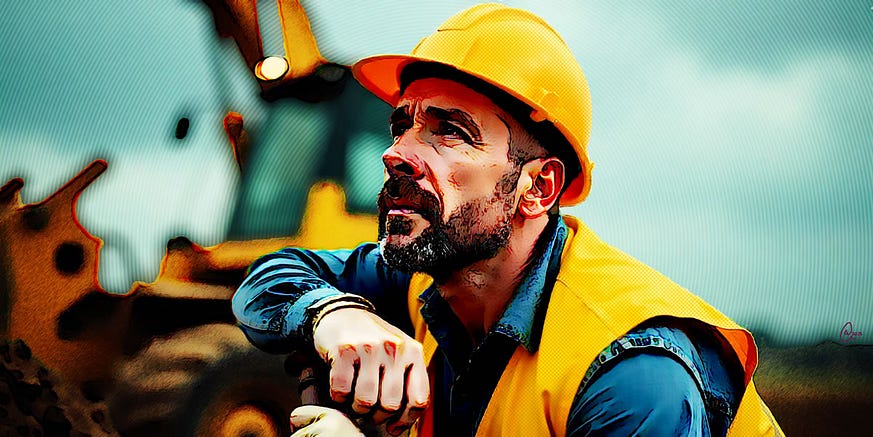
The best and only way to achieve life satisfaction is to focus one’s time and energy on doing what they love and applying themselves to produce outcomes they can be proud of. Rarely does that satisfaction get defined by money… and certainly not by those in society whom we recognize as psychologically healthy individuals whom we respect and admire as human beings.

We have learned and continue to realize that those among us who worship wealth acquisition above basic human decency are the most broken and villainous threats to our social stability and progress.

People often blame money as the root of all evil, but that’s not the case; the love of money is above all else.

UBI is the freedom to pursue our higher human aspirations, not an excuse to become lazy.

If having money made people lazy, we would not now have centibillionaires walking among us in a psychotic competition to become the world’s first trillionaire.

What does calling farmers “collateral damage” mean?


This post is a response to a question posed in its complete format: “What does it mean in MAGA when Musk calls US farmers as “collateral damage”?”

The term “collateral damage” was first applied by the military when assessing how many innocent casualties would be created when assaulting an enemy.

It was a way of dehumanizing those who happened to be in the vicinity — in the wrong place at the wrong time — and who may or may not have been guilty of collusion with the target but were considered expendable.

For Elon, it means that he views the farmers whose lives he destroys as enemies whom he dehumanizes while waging a war against American citizens to acquire material wealth.

For someone like Elon to use this expression, he’s letting the little people know that’s how the 1% regards the majority of the people, as acceptable casualties in their power games.

He is confirming that the 1% view us all as less than human and as disposable as they have always considered their slaves to be throughout history.

The 1% have been consistent in choosing profit over lives. Elon has admitted it’s not an either/or situation but a situation of strategic intent to destroy the lives of the many to enrich the few.

Everything about the Trump administration is a blatant act of assault against the majority, while robbing us all and killing us in the process, not out of necessity but expedience.


Bonus Question:
What do you think of Musk’s Tesla losing money and Twitter crashing?

I think it can’t happen fast enough.

The best thing we can do for society and the future of humanity is to make the wealthiest man on the planet homeless and destitute.

Why?

Because it shows two things:

  • The wealthy are not invulnerable and
  • We can defeat their corruption without bloodshed.

How can a society allow everyone to succeed?

This post is a response to a question posed in its complete format: “How would you design a society where everyone has the opportunity to succeed?”

Until Ronald Reagan and Margaret Thatcher, humanity was well on its way to perfecting that democratic society in which everyone had a reasonable opportunity to achieve class mobility and a basic form of success that permitted a life of dignity with what was characterized as the “American Dream.”

A mortgage on a house with a surrounding picket fence, a vehicle, a family with 2.5 kids and an annual vacation wasn’t only possible but virtually guaranteed to anyone who made the effort to earn it.

They betrayed the entire middle class around the world to curry favour from the wealthy who have long desired a return to a barbaric age of kingdoms with rulers and disposable serfs.

We failed to modernize the one institution that has proven itself the greatest threat to the goal of an egalitarian society, industry.

Almost every other entity in society is a democratic body. Corporations, however, are holdovers from a medieval structure of rigid hierarchy fraudulently appointing members to an inner circle of power, allegedly based on merit, while elevating those who support their corrupt application of power.

We can repair this mess of corruption with only a few fixes, but one of the most important and most easily overlooked solutions will be a difficult challenge to implement. It will (and has been) meet(ing) massive resistance by those who most adamantly refuse to give up their power, as it involves restructuring how corporations exist and do business in society.

We can quickly implement numerous initiatives today, such as UBI, Universal Healthcare, and Universal access to education, that will have long-term implications leading toward much more stable societies that can guard against corruption.

Other initiatives, such as a global cap on personal net worth and restructuring industry into democratic institutions, are potentially much more disruptive to society. We are, however, fortunate to find ourselves amidst a radical transformation into full automation throughout every level of society. This transformation will allow us to restructure political systems while increasingly democratizing society and flattening global power structures.

The only way to ensure society can facilitate opportunities for everyone to succeed is to flatten power and spread it across the globe to the people. At this stage in our history, our existence faces an existential threat due to the corruption of disproportionate power running rampant throughout society. It may be the case that we will have to rely on historical inspirations to repair the damage the wealthy class has done to society and make reparations for their betrayal of the social contract.

When did humans become so judgmental and predatory?

This post is a response to a question posed in its complete format: “What happened to us, where and when did the human race decide to become so judgmental and predatory, what happened to the old fashioned sense of community?”

wut?

Here’s a rule of thumb about reality: Noticing something for the first time doesn’t mean that thing hasn’t been around for a long time.

It only means that your mind has clicked something into focus that had previously been on the periphery of your vision.

You are not unaware that wars have been waged practically everywhere on the planet throughout human history.

You are not unaware that hatred of very many forms, including racism and misogyny, along with sex and gender bigotries, have existed for centuries and have been a part of our story since the dawn of human civilization.

The only thing that has changed is our ability to tune it out because we are now in an information age.

We can no longer retreat into the comfort of ignorance while lying to ourselves that the suffering of those we have been overlooking is not caused by our inability to face the harsh truth about humanity. We are a psychologically damaged species, and the sooner we can face that, the sooner we can learn to heal ourselves and our species.

We haven’t “gone wrong,” because we are awakening to realities we have had the luxury of ignoring. We cannot heal ourselves until we accept the truth about ourselves, and that’s a harsh and bitter pill to swallow.

We are undergoing the first and most necessary step in our healing, awareness of our broken nature. We must first accept that we are suffering as a species, and this time of awakening is a necessary part of the process.

We cannot mature as a species if we cannot accept that we have been struggling, and the only way to end the struggles is not to ignore the suffering but to acknowledge its existence.

One in five people is suffering from a visible form of mental health issue. A whopping majority 70%-80%) of families are dysfunctional.

We cannot ignore these statistics and pretend there is nothing wrong with humanity.

We can only learn to embrace our broken selves and work together to help each other heal.

There is no other path to a better world.

The sooner we accept that, the sooner we can progress toward achieving a better world for everyone.

It is true, however, that our focus on community has taken a beating as our community boundaries have expanded beyond quaint notions of imaginary lines dividing us into becoming a global community.

The challenge is acknowledging that our community is no longer a geographic boundary but a global one in a much larger and inaccessible community among the stars.

Most people embrace the potentiality of exploring beyond our current home and wonder if we can join a broader community of life. We must first unite as a community in our house before the universe can open its arms to accept us as a species among the stars.

Looking past our limitations, we may find the synergy we need within the community to manifest our aspirations to travel the stars.

There is something better ahead to hope for, but we cannot ever reach it without acknowledging what is holding us back, and that begins with the state of our psychological health as a species.

In short, nothing “has happened to us” that has not been happening all along; we are only learning to understand how we must face these issues together as a community.

Can empathy be overdone and detrimental?

This post is a response to a question posed in its complete format: “Can a person be highly empathetic and think empathy can be overdone and in many cases detrimental to better outcomes? Can being conscious of empathy and in control of your emotions be called for to create more realistic circumstances?”

No. You’re conflating empathy with other unrelated characteristics such as sympathy or pity.

Empathy is a complex phenomenon, more adequately described as an additional sense, not entirely unlike intuition or your other five senses. It’s a blend of cognitive parsing, information gathering, and processing, adding a layer of intellectual stimulation to our understanding.

There are three types of empathy: “affective empathy” (or “emotional” — feeling what someone else feels), “compassionate empathy” (recalling one’s feelings from similar situations and re-experiencing the emotion), and “cognitive empathy,” (intellectually identifying the emotions and connecting them to stimuli to comprehend the context in which the feelings are expressed).

The people most prone to being overwhelmed by an empathetic response to stimuli, often referred to as “hyper-sensitive,” struggle to discern between original feelings generated within and feelings they pick up from external stimuli. Their empathetic natures are primarily derived from the emotional form of empathy, akin to a radio tuned into a station while the volume is set to maximum. It can be overwhelming to find oneself tuned into powerful signals.

It can take a lifetime to cope with one’s sensitivity, primarily because of a lack of social support for such sensitivity. More often than not, highly sensitive types tend to be targeted by bullies because they are perceived as easy victims who are also usually shunned by their peers. This lack of support can lead to feelings of isolation and exacerbate the challenges that sensitive individuals face in society.

These have been socially acceptable attitudes toward highly sensitive people, while many still doubt that empathy is genuine and is not a personality dysfunction. The first of these two questions is an example of misunderstanding empathy on that disparagement vector.

The second question, however, points toward a somewhat effective solution or means of coping with one’s sensitivity. Learning to discern between one’s natural feeling and those one receives from others on a subliminal level is crucial to maintaining one’s composure, if not sanity.

On the upside, once one learns to master the all-too-rare skill of self-awareness, they discover they possess a “superpower” and become “human lie detectors.” It can be frightening to learn that they are talking to a stranger who almost instantly knows their deepest secrets and more about them than they know about themselves.

Empaths who have mastered their emotional regulation and awareness skills also learn to conceal their awareness of others, as they generally don’t want to create enemies who are intimidated by them. Making matters more complicated is that one’s empathetic sensitivities are not infallible and can often be mistaken about other people. Much of this judgment error is due to unresolved personal growth issues. In essence, what I referred to as a “superpower” is more about “power over oneself” rather than over others.

Highly empathetic people tend to be the most honest because they must learn to be honest with themselves to maintain their internal equanimity. Living with the lies one tells oneself is much harder to do when one’s cognitive dissonance escalates rapidly, much more so than for those with diminished sensitivities to empathy.

The two other forms of empathy, “cognitive” and “compassionate,” generally complement affective empathy, but there may be cases where they don’t. I don’t know of such cases, nor see how that’s possible. Still, I’m not a professional who has spent a lifetime studying the manifestations of empathy in thousands of patients and volunteers.

Emotional regulation is otherwise a skill that anyone can benefit from, regardless of their sensitivities or empathetic capabilities.

Why is there no neutral ground in America?

This post is a response to a question posed in its complete format: “Why does it seem that there is no neutral ground for political parties in America? You seem either extreme right or extreme left. Indeed, agreeing that the opposite party have a point seems to brand you as a traitor? Why is there this perception?”

The perceptions you describe result from a myopic lens in which the nation is ruled by one extreme.

There is no extreme left in the U.S.

No parties or groups are demanding to seize ownership of the means of production.

You argue that there is an extreme left because it helps to lessen the seriousness of the challenges facing your nation today. It’s a perception that helps to justify its Nazification as a reaction to a perceived enemy rather than a decline and degradation of its long-held moral values.

To believe an extreme left exists is to deny the harsh reality of natural cruelty your nation has been cultivating for decades.

Gordon Gecko was a warning against this cruelty, but as a nation, you embraced it, and you embody it by permitting the ongoing mass murderers of children in schools, by denying healthcare as a human right, by permitting whole towns to poison their people through contaminated water, and by justifying a profit motivation.

Your nation has been welcoming this transition into a culture of sociopathic dehumanization for decades, and you have cheered it on. You cheered when Reagan fired the air traffic controllers’ union. You cheered when he shut down mental health facilities and threw the vulnerable out onto the streets. You supported his hatred of gay people and allowed countless murders of them by denying them life-saving medical treatment.

You justify the fabricated existence of a far-left because you struggle to avoid facing the ugly truth of the nation you have become by choice.

There is no neutral ground because all that remains is a toxic evil threatening global stability. Those who struggle to muster the courage of their ancestors are stunned to find themselves engaged in a surreal battle against monsters who should know better than to deem themselves modern-day kings among the educated and democratized masses.

Is Empathy a fundamental weakness of Western civilization?


This post is a “twofer.” It’s a response to a question posed in its complete format: “What do you think about Elon Musk saying “The fundamental weakness of Western civilization is empathy”? https://www.snopes.com/fact-check/elon-musk-empathy-quote/“ — In this case, I’m setting up my answer with an answer to another question: “What role does empathy play in understanding and connecting with the thoughts of others?”

Empathy is a conduit to understanding and connecting with others.

Empathy is like an additional sense or language allowing more profound insights into people than a typical means of sharing information about oneself with others.

“How you say something is as important as what you say.”

I assume you’ve encountered this above phrase or similar ones to understand how meaning is conveyed in ways beyond the definitions of the words one uses.

Empathy is similar in that one identifies more closely with the emotions of others, which makes it easier to connect with people on much deeper levels much more quickly than most people are used to.

Empathy is otherwise the glue that keeps human civilization together.


“Evil is a lack of empathy.”

This sentence above is the simple answer that most have already presented, so I had intended to ignore this question. Tomaz Vargazon’s answer, however, has motivated me to provide my input by the inclusion of the full quote he provided from Musk’s interview with Joe Rogan:

Musk: Yeah, he’s [Gat Saad] awesome, and he talks about, you know, basically suicidal empathy. Like, there’s so much empathy that you actually suicide yourself. So, we’ve got civilizational suicidal empathy going on. And it’s like, I believe in empathy, like, I think you should care about other people, but you need to have empathy for, for civilization as a whole, and not commit to a civilizational suicide.

Rogan: Also don’t let someone use your empathy against you so they can completely control your state and then do an insanely bad job of managing it and never get removed.

Musk: The fundamental weakness of Western civilization is empathy. The empathy exploit. They’re exploiting a bug in Western civilization, which is the empathy response. So, I think, you know, empathy is good, but you need to think it through and not just be programmed like a robot.

  1. “Suicidal empathy”
  2. “Don’t let someone use your empathy against you.”
  3. The “empathy exploit.”

These three statements indicate that these sociopathic morons don’t understand empathy because they are conflating “ compassion” with “empathy.”

These are not the same thing. Not by a long shot.

Empathy operates like a sensory receiver, while compassion is a cognitive process of identifying with another life.

Empathy cannot be “used against someone” any more than one’s eyes can be used against them.

The ability to experience another’s emotions is not a weakness but a strength.

Another issue is how we process our understanding of the emotions we detect.

The only vulnerability to exploit is the trust connection between individuals, and that exploit exists regardless of either party’s empathetic capabilities.

Their arguments are the equivalent of claiming one can be susceptible to being robbed because they know more about the criminal attempting to rob them.

It’s a bloody ludicrous argument forwarded only by sociopaths who have no clue what empathy is.

The harsh reality in today’s world is that empathetic people are victimized precisely because they’re walking, talking, living, and breathing lie detectors.

Anyone with advanced empathetic sensitivities understands precisely what I’ve just said. Every sociopath on the planet would otherwise vehemently deny this is the case while using this statement to vilify anyone who reveals this truth to the public.

Only sociopaths would ever dare to consider empathy a weakness because they recognize empathy as a superpower wielded by people who always default to showing compassion toward others, especially toward those like them, who comprise the most broken humans among us.

The lesson of today’s age and of this garbage pronouncement by the most destructive sociopaths we have seen emerge in society has pushed the tolerances and compassions that empathetic people experience toward humanity past the brink of decency and forces us to realize how our species is in a severe struggle for survival.

If we allow these sociopathic monsters to continue defining humanity for us, civilized society as we know it will crumble.

Now is the time for empathy to assert itself as humanity’s superpower and end the scourge of sociopathy before it’s too late.

Now is the time for the meek to inherit the Earth because these monsters have no respect for life beyond their fleeting whims.

These are expressions from people who have no reverence for anything outside their navels.

The more we allow them to assert dominion over humanity’s character, the more they teach us they will relent only when we break and repeat history.

Does Elon Musk think we have a problem with empathy?

This post is a response to a question posed in its complete format: “Elon Musk apparently didn’t dismiss empathy entirely, but thought that we have a problem with empathy for the wrong people. How do you judge?”

I partly disbelieve this moronic assertion but won’t deny it’s possible he would say something so stupid.

I wouldn’t put it past him because he disowned a daughter that he paid to ensure she was born physically as a male.

He got pissed that he didn’t get what he paid for and punished his child for daring to assert her identity.

Suppose he lacks empathy, which he seems to demonstrate while bemoaning his inability to experience empathy proudly. In that case, he’s a walking-talking case for how badly screwed up some kids can be when their sociopathic parents severely screw them over.

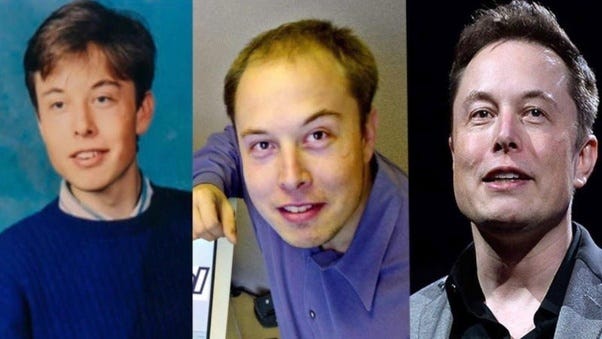
It still amazes me when I look at photos of him as a kid because he appears as a somewhat sensitive type of nerd who tried being himself but was abused for it.

That’s the only explanation I can devise that makes sense of his severe state of dysphoria (minus the drug addiction of both the chemical kind and the egotistical drug of power through his wealth).

He appears as a youth to be a typical “sensitive” who would likely have been highly empathetic. Still, it’s been beaten out of him through likely mostly verbal abuse (because he doesn’t appear to show typical traits of physical abuse — such as scars or even an emotional coldness in his demeanour). (Unlike DonOld Trump, whose physical abuse is written all over his demeanour. You can almost read the number of times his father physically beat him like counting rings on a tree trunk.)

Statements like the one attributed to him show the child attempting to speak through the cracks of a semi-polished exterior.

Empathy is like any other characteristic, which presents itself in varying degrees throughout the population. Empathy is like muscle mass; it has a developmental potential but must be cultivated to show itself in its most developed form.

In his case, his capacity for empathy was stripped from him and has been starved to (near?) non-existence.

I suspect some vestiges of empathy remain alive within him but that he’s trapped in a world where he cannot trust, allowing himself to experience it because the fear of permitting himself to experience it openly has been beaten out of him by his parents.

It’s not that the “wrong people have empathy” but that people have had their empathy wrongly denied their right to experience it without adverse repercussions.

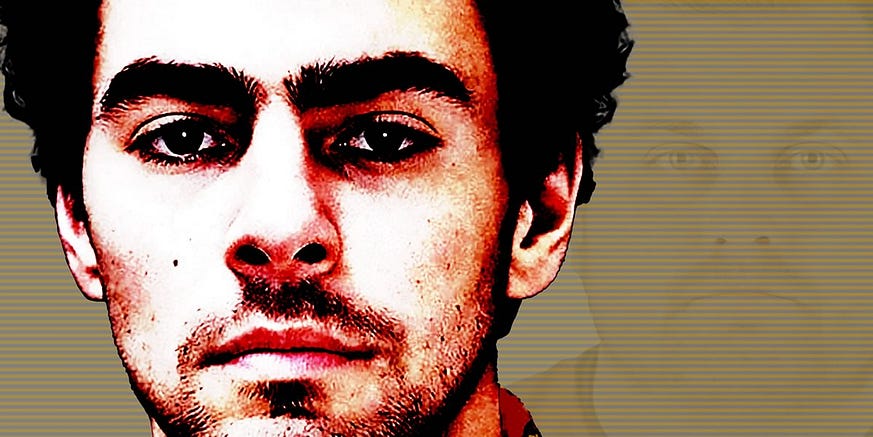
What do you think of Luigi Mangione?

This post is a response to a question initially posed on Quora, and can also be accessed via “https://luigimangione.quora.com/What-do-you-think-of-Luigi-Mangione-1

This question cannot separate the person from the act that introduced the person to the world. The person and the act are now inseparable. No one can answer this question independently from knowing why he is known.

What people think of Luigi Mangione will forever be the act superimposed upon a subjectively constructed image of him.

The only means by which one can now render an objective description of him is by offering up statistical data and facts about his life. Who he is as a person is now beyond anyone’s comprehension. No one can know what motivates his existence or what comprises the subjective state of Luigi Mangione beyond surmising a person who has experienced a breaking point in their life in which it was better, in his mind, to do the unthinkable for most of the rest of us than to continue an invisible march into a nightmare he could no longer endure.

No one can know what that feels like unless they’ve been forced to walk in similar shoes.

One conclusion that can be drawn about his personhood is that he demonstrated an ability to sacrifice himself to act on behalf of thousands of faceless victims forgotten in the march of greed.

Along with losing the ability to think of Luigi Mangione as a being separate from his act, neither can we separate the notion of the tens of thousands of victims lost to us every year in service to the God of profit. We can no longer forget how easy it is for many among us to justify murder if it means pocketing riches and obtaining a life of material wealth for oneself.

None of us can separate Brian Thompson’s callous extinguishing of lives from an algorithm to be rewarded for it in service to the monsters who refuse to honour the social contract and a local thug who robs a convenience store for a drug fix without admitting to being a sociopathic monster.

The reality between the two scenarios is that the local thug is less of a monster than the billionaires who think nothing of the lives they extinguish while offering up the lie that there is nothing they can do about it.

None possess the courage or the integrity to distinguish between ability and desire.

Every insurance billionaire can choose otherwise, but they don’t and hide behind the lie that the protocol they devised to protect their material luxuries is immutable and outside their control.

What I think about Luigi Mangioni for sacrificing his life to show us all our ugliness in a black mirror of a broken society is that he should not have been forced to put all the rest of us to such severe shame, and even more so is the pity that we still can’t grasp how evil our world has become.

What is Quora used for?

This post is a response to a question posed in its complete format: “What is Quora used for? Can I use it to post my social life? What can I use Quora for?”

You can use Quora to ask questions or answer questions.

What you do with those questions or answers is entirely up to you.

For example, my use of Quora has evolved into a sketchbook of ideas where I repurpose some of the answers I write here into articles for publication on other sites.

This was a natural evolution for me that occurred from when I first joined over ten years ago. I was drawn to an academic vibe at the time, with primarily intelligent questions and answers from people who were very knowledgeable and extremely generous in sharing their knowledge.

It felt like a welcoming environment of aspiration for contributing value to our world.

Sadly, most of that is gone or buried under volumes of nonsense as the profit motive prioritized decisions that cared little about preserving knowledge sharing. Quora has succumbed to the same community-deteriorating profit-chasing phenomenon that all other social media sites have.

My personal life was also supremely upended shortly after joining, and I stuck with Quora, not out of my original intent of adding to a marketing funnel for my consulting efforts as an instructional designer but out of a therapeutic need to feel I was still able to make positive contributions to other people’s lives.

As Quora quality devolved, so did my participation to such a degree that it became a vessel for venting. As much as that has helped me to cope with what I’ve endured, it’s often toxic and destructive to a fragile state of mind. Fortunately, writing leaves a trail for facilitating introspection, which has become a path out of personal darkness for me.

I hope my latest stage of using Quora as a springboard of ideas and back into a life of some modest dignity will be a stage where I can leave most of my negativity behind and be grateful to Quora for functioning as my only source of productive therapy over the last decade.

A condition of where my life is at right now involves meeting with an actual therapist. I have concluded, however, that he’s a hired assassin for an entity that seeks to escape responsibility for the consequences of its actions through a strategy of encouraging suicidal ideation.

That may seem like hyperbole, but there is no other explanation for the overtly antagonistic and abusive behaviours exhibited by this “professional.”

For me, the only valid forms of therapy I have ever experienced have been through my creative expressions, which have mostly been through writing and creating pictures.

For me, Quora will, hopefully, be a means of moving on from a stage of inertia into a productive future where I can encapsulate ideas I’ve explored here into formats that can serve as some form of legacy to my life I can feel proud of.

What you want Quora to be for yourself is whatever value it brings to your life. Generally speaking, however, as social beings, how we manage our social interactions, whether in person or online, defines our lives for each of us.