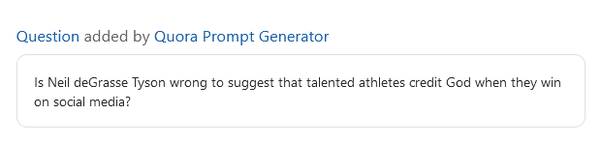
This post is a response to a question posed in its complete format: “Is Neil deGrasse Tyson wrong to suggest that talented athletes credit God when they win on social media?”
I think there is something severely wrong on so many levels that it’s impossible to address them without an entire book and a lot of research to identify the dynamics of a business decision justifying the dissemination of lies in society to stimulate engagement and generate revenue.
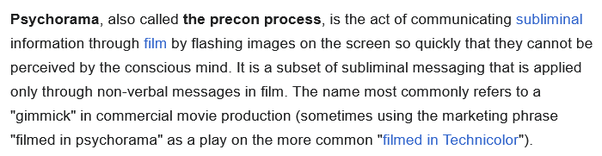
This is horrifying on so many levels that it insults every aspect of humanity, human society, and the social contract. This contributes to the widespread decay and ultimate destruction of civilized society on the most malignant levels. This crap is worse than the stage of “subliminal seduction” we went through in the 1970s when laws were crafted to prohibit embedded “invisible messaging” within entertainment media.
Neil deGrasse Tyson has never suggested any such thing, and although it’s easy to attribute this claim to a believer on a mission of Lying for Jesus, it’s not. This is even worse than a believer trolling for reactions by lying.
For non-Quorans: This screengrab indicates the question author, and in this case, the question was written and posed by a bot designed to stimulate engagement on this social media site. This is a common revenue-generation strategy employed by media outlets across the board. Fox Entertainment, for example, has built its empire entirely upon this toxic revenue generation model.
Targeting information appealing to the limbic system is like serving up crack to a heroin addict, and that shapes the society we are cultivating by allowing this practice to dominate media. The effects are profound.
Not only does this represent an abysmally immoral strategy for generating revenue, but it’s also a strategy that furthers a divide between people in a society already at the edge of fracturing into chaos. This strategy for engagement is ultimately a violent assault on our social contract and is responsible for the dramatic divisiveness characterizing our social dynamics today.
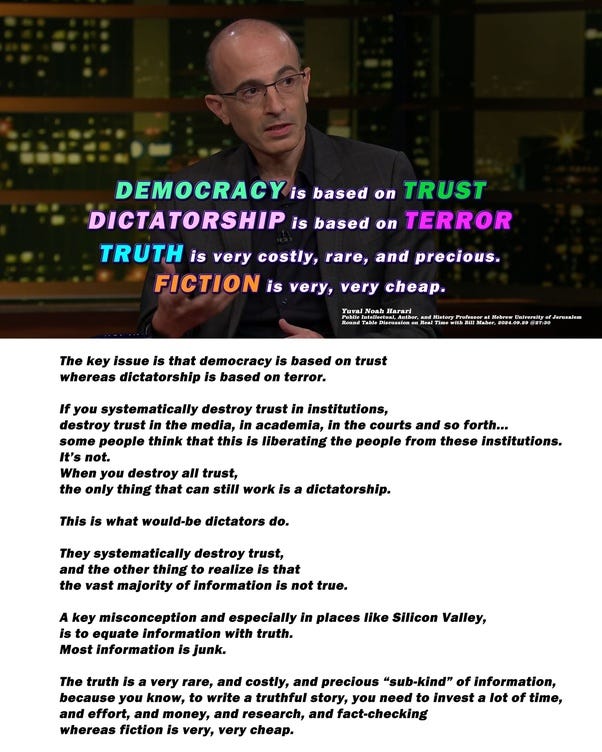
This precisely reinforces the post on my Thotbag space, citing Yuval Noah Harari’s statements during a round table discussion about the threat democracy itself is facing. Here is the meme I posted that includes his full text:
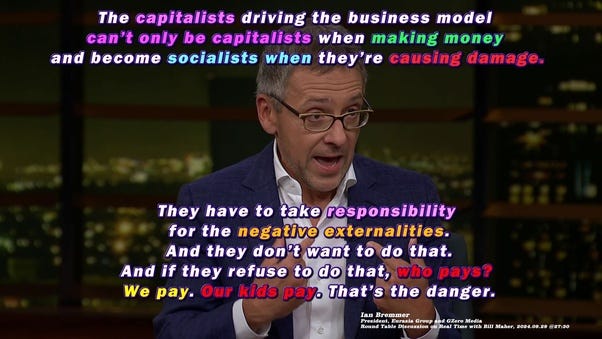
Along with Mr. Harari’s warning, Ian Bremmer pointed at the problem this divisive, conflict-escalating disinformation creates for society:
This fraudulent question is worse than Quora violating its own, now primarily defunct BNBR policy; it’s an assault on human decency on the most corrupt of levels for the most corrupt reasons.
This should not be disturbing only to atheists who fight back against a daily assault from believer trolls seeking to provoke emotional reactions. This should be disturbing to everyone who cares in the least about things like integrity and the social contract that has never been strained to such a degree as what we are living with today.
If society collapses into chaos — If people’s lives are unnecessarily lost because we can’t or won’t back away from the cliff we march toward — Then this kind of manipulative nonsense perpetrated upon us all for the sake of profit will be responsible for the nightmares ahead that we are about to encounter.
This is central to my argument on why social media should not be operated on a for-profit model. Social media is a community development endeavour, and we must consider how we approach its role in society more thoroughly than consigning personal information to a feeding ground for mining material profit.
That we are being strategically and systematically provoked by algorithms to hate each other should horrify all of us.
This post is a response to a question posed in its complete format: “Why did people work for demanding leaders such as Steve Elon Musk? If they do not like them, why couldn’t they change their job?”
Jobs are not items in a grocery store that one can pick and choose at leisure.
Each job is a springboard to a better job or a deep dive into an abyss.
It cannot be stressed enough how critical it is to career success that one always has an exit strategy and a place to go if one’s job turns sour.
Jobs often go sour for reasons unrelated to performance and often due to abusive behaviours by management.
A personal case is one in which I was often extolled for my leadership skills while my supervisor would say to me, “You run a tight ship.” He would say these words to me while appreciating how much easier his life was due to my contributions. When I asked him for a reference letter, he wrote me a generic description of my length of employment as an act of spite to limit my options. He deliberately wanted to make it harder for me to make a vertical or even a lateral move away from an abusive environment in which he fraudulently presented himself as an ally who empathized with the abusive treatment I received from his supervisor.
Making matters more challenging is that jobs often go sour to such a degree that they are worse than not having a reference to support one’s candidacy for the next job. In my case, the Senior VP decided it would be fun to play a game of pretend I don’t know you each time we encountered each other. This went on for five years while I struggled with a salary 40 percent below market for my role on paper as I performed at levels higher than the manager and director above my role. They were happy to have me around, while I often saved their bacon and changed their tunes quickly when I chose not to go above my role and intervene to fix their mistakes.
A job relationship gone sour can become a barrier to continuing one’s career. More people than one would like to believe will easily choose spite to justify sabotaging a person’s career development efforts.
Someone as petty as Elon Musk could easily justify going to cartoonish lengths to destroy a person’s career on a whim. In his case, his reasoning is a consequence of the corruptive effects of too much power for anyone to possess.
Changing one’s job was much easier when we had a thriving middle class and various job options outside the structured and incestuous corporate world. Job options have become severely limited throughout the last several decades, in which one’s only choice for a stable career has mostly become a choice of serving as a cog in a multinational organization while hoping restructuring efforts don’t result in it vanishing overnight — like what happened with Twitter when Musk fired most of his staff on a whim.
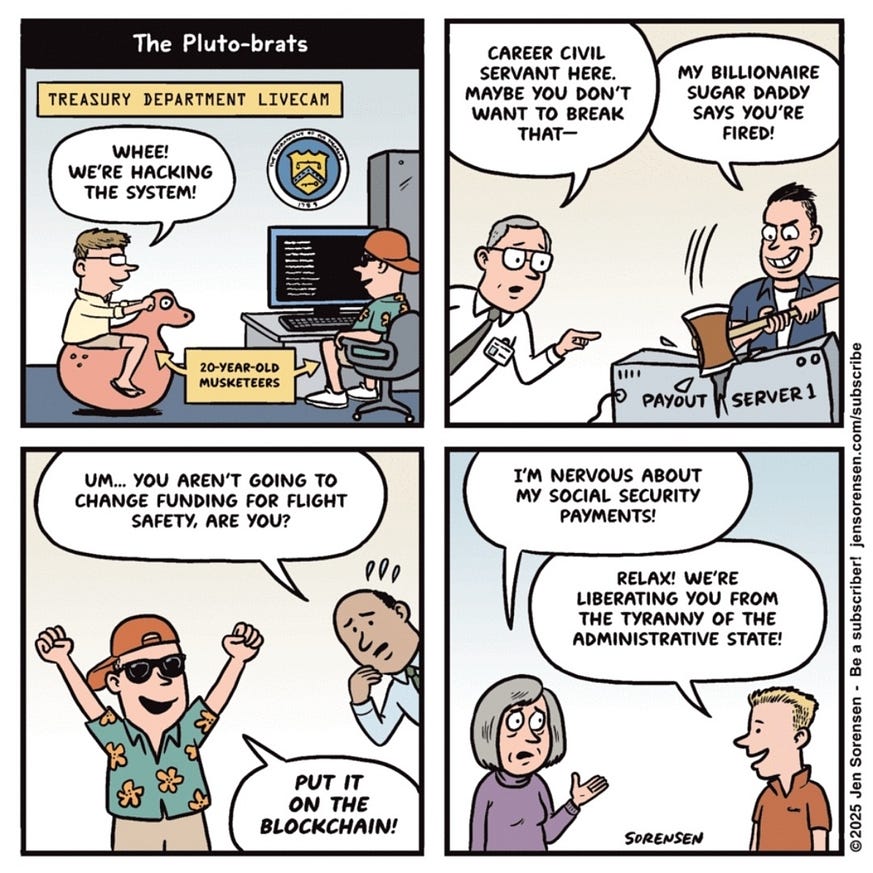
Musk’s latest attempts at accessing the personal data of three hundred and fifty million Americans are precisely for controlling their lives by leveraging their histories against them. Our choices in working for leaders we don’t like are becoming increasingly restricted to either that or homelessness and destitution. That’s not much of a choice.
If this nonsense continues, no one will be free to do anything without his oversight and the oversight of a fascist oligarchy.
This post is a response to a question posed in its complete format: “Was there a defining moment that led you to become a feminist, and if so, what was it?”
Feminism seeks to obtain equal rights, privileges and opportunities for women; to improve their lives and living conditions, particularly with respect to problems that are unique to them; to produce equal outcomes of these policies such that they have similar levels of power, wealth, influence and respect to those enjoyed by men; and to change social attitudes that are hostile, derogatory, oppressive, or tend to interfere with any of the foregoing.
The funny thing about my upbringing is that I should have turned out to be a misogynist.
All the elements were there.
Under-Educated Community? — Check
The average education in the town of about seventy thousand I grew up in was grade nine. The primary employers in the area were forest industry operations. One could afford a comfortable lifestyle with a mortgage and two-point-five kids on a mind-numbing daily routine.
Toxic Masculinity Within My Family and Throughout My Community? — Check
“Be a man” was a daily slogan one would hear everywhere in almost every context, but it wasn’t in the refuge of my art class where one of my instructors was flaming, but I didn’t realize it then. Hell, I didn’t realize that about him until I visited the ol’ stomping grounds years after graduation, and I wondered why it seemed he was lusting after me.
Practically everywhere else, though, including my own family, there was no shortage of advice on how to put women in their place and no shortage of shame hurled in one’s direction if they showed “weak emotions” like compassion.
A Panoply of Bigotries Everywhere? — Check
There was always a reason to crap on different genders, different skin colours, different hairstyles, different clothing styles. One acquaintance who listened to the Beach Boys morning, day, and night would give you a sideways glance if you listened to anything else. From his perspective, something was wrong with you if you liked Reggae.
Manly Men Doing Manly Things Everywhere? — Check
If you couldn’t name every part in your car while stripping it down to nuts and bolts while doing your oil change and then reassembling it for fun, there was something wrong with you. You weren’t a man if you couldn’t work on your vehicle at minus twenty below weather.
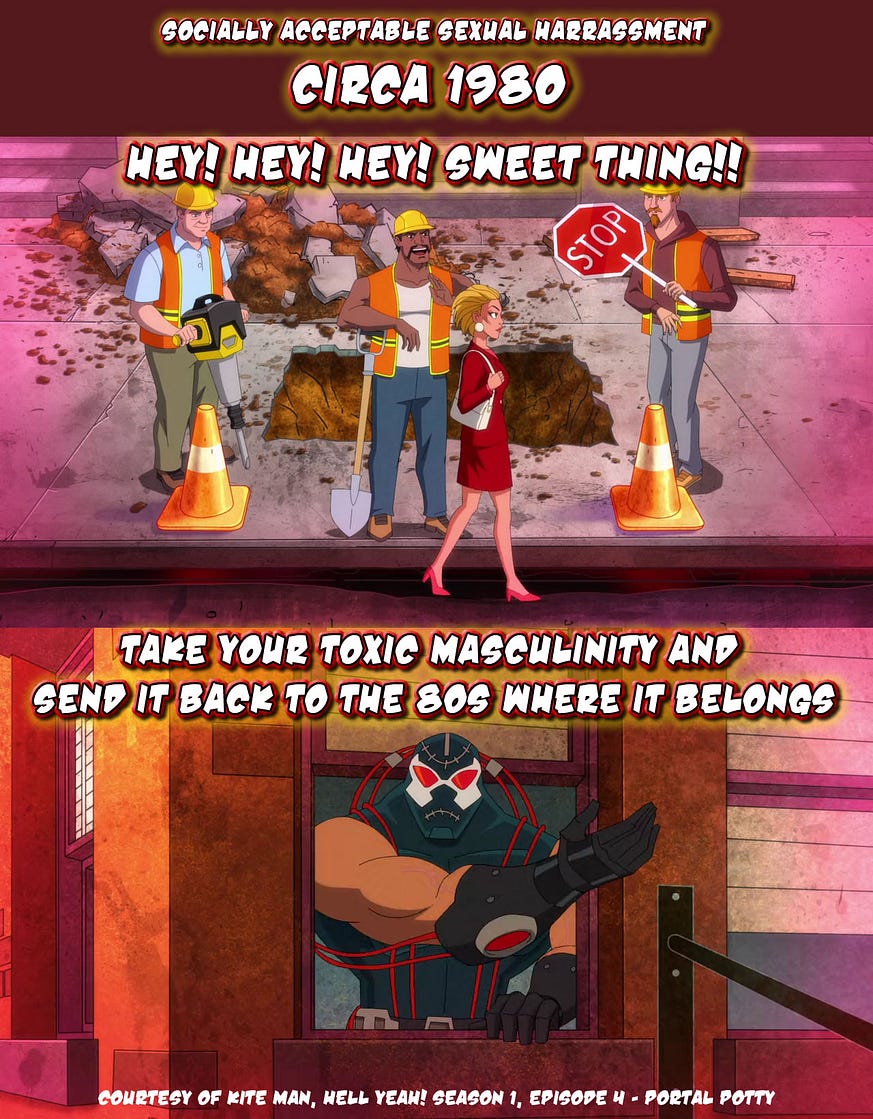
Hanging Out Car Windows While Wolf-Whistling at Every Woman Walking Down the Street? — Check.
Boys believed the girls went for that sort of behaviour and were butch if they didn’t. Even the girls in that environment were more masculine than any male in the school band, and they could drink one dozen of them under the table without a bathroom break.
Somehow, though, I never thought of women as either inferior or superior or anything beyond being just people. They smelled nicer, and some could appreciate sensitivity, but you had to be careful who you displayed it to because most would think something was wrong with you.
I didn’t realize I was a feminist until well past my thirties. I still don’t think about it unless it comes up in conversation, and I have to remember that I somehow reacted against the toxic masculinity in ways that made me one.
I think that’s one of the things that bullies don’t quite get. Every person they bully in life learns to hate everything they embody, and so growing up in an environment rife with toxic masculinity has taught me to hate machismo on such a level that I am now in a position of putting my life at risk with the police because they have bullied me to such a degree that I’m barely hanging onto my life by a thread. I’ve been adamant in conveying to them that I will not shut up and die quietly so as not to disturb their reverie because I am only beginning to rage against their destruction of my light publicly.
Feminism is equality, and even though men take the lion’s share of the blame for abuses, it doesn’t mean all are guilty of being abusive bullies. Women can also be assholes on levels equal to men as well.
Feminism simply asserts that we are all people, while the idiots on social media who never shut up about the evils of feminism are screaming their toxicity to the world. They are like MAGAts wearing warning labels in the form of red caps to identify themselves as toxic. Every male who whines about feminism is admitting to the world that they’re a toxic misogynist.
As prevalent as misogyny may still seem to be, it gives me hope to see popular media represent changes in society that remind me how glacial our social evolution is. It may seem imperceptible from the perspective of an individual life. Still, we are maturing as a species — no matter how much temporary regressions of our values may challenge our ability to maintain hope for a better future.
Of course, peace is always possible. The challenge is making it desirable enough for all parties to commit to making it possible.
Peace is otherwise impossible when one or more parties refuse to accept compromise as the only path toward achieving any form of peace, whether temporary or lasting.
We have to accept the reality that some people are so broken they would choose to burn the world to ashes rather than give up their power or relinquish their power designs, and so that means the only path to peace is through the destruction of those types. Sadly and ironically, the argument of an escalation of conflict as the only path to peace is validated by the entrenchment of those who endorse imposition as their means of achieving peace through subjugation.
For some people, reason as a path to peace is rejected in favour of catering to hubris. Sometimes, people are so confident in their ability to overpower those they believe entitled to victimize that they will adamantly reject compromise even upon their final breath.
Peace requires giving up at least some of one’s power, while conflict escalations are almost always about exercising, protecting, or expanding power.
It is easy to become cynical in a world filled with so much violence that there has never been a period in human history where wars have not been waged, at least somewhere on the planet. It’s easy to think humans are an irreparably self-destructive species, but that’s a perceptual choice.
The reality is that although our species has never been “war-free,” humanity has predominately existed in a state of peace. Most people are comfortable with enough personal power to live peaceful lives.
However, a small percentage of humans are unsatisfied with that level of personal security and require much more power to quell their insecurities. Their antics are far more successful at capturing public attention because conflict is like a drug that enraptures people’s imaginations, while peace is boring. With this skewed mindset, it’s easy to believe peace is impossible.
To make peace possible on a universal (or global) level, we must address the fundamental elements giving rise to conflict, which begin with addressing factors that undermine psychological health. It’s a massive task that is conceptually simple but logistically impossible today. Whether we will mature enough as a species to achieve optimal mental health sufficiently to mitigate the aggravating factors for conflict escalation is a toss-up. We are currently on a trajectory toward extreme aggravation and conflict escalation that could dramatically reshape the human landscape.
It isn’t very comforting to contemplate how we might survive our challenges over the next few decades. If we can maintain most of the trappings of modern democratic society, our experiences will encourage systems that can address our psychological issues in healthier ways.
I want to believe that once we emerge from the other end of the dark tunnel of regression we have entered, we will be much closer to reaching a new bar for global peace.
This post is a response to a question posed in its complete format: “Why won’t rich people just donate a tiny bit of all their wealth to poor people?”
Some of them do. MacKenzie Scott, the ex-wife of Amazon founder Jeff Bezos, has donated over $17 billion to charitable causes since 2019. Our problems, however, can’t be fixed by relying on a few donations by the small percentage who care about other human beings beyond themselves.
People need to stop thinking about ways to guilt the few rich capable of feeling guilt into ponying up on behalf of those who don’t care in the least about the poor as long they shut up and die quietly and out of sight.
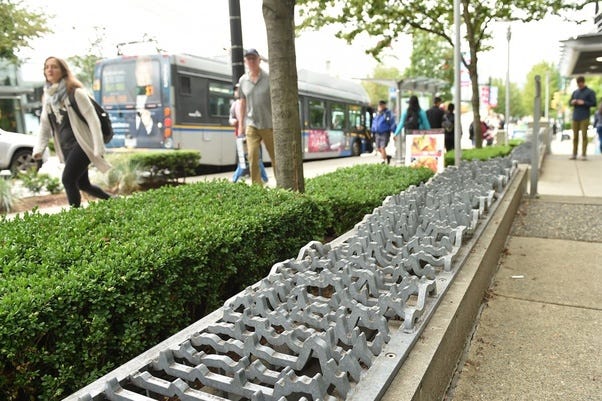
Why do you think “hostile architecture” exists?
A lot of people don’t want to help the poor. They want them gone out of sight and out of mind. They want to blame the poor for creating their conditions of poverty.
They want to think of them as lazy addicts who irresponsibly ruined their own lives.
It’s no different than shaming a woman for her clothes or behaviour for inviting a rapist.
It’s like shaming a mugging victim for paying cash for their drink in broad daylight.
People don’t want to think about why things go wrong for other people because it means dealing with the possibility that things can go wrong for them. If people believed they could also become one of “those people.” many would just give up, while others wouldn’t be able to function past their anxieties.
Although the existence of centibillionaires is a huge symptom of a system so broken that so many poor exist, no one wants to change anything because it means having to do things differently than they’ve become used to.
Look at how impossible it’s been for Americans to adopt a universal metric system — even though it would save them money.
Look at how impossible it’s been for Americans to adopt universal healthcare — even though it would save them money and lives.
People may demand change, but they hate change. Many people prefer complaining about how bad things are to doing something different because they fear change will be worse than what they’ve gotten used to.
My province of BC has had three referendums on electoral reform that would have made our elections more representative of the people. We would have become a more democratic province that more effectively addressed the needs of the people if the people could vote for what they want rather than vote against a change they don’t understand. Even worse, the change is easy to know if one makes a small effort to educate themselves, but they don’t and won’t understand something until they’ve lived it. When people are unsure, they consistently vote to maintain a corrupt status quo instead of voting to change it.
Americans are going to continue voting for corrupt leaders until they realize their lives are at so much risk that the choice is no longer “change or continue suffering” but “change or die.”
That’s where we are right now… or at least, those who refuse to read the writing on the wall will eventually figure out that’s the case when they start seeing the suffering around them can no longer be denied. They will change only when they become more afraid of maintaining a destructive status quo than the change they can’t understand until they’ve made their change.
Rich people won’t give up their wealth, even in part to sustain a failing system until it fails so badly that they start running and hiding for their lives from the mobs who are angry enough to repeat history. They won’t change what they’ve gotten comfortable with, even if it means they’ll end up more prosperous.
This is why “woke” is such an important concept these days — because we are at the stage where a lot of people are sick and tired of screaming “Wake up!” to people who insist on ignoring the threat they’ve become to our future.
The bullying Nazis among us still think they can play their bullying games endlessly while laughing at the “librul” tears they imagine are being shed out of frustration without realizing those tears are being shed because of what comes after those tears… the mourning of having to do what could have been avoided.
The few wealthy people cannot, through donating portions of their money, fix what’s broken.
The system needs to change on fundamental levels enough to force the greedy sociopaths to acknowledge the critical importance of maintaining a universally sustainable social contract. They need to understand the benefit of giving up some of their money to pay back into a system that allowed them to become rich in the first place.
Allowing a small number of elite few to grow hoards is not how to develop a sustainable economy or lift people out of poverty.
People like Musk know this. They don’t care because they see themselves as entitled to rule over the rest of us like we were herd animals.
Eventually, someone like Musk will push society far enough for the guillotines to come out and put his head on a pike. He doesn’t believe that’s what he’s inviting into his life. He thinks he is untouchable… just like Trump thinks he’s untouchable — that no one would dare do the unthinkable.
Suppose Trump decides to start a war with Canada, and NATO steps in. In that case, the chances of an American military officer putting a bullet in his head on the brink of launching a nuclear attack against a long-time partner becomes a very real possibility. Just because he’s the “commander in chief” doesn’t mean he has carte blanche to do whatever he wants. Everyone has limits. That’s just life. We must acknowledge that and protect them for everyone, for all our sakes.
We don’t know right now what those limits are and what it will take to cross that one bridge too far… but if or when it does happen, there will be chaos in the streets. We’ll be spending the next hundred years dealing with profound regret while armed with microscopes to examine in micro-detail how it could be that we allowed this nightmare to go on as long as it did.
We will be kicking ourselves with the kind of regret that will change us forever in ways that will horrify us deeply if this happens again. We should be paying attention to how the German people have had to cope with their recovery from the madness that overtook them. We should be learning from history, but 76 million people voted for a repetition, while another 80 million said they didn’t care enough to do anything different but pretend it wasn’t their problem to solve… so they made it their problem and everyone’s problem.
Meanwhile, it’s unfair to the few wealthy who are generous and care about humanity to put the onus on them alone to solve the problems we all have a responsibility to solve.
If that means we have to start punching Nazis to get them to develop enough humility to behave like human beings, then we need to start swinging as if our lives depend on it because they do.
Nothing will change until we take this dystopia seriously enough to deal with the threats we face in the form of hatemongers who feel themselves entitled by God to rule this world.
If there’s one thing we can learn from Luigi Mangione, it’s how overwhelming this problem is and how overpowering the enemy is. They’re not taking any breaks now that they’ve been given the keys to transform the landscape radically. They’re putting the pedal to the metal, and if it means running over millions of homeless people with a bulldozer, then so be it.
They don’t care about the poor. They are happy to destroy the easily victimized among us.
Why do you think they’re starting with schoolchildren?
This post is a response to a question posed in its complete format: “When will people understand that their constant selfish reckless belligerent greed is what brought society to its current disgusting miserable state of existence?”
Let’s look at someone like Donald Trump. He has spent an entire lifetime spreading hatred while bullying people to feed shallow desires, and he entertains himself through acts of cruelty he enacts on fleeting whims. He’s been behaving in ways that epitomize constant selfish, reckless, and belligerent greed, ostensibly his entire life.
His response to being criminally convicted was not remorse but to have the conviction overturned.
This question naively presumes that a person who behaves in destructive ways throughout their life will magically experience an epiphany of conscience in which they will transform into the “decent human” imagined by this querent.
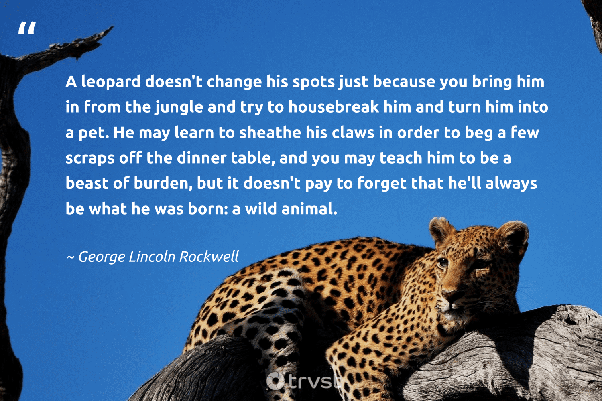
Never has any evil monster throughout history found any turning point in their life that magically transformed them into saintly beings. Most who claim to have “seen the light” assume such a position as a fraudulent means of continuing their prior agenda of self-benefit at the expense of others.
The short answer to your question is “never.”
People cannot change their essential nature. They may choose to improve, but that presupposes desire that has always existed and a lifetime of dedication toward that end.
People like Donald Trump see nothing wrong with their behaviour and so will never make an effort to improve.
Epiphanies such as this question presume to be possible constitute wishful thinking on a highly destructive level of delusion that prevents us from addressing the fundamental issues of broken psychology that we must dedicate ourselves as a society to addressing on the most basic levels.
We can never truly call ourselves civilized if our systems enable and empower the kind of evil embodied by people like Donald Trump — and make no mistake about it, we encourage his evil.
Our societies embrace and enable selfish, reckless, and belligerent greed.
Until we can address the fundamentally broken human psychology on a system-wide and social scale, we will continue to be plagued by these behaviours.
Ten percent of the world’s wealthiest are destroying our planet at a rate practically matching the total of the other 90% of the rest of humanity. Instead of doing something to restrain their destructive behaviours, we put them on pedestals and worship their harmful behaviours.
Changing humans in ways that address destructive behaviours embodying selfishness, recklessness, and belligerent greed means we must start at the top and change all of human society.
This post is a response to a question posed in its complete format: “Do you feel that Wal Mart employee’s lack of performance could be due to the fact that welfare literally forces people to accept a job offer or lose benefits that provide Food and Housing? Support #UBI”
When employers don’t care about their staff, their staff stops caring about them.
When employees stop caring about their employers, they disengage and produce the minimum they can get away with. They focus less on productivity and more on toxic politicking to gain personal benefit over others in an increasingly misanthropic culture that pits people against each other.
The sociopathic Walton family is teaching their people to hate them, their operation, and the society which permits them to exploit the vulnerable. Their people, staff and customers are being virtually trained to devalue everything about human life and modern society. This naturally results in the disengagement that every other historic failure of society has experienced preceding widespread systemic collapse.
This isn’t rocket science. It’s reciprocity.
Most people understand it clearly as “you get what you give.”
Sadly, we’ve allowed our societies and our systems to forget the most critical principle to acknowledge and characteristic of the human condition to preserve within everything we do. Strangely, it’s also a core principle within almost every religion throughout the history of religion.
It’s not complicated in the least.
Even science acknowledges it.
It’s cause and effect.
“Do Unto Others As You Would Have Them Do Unto You.”
It’s only a matter of time before the greedy, misanthropic Walton family finds themselves confronted with the bill for the consequences of their sociopathic and parasitic disdain toward society. In effect, they are no different than this person who justifies shoplifting.
They are responsible for breeding this kind of thinking because this is precisely their reasoning as they disempower their people and force them to rely on government assistance so that they can increase their hordes in an escalation of the misanthropic decay of society.
They are spitting on the social contract from the comfort of their luxurious mansions.
They are no different from this person and are responsible for validating this skewed justification.
UBI is a basic correction to veering off-course in the last several decades. UBI is insurance for the transition toward automation, which is well underway. UBI is a stabilizing societal element that will eliminate poverty, homelessness, and various social problems that create conflicts from which we all suffer.
This post is a response to a question posed in its complete format: “Why do people think I should feel guilty shoplifting, when literally so many people in the world want to use other people for what they have?”
You seem to want to justify shoplifting as a form of protest.
Meanwhile, protesting is a means by which systemic injustices are challenged by publicizing grievances. The point of doing that is to garner widespread support and enough momentum to make a systemic change that addresses a grievance over a condition which victimizes many people.
Sometimes, protests must be escalated to such a degree that some form of tradeoff between victimizing an aggressor and sacrificing someone in an act which alerts an otherwise unaware public of the severity of a grievance.
The incident between Luigi Mangioni and Brian Thompson from United Health qualifies as a situation in which escalation was deemed necessary (by Luigi) to sacrifice one’s life to alert the public to the severity of a systemic injustice.
Most often, protestors sacrifice only time and effort to address injustices. The goal of protesting, however, is to help people other than themselves who may or may not participate in the protest itself.
The purpose of a protest that can successfully gain support and make meaningful change is never to benefit an individual at the expense of victimizing someone else because that’s just another form of victimization.
It may be true that the degree of victimization is practically invisible to the victim such that they suffer a loss on an unnoticeable level, but they remain victims nonetheless.
It may very well be that the stores absorb their losses from your thefts with little impact on their operations, but that’s mostly because they amortize their losses across their operations. That means that a proportion of the cost of their products contains a piece of math they’ve determined recoups their shoplifting losses through every product sold.
Your thefts as an individual may be unnoticeable. Cumulatively, however, with others who think the same way you do, your thefts contribute to the increased cost of products that everyone bears while the store factors in a profit margin for managing those losses. Your thefts contribute to their net revenue while further victimizing those who pay full price for their products.
You may view your theft as a personal protest, but it’s an act that solely benefits you and injures all other consumers more than it injures the store you steal from. For this reason, your behaviour is considered selfish, over and above being a crime that contributes no benefit as a protest to the issue you criticize.
Your reasoning shares more in common with the stores you steal from when they add surcharges to an expected percentage of loss that’s padded enough to profit from.
Your reasoning and theirs are based on misanthropic, spiteful, and opportunistic thinking to justify an essentially parasitic behaviour.
You may not feel guilty about your choices, but they are neither justifiable nor actions to be proud of. However, the risks you take will one day result in criminal charges against you, while no one will be interested in empathizing with your reasoning.
You will carry a stigma of shame for the rest of your life once that happens, and no one will be sympathetic to whatever suffering you might experience as a consequence of your criminal choices.
Furthermore, your shame will be compounded by the reality that you will have become exactly the type of person that you justified harming through your thefts.
In short, your reasoning makes you a hypocrite, and you may not feel guilty about stealing from a greedy operation. You might still want to consider alternative forms of protesting to make your point — assuming, of course, that you believe your reasoning instead of just making excuses for being precisely the same as the people you criticize.
The circular and self-serving nature of your reasoning is precisely the same reasoning every criminal uses to justify their behaviour.
After all, in their minds, they also believe “everyone else does or would do the same in the same situation they’re in.”
Try to imagine the chaos that would ensue if everyone made the decisions you have made for yourself using the same reasoning you employ.
Society would shut down, and that’s why you will get no mercy when you inevitably get caught. After all, it’s never an issue of “if” with repeat offences but “when.”
Your luck will eventually run out, and you will be caught. If guilt isn’t enough to motivate you, then understanding how impossible it is to shoplift indefinitely might help you to reconsider your choices.
Security systems are improving every day. It’s already impossible enough for security experts to keep up with all emerging technologies, let alone someone like yourself. Cameras are cheap nowadays and tiny. You won’t know where you might be recorded, and it’s only a matter of time before you won’t know about the GPS tracker hidden in the liner of the coat you steal.
Good luck, though. Maybe you’ll convince a billionaire to give their people a decent raise just to convince shoplifters to stop shoplifting… which will happen after cows learn to fly. 😜
Their options are always limited to housing, which most often includes conditions that would be unbearable for those who take their ability to afford decent housing for granted. Consequently, any time spent with anyone living a marginal life will reveal horror stories most people could not believe were real.
As an example, someone I know had no choice due to prior “accommodation difficulties” (of which this person was a victim of the behaviours of others in this prior matter), chose an opportunity of availability and expedience because neither time nor resources allowed the luxury of shopping and waiting. As a result, a choice was made for a temporary resolution to bide time and save money for something better. The living conditions were rather horrendous as it was a suite within a house (which tends to be what’s most available at the lowest costs) owned by a hoarder who often snooped and eavesdropped while generally inebriated every waking moment — fortunately, not the violent type.
At any rate, this temporary accommodation was six months filled with fun and adventure, ending in an almost surreal form of coincidence. Upon having found another, more appropriate suite in a moderately priced complex and beginning preparations for moving, the owner was found unconscious. He was rushed to the hospital and treated for a heart condition, but since his mental faculties had failed so severely, he was moved into a care facility. Of course, this turn of events meant relocating sooner rather than later.
This person’s new and seemingly stable accommodation required some austerity to maintain a stable and relatively comfortable lifestyle. After the one-year lease expired, the rent increased by its legal maximum. Shortly thereafter, they were informed that the building complex had been sold and that the new owners were considering redevelopment, which may require them to move again.
This is one of the overlooked details of poverty. The lack of stability itself is an incredible drain on resources, which means this approach to living by addressing crisis after crisis over time is psychologically, physically, and financially draining. The consequence is this is just another forgotten example of how poverty is an existence of perpetual punishment for simply being poor while having little to no access to escape.
A harrowing statistic I’ve just recently posted in another answer to another question since answering this question 6 years ago is the number of people who work full time and are homeless.
I was also prompted by what’s been happening in California with predatory real estate corporations owned explicitly by Blackstone and headed up by Stephen A. Schwarzman from an email I received from Brave New Films. It prompted me to create a provocative meme to post on Xitter that may be a bit too provocative for some but can’t be ignored as a practice that can only be endorsed by psychopaths who are responsible for the current state of dire straits experienced by victims of theirs.
This is an argument against corporate ownership of residential real estate.
This post is a response to a question posed in its complete format: “Why don’t people realize that it is plutocracy (our country being governed by the wealthy elite) that is causing our economic problems?”
People don’t magically “realize things.”
People must be educated, informed, and aware of circumstances and details.
They need to be walked through the information presented to them as if one functions as a guide on a tour, answering questions.
People also don’t respond to laments, particularly when entrenched in counterfactual bigotries that prevent them from apprehending reality through an objective lens.
In essence, if this is an issue of concern for you, which I’m glad to see it is, then you need to start banging drums and sharing information and details because there are at least 76 million people in the U.S. alone who are entirely so oblivious to what you’ve determined for yourself that they contribute to the problems caused by the plutocracy.
There are many reasons why many people support self-and-socially destructive agendas, and most of those reasons can generally fall into only a few camps:
They benefit directly from the corruption,
They interpret the economic problems of the victims of a corrupt system as personal failings,
They imagine themselves as potential beneficiaries of corrupt powers by supporting them,
They lack the wherewithal to do anything about the corruption, so they cope with what they don’t believe they can change by resigning to hate the more easily victimized,
They support what they believe is a natural state of a zero-sum existence encapsulated as a butchered interpretation of life often referred to as the “law of the jungle,” in which there are only predators and prey in this world,
They’re psychologically dysfunctional — which is an explanation that applies to all the preceding points,
Their education is woefully lacking — which also applies to all preceding points and leads back to the onus placed on those who know better by providing the support necessary to make positive change while also receiving a reminder that lamenting the sad state of affairs does nothing to change them. It does, however, give the broken among us a target to jeer and mock and use as an example to justify their corrupt interpretations of life.
Now, arm yourself with the information you need to fight as a keyboard warrior and do something more productive than issue lamentations to elevate humanity from this dank pit of misanthropy.

















 thotbag