How different will the late 21st Century be?

This post is a response to a question posed in its complete format: “Do you think the late 21st century will be different from the early 21st Century just like the early and late 20th Century are nothing alike?

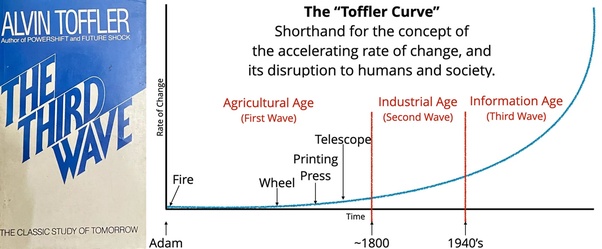
The rate of change has been steadily increasing. We (the public at large) have been made aware of this increasing rate of change since Alvin Toffler’s Future Shock was published in 1970.

Re-reading Future Shock, 50 years on

“Western societies for the past 300 years have been caught up in a firestorm of change. This storm, far from abating, now appears to be gathering force.” (p.18)

Future Shock Complete Film on YouTube (1:53:13)

“Future shock is the dizzying disorientation brought on by the premature arrival of the future… [It] is a time phenomenon, a product of the greatly accelerated change in society.” (pp.19-20)

The degree of change between the two centuries will be far more pronounced at the end of this century than the changes that occurred throughout the previous century and all preceding centuries.

Most answers focus on technological change, but this is the most apparent change because many can still remember an analogue age in which telephone communication involved an electronic umbilical cord and displays were limited to televisions and equipped with oddities called “rabbit ears.”

OMG! You had to get up from your seat and move a few feet before turning a dial to watch something different. We have demanded a remote controller for almost every electronic device since enduring that torturous existence. Now, we’re drowning in remotes we can’t find when we need them, while they demand an additional expenditure of precious dollars to feed them energy from disposable batteries.

Technological change alone represents multiple dramatic transformations of human society
and in how we will live from day to day. Today’s world of work will appear both alien and punitive to a world of work that will more closely resemble pre-industrial human society, according to Toffler’s third future-prediction book, “Third Wave.”
Technological change expands the possibilities of what can be considered human and redefines humanity itself. We can already see a massively transformative future for human biology through expanded medical and healthcare solutions to physiological needs and the emergence of a transhumanist movement that emphasizes the benefits of technological augmentation. While we remain cautious about biological alterations and focus on non-invasive technologies, medical solutions to limb loss, for example, are increasingly human-like in function while superior to their biological counterparts.

Like tattoos, artificial enhancements have been considered social taboos (for a short period, under the influence of Victorian sensibilities governing socially acceptable norms); however, they can conceivably become a popular means of “touching pseudo-immortality” and achieve small degrees of “super-humanity.” Genetic modifications will expand beyond preventing the transmission of genetic diseases to include prenatal selection of traits for one’s children. This will occur despite moral outrage because those with means will seek the greatest advantages they can for their lineages.

Technological change, however, is not the most radical change we are currently undergoing. Technology, however, has inspired, enabled, fueled, and empowered the most radical changes to date: ourselves.

We, as humans, are dramatically transforming, through growing pains demanded by our need to build a cooperative world in which cultures that once existed in isolation must now become interdependent to survive. Human psychology is being fundamentally restructured globally, in a way consistent with nature’s demand that we adapt or die.

Old forms of thinking and social organization cannot survive this transition without severely curtailing our social evolution, and they are trying to do precisely that. The MAGA sensibility and its adherence to a fictional nostalgia where familiar power structures continue to wreak havoc on outsiders is unsustainable in a global community that thrives on diversity.

We must learn to communicate and cooperate through mutual respect, and that’s why so much is so messy today. We haven’t grown up. We’re still in grade school, where our leaders mock 12-year-old girls and their base ignores that as irrelevant.

We are currently confronted with the sum of our human flaws and weaknesses, as well as with the social, economic, and psychological dysfunctions we have inherited from our forebears, through a focal point created by technology. Everything we once ignored and silently turned away from has become magnified and loud.

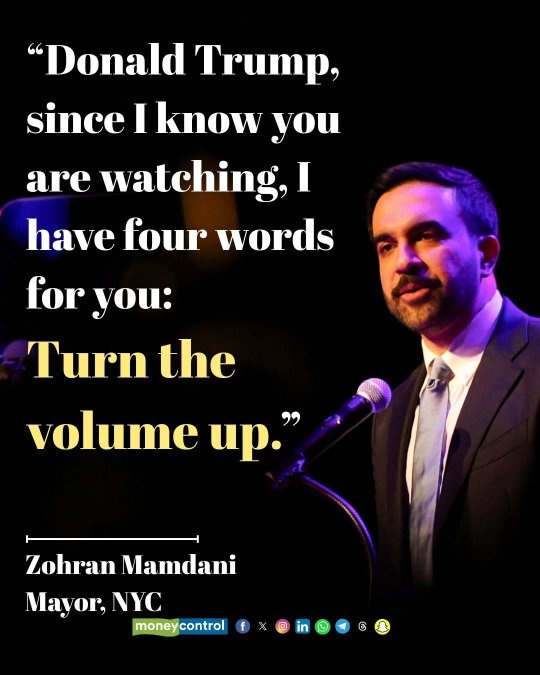
Each day that passes, the volume of discord increases as we negotiate new terms for the social contracts binding us all to a construct called “civilized society.”
“Millions of ordinary psychologically normal people will face an abrupt collision with the future.” (p.18)

We have become aware of the toxic effects of the remnants of decay left behind by our primitive ancestors. The drive for conquest, domination, and exploitation of the vulnerable in society has reached a fever pitch as dinosaur gatekeepers rail against the loss of their power while being confronted by the reality of their limits in their waning years.

We are undergoing massive power shifts and now hand-me-downs as new dynasties emerge, in which the powerful take what they want despite protestations, pleas, and persistent reminders of the values of a world of equally free people, not kingdoms with serfs ruled by rulers who deny the people their needs to favour their luxuries.

The powerful take what they want because they can
And now the people are beginning to say, “No.”

We are increasingly aware that what we become is what we allow.

We have all seen this movie; while some of us seem to have slept through the Reality Onboarding Orientation Program (Introductory ROOP) to miss out on what’s going on in GongShow Reality Tunnel #42, which means we all get to enjoy the cataclysmic scenery together.

We are buffeted about in herds to feed on words, and mostly instructions, telling us how we must live.
At their behest.

Humanity is changing, and the cycles can repeat only so often until enough stop and say enough.
This ends here. This culture of casual cruelty ends now. Right here. Today.

We are human beings: we know we become chaos whenever bound or chained.
We embrace that because human society survives only when humans are equal.
[There is] a racing rate of change that makes reality seem, sometimes, like a kaleidoscope run wild.” (p.19)

Amplifying such voices by the many through the megaphones, the powerful seek to dominate
because they know how to run the show.

This dynamic ebb and flow of power in an endless game of take, take, take
will last only until it breaks.

Meanwhile, numerous pressures are amplified by their instantaneity within a complex formula that quantifies interpersonal dynamics and produces opaque functions, algorithms, and equations.
To result in chaos.

As it turns out, humans are not quantifiable
We never were
Humans have always been chaos

Automation through AI and robotics that can provide for every socially practical human need
dispenses with work altogether, while consolidated powers ignore how their consumptions
are destructive to our weather, but we are told that we must be bold
As they raid our home of all its gold.

Conditions are ripe for a massive reset for how we live and how we think about living.
What can we do?

Future Shock was an attempt to quantify chaos 50 years ago. Today, its envisioning of the future appears as quaint as the original Star Trek.

We don’t know what surprises are in store that could set us on a trajectory in any direction.
We do know that we stand at a crossroads today to determine a fundamental,
not cosmetic alteration of human life and society as we know it.

That’s a guarantee.
The transformation ahead is far more significant for tomorrow
than the Industrial Age was for today.

Tomorrow is as unimaginable as today will be tomorrow.

“Once emptied, the future can be filled with anything, with unlimited interests, desires, projections, values, beliefs, ethical concerns, business ventures, political ambitions…”

Has China become more democratic?


This post is a response to a question posed in its complete format: “Has China become more democratic as its economy grew in the 1st quarter of the 21st century?”

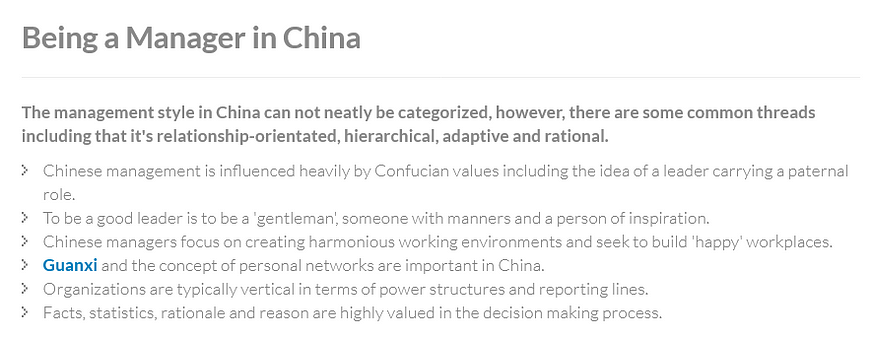
China has become more accommodating of the needs of the people while maintaining a paternalistic attitude toward the masses — which has been effective, to a degree, in maintaining order while educating and empowering the people as they work toward common goals benefiting their society.

As a system of governance, Xi has been moving toward increased consolidation of presidential power while questions about how much control he has over the levers of power have arisen. In essence, however, China remains a single-party system that they sometimes call a “People’s Democratic Dictatorship,” and in other cases a “Socialist Consultative Democracy.”

The magical ingredient of their community-based social evolution has been lost within the hyper-independence cultivated in the West. China has avoided the manifestation of extreme sociopathic disregard for one’s fellow citizens from a philosophical perspective. However, they have profited from the paternalistic exploitation of workers to enrich the community and the rich in more of a partnership than as disposable commodities in the West.

In contrast to the planned societies in China, today’s “Western-based” corporatocracy has resulted in a legalized re-institution of a medieval social structure built upon publicly denied but implied class divisions as the plutocrat class feigns partnerships with the working class through empty slogans like “essential workers.” Ironically, China’s single-party rule of the people has been transforming from an iron-handed autocracy into a kindly old grandfather who watches and guides the product of their efforts to discipline their offspring and bear fruit.

China was rightly criticized for its suicide nets, and I’m not sure how prevalent those are these days, nor how gruelling their factory work remains, but the sacrifices of those who gave their lives in service to a horrid existence appear to be making way toward the emergence of superior societies built around advanced technological progress. Planned cities like Zhenzhen and Chengdu have become global technology hubs, making breakthroughs that rival American developmental efforts.

At this rate, American dominance in technological breakthroughs will become a memory within the next few decades.

As more technologically sophisticated societies emerge, the less reliant the public will be on autocratic structures to maintain order because they will become capable of the self-regulation that accompanies higher technological and psychological development levels.

Knowledge work has been woefully misunderstood by Western thinking. Capitalists like Musk, who consider highly educated people disposable assets rather than allies, rely on controlling talent they treat in abusively disposable ways instead of leveraging them as partners who could help him overcome his limitations. As we see with Chinese corporate structures, the way of the future is a more nurturing management style in their operations, favouring mentorship and career development support, than Western corporate autocracies favouring cultures with toxic cutthroat competition.

The Chinese Management Style
A free guide to being a manager in China. Learn about Chinese Management styles, Business Management, Project…www.commisceo-global.com

For the last few decades, workers in Western high-tech environments have been far more competent than leadership incapable of comprehending, much less appreciating how much more skilled their employees are than they are in their knowledge domains. Companies in the West hire down to the level of incompetence of the management rather than hire up to empower their organizations with capabilities that can empower their growth. They are still stuck in the dark ages of employment, which is why most people still don’t understand how disastrous DOGE’s cuts will be for the functional needs of the nation.

Far too many believe the laid-off labourers can be replaced like obedient cogs to continue functioning as before. They fail to realize they’re impacting human lives and professionals who once cared about their roles and their impact on their operations. They fail to recognize the cost of replacing professionals is not as simple as identifying another body to fill a space. Workers are now being incentivized to disengage and stop caring because they’ve been consistently confronted with proof that their contributions bear no value to any psychopath with power.

If the public was ever upset when dealing with dispassionate bureaucrats who did the least they could get away with in their jobs, welcome to “I don’t give a shit version 2.”

The deterioration of the human spirit currently prevalent within the Western sensibility merely gives China the impetus to continue empowering its people because global leadership is just around the corner for them.


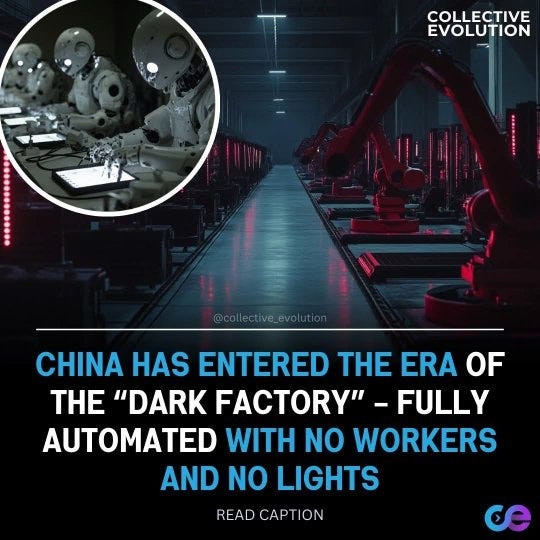
With the advent of “Dark Factories” — fully automated factories, the Chinese people are ahead of Western Industries and their government is likely better equipped psychologically to transition their support systems for the people than what we’re seeing now in the reckless Chainsaw antics of cutting necessary systems indulged in by American plutocrats.

How this translates into a better-equipped governance system to represent the people makes American-style pseudo-democracies appear less capable of being the governments of the people and for the people than the Chinese government of a paternalistic entity ruling the people. It’s no wonder people had become more amenable to a fascist style of government before Trump’s bull-in-a-chinashop rampage began.

Fortunately, the world has better models for democracy in the Nordic styles of social democracies, which borrow concepts from both governance styles to create an effective balance between necessary support infrastructures and free market capitalist principles with realistic restraints on power.

In short, China hasn’t “become more democratic,” but it has become more efficient at meeting the needs of the people. Their system will continue to evolve as their industrial sector evolves and drives social change as it has since the beginning of the Industrial Age.

Is it true that no programmers will be needed within 5 years due to AI?


This post is a response to a question initially posed on Quora, and can also be accessed via “https://www.quora.com/Is-it-true-that-no-programmers-will-be-needed-within-5-years-due-to-AI/answer/Antonio-Amaral-1

Fewer people will indeed be hand-writing tens of thousands of lines of code. However, someone still has to identify use cases for an application, design the application, develop the application, evaluate and tweak the code for the application, test the application, deploy the application, and evaluate the application.

Whoever does that will need to understand code, code architecture, and coding techniques and be able to identify potential exploits within the codebase.

Despite the changes, the role of programmers will remain crucial in the future of coding. Their numbers may even increase. However, they will not be as prone to developing carpal tunnel syndrome or relying on eye-strain remedies as they do now, thanks to the evolving nature of coding.

Coding will become a much more accessible activity, just like creating polished and professional-looking graphics, which are much more accessible today to people without art training.

We will eventually see the end of multi-thousand-employee enterprises and an explosion of small businesses that can match punches with today’s big players.

In another couple of decades, you and half a dozen buddies will get together to operate a business that can serve the globe with a unique product or service that each of you has some expertise in to create a successful enterprise that currently requires employing a few hundred people.

As I’ve pointed out in other answers, this transition period will be excruciating for many people. Lives will be lost, and we can only mitigate the widespread destruction that will eventually be resolved by instituting a universal basic income.

We are already seeing the beginning of a new infrastructure emerging in primitive forms with entrepreneurial solutions such as drop-shipping and outsourced manufacturing to dedicated manufacturers that don’t sell any product they design but rather provide a manufacturing service for designers.

Once it’s completed, the most significant upside of the transition is that we will all have the opportunity to create revenue for ourselves based on our ingenuity. At the same time, all the grunt work that people toil on today while wondering when they can escape their hell will be handled through automation.

People will be ever more reliant on their knowledge and creativity to create success for themselves while being free of toil.

It’s a bloody scary time right now — and primarily because it’s defined by the greed epitomized by eight people owning half of the world, but once we cross that finish line, people will be cheering because we will all finally be free of the treadmill wearing our lives down to dust.

It certainly is scary as hell right now, but if we survive our greed and environmental stupidity, we’ll arrive at the closest we have ever been to a Star Trek utopia.

I highly recommend watching Geordi LaForge or Tom Paris devising engineering solutions or Janeway programming the Holodeck to see how they issue verbal commands and make adjustments.

Watching Tony Stark work on his 3D table is exciting, and it is exciting to imagine what will happen in the real world because we are heading in that direction of usability.

I remember getting a good laugh with a friend when I joked about being in our senior years and reminiscing about how we used to kill ourselves by being on our knees and feeding miles of cable through small tunnels. Now, we’ve got wireless that kicks the old wired solutions’ ass.


Join the Conversation at https://ubinow.quora.com

Anyone wishing to engage in a dialogue on UBI is invited to participate in an open space on Quora dedicated to the issue. You may need to register for a Quora account — It’s free, and I don’t get any kickbacks from it. This space is intended purely for stimulating discussion on the topic — there are no hidden surprises beyond possibly needing to join Quora if you want to post comments. Visitors to the site can read the content without registration hassles.

https://ubinow.quora.com/