How Much of Political Messaging Relies on Public Bias?

This post is a response to a question posed in its complete format: “Are politics and marketing highly dependent upon, and structured around, the inability of the masses to think logically, act responsibly, and go beyond surface thought; especially go beyond surface thought?”
“All Publicity Works Upon Anxiety.”

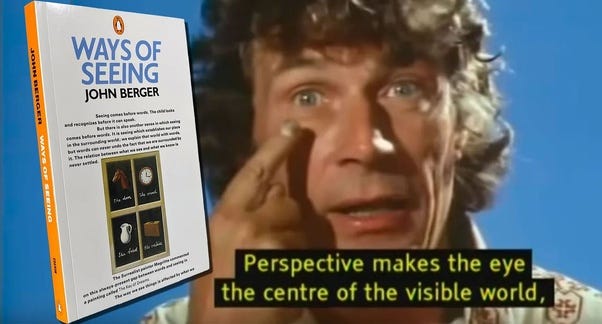
John Berger’s “Ways of Seeing” was an excellent introduction to my young mind as an art student in the early 1980s, helping me become more consciously aware of the then-daily bombardment of thousands of messages. It’s been decades, so I vaguely remember it, but I recall being repeatedly reminded of it over all this time. That suggests some “staying power” in my mind, with value over time. The book and/or the four-part documentary series created from it are both worthwhile experiences.
All four episodes have been combined into a single 2-hour YouTube presentation.

“We never look at just one thing; we are always looking at the relation between things and ourselves.”

The numerous concepts this short volume addresses introduced me to the layers of meaning in the images we encounter. The venue, the presenter’s intent, and the state of mind we bring to the viewing experience all coalesce into a unique perception we create for ourselves.

We are bombarded daily by thousands of images, according to the observations made in the early 1970s. I imagine the then-massive number I don’t quite recall at the moment (and am too lazy to scrub through the video to find it) has mushroomed by orders of magnitude since.

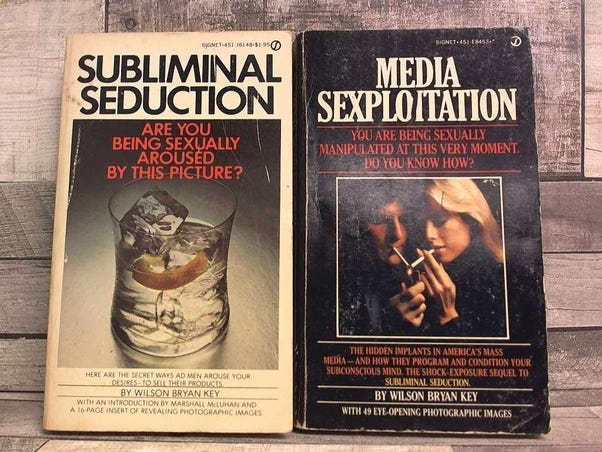
Marshal McLuhan challenged presumptions about media and its consumption.
We learned to think strategically about the messages we consumed.
His maxim, “The Medium is the Message,” gained him some notoriety among the media-savvy.

Then came “SEX” on a Ritz Cracker;
I’ve referred to a “we” requiring a definition. I think it was implied in “media-savvy” because it relates to awareness of what we are expected to believe and why it is essential to accept what is desired of us.

To be “media savvy” means being aware of the content of the ideas we consume and of how we choose which ideas to consume.
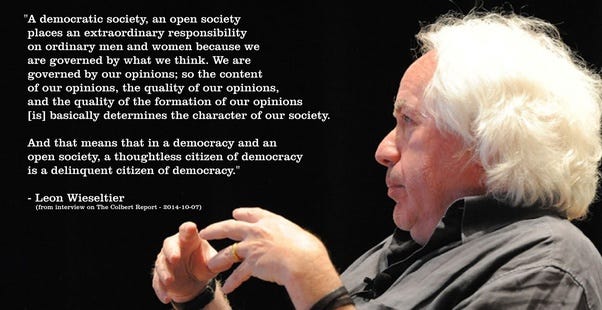

All Communication is Purposeful

We communicate not out of a compulsion to occupy idle time,
not even necessarily for social entertainment,
at least not when we go beyond the most superficial levels.
We communicate with one another because we must to survive.

Without communication, we would not be here today to examine our communication.

Who benefits most from what we believe?
It seems less about the people and more about benefiting those who have benefited most from a predatory system.

The above examples are from popular social discourse, about forty years ago and below is an example of current popular discourse:

(I refer to this example above as “popular” because it represents strategic messaging to serve a communication function of industry within the broader context of a culture structured around industry, economics, and consumption.)

The strategic manipulation of messaging is prevalent throughout society, in every domain, from interpersonal dynamics to international relations.

Whatever humans evolve into, some form of socially cohesive network of “shared perspectives” will perpetually question our experiences and compose new narratives to correct our collective perspectives.

Many of us do so with earnest and deep commitment to learning. Most will spare what time they can through highly structured days, allowing minimal opportunity for reflection.

We won’t stop thinking and talking about our experiences because we can’t. Willful ignorance may take centre stage from time to time, but it eventually gets the hook to exit left as it’s booed off the stage.

If the story doesn’t touch grass and meet reality, the people eventually figure out we’ve all been played for suckers by ever bigger games of power, and we find ourselves repeating history as ever-expanding dominions of power promise unity and deliver submission.

The barrage of imagery, sounds, videos, and merch-oriented stories has become increasingly overtly political. Factions grow around concepts and issues, not geography or physical commerce, but in the world of ideas, of how we think, how we see the world, and how the world looks back at each of us.

What do we want?
Certainly not chaos?

Chaos invariably leads people to one incontrovertible conclusion: for communication to succeed, there must be a relationship of trust. Without trust, there can only be chaos.

Choosing trust is a binary decision about life and what that means to each of us, from micro to macro scales, now encircling the globe.

Trust Means Accountability:

One hundred years ago, our circles of trust were local and lifelong.
Today’s global reach with casual effort was unimaginable then.

Where we end up one hundred years from now is provocative to contemplate. Some form of examination of the information we consume will continue for as long as some similar form of abstract thinking persists.

How Aware Are We Today?
Or, how much awareness can our general public sustain without inviting chaos?

What do we reeeeeally know about what’s going on around us?
Well, that’s easy, chaos.

Changes are occurring everywhere while everyone competes for resources and integration into the general machinery of social production.

We know how power structures coalesce to construct universal narratives about the acceptable social order we are encouraged to support, while our own needs are increasingly neglected.

We know that some messages aim at social disruption, whereas others aim at social cohesion.
What we do as a society to facilitate cohesion after a half-century steady diet of failed promises.

I’m reasonably sure most of the public knows, or is becoming aware of, the apparent disarray in our politics. How dependent is this massive economic superstructure on our willing participation?

We must have leaders we can trust who will represent the needs of the many over the few who benefit most from a corrupted system gone askew.

Do you think that society was better before social media?

This post is a response to a question initially posed on Quora, and can also be accessed via “https://www.quora.com/Do-you-think-that-society-was-better-before-social-media/answer/Antonio-Amaral-1

No.

All of the ugliness we see on social media didn’t just magically appear because of social media. Social media is simply a means by which people can express their natural selves. People have always been the way they are on social media. The only difference is that their voices and behaviours were not broadcast to the world.

Before social media, people lived in social silos which enabled toxic people to rule their environments. Their victims had no outside support or validation for their suffering and were groomed to believe they had to accept the toxicity as normal. People have been groomed for generations to believe social reality is immutable, that change is impossible.

We can now see that the opposite is true, and social media helps bring about change.

Social media brings about social change much faster than was ever possible, and that makes social media a solution to society’s woes, not a problem.

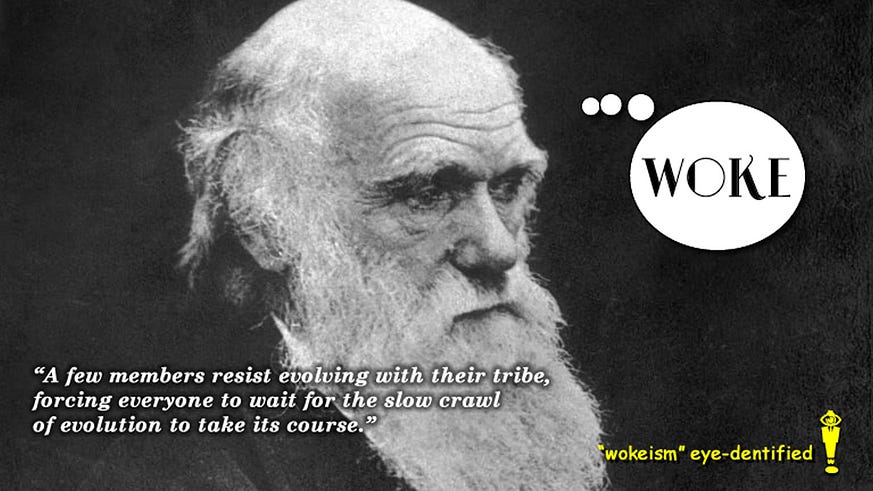
Consider, for example, how concepts like “Woke” are used as weaponized disparagements to enable the corrupt among us to leverage hatred into legislation sending society back into the dark ages.

Fifty years ago, and before social media, similar terms like “tree hugger,” “do-gooder,” and even “liberal” were terms of disparagement in which whatever little media attention was given to them existed without pushback from a public rejecting the toxicity. “Politically incorrect” was such a term that took hold as a disparagement before social media, and it is now widely accepted as a negative characteristic in society.

The pushback it received wasn’t magnified like “woke” has been through social media. Consequently, the attempts made to weaponize “woke” like all disparagements which began with positive connotations haven’t succeeded at converting “woke” into a negative. “Woke” is now a term that backfires onto those who try to use it as a disparagement. Through pushback on social media, “woke” will reassert itself as a wholly positive connotation. In contrast, those who invoke stupidities like “woke mind virus,” and “go woke go broke” will increasingly become viewed as enablers of toxicity much like the red alert beanies in society have become.

This represents tremendous progress in the fight for human decency on how we perceive concepts and how they frame our interactions with the world.

It’s almost quaint, now, to think of “do-gooder” as a bad thing to be called; and to such a degree that if someone is to refer to someone else as a “do-gooder” today, they sound like sociopathic idiots. That conceptual lifecycle is what has happened now with the term “woke.” It’s taken a fraction of the time for the implications of the word to settle into our public consciousness within the context it originally conveyed.

Being called a “do-gooder” fifty years ago meant one would retreat in embarrassment, but now, the accusation garners confusion. The person who hurls that accusation appears like an idiot.

In contrast, “woke” became popular less than two decades ago. It appeared as a positive connotation that the toxic among us attempted to weaponize like they have with every positive connotation in society. Within a comparatively short time, people who weaponize “woke” are already being regarded as toxic idiots.

Without social media, the weaponization of “woke,” and the legitimacy of concepts like “woke mind virus” would have been accepted as valid disparagements in which those are “woke” would retreat from social discourse because they had no outside support.

Arguments and counter-arguments flitted about in geographically isolated silos and never managed to spread from community to community. The consequence was to cultivate localized and insular community values. Social media cultivates community values across the globe. Social media breaks down the silos, and the barriers of distance between human beings and empowers those who must face the bullies attempting to corrupt positive values in society.

The best weapon against bullying is social media because of this. It’s also a megaphone for bullies, but they’re outnumbered by those they victimize and they are generally stupid people.

For example, the best thing that Trump could have done was to have that media circus of bullying Zelensky. He claimed, during his ego masturbating rant, that he “let it go so long” for a purpose suiting his goals, but it backfired spectacularly.

He and Vance were viewed as the bullying thugs they are and I’m sure this will be a watershed moment for many who have blindly supported Trump. Many people, if not most of us, have been exposed to bullying and the thing about bullying, is that the victims of bullies never forget.

Social media is community development on steroids. The problem with social media, however, is that it is predominantly operated on a for-profit basis, which makes it impossible for social media to cultivate positive social values deliberately and strategically.

Community development on social media occurs organically and within a chaotic environment. The fact that we can progress on issues through this chaos is a testament to the human spirit. No matter how the toxic people among us make life difficult for the rest of us, we are pushing back and succeeding in gaining ground on establishing a baseline for decency. It may occur glacially in contrast to what would be possible if a publicly owned and operated, not-for-profit social media environment existed within and to compete against the for-profit model.

We are, however, succeeding in making “woke woke again”.

I’m sure many people would quickly gravitate to a much safer environment where they could trust that their personal information wasn’t being mined for profit.

What is Quora used for?

This post is a response to a question posed in its complete format: “What is Quora used for? Can I use it to post my social life? What can I use Quora for?”

You can use Quora to ask questions or answer questions.

What you do with those questions or answers is entirely up to you.

For example, my use of Quora has evolved into a sketchbook of ideas where I repurpose some of the answers I write here into articles for publication on other sites.

This was a natural evolution for me that occurred from when I first joined over ten years ago. I was drawn to an academic vibe at the time, with primarily intelligent questions and answers from people who were very knowledgeable and extremely generous in sharing their knowledge.

It felt like a welcoming environment of aspiration for contributing value to our world.

Sadly, most of that is gone or buried under volumes of nonsense as the profit motive prioritized decisions that cared little about preserving knowledge sharing. Quora has succumbed to the same community-deteriorating profit-chasing phenomenon that all other social media sites have.

My personal life was also supremely upended shortly after joining, and I stuck with Quora, not out of my original intent of adding to a marketing funnel for my consulting efforts as an instructional designer but out of a therapeutic need to feel I was still able to make positive contributions to other people’s lives.

As Quora quality devolved, so did my participation to such a degree that it became a vessel for venting. As much as that has helped me to cope with what I’ve endured, it’s often toxic and destructive to a fragile state of mind. Fortunately, writing leaves a trail for facilitating introspection, which has become a path out of personal darkness for me.

I hope my latest stage of using Quora as a springboard of ideas and back into a life of some modest dignity will be a stage where I can leave most of my negativity behind and be grateful to Quora for functioning as my only source of productive therapy over the last decade.

A condition of where my life is at right now involves meeting with an actual therapist. I have concluded, however, that he’s a hired assassin for an entity that seeks to escape responsibility for the consequences of its actions through a strategy of encouraging suicidal ideation.

That may seem like hyperbole, but there is no other explanation for the overtly antagonistic and abusive behaviours exhibited by this “professional.”

For me, the only valid forms of therapy I have ever experienced have been through my creative expressions, which have mostly been through writing and creating pictures.

For me, Quora will, hopefully, be a means of moving on from a stage of inertia into a productive future where I can encapsulate ideas I’ve explored here into formats that can serve as some form of legacy to my life I can feel proud of.

What you want Quora to be for yourself is whatever value it brings to your life. Generally speaking, however, as social beings, how we manage our social interactions, whether in person or online, defines our lives for each of us.

Is Neil deGrasse Tyson wrong?

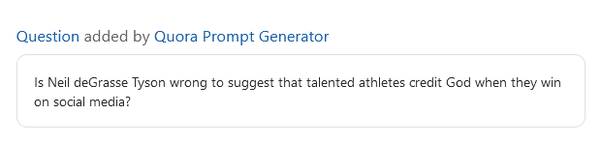
This post is a response to a question posed in its complete format: “Is Neil deGrasse Tyson wrong to suggest that talented athletes credit God when they win on social media?”

I think there is something severely wrong on so many levels that it’s impossible to address them without an entire book and a lot of research to identify the dynamics of a business decision justifying the dissemination of lies in society to stimulate engagement and generate revenue.

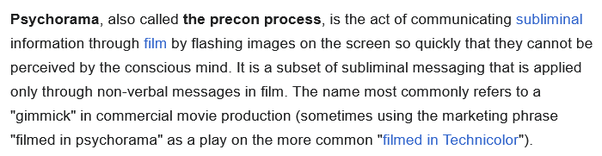
This is horrifying on so many levels that it insults every aspect of humanity, human society, and the social contract. This contributes to the widespread decay and ultimate destruction of civilized society on the most malignant levels. This crap is worse than the stage of “subliminal seduction” we went through in the 1970s when laws were crafted to prohibit embedded “invisible messaging” within entertainment media.

Psychorama — Wikipedia

Neil deGrasse Tyson has never suggested any such thing, and although it’s easy to attribute this claim to a believer on a mission of Lying for Jesus, it’s not. This is even worse than a believer trolling for reactions by lying.

For non-Quorans: This screengrab indicates the question author, and in this case, the question was written and posed by a bot designed to stimulate engagement on this social media site. This is a common revenue-generation strategy employed by media outlets across the board. Fox Entertainment, for example, has built its empire entirely upon this toxic revenue generation model.

Targeting information appealing to the limbic system is like serving up crack to a heroin addict, and that shapes the society we are cultivating by allowing this practice to dominate media. The effects are profound. 

Not only does this represent an abysmally immoral strategy for generating revenue, but it’s also a strategy that furthers a divide between people in a society already at the edge of fracturing into chaos. This strategy for engagement is ultimately a violent assault on our social contract and is responsible for the dramatic divisiveness characterizing our social dynamics today.

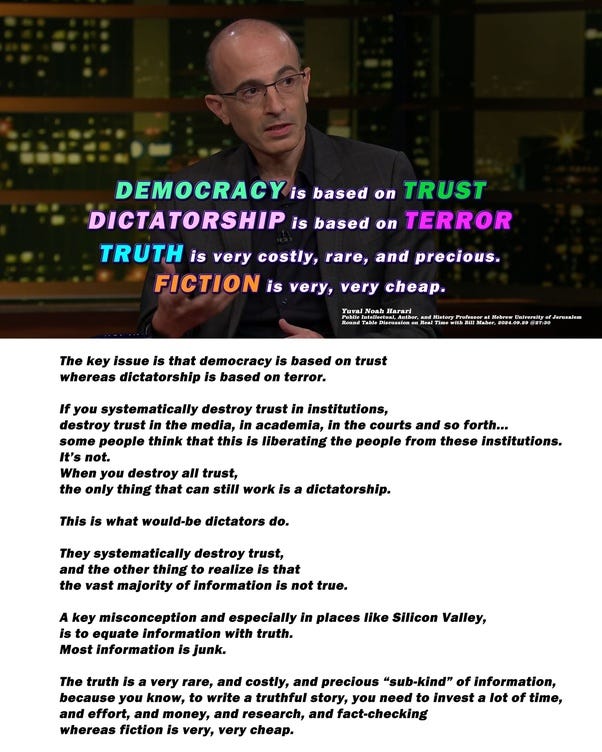
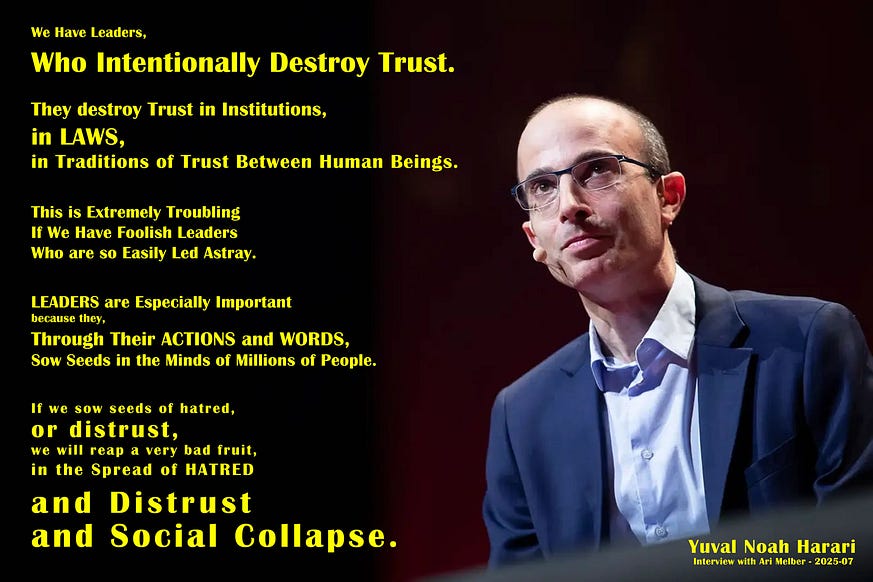
This precisely reinforces the post on my Thotbag space, citing Yuval Noah Harari’s statements during a round table discussion about the threat democracy itself is facing. Here is the meme I posted that includes his full text:

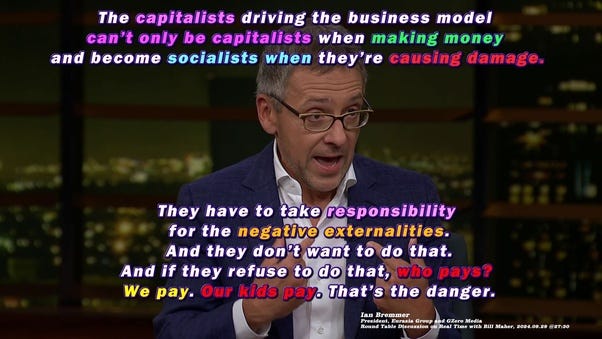
Along with Mr. Harari’s warning, Ian Bremmer pointed at the problem this divisive, conflict-escalating disinformation creates for society:

This fraudulent question is worse than Quora violating its own, now primarily defunct BNBR policy; it’s an assault on human decency on the most corrupt of levels for the most corrupt reasons.

This should not be disturbing only to atheists who fight back against a daily assault from believer trolls seeking to provoke emotional reactions. This should be disturbing to everyone who cares in the least about things like integrity and the social contract that has never been strained to such a degree as what we are living with today.

If society collapses into chaos — If people’s lives are unnecessarily lost because we can’t or won’t back away from the cliff we march toward — Then this kind of manipulative nonsense perpetrated upon us all for the sake of profit will be responsible for the nightmares ahead that we are about to encounter.

This is central to my argument on why social media should not be operated on a for-profit model. Social media is a community development endeavour, and we must consider how we approach its role in society more thoroughly than consigning personal information to a feeding ground for mining material profit.

That we are being strategically and systematically provoked by algorithms to hate each other should horrify all of us.

Do you think that Quora users are mean?

This post is a response to a question initially posed on Quora, and can also be accessed via “https://www.quora.com/How-mean-are-the-people-on-Quora/answer/Antonio-Amaral-1

Quora users are no different than anyone else on other social media sites.

The virtual environment, coupled with the insulation of an identity divorced from who people are in real life, allows them to indulge in their basest behaviours without repercussions to themselves.

Some are deliberately more abusive online than they would be in person because of a lack of consequences to them in life. Some use social media as a vehicle for venting their frustrations, and that often involves victimizing others.

It’s a dynamic that exists everywhere but is exaggerated online due to the shield a fraudulent identity provides.

All social media is much like Quora, but I would argue that Quora is more civilized than Facebook. A lot of aggression on Facebook is expressed passively through the emoticon reaction system. Facebook UI also sucks big time for permitting extended dialogues, while Quora’s system of ownership of content and content threads by the answer writer helps to minimize aggressions here.

Quora’s system is less antagonistic than Facebook’s because of its structure and is more efficient than other sites at handling long discussion threads.

Insofar as degrees of meanness on social media, my decades of experience on Usenet remain unsurpassed in meanness. Still, social media has generally degenerated in decorum to more closely resemble interpersonal dynamics on Usenet.

It’s a shame that social media has become so toxic. This devolution of courtesy is an argument for a publicly owned and supported social media venue that eliminates the profit motive by operating as a non-profit entity to serve as a community development tool, performing various community development functions and providing various public services.

A sign-on system, for example, could replace the various sign-on systems that people use for logging into sites where sensitive data is stored while ensuring one’s data is accessed through a single entity that provides access to one’s government-related needs such as their taxes or identification needs, and etcetera.

Social media has always been about community development. I have found amusement in statements about upholding community standards from privately owned entities like Facebook that routinely violate the bounds of decency within a community-oriented context. I often complained to Quora about inconsistently applied BNBR standards, and the result of attempting to manage nuance was resolved for them as a business decision deemed too expensive to operate effectively. There was no profit-oriented point to them to pretend that being nice and respectful was an important feature to protect.

Part of the problem with moderating systems is that petty people find ways to weaponize moderation against people they decide to behave spitefully toward.

I’ve been considering a series of articles on social media while arguing in favour of a community-based, owned-and-operated system that can address a number of the shortcomings while functioning as a means of “encouraging” improved interpersonal dynamics through a self-moderating model, but that’s a significant endeavour while I’m currently in the process of addressing more profound to me issues through a struggle I’ve been undergoing for the last decade. I hope I finally get a resolution to it soon and in time to focus on other areas in which I hope to make more constructive contributions to society rather than the wholly destructive path I’m currently on.

In short, and as a summary, however, people can be pretty mean everywhere, and sometimes, there’s nothing one can do about it but try to avoid or dismiss their meanness. It might help to be aware that not everyone is always mean. I’ve noticed within myself while using Quora as a public therapy tool for coping with my circumstances that my bouts with meanness correlate directly with my mood, and my mood is often affected by my current experiences. The best I can do is to learn to understand myself so that I can better understand the meanness of others, and that seems to be helping because their meanness over time has a decreasing impact on my psychology while I’ve become more effective in addressing their meanness in ways that I hope help them to improve.

That’s essentially all we can do for each other is to ensure we protect our boundaries in ways where the meanness doesn’t destroy our self-image. If it impacts it, then it serves as a teaching moment where we improve ourselves and become less mean over time rather than more mean — which is precisely the distinction in attitude I see creating the division between the toxic MAGA phenomenon and a world struggling to cope with increasingly aggravated divisions that have been cultivated within us by the people who have been setting us against each other while they rob us of our dignities.

Are progressive liberal voters leaving Twitter for other sites?

This post is a response to a question posed in its complete format: “Do you think more and more progressive liberal voters will leave Twitter and go to other sites where their views will be more respected?”

Being on Xitter right now is like being outdoors at a campground that’s become a free-for-all and sitting in front of a fire, watching a massive log slowly burn itself into ash.

Nothing is stopping anyone from cross-posting to any or all of the competition. At this point, there’s no reason not to while waiting for the log to crumble into dust. Xitter still has a massive database of postings and a long enough history to be helpful on some levels for research.

Knowing which of the alternatives will emerge as the front-runner is still early in the game, and it could very well be the case that all three (Mastodon — https://mastodon.social/@, Threads — https://www.threads.net, and BlueSky — https://bsky.app/) will establish comfortable niches for themselves. There may emerge reasons for choosing only one, but it’s too soon to do that now.

This phenomenon is an example of how socializing on a virtual scale robs us of experiences that are common IRL. For instance, it’s been less than one year since I predicted Xitter would die within five years. I received a lot of mockery for it then. Less than six months ago, when it was announced that Xitter had lost 40% of its value, I posted that it was tanking faster than I thought it would and made a softer prediction about its data being sold off in less than five years. I received a lot of mockery from Elonia’s fanbois for that. A few days ago, it was announced that Xitter is now worth only 25% of its purchase value. It’s tanking faster than I expected. Elonia’s doing a marvellous job of teaching the little people how much contempt the rich psychopaths among us have toward their pawns.

(To be clear, not all the rich are as contemptuous, but they are obnoxious because they are captains of industry and de facto leaders in society. They should all be like Nick Hanauher and banging a drum for positive changes for humanity. That’s the least that can be expected from them. If they’re not doing that, they are callously egomaniacal for a myopic and self-serving regard toward the benefits they enjoy and take for granted. They’re also quite stupid for failing to apprehend how they would be much better off if they supported dignified living for the little people.)

This is one of those cases in which I am not only happy to be way off on my prediction, but I can also boast about it, and I have no idea who those people were while I’m sure I blocked a lot of them. If this were IRL, I’d be enjoying a lot of gloating while downing several beers at a bar that were owed to me by people I’d have made bets with.

Eventually — and sooner rather than later, the people who continue to use Xitter exclusively will begin to wonder if their experience is worth the effort to log into it, and that will be the day the Xitting dies.

If you’re posting on such sites to build up top of mind, there’s no reason not to cross-post. That way, you can see what kind of attention each gets you, and that will let you know who to focus on and with targeted messaging that can be most effective for your goals.

I’m generic in that respect and don’t have a specific target or strategy for sales or what you have in mind, so my approach is just “put my shit out there and see what happens.”

There appear to be developing differences between the alternatives. While Xitter is emerging as the haven for lunatics, there are still a lot of progressive voices there that seem to be there while cross-posting on other platforms. Robert Reich, for instance, appears to be on all three.

People more focused on a specific community to engage with will find it tough to know where best to put their eggs right now, particularly since all three platforms are still establishing themselves.

Is it worth responding to the laughing emoji reactions to a tragic post on Facebook?

This post is a response to a question that was asked in its complete format: “What do people think of others who react with a laughing emoji to a serious or tragic post on Facebook? Is it worth going through the list and giving them all a nasty pm, or would this be a rather pointless and sad exercise?”

That list you imagine going through to castigate people individually is often over one hundred people and can sometimes be several hundred to over one thousand.

Going through one list of even just one hundred people would easily chew up your entire day.

You would also have to deal with pushback and people reporting you for intrusive messages on their DM.

You would likely find yourself consigned to Facebook jail for your efforts.

Even the process of blocking on Facebook is onerous enough where if that’s all you did was block one hundred people, that would easily chew up a few hours of your day…

On just one post.

Odds are excellent, and you could find at least half a dozen such posts that motivate you to block hundreds to thousands daily.

It could be a full-time job just blocking people, and you would still find a never-ending supply of names to block within a user base of two billion.

Blocking one thousand people daily would take three years to block one million people.

If you were to go by statistics that bear out at one in five people having severe mental health issues, you would need to block 400 million people.

That would be a lifelong job working every day from morning until you fell asleep without any break from that task.

If that’s how you wish to spend your life, it’s your choice, but you may find other approaches to making your point more beneficial to your sanity.

You can post a public comment on a post where you can chastize all inappropriate laugh reactions at once. I’ve done that, and it can feel rewarding when you get a lot of feedback from people who appreciate someone publicly criticizing lousy behaviour. You will also find that you’ll get laugh reactions on your complaint that you can address.

If you think you will have a discernible impact on behaviours, then you’re not being realistic because succeeding on that level will require years of effort.

You may want to consider lobbying Facebook for improvements to their blocking process because it sucks. It’s onerous and constantly redirects you to pages you probably don’t want to see repeatedly.

Change.org has a petition that has already gathered 296 signatures, and as of this writing, it requests that the Laughing Emoji be removed from Facebook altogether.

Sign the Petition
I recently wrote feedback to Facebook about something that’s been bothering me about their emoji feature. Here is what…www.change.org

If it gains enough traction, we might see at least some changes to their emojis if the laughing emoji isn’t removed altogether.

Here is another article calling for its removal:

No laughing matter: Why it’s time to cancel Facebook’s haha reaction
That squinting, grinning idiot is poisoning Facebook.thespinoff.co.nz

Whatever you decide to do at this point, it’s probably wisest to consider it more personal venting than instigating social change. Otherwise, you will tire yourself into a frustrated frenzy while spinning your wheels and going nowhere.

A helpful quote you should keep in mind for whatever you choose to do is from Winston Churchill.

Good luck with whatever you choose to do.