If aging feels like things get worse, how can we deal with living 200 years?


This post is a response to a question posed in its complete format: “If older generations tend to get fed up with the following generations, and feel that people are stupider, societal values, music, culture and everything else is worse, how could humans ever deal with living to be 150 or 200 years old?”

This question is based on a flawed presumption and a form of projection because “older generations” is a monstrously huge brush comprising hundreds of millions worldwide.

That number of humans don’t think alike, and they certainly do not all “get fed up with etcetera generations.” However, people who employ broad brushes when making judgments about people they don’t know are also exhibiting precisely the mindset that disparages people and renders broadly negative judgments about “things getting worse.”

Thinking in these negative terms and judgments is often a means of rationalizing one’s negative attitude. By believing age leads to negative judgments, one is permitting oneself to develop one’s negative judgments.

The reality, however, is that many people remain “young-minded” and optimistic throughout their old age and consequently live happier and longer lives.

Here are some examples of people who remained optimistic throughout their long lives:

George Burns 1896–1996


Grandma Mose — Anna Mary Robertson Moses — September 7th, 1860 — December 13, 1961

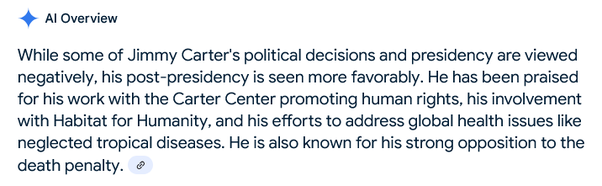
Jimmy Carter — October 1, 1924 — December 29, 2024

After having pissed away valuable time on another post dealing with toxic incels whining about how unfair life is that they don’t get to control the women they impregnate, I’ve arrived at this question with the attitude that people choose to believe the world is getting worse because they’re not able to control every aspect of it. That frustration wears them down over time, and they develop a negative attitude toward life and people in general.

I was a child during the “Dawning of the Age of Aquarius,” and was a preteen during the flower power generation with love-ins, and an optimistic view of a hopeful future.

Then came the 1980s, when people’s mindsets appeared to change from an open-minded view of society to a rather cynical and dispirited view based on a self-centric model of getting what one could for oneself, even at the expense of others. It seemed the era of sharing and caring was vanishing.

Throughout it all, I still maintained my somewhat naive but hopeful view that we would recover the community spirit I remember being moved by, while reminded of it each night, as the television stations shut down their programming for the evening, with the Brotherhood of Man song, “United We Stand, Divided We Fall.”

Although I have perceived, throughout the last forty-five years, since the beginning of the 1980s, a general increasing separation between people, many changes have distracted my mind from it. I could sense it occurring, but I mostly ignored it as I went along with it while focusing on the developing technologies and learning to leverage skills and knowledge to carve out a sustainable career for myself. I was caught up in my optimism for a hopeful future for myself, and became increasingly introverted and isolated from interpersonal interactions and a community I could rely on.

Since that was taken from me, maintaining optimism has been quite a struggle. Still, I understand on a deeply visceral level how succumbing to negativity is quite much like drinking poison. The intensity of my experience has made it abundantly clear that a destructive mindset also harms one’s physical health. It creates a feedback loop of self-destruction, which allows one to wallow in broadly negative views toward life in general.

I believe that insight clarifies that living 150–200 years (which no human has ever done) depends on one’s frame of mind and maintaining an optimistic outlook.

If people develop such a negative perception of life that they believe everything is perpetually worsening, they don’t live as long as they otherwise could. Our attitudes toward life constitute a life-shortening way of ensuring we don’t have to cope with hopelessness.

This is part of the reason optimism has increased in importance for me, particularly since I still find myself venting against the prevalence of negativity we see every day and almost everywhere we look.

I can accept that much negativity exists in this world, but I don’t have to accept enduring it, so I get carried away with challenging it. I’ve gotten quite sick and tired of the rampant cynicism. I would like to see a resurgence of hope filling my senses like it did when naive hippy optimism of peace, love, and tree-hugging do-gooders captured public attention, even if it may have mainly been performative or just acting out against previous dark periods in human history, like the Second World War.

I want to believe we’ve arrived at a form of “peak darkness,” and a crossroads in our future as a species and a civilization where we can change course and restore hope to protect our longevity. The alternative is to allow ourselves to succumb to oblivion because we cannot survive an existence sustained by cynicism.

To that end, I do what I can to find examples of young people who give me hope for our future because, with each generation, we have both Kyle Rittenhouses and Greta Thunbergs, just like we have had for generation upon generation before them.

We must choose whether we want long lives of optimistic hope or shortened lives of cynical darkness.

Perhaps I’m just on a high from Canada’s recent election and getting the good news today about Australia following suit. Still, I think — or at least can start feeling some hope that the MAGA madness may finally reach its breaking point. It’s impossible to know if we’re experiencing a sea-change or a temporary lull in the degradation of our values. Still, I’d prefer to adopt an optimistic belief in our future than a cynical one because that’s too toxic a burden to endure. We may still require a world war to break this century’s “MAGAt fever,” or we may have learned something from our history, at least enough not to have to turn our world into a humongous bowl of ashes and regret before we finally start making hopeful and community-minded decisions to grow together instead of tearing each other apart.

At any rate, life may suck but feeling sucky about it only makes it suckier. Even if life sucks, thinking optimistically about a positive future at least makes the suckiness easier to deal with, and that’s why I equate long life with attitude and posted a few well-known examples of people who we can all learn something from.

In short, it’s not about “older generations” but about “old minds.”

Temet Nosce

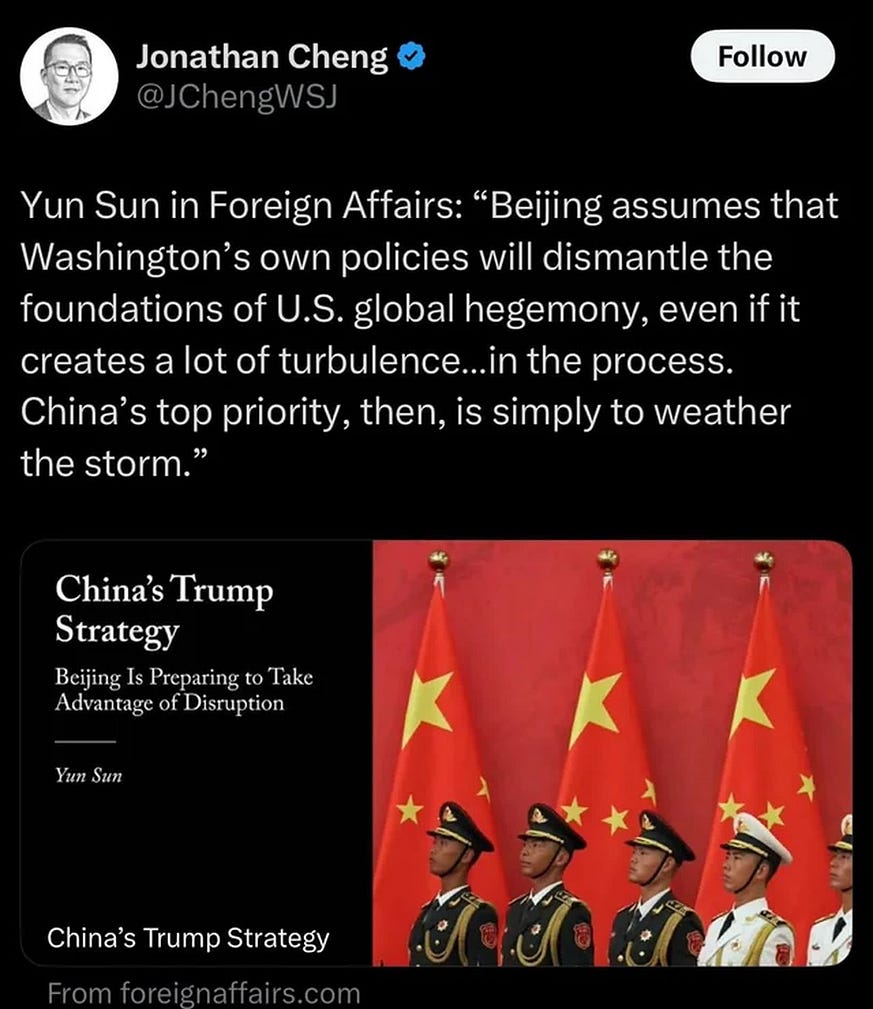
Why does the Chinese government look like geniuses run it?

This post is a response to a question posed in its complete format: “Why is that for Chinese living inside China, the Chinese government is not perfect, but for people looking at China from the outside, the Chinese government looks like it is run by geniuses who plan far ahead into the future?”

I believe it’s important to highlight a harsh truth that completely escapes MAGAt minds.

China isn’t “run by geniuses” but by ordinary minds who use “common sense” to plan “far ahead into the future.” They leverage the minds of their people, and many are geniuses, making incredible technological breakthroughs.

Nations cannot plan for the short term without missing the boat on the long term. People can prepare for the short term because the lives of individual people are short compared to the lives of nations. Nations must plan for millions of lives and not just one.

“Common sense” leadership is acknowledging one’s limitations and relying respectfully on the crowd’s wisdom to achieve a nation’s most significant potential. Authoritarian mindsets will always fail against this kind of “common sense.”

It doesn’t take a genius to figure this out.

All that’s required is not to be a stupid, short-sighted narcissist who thinks the world magically dances to the sound of one’s voice.

That’s precisely the problem fueling the self-destructive hubris sending the U.S. careening into becoming a third-world shithole and all of this is entirely due to the machinations of short-sighted bigots whose goal is the resurgence of another Reich because they continue to refuse to learn from history.

MAGAts may claim to value “common sense,” but their short-sighted and self-serving biases are not “common sense,” but an entirely “subjective and self-destructive sense.”

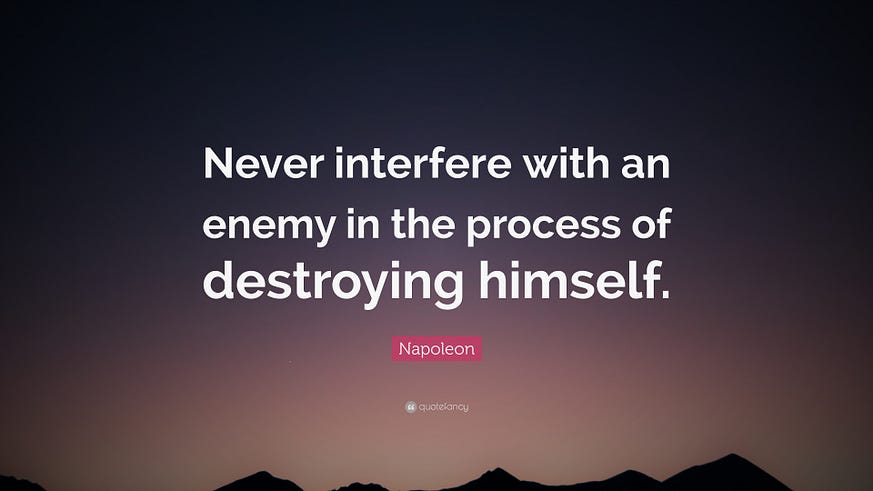
This period in history is teaching us once again that we must cure our species of the authoritarian virus that we have been fighting against since the dawn of human civilization.

China has had enough experience with authoritarianism to know how to handle the U.S. slide into fascism.

Why work if you can live on benefits?

This post is a response to a question posed in its complete format: “What’s the point of working if you can live through getting “benefits”?”

You’re asking the wrong question.

Instead, you should ask, “What is the point of living like a lazy slug who accomplishes nothing and does nothing to make themselves feel good about themselves or their lives?”

That’s what you’re implying with your question.

You imply a false dichotomy between living one’s life based on laziness rather than doing what motivates them or submitting themselves to an abusively dehumanizing existence as a disposable cog to make someone else rich while struggling with one’s self-respect.

Life isn’t a choice between working and not working. It’s a choice between employment as a wage slave or generating an income for oneself based on doing what matters to them and which motivates them to be excited about their lives.

Employment used to be a motivator when the income generated enough to go well beyond meeting basic needs and into enough disposable income to invest in one’s future.

That’s no longer the case.

Employment today is the equivalent of a lifetime of dog-paddling in an ocean until one gets too tired and drowns.

That’s not a life. That’s a lifetime prison sentence.

What’s the point of struggling in poverty until you die to make someone else wealthy when you can be much happier and less stressed while doing what you love?

Bonus Question:
Should there be a universal basic income to address economic inequality?

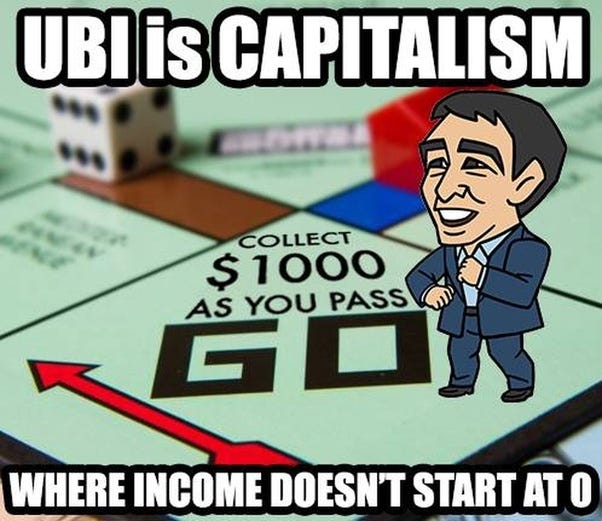
UBI doesn’t address the issue of economic inequity, and it isn’t intended to.

UBI provides economic stability and gives people room to make the best choices for themselves without having a desperate need to survive leveraged against them.

UBI frees people from the pressures of meeting basic survival needs enough to escape oppressive working conditions. The consequences of businesses losing the leverage of economic desperation to create downward pressure on wages can more easily permit upward pressure on wages.

This change in a negotiating dynamic contributes to a reduction in economic disparity, but it doesn’t address it head-on.

What can I do about my job being automated?

This post is a response to a question posed in its complete format: “I don’t want my jobs to be automated. What can I do? Will there be a chance to get it?”

Hi again Furquan. 🙂

You have asked me several questions on automation in the last few months, and I appreciate that you find value in my words. Thank you.

I have to say that it is essential to understand the automation revolution is inevitable and unstoppable.

The decisions for automation are being made not by us lowly citizens but by those who have the power to implement what they view as solutions to their needs — such as cutting back on labour costs.

The career one chooses for oneself does not matter to the ownership class because their perspective is based on what they are willing to pay to produce the revenue they seek for themselves.

This is the fundamental flaw of capitalism.

Capitalism, as it stands, has been permitted to flourish in ways that disregard the needs of the many in favour of the whims of the few. I say “permitted” because we have always had the power, as a people, to restrain corruption, but we have been mollified by messaging and the “luxurious” benefits of modern technologies.

We used to be much better at restraining greed, and our societies flourished. The ownership class, however, has invested hundreds of billions over the last half-century in lobbying the government, installing government puppets, and creating propaganda machines often referred to as “Think Tanks,” like the Heritage Foundation. Their goals are clear: to re-establish dynastic rule over the people. They made that abundantly clear when they released Project 2025 and issued a threat against anyone who resisted.

They have become so comfortable in their misanthropic regard for citizens that they no longer hide their agenda.

As individuals trying to navigate and survive the nightmare of this transformation into fully automated societies, we have two personal mandates to adopt.

The first mandate we have to ourselves is to equip ourselves with as much knowledge of the transformations as we are able. You have shown yourself eager and well underway on your first step by simply asking questions. The only way to anticipate the changes coming and avoid any potential disruptions to your life is by asking questions.

The second mandate we have for ourselves is to accept the fundamental premise of capitalism, which is that every human being is a business entity. We have no choice now because the era of life-long jobs and straight-up career ladders has vanished. That means even a stable job one is employed within today will be temporary, not necessarily by malice, but because the world is changing rapidly. The capitalist owners of that business also have to adapt to the changes or go bankrupt.

We are, in essence, in a surreal state of every person for themselves, and it’s taking a toll on us as individuals and creating cracks in the social contract.

This leads us to a second set of mandates we have to ourselves by serving our fellow citizens.

The first of these “community mandates” is to stand against lies and disinformation. Call out the lies and counter them with facts. Refuse to support individuals and institutions that disseminate lies. Take action, like boycotting Fox, and make your decision public. Let other people know there is a line to be drawn between decency and depravity in society that we must all be in solidarity with if we want to re-establish ourselves as humans worthy of the distinctions we revere when referring to our collective selves as “humanity.”

Greed is not good. Greed hurts us all, and we must support each other, or we will not survive the challenges ahead without great calamity and horrific losses of life that will scar whatever remains of humanity for whatever future may manifest for us as a species.

The second of these “community mandates” is to do what you can to support actions intended to restore decency. For example, I can do little with my resources beyond shooting my mouth off at every opportunity and creating memes to challenge the bullshit. I also actively sign petitions and help out in ways that are available to me.

Register with this organization — Change dot org — get on their list and peruse the many ways in which people are taking action worldwide:

The world’s platform for change

Choose from whatever causes matter to you and support them by signing a petition. If you can afford to donate even small amounts, that helps. Please don’t underestimate the power of a single voice when it comes together in harmony with millions.

Anyone can start up a petition on this site. If you have something that you specifically want people to support, such as protecting jobs in a particular industry or role — something tangible in which people can take action by speaking up, then you can contribute toward the issue of ongoing automation.

The third social mandate may be construed as primarily a personal bias. It is an inevitable necessity precisely because of automation and because capitalism forces us all to be capitalists on some level.

  1. Each of us needs some support to survive the challenges of meeting our basic needs.
  2. Society, as a whole, produces more than our basic needs.
  3. The success of capitalism is predicated upon innovation and productivity.

These three fundamental presumptions are what have led me to understand this fourth premise:

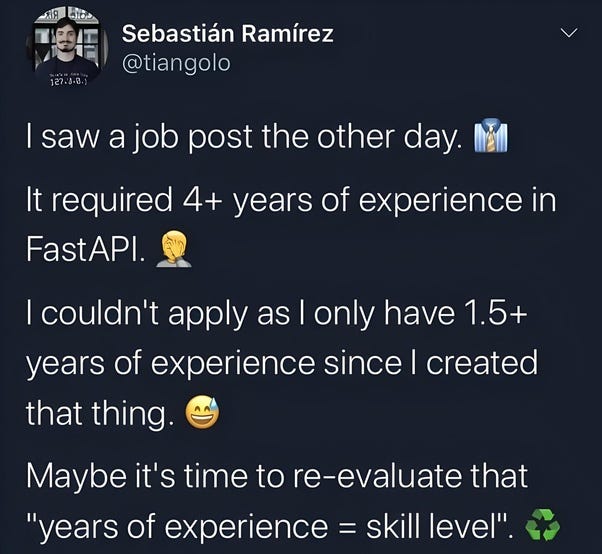
As I look back on my life and consider the thousands of hours spent on resume development and submitting tens of thousands of applications to employers that either mostly ignore and mistreat their applicants or allow the ignorance that defines many of the decision-makers among them to result in abominations like this:

I think that this entire system is broken.

Had I not wasted so much time and energy trying to fit into a system that has largely rejected me, I would have had plenty of time to develop my skills and voice to carve out my unique place of success in this world and the capitalist system we operate within.

For all the benefits that capitalism proffers to society, what it robs from us as we are herded through dehumanizing machinery to be regarded as commodities is a horrendous evil and a blight on humanity.

For this reason, I welcome our transition to a fully automated society because at the end of this painful transition is the freedom to live our lives as we choose.

The only thing that’s missing right now from our global support to a universal basic income is the awareness and acknowledgement we need from the wealthy class that this is THE best solution for almost all of our social ills — and it is much more than simply a solution, it’s an opportunity for them to capitalize on the repressed ingenuity of billions of people worldwide.

Once they realize the amount of untapped potential within the human race, in which they are shortchanging themselves with a master/slave relationship as employers/employees, they will broadly endorse UBI. Sadly, many are too short-term focused to want anything more than the quick buck that Donald Trump and sociopathic exploiters among the ownership class embody.

None of them are capable of innovation. They are capable of parasitic forms of self-enrichment. Elon Musk has clearly shown us that material wealth is not derived from personal innovation but by bleeding the benefits of the innovations of others.

My suggestion for you, Furquan, is to not buy into the myth that you will need a job to ensure long-term security for yourself because that’s a lie. Your long-term security is guaranteed only by your skills, capacity to provide value (mainly through any innovations you can devise), and the community supporting your efforts.

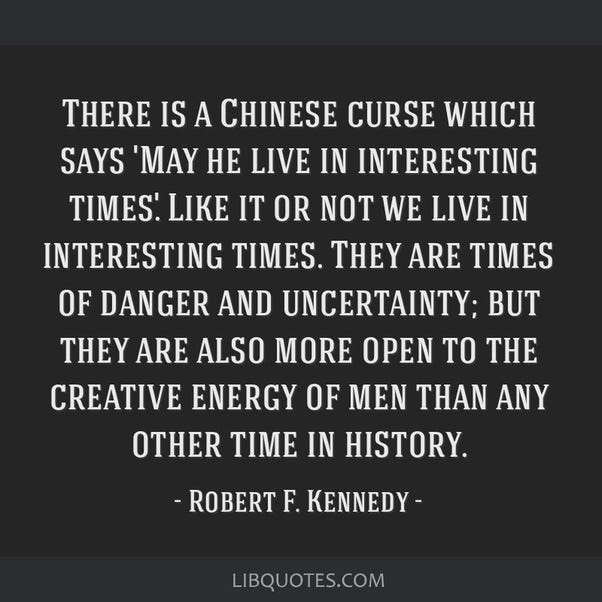
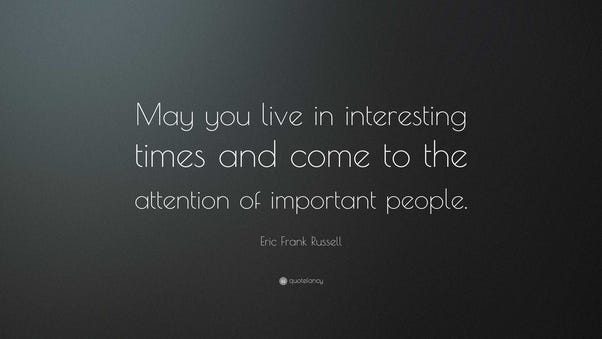
There are many different ways to perceive one’s challenges, and in this case, it appears to me the best way to represent this and the challenges we face today are embodied with an ancient curse:

I wish you all the best of luck in your future during this exceptionally unique period in human history that we have had the “great fortune” of being born into.


Temet Nosce


Join the Conversation at https://ubinow.quora.com

Anyone wishing to engage in a dialogue on UBI is invited to participate in an open space on Quora dedicated to the issue. You may need to register for a Quora account — It’s free, and I don’t get any kickbacks from it. This space is intended purely for stimulating discussion on the topic —  there are no hidden surprises beyond possibly needing to join Quora if you want to post comments. Visitors to the site can read the content without registration hassles.

https://ubinow.quora.com/