How Much of Political Messaging Relies on Public Bias?

This post is a response to a question posed in its complete format: “Are politics and marketing highly dependent upon, and structured around, the inability of the masses to think logically, act responsibly, and go beyond surface thought; especially go beyond surface thought?”
“All Publicity Works Upon Anxiety.”

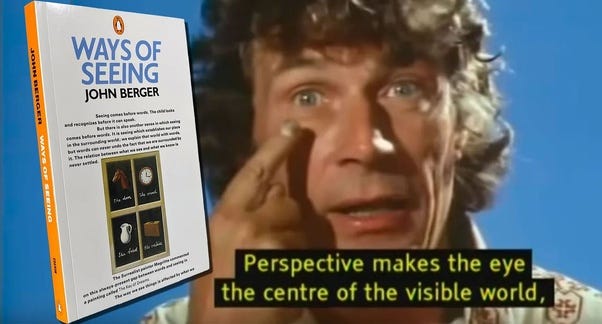
John Berger’s “Ways of Seeing” was an excellent introduction to my young mind as an art student in the early 1980s, helping me become more consciously aware of the then-daily bombardment of thousands of messages. It’s been decades, so I vaguely remember it, but I recall being repeatedly reminded of it over all this time. That suggests some “staying power” in my mind, with value over time. The book and/or the four-part documentary series created from it are both worthwhile experiences.
All four episodes have been combined into a single 2-hour YouTube presentation.

“We never look at just one thing; we are always looking at the relation between things and ourselves.”

The numerous concepts this short volume addresses introduced me to the layers of meaning in the images we encounter. The venue, the presenter’s intent, and the state of mind we bring to the viewing experience all coalesce into a unique perception we create for ourselves.

We are bombarded daily by thousands of images, according to the observations made in the early 1970s. I imagine the then-massive number I don’t quite recall at the moment (and am too lazy to scrub through the video to find it) has mushroomed by orders of magnitude since.

Marshal McLuhan challenged presumptions about media and its consumption.
We learned to think strategically about the messages we consumed.
His maxim, “The Medium is the Message,” gained him some notoriety among the media-savvy.

Then came “SEX” on a Ritz Cracker;

I’ve referred to a “we” requiring a definition. I think it was implied in “media-savvy” because it relates to awareness of what we are expected to believe and why it is essential to accept what is desired of us.

To be “media savvy” means being aware of the content of the ideas we consume and of how we choose which ideas to consume.

All Communication is Purposeful

We communicate not out of a compulsion to occupy idle time,
not even necessarily for social entertainment,
at least not when we go beyond the most superficial levels.
We communicate with one another because we must to survive.

Without communication, we would not be here today to examine our communication.

Who benefits most from what we believe?
It seems less about the people and more about benefiting those who have benefited most from a predatory system.

The above examples are from popular social discourse, about forty years ago and below is an example of current popular discourse:

(I refer to this example above as “popular” because it represents strategic messaging to serve a communication function of industry within the broader context of a culture structured around industry, economics, and consumption.)

The strategic manipulation of messaging is prevalent throughout society, in every domain, from interpersonal dynamics to international relations.

Whatever humans evolve into, some form of socially cohesive network of “shared perspectives” will perpetually question our experiences and compose new narratives to correct our collective perspectives.

Many of us do so with earnest and deep commitment to learning. Most will spare what time they can through highly structured days, allowing minimal opportunity for reflection.

We won’t stop thinking and talking about our experiences because we can’t. Willful ignorance may take centre stage from time to time, but it eventually gets the hook to exit left as it’s booed off the stage.

If the story doesn’t touch grass and meet reality, the people eventually figure out we’ve all been played for suckers by ever bigger games of power, and we find ourselves repeating history as ever-expanding dominions of power promise unity and deliver submission.

The barrage of imagery, sounds, videos, and merch-oriented stories has become increasingly overtly political. Factions grow around concepts and issues, not geography or physical commerce, but in the world of ideas, of how we think, how we see the world, and how the world looks back at each of us.

What do we want?
Certainly not chaos?

Chaos invariably leads people to one incontrovertible conclusion: for communication to succeed, there must be a relationship of trust. Without trust, there can only be chaos.

Choosing trust is a binary decision about life and what that means to each of us, from micro to macro scales, now encircling the globe.

Trust Means Accountability:

One hundred years ago, our circles of trust were local and lifelong.
Today’s global reach with casual effort was unimaginable then.

Where we end up one hundred years from now is provocative to contemplate. Some form of examination of the information we consume will continue for as long as some similar form of abstract thinking persists.

How Aware Are We Today?
Or, how much awareness can our general public sustain without inviting chaos?

What do we reeeeeally know about what’s going on around us?
Well, that’s easy, chaos.

Changes are occurring everywhere while everyone competes for resources and integration into the general machinery of social production.

We know how power structures coalesce to construct universal narratives about the acceptable social order we are encouraged to support, while our own needs are increasingly neglected.

We know that some messages aim at social disruption, whereas others aim at social cohesion.
What we do as a society to facilitate cohesion after a half-century steady diet of failed promises.

I’m reasonably sure most of the public knows, or is becoming aware of, the apparent disarray in our politics. How dependent is this massive economic superstructure on our willing participation?

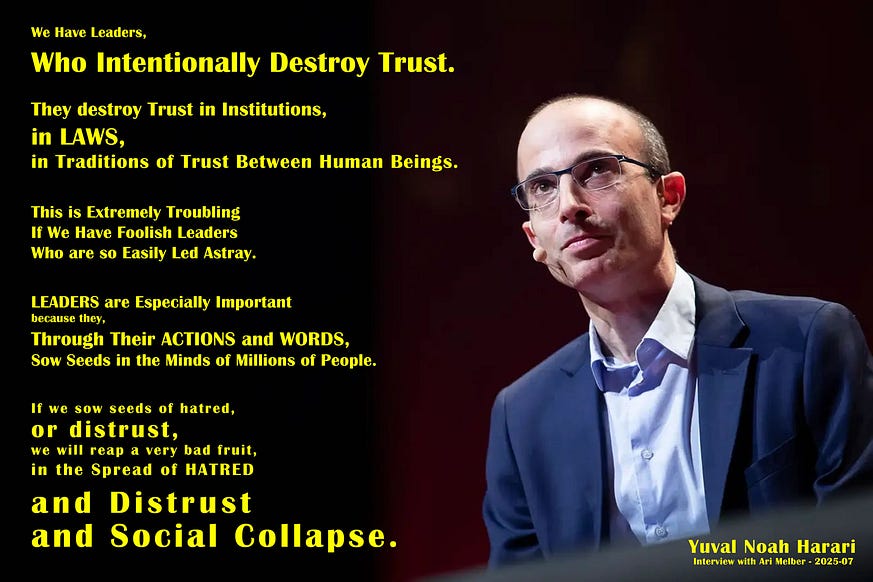
We must have leaders we can trust who will represent the needs of the many over the few who benefit most from a corrupted system gone askew.

Do political parties work to improve the well-being of citizens?

This post is a response to a question posed in its complete format: “Are there any political parties in this world, who not only defend their country, work to improve social and material wellbeing of citizens, but also aim to improve spiritual wellbeing of citizens?”

Any political party that focuses on the material well-being of the citizens while acknowledging how industry is intended to serve, not rule them, is a party that defends their country and works to improve their overall well-being.

No political party can “improve the spiritual well-being of citizens” because that’s a responsibility each citizen holds for themselves. Governments are administrative bodies that regulate the pragmatic activities of a society.

“Spiritual matters” are neither pragmatic nor quantifiable in any way that any administrative body can directly address. However, by facilitating the development of a socially and economically stable and harmonious environment, a government frees the people up to address their personal “spiritual” issues.

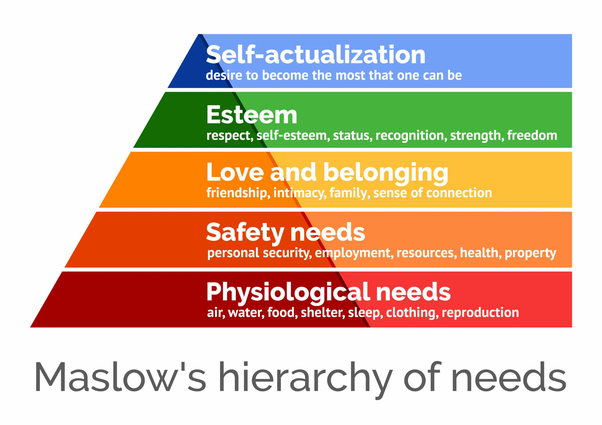
In this case, Maslow’s Hierarchy of Needs can illustrate these parameters for a government’s responsibility to its citizens.

Governments are responsible for ensuring the first two tiers of needs are accessible to all citizens. By addressing these basic needs, the community can adequately address the following two tiers of needs. When a government provides the stability of the two bottom tiers, then a community can become stable and supportive of its members, which then encourages each member of that community to pursue matters at the top of their hierarchy of needs.,

When the bottom of the pyramid begins crumbling, like it is now with extreme income inequity, the entire edifice of meeting needs crumbles and civilized society is then lost. We are seeing the cracks throughout governments worldwide as widespread disinformation by toxic parties disrupts our systems around the globe while they vie for power.

If we want to avoid system-wide collapse, then we must each reaffirm our commitment to the social contract while recognizing we are all in this together, and only by working together within the context of mutual respect, can we resolve the problems arising from the chasms we have been creating between us to sow division around the globe.

Either we learn to “voluntarily see the light” and choose better for ourselves, or we continue to allow the toxic members of society to direct our species toward a systemic collapse. If we fail to resolve our political issues, future existence on this planet will be threatened by our ecologically destructive activities. Our environmental irresponsibility will catch up to us and cull our species at rates exceeding hundreds of millions per year until the Earth can reestablish a new “normal” for itself.

Governments worldwide must reassert their commitment to ensuring the bottom two tiers of Maslow’s Hierarchy of Needs are adequately addressed if we are to restore global stability and secure our future. Individuals’ “spiritual needs” will naturally be addressed if we can accomplish that.

When did humans become so judgmental and predatory?

This post is a response to a question posed in its complete format: “What happened to us, where and when did the human race decide to become so judgmental and predatory, what happened to the old fashioned sense of community?”

wut?

Here’s a rule of thumb about reality: Noticing something for the first time doesn’t mean that thing hasn’t been around for a long time.

It only means that your mind has clicked something into focus that had previously been on the periphery of your vision.

You are not unaware that wars have been waged practically everywhere on the planet throughout human history.

You are not unaware that hatred of very many forms, including racism and misogyny, along with sex and gender bigotries, have existed for centuries and have been a part of our story since the dawn of human civilization.

The only thing that has changed is our ability to tune it out because we are now in an information age.

We can no longer retreat into the comfort of ignorance while lying to ourselves that the suffering of those we have been overlooking is not caused by our inability to face the harsh truth about humanity. We are a psychologically damaged species, and the sooner we can face that, the sooner we can learn to heal ourselves and our species.

We haven’t “gone wrong,” because we are awakening to realities we have had the luxury of ignoring. We cannot heal ourselves until we accept the truth about ourselves, and that’s a harsh and bitter pill to swallow.

We are undergoing the first and most necessary step in our healing, awareness of our broken nature. We must first accept that we are suffering as a species, and this time of awakening is a necessary part of the process.

We cannot mature as a species if we cannot accept that we have been struggling, and the only way to end the struggles is not to ignore the suffering but to acknowledge its existence.

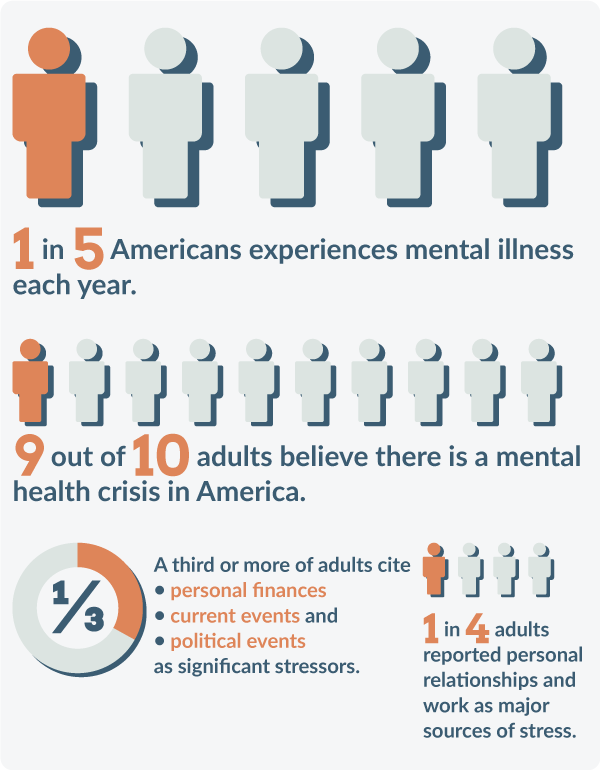
One in five people is suffering from a visible form of mental health issue. A whopping majority 70%-80%) of families are dysfunctional.

We cannot ignore these statistics and pretend there is nothing wrong with humanity.

We can only learn to embrace our broken selves and work together to help each other heal.

There is no other path to a better world.

The sooner we accept that, the sooner we can progress toward achieving a better world for everyone.

It is true, however, that our focus on community has taken a beating as our community boundaries have expanded beyond quaint notions of imaginary lines dividing us into becoming a global community.

The challenge is acknowledging that our community is no longer a geographic boundary but a global one in a much larger and inaccessible community among the stars.

Most people embrace the potentiality of exploring beyond our current home and wonder if we can join a broader community of life. We must first unite as a community in our house before the universe can open its arms to accept us as a species among the stars.

Looking past our limitations, we may find the synergy we need within the community to manifest our aspirations to travel the stars.

There is something better ahead to hope for, but we cannot ever reach it without acknowledging what is holding us back, and that begins with the state of our psychological health as a species.

In short, nothing “has happened to us” that has not been happening all along; we are only learning to understand how we must face these issues together as a community.

Is karma real?

This post is a response to a question posed in its complete format: “Do you believe in karma? Is karma real and happen to everyone whether they believe or don’t believe?”

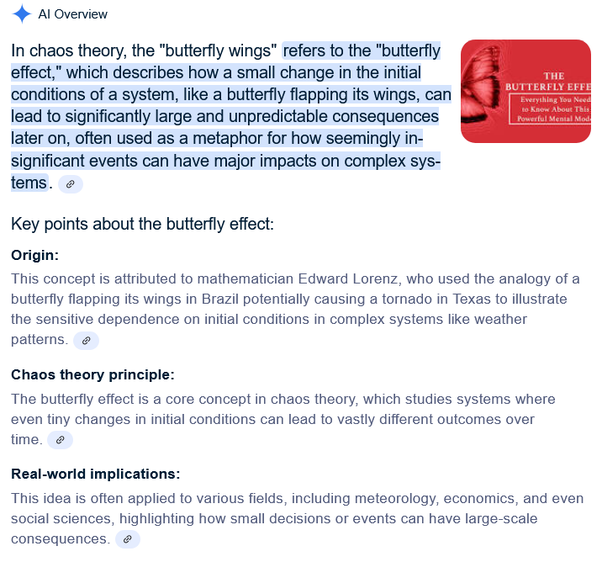
Cause and effect is physics, and so is Chaos theory, which is encapsulated within a concept called the “Butterfly Effect.”

In essence, it’s impossible to confidently predict the consequences of human behaviours because human societies are chaotic systems in which the most minor actions can lead to highly dramatic outcomes.

Whispering the correct sequence of words in the right tone into the correct ear can initiate a domino effect that can destroy an entire civilization (to translate the Butterfly Effect into a highly dramatic potentiality within the space of human dynamics).

That is valid science supported by observation and math.

Karma is “woo” — wishful thinking connecting a cause to an unconnected but desired outcome. It is supported only by the desire of the individual who hopes for a specific result. Reality doesn’t work that way, but coincidence can cause people to believe it does.

Having said that, if enough people desire an outcome, such as stopping a malignant force like Trump’s rabid destruction of the nation, then people will take action to affect an outcome through intent. This isn’t “Karma,” which suggests some invisible hand of the “human interaction space” (like the magical “invisible hand” of the free market) but cause and effect.

What will result from the escalation of conflict through the initiation of several protests as pushback to what the Trump administration is attempting through their implementation of Project 2025 is unknown. The only predictable aspect of where we are now is the guarantee that conflict will continue to escalate until it reaches a crescendo that can result in a complete breakdown of civilization through unmitigated chaos. How far all of this goes is anyone’s guess. We won’t know until the dust settles. We can only hope for a specific outcome based on the degree of public engagement and the escalation of protests against the takeover of the nation by a fascist entity.

That’s not karma because we can lose, while karma implies a guaranteed win. This is cause and effect in action, and the outcome is unpredictable.

People will call Tesla’s worldwide sales tanking karma because it feels good to say that. The reality, however, is that it’s the effect of a Nazi salute on the marketplace by a public that hasn’t forgotten the horrors of the Nazi scourge that extinguished millions of lives.

In short, I prefer to know the variables that can affect an outcome than hope some magical cosmic intelligence is balancing some invisible scale according to how I would wish the universe to operate.

Effects flowing from causes are reality, while karma is just wishful thinking.

How do atheists think this brief existence is all there is?

This post is a response to a question posed in its complete format: “How do atheists think this brief existence is all there is? Don’t you have a yearning in your heart that there must be something over the rainbow?”

That’s not exactly how that works.

This brief existence is all there is for this thing we call “ego.”

This thing we call “ego” is far from being “all there is” and is, in effect, as relevant to the universe as a speck of dust on our planet. The problem here isn’t the insignificance of ego but the ego’s addiction to being (or being perceived as) relevant beyond its existence.

There is much, much more to existence beyond the human ego, but as soon as each life ends, so too does that frail construct that demands immortality for itself on the sole basis of simply recognizing its own existence.

What we should be doing with human egos is learning how to train them to focus on the lives they get so that the benefits of existence are maximized for themselves and through others because that’s the only way for the ego to validate itself within the context of its limited existence.

Pissing away one’s life by catering to delusions of egotistical immortality is the most toxic form of grooming for one’s ego that invariably metastasizes it into a cancerous tumour for human society.

Whatever may exist “over the rainbow” is not for the human ego to experience.

This existence is all there is for the human ego.

The sooner the human ego can embrace that, the sooner it can grow to appreciate a gift that can vanish at any moment for any reason. Appreciation for the finiteness of one’s existence is precisely the point of a limited existence. There is no other way to transcend this limitation.

Will people understand greed is a miserable state?

This post is a response to a question posed in its complete format: “When will people understand that their constant selfish reckless belligerent greed is what brought society to its current disgusting miserable state of existence?”

Let’s look at someone like Donald Trump. He has spent an entire lifetime spreading hatred while bullying people to feed shallow desires, and he entertains himself through acts of cruelty he enacts on fleeting whims. He’s been behaving in ways that epitomize constant selfish, reckless, and belligerent greed, ostensibly his entire life.

His response to being criminally convicted was not remorse but to have the conviction overturned.

This question naively presumes that a person who behaves in destructive ways throughout their life will magically experience an epiphany of conscience in which they will transform into the “decent human” imagined by this querent.

Never has any evil monster throughout history found any turning point in their life that magically transformed them into saintly beings. Most who claim to have “seen the light” assume such a position as a fraudulent means of continuing their prior agenda of self-benefit at the expense of others.

The short answer to your question is “never.”

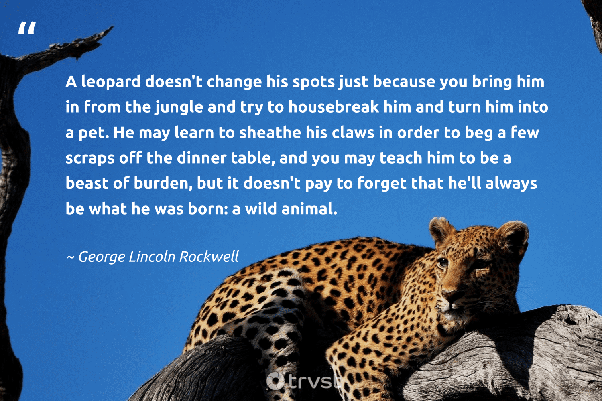
People cannot change their essential nature. They may choose to improve, but that presupposes desire that has always existed and a lifetime of dedication toward that end.

People like Donald Trump see nothing wrong with their behaviour and so will never make an effort to improve.

Epiphanies such as this question presume to be possible constitute wishful thinking on a highly destructive level of delusion that prevents us from addressing the fundamental issues of broken psychology that we must dedicate ourselves as a society to addressing on the most basic levels.

We can never truly call ourselves civilized if our systems enable and empower the kind of evil embodied by people like Donald Trump — and make no mistake about it, we encourage his evil.

Our societies embrace and enable selfish, reckless, and belligerent greed.

Until we can address the fundamentally broken human psychology on a system-wide and social scale, we will continue to be plagued by these behaviours.

Ten percent of the world’s wealthiest are destroying our planet at a rate practically matching the total of the other 90% of the rest of humanity. Instead of doing something to restrain their destructive behaviours, we put them on pedestals and worship their harmful behaviours.

Changing humans in ways that address destructive behaviours embodying selfishness, recklessness, and belligerent greed means we must start at the top and change all of human society.

Do atheists believe “all men are created equal”?

This post is a response to a question posed in its complete format: “Do atheists believe in the Jeffersonian phrase that “all men are created equal”?”

This atheist believes the word “equal” is all too often confused with “identical.”

All life is otherwise “equal” from the perspective of an experiential existence.

There is no metric nor means by which any evaluation can be established to determine degrees of consciousness that are not subjected to biases derived from ignorance of the nature of consciousness itself.

Humans can easily consider themselves “more conscious” than ants, but even that comparison is predicated upon a human bias toward the concept of consciousness.

“Ant consciousness” is observably “different” from human consciousness. It remains just as much of a mystery, taking the shape of a puzzle piece in which we cannot yet make out its composition.

The only thing we truly understand about consciousness is that we don’t understand it. We are exposed to slices of it presented within contexts appealing to the spectrum of consciousness we are most familiar with.

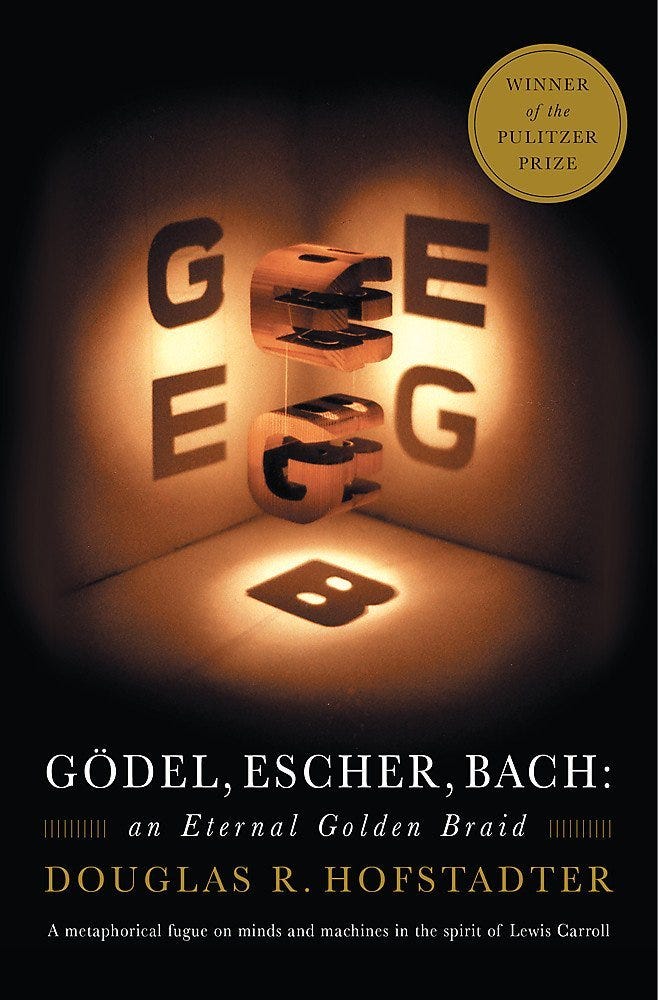
What broke the ice for me in an apprehension of a fundamental characteristic shaping the universe was the analogy of consciousness as a meteor crashing into another by Douglas Hofstadter in “Gödel, Escher, Bach — An Eternal Golden Braid.”

https://www.goodreads.com/book/show/24113.G_del_Escher_Bach

It was quite some time after reading this book as a student in the 80s that I encountered various ideas like “Integrated Information Theory,” which allowed me to progress beyond “The Thermostat Problem.”

I had always maintained a belief, however naive, in the fundamental nature of our equality as human beings. In many ways, my adherence was a reaction to coping with learning at the tender age of eleven, that my knowledge of the world far surpassed that of my mother.

(That revelation arose from her confusion over an ultrasound image on the television screen. She asked what it was, and I said it was a baby being born. The shocked expression on her face was like a sound vacuum for the room. My eldest brother turned to me and chastised me for exposing her to knowledge beyond her capacity to process it.)

Even though I was then always treated as an inferior in my family, I rejected that and struggled to assert my equality in an attempt to be accepted. That was fruitless and counterproductive because my efforts only increased the rejection.

I have learned that it is always those whose insecurities compel them to establish degrees of equality between people on the flawed notion of identicality. Over time, I have developed a bias against such a mindset, which I now view as an inferior state of being (a somewhat hypocritical attitude — but honestly earned).

Ironically, such a mindset seems most common among believers, but that may result from sheer numbers. On the other hand, I cannot ignore how that resembles the toxic competitiveness I experienced as I grew up in a dysfunctional environment ruled by a toxic personality who pitted their children against each other for favour.

Whenever the concept of equality is raised, I almost immediately think someone is struggling with their basic humanity and seeking validation to quell their insecurity.

All the pieces comprise the universe we inhabit, and parsing values between constituents is like arguing over whether red blood cells are more or less valuable than white corpuscles. All pieces of a puzzle are necessary to form a complete picture.

We will never see a complete picture if we discard pieces that fall outside our ability to comprehend the nature of their importance to the whole.

From my biased perspective, parsing out a given, like equality, to enumerate differences is more of an expression of toxic thinking that erodes the social fabric than is productive for our societies.

How do atheists view the concept of being born again?

This post is a response to a question initially posed on Quora, and can also be accessed via “https://divineatheists.quora.com/How-do-atheists-view-the-concept-of-being-born-again-60

I remember someone I once trusted approaching me for relationship advice.

I don’t remember the specific complaints registered against him by his then-recent ex, but I remember how he tried to convince her that he had changed overnight.

The next day after she ended her relationship, he returned to her and claimed he had changed.

After relating that to me, I tried to explain to him that’s not how change works. One doesn’t change oneself like they change their clothes, most certainly not overnight.

That wasn’t my best approach to helping him overcome his anxiety. He outright rejected what I tried to get him to understand. I believe that was the last conversation he and I ever had.

However, His attitude toward change stuck with me as I struggled to understand that thinking. I thought of it as chillingly superficial and worse as it appears to be an attitude which fits within the mindset that justifies telling people what they want to hear.

Everything about how a certain mindset perceives the world around them is based entirely on optics, and their behaviours are mere performances designed to elicit desired responses from their audience.

It left me feeling cold, and I’ve learned to understand how severe a red flag that is. I wish I hadn’t been such a slow learner in this regard because I could have saved myself a world of hurt if I had fully considered the implications of that behaviour then.

At any rate, the notion of undergoing a transformative experience had always intrigued me as I deliberately sought paths and methodologies for transcending limiting ways of being. From a very young age, I was aware that I was conditioned into being what I conceptually rejected but required something tangible to transform my desire for change into actual change.

Symbolically, the notion of being “reborn” is a ritualized performance in which people present themselves as if they had changed from committing to a belief system and being “remade” by that commitment itself.

People who have undergone such a ritual sincerely think they have transformed into a better version of themselves. Their exclamations, however, have more often been expressions of hopeful anticipation rather than observable reality.

Their subsequent behaviours and fundamental attitudes remain the same. From an outsider’s perspective, the only change visible was the compass setting they prioritized.

Although some stick with their new compass setting over the long haul, many returned to being who they always were while dismissing a temporary compass setting as one they outgrew and was no longer relevant to them.

Some remained within their faith but regarded it with their “old eyes” and treated their entire relationship with their beliefs and community as a game of optics. Others moved on as they acknowledged their experience as helpful but not enough to commit to it for a lifetime. I found this latter group more authentic in their journey of discovery. The clarity of direction or need they expressed as they described their choices through fogs of confusion they struggled to dispel always made them feel more human to me. In contrast, I found those who appeared to skim through emotional turmoil somewhat confusing. I didn’t know how to interpret their responses to emotional struggles. I must have envied them as I could never respond to my own in similar ways and often wished I could have. It seemed to make life easier for them.

These “performers at life” always made me feel cold, though, and it’s taken me a long time to understand why.

Understanding how a proportion of our population lives through a shallow lens may be conceptually easy to grasp superficially, but that’s not a satisfying apprehension of the phenomenon. One inevitably finds oneself mystified by its manifestations while wondering why they feel put off in ways they don’t quite understand. It can be a harrowing journey to fully grasp the implications of such a life on a visceral level for those whose feelings run deep.

Another example was an individual who had been married for about six years and who I had gotten to know as a close couple who seemingly shared everything. Conversations with either always involved extolling the virtues of the other and never was an unkind or critical word shared. I thought they were a remarkable example of a successful couple until the husband informed me they were getting divorced.

Their separation appeared as if life sped forward at super-speed for them because it all took place within a couple of weeks — from agreement to the formalized documentation of divorce. There was no emotional turmoil I could detect in the husband, as the ex-wife had already left, and I had no means of gauging her condition. In his case, however, I was more shocked at his ability to move on than I was at their separation.

For him, it was as if nothing of note had happened in his life. I couldn’t fathom that, particularly after having endured my periods of extended angst over far shorter and more superficial commitments. I remember envying his ability to rebound from what would have been at least a year or two of turmoil for me.

I didn’t realize until later that his personality was characterized by subtle paranoia and mistrust toward others on mostly innocuous levels. I first noticed that aspect of his character after he described a business venture I found myself intrigued by and expressed how much I liked it. His response became immediately cold and protective of it. He clarified that I had no place in his venture even though I had not expressed such desire or intent.

I remember switching the conversation at that point and inquiring about his ex-wife, and I was curious to know if she was doing well. His response was mainly dismissive, but he let the cat out of the bag by indicating that the reason for their divorce was his unfaithfulness.

The ability to move on quickly from a profoundly emotional experience had often been a source of admiration for me. That was before I understood the costs of such a state of being — to both themselves and those they inevitably victimize.

I don’t think he was ever capable of connecting deeply with anyone, and I didn’t understand, even then, how profound that was. I knew it was essential for me, and I accepted how that might not be for others. I didn’t think of it as a toxic dysfunctionality — even though I should have known better after having experienced it with many others so often throughout my life.

From a ritualistic perspective, there can be some benefit to undergoing a formalized process that symbolically represents change and, more importantly, a desire for change. However, it’s all done for optics more than acknowledging the necessity of change and its role in one’s personal growth.

I always have felt this way, but I never understood how that attitude itself, on my behalf, was present even as a child when I underwent my first confession. It wasn’t conducted in a booth but in an empty classroom on a chair across from the minister. We were in full view of each other without obstruction, and he asked me to speak.

I struggled to find words while suppressing a broad smile as I found the experience entirely superficial. After all, how could I possibly be exonerated of guilt over actions I may have taken that were considered sinful by simply uttering them to this stranger? At the age of eleven, the most egregious sin I could think of was masturbation, and I suppose that might have been why I struggled to suppress a broad smile.

Within a belief system that purports to provide adherents with pathways for growth, I can understand and support the prescriptive manner of formalizing rituals to celebrate that growth. The shortfall in converting subjective experience into an objectively procedural system is that it fails to account for individual differences. It is a process that cannot account for or mitigate abusive misuse.

Much like the reporting systems across all social media, the symbolic ritual of change is a tool that can be weaponized for personal gain. The emphasis on optics is a form of corrupt thinking which overlooks the critically ineffable in favour of supporting shallow expedience.

The concept of “being born again” is just a formalized process of stripping profundity from life in favour of optics because we do not, as a whole, value depth in a world that has industrialized human existence and reduced the human condition to the level of a disposable commodity.

We have evolved into an increasingly dehumanized existence while being led by institutions that claim to represent higher states of being. Our only hope for reclaiming our existence as human beings capable of achieving our potential is completing our transformation into a fully automated society. It will only be once we cross this threshold that human beings will be free of the superficial trappings of optics made necessary by the industrialized herding of our species. The function of symbolic optics is an inherent limit to our potential as individual beings within what we refer to as “civilized society.”

I believe the concept of “being born again” should be viewed with great suspicion and mistrust because it reflects nothing of an individual’s inner world or the foundation of their character.

It can, however, be a practical means of applying a metric for identifying differences between that standard and one’s words and deeds to triangulate a more accurate picture of one’s internal world.

What is this thing people call humanity, and why should I feel it, need it, or want it?

This post is a response to a question initially posed on Quora, and can also be accessed via “https://www.quora.com/What-is-this-thing-people-call-humanity-and-why-should-I-feel-it-need-it-or-want-it/answer/Antonio-Amaral-1

“Humanity” is from the late 14th century and derived from the Latin word “humanitatem” or “humanitas” for “human nature, humankind, life on Earth, the human race, mankind,” and Old French “humanité, umanité.” “Humanity” includes all humans but can also refer to the feelings of “kindness, graciousness, politeness, consideration for others,” which humans often have for each other.

Variations of the term, such as the adjective “humane,” which arose in the mid-15th century, refer to the ineffable qualities of being human rather than the physical characteristics of human existence. By the early 18th century, it evolved from meaning “courteous, friendly, civil, and obliging” into “tenderness, compassion, and a disposition to treat others kindly” and evoke “kindness” within the sphere of the human condition.

By the 1700s, the plural of humanity — “humanities” was adopted as a description of the study of “human culture” through the literature branches of rhetoric and poetry and from a secular perspective rather than religious via “literae divinae.”

“Humanism” emerged from that evolution in meaning from the Latin “humanitas” or “education benefitting a cultivated man” while supporting the notion of humanity as symbolic of the best qualities of our species.

Much of this evolution in meaning is derived from a history stretching long before prehistory to a time when our survival as a species was contingent upon working together to feed and clothe ourselves as we hunted in packs.

Successful interdependence requires supporting one another; thus, empathy was given rich soil to grow.

I suspect, however, that none of this constitutes new information for you even though your question misses the point altogether — and to such a degree it screams severe psychopathy, even as an entertainment-seeking provocation.

From initially reading it in my notifications for questions I’ve been asked to answer, my first thought was that it’s an apparent provocation from a misanthrope and most likely a troll. What I discovered upon encountering your profile is something far more insidious.

Let’s begin with the presumption in this question, “Why should I feel it?” etcetera.

There is no “should” in that you are not “obligated to feel” anything. That’s not how emotions work. You appear somewhat educated — or at least literate — based on the number of publications you’ve written and have posted on Amazon.

Somehow, though, a fundamental comprehension of oneself as an “intelligent” member of an interdependent species escapes your notice. You rely on others to feed, clothe, and house yourself through literary endeavours and can’t acknowledge how you already “feel it, need it, and want it.”

Even this provocation attempts to cater to those basic needs by identifying people who can respond in ways that support egotistically defined goals.

Most literate people develop a basic comprehension of emotions and the atavistic precursors making them manifest. On my behalf, this could be a flawed presumption, but I’m pretty sure you’re no stranger to “darker” emotions such as fear and anger, and you have no misapprehension about their manifestations within you. The sarcasm in your writing indicates your preference for wallowing in those emotions and is consistent with the attitude displayed within your provocation disguised as a question.

The problem you struggle with is that you hate your interdependence and deny that it exists within you — most likely due to having found yourself disappointed and hurt repeatedly by people who failed to live up to your expectations from a very young age.

Sadly, in a world where a whopping majority 70%-80% of the population is raised within a dysfunctional family unit, your experience is far from being a minority. Unlike some lucky few who can cope with their pain to the degree that can transcend it on levels that allow them to minimize the transmission of a toxic mentality characterized by misanthropy, you have chosen to embrace the cynical view that humanity is beyond hope.

Whether or not that’s true is irrelevant to me because my biased perspective shudders at the prospect of living in a world where one broadly hates all of humanity to such a degree they fail to see or experience the gestalt of existence within each of us.

To live a life without comprehending the value of joy is the equivalent of living a life deprived of meaning. It’s like a walking death. Even if one’s life circumstances necessitate a deprivation of joy, knowing it exists can often be enough to overcome the most painful hurdles.

Even the briefest taste of love in a fleeting life characterized by its absence or a prevalence of fraudulent forms of love is enough to sustain one’s spirit for a lifetime.

That’s the power of living on the side of light those who wallow in the dark fail to comprehend.

Once one understands that power, one no longer feels pushed into seeking something out of conceptual reasons but from an atavistic need to partake in as much as one can, like struggling for breath while deprived of oxygen because of a plastic bag covering one’s head.

Sadly, you’ve never tasted it, or you would know why you are drawn to it while feigning a disinterested rejection. As much as your ploy may feel like a shield protecting you from further disappointment, it’s a cry for help heard echoing its way around the world, crying out in pain.

If nothing else, in your case, it merely reveals you as a product of a wholly dysfunctional era in which we exist today as a species suffering from generation upon generation of transmissible trauma.

In other words, you asked this question because, on some level, you realize your struggle. Although it may be easy to peg you as a statistic identified as part of “the one in five” visible sufferers of a mental health condition in society, you’re not. Instead, the psychopathic dysphoria you struggle with is made invisible by its type of dysfunctionality and how it fits within the accepted definition of a psychologically well-adjusted individual within a maladaptive system (by which I mean our environment and economies are not suitable for cultivating the best of humanity).

As unhealthy as your expressions are, their implications exist outside the boundaries of what the psychological sciences deem unhealthy because you seem capable of functioning at a high enough level to adapt to the rigours of your day. In my view and statistically speaking, of the remaining four in five who do not display visible signs of an inability to adapt, three of those four are still victims suffering from degrees of stress that remain invisible to a triage mentality characterizing the state of our species today.

Your wallowing in cynicism is not your fault. You’re a victim of an entirely dysfunctional world. You happen to be smarter than the average bear, making a positive adaptation to a broken world much harder.

If you’re lucky and can make yourself willing and available to receive the cream of humanity, you’ll feel the answer you seek that words alone cannot give you.

Try not to let the bastards wear you down.

Boa Fortuna

Has humanity only just begun to scratch the surface understanding of the fundamental nature of reality?

This post is a response to a question posed in its full format as follows: “As clever as humanity considers itself to be, has it only just began to scratch the surface of a true understanding of the fundamental nature of reality?”

This question reminds me of the Epistemology course I took at a local university over a summer off from art school. I was accepted into a third-year program without prior university-level philosophy course experience. I successfully leveraged my art school experience toward my application.

This was my introduction to understanding how language can be utilized with the same disciplined approach toward meaning as mathematics. The course material I read felt more like I was interpreting algebraic formulae than English text.

During this period, I realized access to new knowledge domains began with mastering the grammar that defined a domain.

At first, I read and reread sentences until the language made sense. I plodded slowly through the material and expanded beyond spending upwards of half an hour reading sentences to over an hour reading paragraphs and several hours reading entire pages to ensure I had developed what felt like an adequate understanding of what I had read.

This was not my first time having such an experience. Many would be surprised to discover the art world is also filled with jargon and concepts that require an equal measure of effort at the outset to comprehend the information conveyed. However, the grammar defining the art world can be even more complicated and confusing than intermediate philosophy.

Unlike the disciplined rigour of mathematical precision found in the language of philosophy, art world jargon is often subjectively defined and expressed through abstractions rather than through concrete concepts based in a material world. It makes for mixed messaging among instructors, where one adopts interpretations of concepts based on interpersonal dynamics rather than objectively defined definitions of concepts. I remember often tripping over the concept of chiaroscuro because it seemed no matter how I interpreted what is arguably one of the objective terms in art, every instructor had a different definition. I chose to favour the art history instructor’s definition over the conflicting definitions offered by my painting instructors.

At any rate, my painstaking journey through reading my philosophy assignments left me tired enough at the end of the day to sleep soundly at night and wake up feeling like I was prepared for the class discussion of what we had all read. I would attend class feeling confident that I understood the material — until the class discussions began and the instructor interjected with dialectical curveballs to illustrate limitations on some of the arguments forwarded by students.

About halfway through the class, I felt utterly overwhelmed, as if I had no idea what I had read. I felt like my confidence was entirely misplaced and that I should have started my formal training in philosophy at a more junior level.

Then it happened — the discussion veered back onto the topic I thought I had read. I couldn’t fathom how the conversation took a journey to an alternate dimension, but I was happy to see it return to the reality I was most familiar with.

By the end of the class, I was dumbfounded to discover that I was correct about understanding the material at the outset before becoming completely confused. I expressed my frustration publicly. My instructor’s response to my confusion was to say simply, “Yes, but now you know it better.”

This was a lesson for me to understand that knowing what I know is merely a product of my confidence in believing I know what I know, while what I know constitutes only the tip of an iceberg of what is possible to know about what we think we know.

For a real-world example, I still recall my experience in an interview with a recruiter who seemed impressed with me when he remarked, “Wow. You quoted Voltaire. I’ve never heard anyone quote Voltaire in an interview before.” He presented his surprise in a way that made me feel he would be in my corner and support my candidacy. As it turned out, that was the moment he decided I was disqualified as a candidate. He ghosted me after that, and I never got another opportunity presented to me through that agency.

It took me a while to figure out what had happened, but when I did, I connected that experience with a much earlier one in which I was on the phone with someone about a temporary labour assignment. I remember asking specifically, “What does the job entail?” The response I got was a very dry, “Welllll…. it entaaaaaaaails moving stuff.” I lost out on that opportunity, and the memory of that experience lingers as a reminder of my language choices and their impact on others.

I’ve had to learn to become very aware of how my natural self is interpreted from a young age when I deliberately chose to use the shortened form of my name to fit in. As a kid who became fat to gain approval from an abusive mother, I had to become aware of responses to my natural state of being from a very young age.

I know that my language choices can be offputting for some. I know that when some stranger uses the short form of my name to address me, it’s a form of disparagement that speaks volumes about their attitude. I’m pretty aware of subtleties many miss, even if I don’t catch them immediately — mainly because I’m not naturally focused on the underlying cynicism many naturally wallow in, so it can take me some time to tune myself into their frequency.

I’m using myself as an example to answer this question because I know I’m pretty self-aware and more than most, but it doesn’t matter how much I know about myself; I’m still discovering new things about myself. This isn’t to say that I’m primarily interested in myself for the sake of knowing myself, but knowing myself is a conduit to a better understanding of the world I live in — for several reasons.

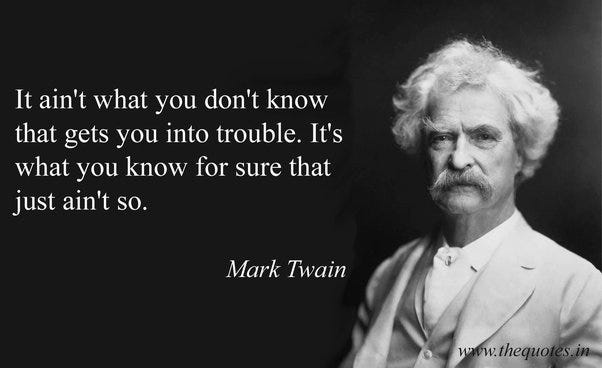
One of those reasons is inspired by an expression I’ve been primarily familiar with as an attribution to Voltaire — yes, precisely the quote I referenced above:

After being inspired by this quote for about thirty years, I discovered it wasn’t a quote by Voltaire. These are words from someone far earlier in history, Publius Terentius Afer, a Roman playwright otherwise more popularly known as Terence.

“Homo sum, humani nihil a me alienum puto.”

These are words from a play entitled “Heauton Timorumenos” (The Self-Tormentor) — Act 1, scene 1, line 77, written in 165 B.C.

The Wisdom of a Former Slave

I had lived with these words, inspiring my pursuit of knowledge of the world through the understanding of self for more than half my life before learning the truth of their origins. I’m still learning new things about it — even though I deeply value what they imply — to me.

This brings me to another quote I treasure by Picasso that he uttered in his 60s after already transforming the art world with his visions, “I am only just learning how to paint.

I loved these words the moment I encountered them because they confirmed that I was on the right track in wanting to become an artist in this world and this life. I understood that what one does to find fulfillment in one’s life is contingent upon loving what one does. The fact that there was no end to learning within art, as expressed by a historical giant, inspired me.

I would never get bored by being an artist. I would never find myself outgrowing what exceeded my grasp, and I could give myself wholeheartedly to its exploration — infinitely — or at least within the context of a finite life.

There was no way I could become complacent and detached from life by choosing a vocation of exploration of life itself. The fact that I would never learn all there could be to know wasn’t a deterrent but an inspiration and a challenge to motivate me to learn as much as possible within the finiteness of time available to me in this life.

Within this microscopic pool of choice available to me as an individual, I found enough inspiration to carry me through a life of discovery. When I imagine the vastness of a universe, we have no clue how large it is or what there may be to discover, and it seems to me that the human species can find millions, if not billions, of years of motivation for discovery.

We have certainly learned a lot about the nature of reality, from a psychological to a physiological to a physical and materialist nature, and beyond, while exploring reality on a quantum level. The fundamental characteristic of learning is that with each answer to a question answered, many more questions emerge. Answers to questions about the nature of reality appear like fractal algorithms that can spawn infinite questions.

No matter how long or how well we succeed in surviving — mostly the challenges posed by our hubris, we’ll never run out of room for discovery.

This, to me, defines the very core of the most basic lesson in life: it’s not the destination which matters; it’s the journey.

Temet Nosce