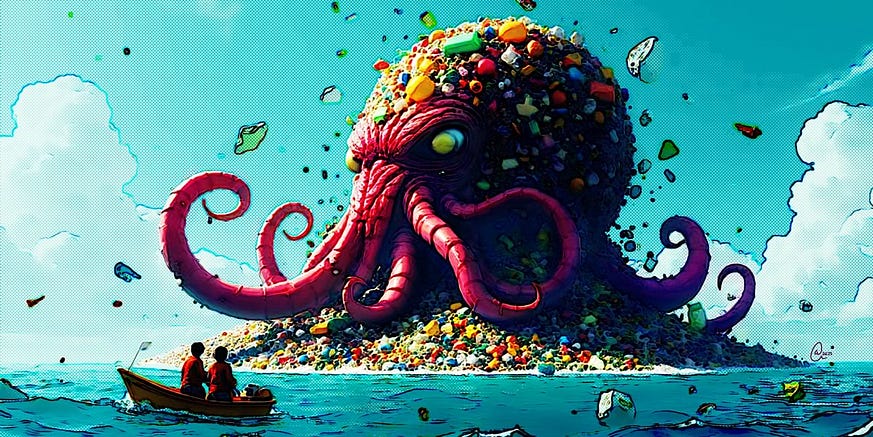
Why do companies use so much plastic in their packaging?

This post is a response to a question posed in its complete format: “Why do companies use so much excess plastic in their packaging? It costs them more and is worse for the environment.”

Plastic was first synthesized in 1869 as an alternative to ivory due to the growing popularity of the billiards game and the strain it put on elephant populations. A New York supplier of billiard balls offered a $10,000 prize to anyone who could provide a substitute for the genocide of elephants to support an entertainment activity.

A printer from Albany named John Wesley Hyatt developed celluloid by processing raw cellulose fibres through nitric acid and mixing them with camphor to make it a flexible and moldable material. The “plastic” originally meant “pliable and easily shaped.”

It became the name for a category of materials called “polymers,” which means “of many parts.” Polymers are compounds made of long molecular chains from cellulose, a material abundant in nature.

Plastic describes various products that are diverse in composition and very versatile in their adaptability to a wide range of use cases. We find no end of applications in which it is a commercially advantageous material for products and packaging.

Over time, as plastics production processes improved and expanded due to their popularity as a material, we developed ways to create synthetic polymers that relied less on plant material and more on carbon atoms provided by petroleum and other fossil fuels.

Fossil fuels became a popular feedstock for plastics production because they are readily available and inexpensive sources of carbon-based molecules used to create the polymers that make up plastics. The carbon density within fossil fuels resulted in higher production volumes at a much lower cost than has been available through alternative materials like natural fibres.

Additional incentives found within fossil fuel-sourced polymers have led to a broader range of properties than available with natural sources, in the plastics produced, including strength, flexibility, and durability. These properties have all lent themselves to developing attractive options in practically every product created for consumer, commercial, and industrial markets.

The full cost of plastics on society has never been calculated to determine what the prices of various plastics should be. We’ve never truly costed plastics from a complete life-cycle perspective and are now struggling with an overabundance of waste that threatens ecological stability.

The fossil fuel industry has known for over one hundred years now that their processes negatively affect the global environment. Instead of adopting a responsible resource management balance for their products while investing in or planning for appropriate transitions to ecologically supportable solutions, they have chosen to ravage our planet and put us in peril.

Instead of reinvesting profits in environmentally sustainable alternatives to a finite resource, they have chosen to plunder the planet to put us all in peril. As we march headlong toward a global environmental catastrophe that can threaten social stability to such a degree that widespread chaos defines human civilization seeking retribution, the first billionaires who need a date with the guillotines are the oil industry billionaires.

They’re not being charged appropriately for the impact of plastic production on the environment, mainly because it is a big oil product, and big oil has dominated global political agendas for over one hundred years.

They have been derelict as stewards of a finite natural resource. They are like the ivory hunters of the 1800s who cared not at all for the extinction of elephants as long as they could maximize their profits while they still existed. Like the ivory hunters, they will not seek alternatives until they acknowledge the approaching end of their ability to plunder our planet for profit.

Making matters worse is that although fossil fuels are declining as a source of energy production, plastics production is steadily increasing without regulations limiting the creativity of applications they can exploit for profit. They’re not being held accountable in any meaningful way for the damage they have been doing to our environment for more than a century.

Fossil fuels represent an industry that operates with impunity in society and with a global reach. Few people are unaware of at least a few war zones around the globe in which blood has been shed in territorial wars for oil dominance. Countries have been destabilized and even been forcibly regressed into a primitive state to preserve oil production dominance on behalf of a small number of plutocrats.

We should be actively transitioning plastics production to an expansion of alternatives meeting niche requirements, such as hemp, which has superior biodegradable properties that do not threaten global ecological stability. Our technologies have sufficiently evolved, as has our awareness of plastics needs, with a consumer, commercial, and industrial market context to define best cases for using various plastics production processes throughout the market.

We must establish production and usage regulations for plastics according to their applications. Where we can use an alternative to oil, we should use a natural alternative. Production processes have evolved such that plastics producers are providing cost-competitive alternatives to oil-based plastics. What is lacking is the incentive to facilitate a transition to a sustainable method of operation.

I can recount a personal story from a stint with a government stewardship program responsible for auditing plastics recycling. The oversight in this operation is a case of the fox guarding the henhouse. I won’t go into much detail on this issue at the moment. Still, I want to provide an example of how this operation fails to demonstrate leadership in adopting environmentally sustainable practices.

This particular operation relies heavily on plastic bags, not only for internal purposes but also for plastic bags used by recycling facilities throughout the province. In a moment of concern for the sheer volume of plastic bags, which amount to several thousand kilograms per month used throughout the province of BC, I identified a bag producer who offers a hemp-based solution at the same cost as they were purchasing their oil-based plastic bags.

The argument given as my suggestion was dismissed was that the supplier was located in a different geographic location. Rather than plastic bags purchased from an oil industry source in another province, these are hemp-based bags sourced from approximately the same distance away but in a U.S. state across the border. The cost of making the change was practically zero. This is a perfect example of leadership in responsible environmental management principles as a government stewardship program providing leadership within the recycling industry.

To my chagrin, I learned that this operation wasn’t interested in environmental leadership inasmuch as they were interested in a guaranteed annual revenue source as a government service contractor. (Sadly, this is not the only government stewardship operation that operates under a fraudulent representation as a government service with a vision toward contributing to the identified need they pretend to serve, but all of this is an entirely different tangent from this article and so, I’ll stop here and get back to answering this question. You can call me Grandpa Simpson.)

In the meantime, we must charge manufacturers through the nose for oil-based plastics while subsidizing the costs of developing ecologically superior alternatives until they become cost-effective enough to eliminate oil.

We must begin pressuring the oil industry and oil billionaires into owning up to their damage to our planet, and in taking greater initiative in supporting transitional strategies. The sooner we begin, the sooner we take steps toward avoiding chaos, massive riots, and rampant bloodshed from environmental collapse and wholesale panic.

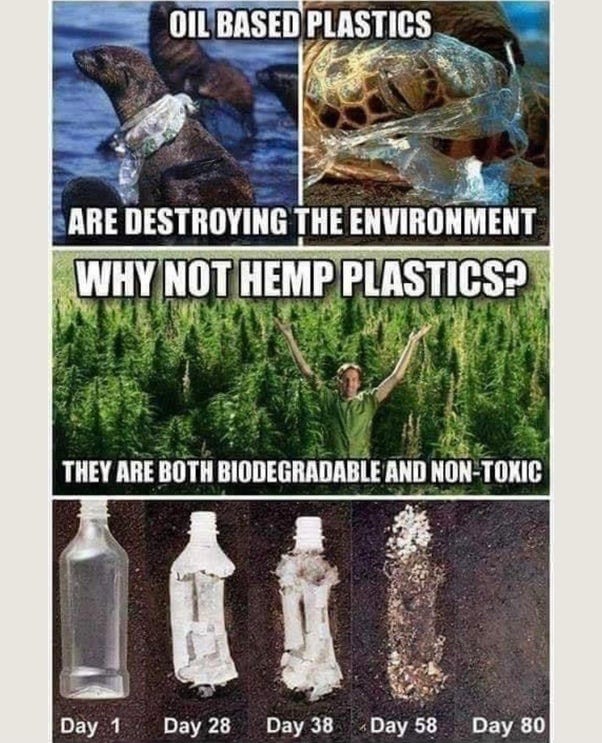
This graphic above refers to “The Garbage Patch,” an island of plastic floating in the Pacific Ocean.

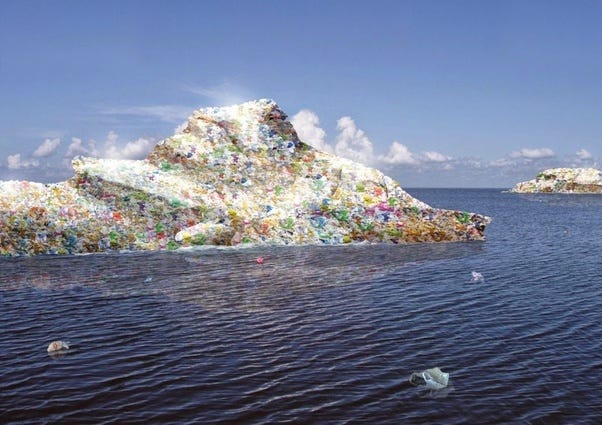
How can we have infinite growth on a finite planet?

This post is a response to a question initially posed on Quora, and can also be accessed via “https://www.quora.com/How-can-we-have-infinite-growth-on-a-finite-planet/answer/Antonio-Amaral-1

It’s not possible.

We have two options for maintaining growth, and one isn’t so much about preserving growth as it is about shifting to new growth areas through a lifecycle management strategy.

The (conceptually) simple model (but prohibitively expensive strategy) for unlimited growth is expanding to an extraterrestrial existence where we can justify an ever-expanding population and theoretical market.

This strategy, however, is not as linear as some may want to make it out to be. Sure, movies filmed on Earth will be consumed by lunar, asteroidal, and Martian colonies, theoretically supporting unlimited growth in those niches. Entirely different markets, however, will need to be created to meet the needs of off-planet living.

Massive resources will have to be shifted toward small markets, making products prohibitively expensive in ways that restrict extraterrestrial expansion.

For example, bone density loss is a dramatic medical issue for an off-planet existence. About one to two percent of bone loss occurs monthly in space, whereas that figure applies to an annual bone density loss for people of advanced age on Earth.

That’s a dramatic biological hurdle to overcome and represents a tiny issue in the vast array of issues humans would have to overcome to sustain off-planet colonies. Making matters more complicated is that colonists face different biological challenges in each environment, from asteroids to lunar to Martian to Venusian cloud colonies.

Adaptation to each environment represents significant investments in biological issues, while the simplest solution is to transition humans from biological to mechanical forms. Convert humans into cyborgs.

Suppose people struggle with tattoos and body modifications today. In that case, one can imagine the sociological implications of leaving our humanity behind to live in a desolate environment without a healing embrace of nature.

So much for option one of unlimited growth.

Option two is riding the wave of technological change and managing technology lifecycles. Unlimited market growth would be achieved by pivoting from end-of-cycle industries to emerging industries that supplant them.

It would be like planning an economy around growing an industry that creates old-style typewriters with an expected lifecycle while anticipating the advent of electronic typewriters with a finite lifecycle that anticipates computers, etc., while hopping from one end-of-cycle industry to another emerging sector.

This is problematic for two reasons, one is that it would be impossible to anticipate computers while still at the stage of an Underwood Typewriter. At that stage, anticipating IBM Selectrics might be possible because that’s a linear progression of technology.

The advent of computers, however, was an unpredictable and utterly disruptive technology.

That’s where we’re at with AI. We have no idea where it will take us, nor how its integration into other technologies like robotics will transform the marketplace.

Unpredictability is also a significant issue in the energy sector because we have many options. Many are in the early stages of implementation with evolutionary hurdles to overcome. Many are in a nascent development stage that shows promise but are still not ready for commercial applications at any scale. We also have high hopes for transformative breakthroughs like fusion energy, for which we don’t know when we will achieve viability.

All this makes planning a perpetually growing economy much like lassoing and riding a tornado like a bucking bronco.

The second and more challenging reason this is problematic is that it doesn’t involve logistics but politics. We can see how that dysfunctionality fails to work in today’s world. The fossil fuel industry is well aware of the environmental damage it does, and how much of a threat it is to biological life on this planet. Yet, no significant energy organizations are spearheading incubation efforts to fund alternative energy initiatives.

They all maximize profits with existing (and predictable) methods while offloading risk to smaller operations they can assess for leveraging a predatory appropriation strategy.

They won’t invest in breakthrough technologies until someone else can achieve market success on their initiative.

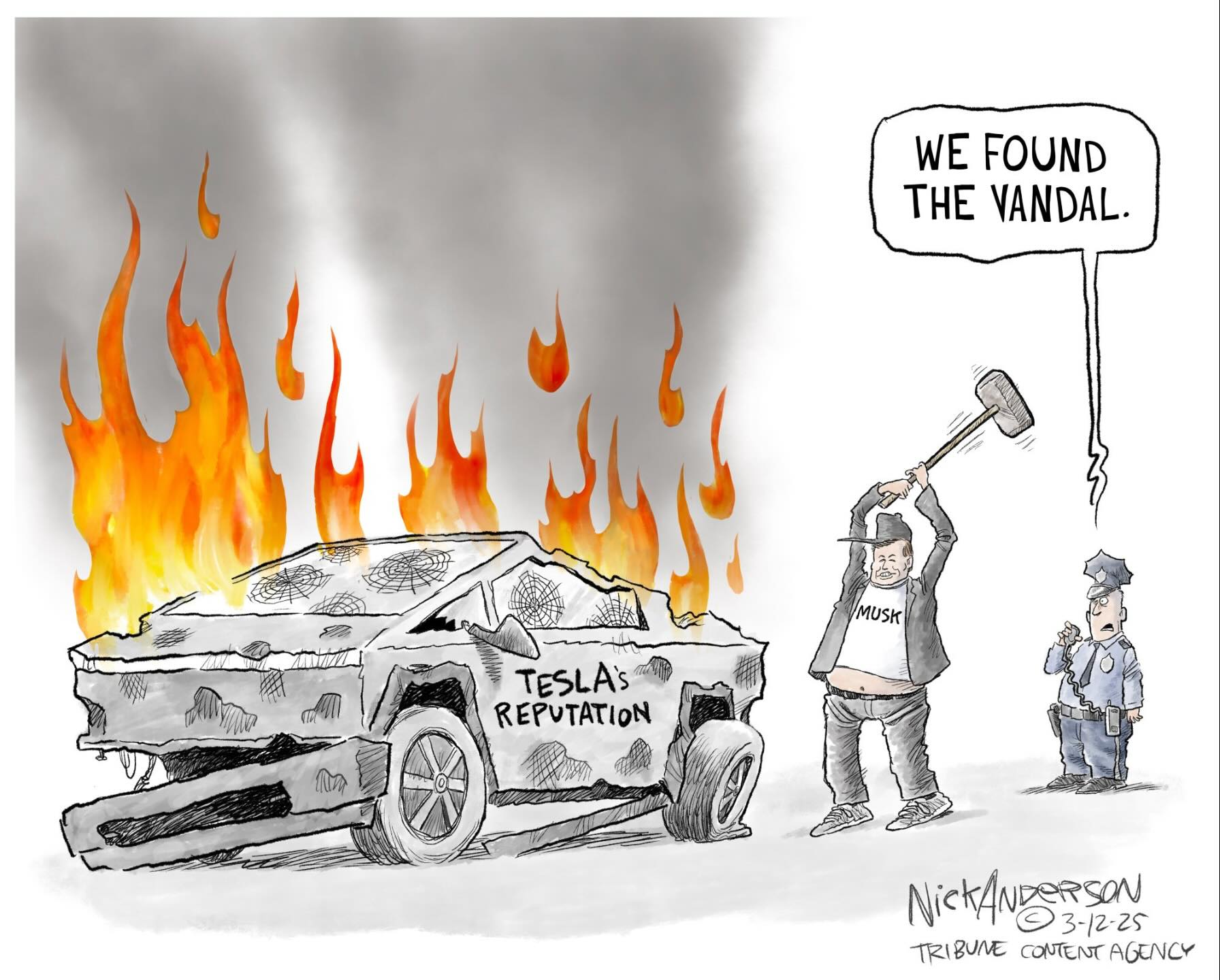
Taking this risk put Elon Musk on the global radar of being perceived as a real-life Tony Stark with Tesla Motors.

The reality of today’s world is somewhat predictable on a macro scale in that society is undergoing a massive transformation on fundamental levels.

Dark factories are already springing up where all the production work is automated. On-site work like construction is well on its way to being performed by humanoid and other specialized function robots.

Transportation and delivery industries will also be shedding human labour. Stores and shopping malls may continue existing, but fewer humans will be available for assistance while technological solutions replace humans, even at the cashier level. Shoppers will be able to walk into a store because they’re bored and feel like going for a walk to pick up some coffee and snacks from shelves and walk straight out the door with their products in hand as the store sensors record product information and deduct the cost of the products automatically from one’s account.

All necessary physical services will be performed through automation solutions.

This will radically transform the economy in ways where people will create trade relationships for customized products and services on a more minor scale that focus on developing interpersonal relationships rather than supplying generic consumables.

This will become an era of transformative creativity. People will choose to purchase highly unique rather than mass-produced products for market niches that can be addressed through small-scale production processes.

We will transform from a market economy relying on endless growth into one that balances high-volume generic production and customized artisanal products.

We will have more time to focus on social interaction and community development initiatives (which will positively affect our self-governance efforts). Because survival will no longer depend on a servant relationship with an employer, we will see a more egalitarian society based on a much more valid basis of merit than the subjective favouritism characterizing today’s corrupt autocratic corporate culture.

The notion of infinite growth will naturally recede from priority status to an antiquated model of unsustainable development corroding our social fabric.

Infinite growth will eventually become irrelevant, while sustainability and balance will become priority values.

Why doesn’t Elon Musk reverse climate change?

This post is a response to a question posed in its complete format: “Why doesn’t Elon Musk or someone else develop a big project for reverse climate change by 2045–2100?”

There are no “big projects” that can reverse climate change occurring due to a cumulative consequence of many different aspects of human society — from energy production and usage to our diets and the homes we live in.

The closest we can get to reversing the effects with a single solution would be through carbon capture technologies, which currently have power requirements that exacerbate the energy contribution to climate change. It’s also nowhere near mature enough to capture enough carbon to reverse the damage.

Until we can generate energy through cold fusion, it won’t be anything close to a solution.

He should, however, use his platform to encourage the changes we need in society that would mitigate the destruction we are doing to our environment. He began his trek to global recognition of that very potentiality through the success of electric vehicles.

He has since shown us that his concerns have always been opportunistic parasitism and is more interested in fleecing hundreds of millions of victims into destitution and early graves than he is in furthering humanity or securing our future on this planet.

He has the power of a global bullhorn that can be marshalled toward uniting humanity in the common cause of saving our planet and societies. Instead, he’s pissing it all away on ego masturbation at the expense of our future as a species.

He could have chosen to be revered like a god among humans for centuries by leveraging his resources to benefit humanity. Instead, he will be remembered as one of history’s most pathetically egotistical villains… assuming we survive his feckless recklessness.