How can we have infinite growth on a finite planet?

This post is a response to a question initially posed on Quora, and can also be accessed via “https://www.quora.com/How-can-we-have-infinite-growth-on-a-finite-planet/answer/Antonio-Amaral-1

It’s not possible.

We have two options for maintaining growth, and one isn’t so much about preserving growth as it is about shifting to new growth areas through a lifecycle management strategy.

The (conceptually) simple model (but prohibitively expensive strategy) for unlimited growth is expanding to an extraterrestrial existence where we can justify an ever-expanding population and theoretical market.

This strategy, however, is not as linear as some may want to make it out to be. Sure, movies filmed on Earth will be consumed by lunar, asteroidal, and Martian colonies, theoretically supporting unlimited growth in those niches. Entirely different markets, however, will need to be created to meet the needs of off-planet living.

Massive resources will have to be shifted toward small markets, making products prohibitively expensive in ways that restrict extraterrestrial expansion.

For example, bone density loss is a dramatic medical issue for an off-planet existence. About one to two percent of bone loss occurs monthly in space, whereas that figure applies to an annual bone density loss for people of advanced age on Earth.

That’s a dramatic biological hurdle to overcome and represents a tiny issue in the vast array of issues humans would have to overcome to sustain off-planet colonies. Making matters more complicated is that colonists face different biological challenges in each environment, from asteroids to lunar to Martian to Venusian cloud colonies.

Adaptation to each environment represents significant investments in biological issues, while the simplest solution is to transition humans from biological to mechanical forms. Convert humans into cyborgs.

Suppose people struggle with tattoos and body modifications today. In that case, one can imagine the sociological implications of leaving our humanity behind to live in a desolate environment without a healing embrace of nature.

So much for option one of unlimited growth.

Option two is riding the wave of technological change and managing technology lifecycles. Unlimited market growth would be achieved by pivoting from end-of-cycle industries to emerging industries that supplant them.

It would be like planning an economy around growing an industry that creates old-style typewriters with an expected lifecycle while anticipating the advent of electronic typewriters with a finite lifecycle that anticipates computers, etc., while hopping from one end-of-cycle industry to another emerging sector.

This is problematic for two reasons, one is that it would be impossible to anticipate computers while still at the stage of an Underwood Typewriter. At that stage, anticipating IBM Selectrics might be possible because that’s a linear progression of technology.

The advent of computers, however, was an unpredictable and utterly disruptive technology.

That’s where we’re at with AI. We have no idea where it will take us, nor how its integration into other technologies like robotics will transform the marketplace.

Unpredictability is also a significant issue in the energy sector because we have many options. Many are in the early stages of implementation with evolutionary hurdles to overcome. Many are in a nascent development stage that shows promise but are still not ready for commercial applications at any scale. We also have high hopes for transformative breakthroughs like fusion energy, for which we don’t know when we will achieve viability.

All this makes planning a perpetually growing economy much like lassoing and riding a tornado like a bucking bronco.

The second and more challenging reason this is problematic is that it doesn’t involve logistics but politics. We can see how that dysfunctionality fails to work in today’s world. The fossil fuel industry is well aware of the environmental damage it does, and how much of a threat it is to biological life on this planet. Yet, no significant energy organizations are spearheading incubation efforts to fund alternative energy initiatives.

They all maximize profits with existing (and predictable) methods while offloading risk to smaller operations they can assess for leveraging a predatory appropriation strategy.

They won’t invest in breakthrough technologies until someone else can achieve market success on their initiative.

Taking this risk put Elon Musk on the global radar of being perceived as a real-life Tony Stark with Tesla Motors.

The reality of today’s world is somewhat predictable on a macro scale in that society is undergoing a massive transformation on fundamental levels.

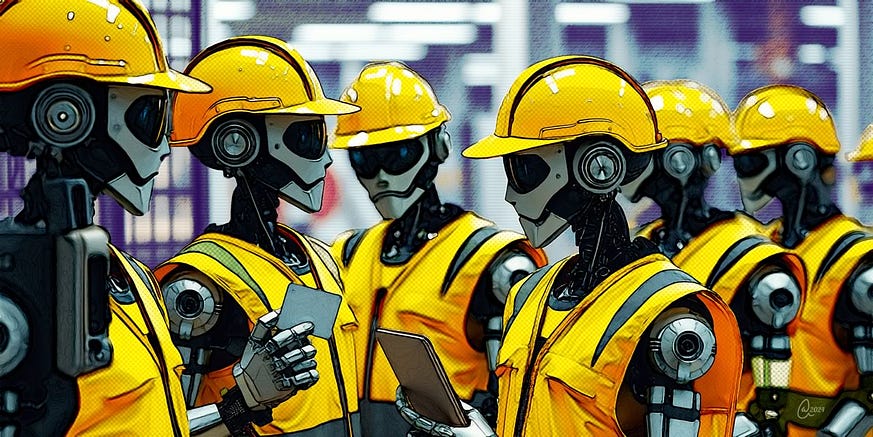
Dark factories are already springing up where all the production work is automated. On-site work like construction is well on its way to being performed by humanoid and other specialized function robots.

Transportation and delivery industries will also be shedding human labour. Stores and shopping malls may continue existing, but fewer humans will be available for assistance while technological solutions replace humans, even at the cashier level. Shoppers will be able to walk into a store because they’re bored and feel like going for a walk to pick up some coffee and snacks from shelves and walk straight out the door with their products in hand as the store sensors record product information and deduct the cost of the products automatically from one’s account.

All necessary physical services will be performed through automation solutions.

This will radically transform the economy in ways where people will create trade relationships for customized products and services on a more minor scale that focus on developing interpersonal relationships rather than supplying generic consumables.

This will become an era of transformative creativity. People will choose to purchase highly unique rather than mass-produced products for market niches that can be addressed through small-scale production processes.

We will transform from a market economy relying on endless growth into one that balances high-volume generic production and customized artisanal products.

We will have more time to focus on social interaction and community development initiatives (which will positively affect our self-governance efforts). Because survival will no longer depend on a servant relationship with an employer, we will see a more egalitarian society based on a much more valid basis of merit than the subjective favouritism characterizing today’s corrupt autocratic corporate culture.

The notion of infinite growth will naturally recede from priority status to an antiquated model of unsustainable development corroding our social fabric.

Infinite growth will eventually become irrelevant, while sustainability and balance will become priority values.
Does the USA need to exist anymore?

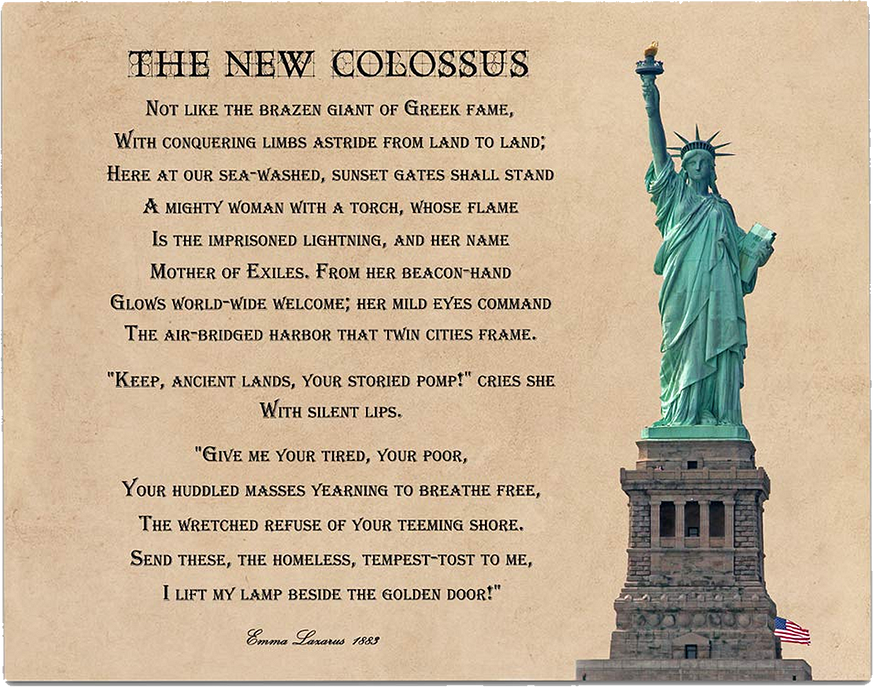
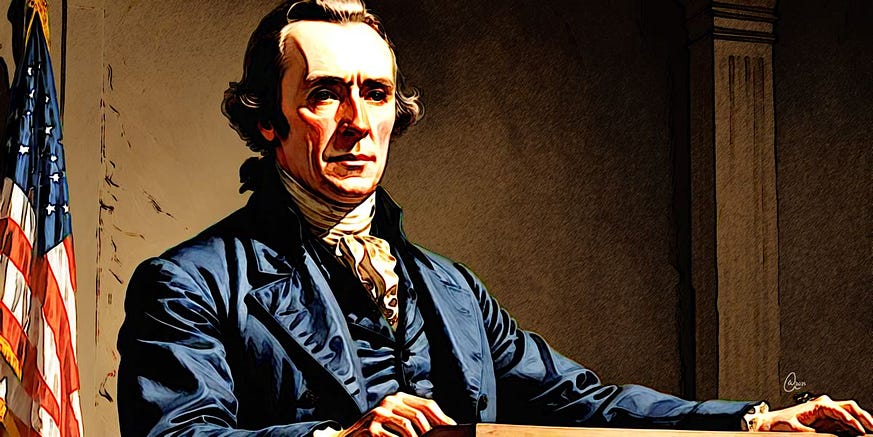
Patrick Henry — Give Me Liberty or Give Me Death

This post is a response to a question initially posed on Quora, and can also be accessed via “https://www.quora.com/Does-the-USA-need-to-exist-anymore/answer/Antonio-Amaral-1

The U.S. cannot continue to exist as it does, mainly because it currently exists in a form that betrays its founding principles and values.

Patrick Henry Speech: https://avalon.law.yale.edu/18th_century/patrick.asp

No matter how much power the few corrupt billionaires have or can amass against the people, they cannot kill the dream.

350 million people will stop them and make them pay for their betrayal.

The U.S. cannot continue to betray everything it claims to be without losing everything it has gained as benefits from representing those values.
350 million people love their country so much that they cannot sing “Home of the brave and land of the free” without feeling shame over how cowardly and submissive they have become by the machinations of monsters.

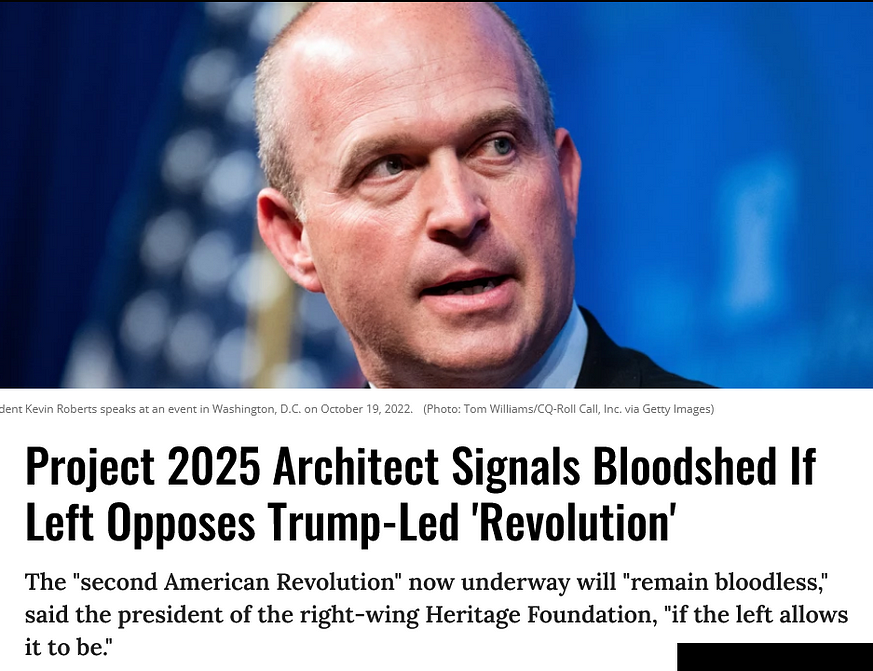
People like Curtis Yarvin will be vilified for decades, if not centuries, while the tech bros with overgrown egos will become cautionary tales for the next century to learn from. The Walton family should be experiencing concern, if not outright fear, for their future. The 50 billionaires who supported Trump’s presidency should be planning to escape to their bunkers. The Heritage Foundation president who threatened bloodshed should now be chowing down on some crow if he’s not too stupid to realize that he is about to reap the whirlwind for his arrogance.

The U.S. will either restructure itself to become more aligned with its professed values or it will destroy itself and destroy global stability in the process. The Find Out stage of the Fuck Around game the billionaires have played with the American people has only just begun.

If they don’t start issuing their mea culpas now, flaming Teslas will appear like quaint bonfires before Trump’s term is done.

The nation’s future lies in the hands of its people, while the rest of the world still holds out faith that the American spirit is not yet completely dead.

We are all hoping the scourge of this century will be overcome by far less bloodshed and destruction than the scourge of the last century.

How can an atheist be sure there is no creator?

This post is a response to a question posed in its complete format: “How can an atheist be so sure that there is no God/creator if there is creation? Doesn’t creation mean something has been created?”

The concept of “creation” was invented by humans who first conceived it when they discovered smaller versions of themselves popping out of their bodies. While living with something growing inside for most of a year, they realized something new grew within them.

Then humans discovered tools. At first, those tools were found objects like bones to be used as weapons or extensions of one’s reach.

Eventually, humans learned they could improve on found objects by fastening rocks to the end of a bone to function more effectively as a weapon.

Throughout all of this, humans developed language, and within that process, they began to create sounds to describe what they witnessed.

As it happened, the notion of something arising out of nothing was expressed as a sound indicating what was understood of that process.

Humans knew nothing of natural processes and how they might have differed from the human process of shaping objects into tools or giving birth to new generations of humans.

Humans then knew nothing of virtual particles and quantum foam, so it was easy to assume some form of magical hand was involved in constructing little humans inside big humans in a way that was not unlike how they shaped better tools with rocks and bones.

The reality, however, that we can see around us and everywhere is that natural processes can lead to massive changes and the creation of the new without any guiding intelligence.

It is generally understood that mountains and lakes were “created” by natural processes and are not the product of intelligence deliberately moving continents to reshape the surface of the Earth.

The universe is far beyond being much more vast than anything we can imagine on Earth. That means it’s as impossible for a singular intelligence to deliberately shape matter into an unimaginable variety of specific forms as it is for an active intelligence to create Mount Everest or the Nile River.

Creation means something from constituent materials assembled into a structure. “Creation” does not imply any guiding intelligence while the vastness of the universe eviscerates any egotistical notion of such an intelligence remotely resembling what we understand of human intelligence.

It’s a delusional form of arrogance held by believers that blinds them to the nature of reality and it is a sickness of perception that threatens our future as a species on the planet.

How can we ensure AI enhances human potential?

This post is a response to a question posed in its complete format: “How can we ensure AI enhances human potential rather than just automating jobs?”

We don’t need to worry about AI’s promise of enhancing human potential. AI is a multicapacity tool with an endless array of potential applications — most of which we haven’t even begun identifying.

Humans are a creative species populated by people who invent imaginative ways to utilize tools in applications beyond their original design.

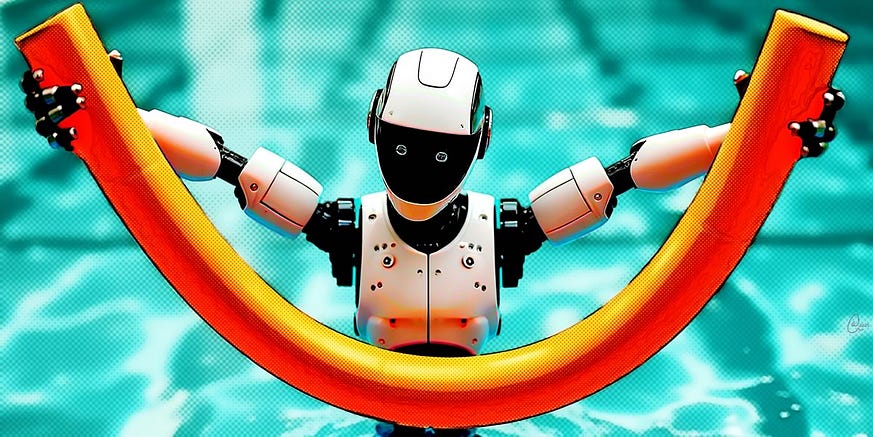
Here’s an example of a floatation device designed for a specific range of purposes:

It’s called a “pool noodle.”

From Wikipedia: 
“A pool noodle is a cylindrical piece of flexible, buoyant polyethylene foam. Pool noodles are used by people of all ages while swimming. Pool noodles are useful when learning to swim, for floating, rescue reaching, in various forms of water play, and aquatic exercise.”

It was designed to fulfill a particular niche and for a minimal purpose. Yet, when the product was released to the market, it took off at a level of popularity that well exceeded its intended use.

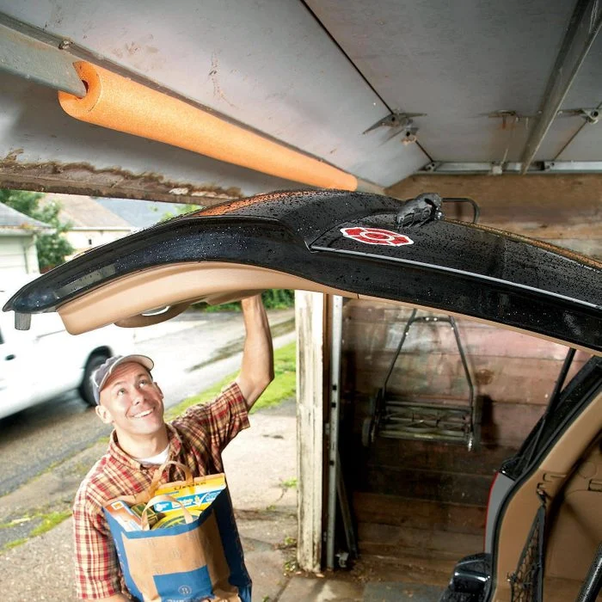
21 Unusual Uses for Pool Noodles

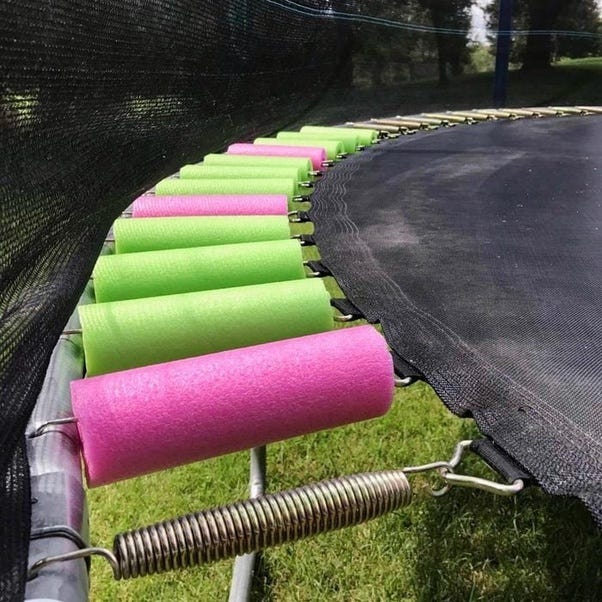
28 Ingenious Pool Noodle Hacks

Pool noodles have hundreds of applications invented by users who have applied some creative thinking to problems they encounter in daily living.

At the time of its design, a simple floatation device could not be imagined to fulfill other needs. It was designed for one purpose that it fulfilled so well that people became familiar with it and began applying its potential toward solving different problems.

We cannot possibly predict how AI enhances human potential without giving it over to humans to invent ways to achieve that potential under their initiative. To refer to AI in such limiting terms as a means of “just automating jobs” is a severe underestimation of its potential and an admission of an utter lack of imagination.

Don’t be too concerned about a failure of imagination, though, because no one can possibly imagine all the uses for which AI will be applied. It’s too big, too broad, and too adaptable to too many use cases for anyone to predict.

AI will enhance human potential; giving humans access is the best way to achieve that.

However, AI’s ability to enhance human potential is as much a threat as a strength. It’s like giving a loaded weapon to a child.

Much more than ensuring AI will enhance human potential, we must ensure that humans have the cognitive skills, emotional development, and psychological stability to utilize AI for beneficial rather than malignant purposes.

AI needs guardrails, but less so around it as a technological tool and more around how humans utilize it.

We should focus significant resources on AI’s development in areas that can improve human development while addressing a severe deficiency in our psychological health. Our state of mental health as a species is our most significant threat, while AI’s ability to enhance that potential is like distributing nuclear weapons throughout a population of children.

Are people presenting Chat GPT answers as their own?

This post is a response to a question posed in its complete format: “Are people taking Chat GPT answers and posting them on Quora? It seems there are many answers all with the same format every time, and sometimes people post the same answer twice. It is very annoying. How can this be stopped?”

There appears to be less of that behaviour today than about a year ago when ChatGPT became a public sensation.

AI-generated content has generally been easy to spot, and I’ve blocked several accounts where people have tried passing off AI content as their own. It may be for that reason I see less of it.

People may also have become more discerning with their inclusions of AI-generated text — by removing obvious clues and editing the content before posting it. ChatGPT has also evolved and become more sophisticated and less easy to spot.

I use Grammarly to speed up my writing and clean up errors, but I still struggle with its structure as it “suggests” changes that are not natural expressions to me.

My experience with it has affected my writing by improving it and relenting on choices I would not have made. I’m unsure how I feel about that beyond feeling a bit dirty in accepting a suggestion out of expedience rather than rewriting an entire paragraph to make it acceptable.

I will fight more vigorously against Grammarly on my desktop than on my phone because typing — especially editing- can be a pain.

Grammarly can generate content from existing text by rewriting it in a more grammatically acceptable (not always correct) format. This makes it somewhat different than the content generated by ChatGPT and other AI LLMs used for content generation.

There also exists AI systems that are designed to spot AI-generated content, of which I am sure many are included within academic budgets. I noticed recently, however, that new AI systems are emerging that claim to be capable of passing muster on being scrutinized by AI detection systems.

Whether those are effective or not, I don’t know. Still, I suspect this will continue to be an evolving issue where it will become impossible to differentiate between human-generated and AI-generated content.

For my part, it seems like I’m being encouraged to cuss more frequently to ensure people understand that they are reading words produced by a human mind over that of a “robot,” but that may be an excuse with a limited shelf life.

Should the internet have a way to shut it off in an emergency?


This post is a response to a question posed in its complete format: “How did the internet reach a point of legitimately being something that no one knows how to shut off in the event of an emergency? Do you think there’s any reason it should have a way of being done?

I’m struggling to think what sort of emergency could possibly warrant shutting off a global environment of interconnected devices while I’m watching the run of Terminator movies.

If Skynet were to become a global threat, then shutting down the entire globe of interconnected machines could not occur quickly enough to defuse such a fictional threat.

Local isolation areas could occur through coordination with service providers, which might be sufficient to limit Skynet’s reach, but doubtfully, because that imaginary AI with a vengeance streak would not make itself so obviously a threat before it’s too late to do anything about it.

Next, a more realistic threat could be a sophisticated virus that propagates throughout the Internet and is likely undetected until triggered into action. Any coordinated shutdown of internet trunks and backbones would still not stop it.

All efforts to mitigate the effects of such a virus would have to be applied locally to billions of connected devices.

It is likely advantageous to maintain internet connectivity to deliver an antiviral payload.

Again… I’m at a loss to identify what possible threat could warrant shutting down or blocking all connectivity between devices.

If such a feature were possible, it would constitute a more significant threat that bad actors could exploit.

Shutting down significant connections could disrupt vast swaths of many economies, making nations vulnerable to extortion.

In this light, such a feature seems more of a threat than any imaginary one, justifying exposing global connectivity to such a weakness.

The primary strength of the Internet is its vast array of redundancies that we will need to rely on to save our asses with increasing climate emergencies ahead.

Your question is born from a mindset where you imagine a coordinated rollout of connecting technology applied uniformly to billions of devices.

That’s not how the Internet came about and grew into a state of global coverage created by an array of trunk lines floating in the ocean and satellites in orbit.

The Internet began small (like everything massive typically does) by hardwiring two computers to each other and developing protocols that permit information exchange.

From there, it grew into supporting military and scientific needs for coordinated information-sharing. From there, tech nerds at the forefront of computer technology shared information on virtual public bulletin boards.

From there and at the beginning of the 1990s, Timothy Berners-Lee wrote protocols for assigning unique identifiers to devices that would allow information to be directed to intended devices in a chaotic system of signal transmissions. He also invented a “Hyper Text Markup Language” that converted computer code into “human-readable pages.”

He is widely known as the “Father of the Internet.”

The Internet grew by quantum leaps year by year as businesses, schools, and homes adopted computers that could connect.

Private companies launched satellites and installed trunk lines while laying down millions of miles worth of cable into a spiderweb of interconnectivity — hence the term “World Wide Web” — the “www” following “http” (hypertext transfer protocol).

While posting a message on my Facebook page asking Mark Zuckerberg to improve blocking on Facebook, I looked up the total number of users, and its numbers were 2.9 billion people on Facebook alone.

All of this has been as far from a coordinated strategy of development as could be the case.

There has never been a perceived need to hamper the primary strength of an always-on internet connection. When failures occur on a localized basis, that entire affected area is in disarray from the disruption.

There exists no means to quickly shut down such a chaotic arrangement of interconnected devices because that’s antithetical to the purpose of the Internet in the first place. At most, an EMP pulse could disrupt a localized area quickly, but that’s about the extent to which a rapid shutdown is possible.


UPDATE:

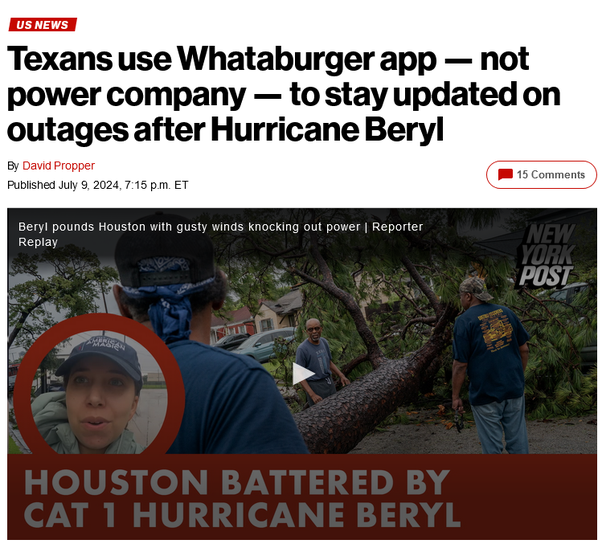
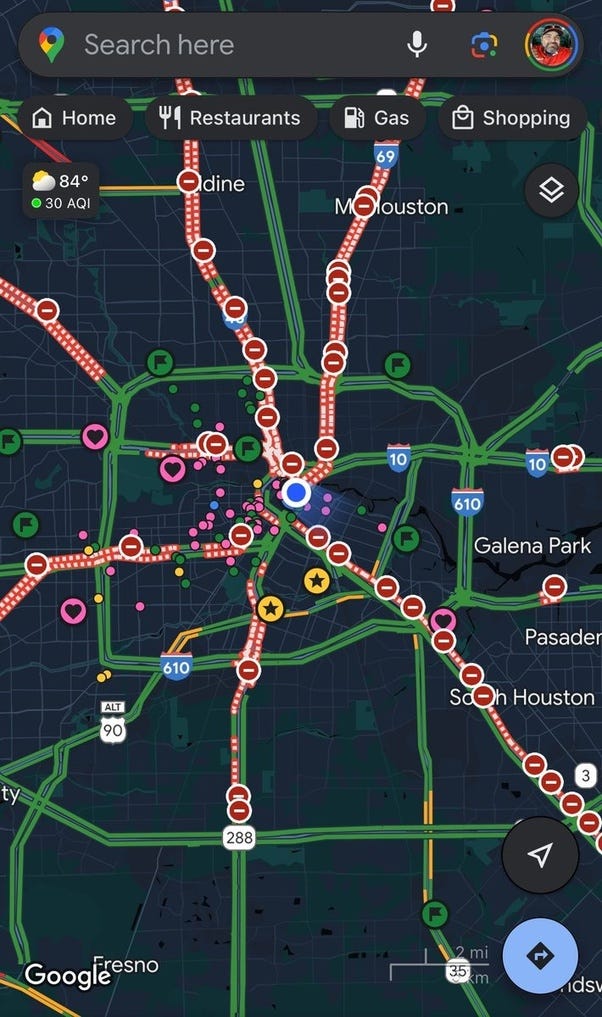
As it turns out, one of the benefits of redundancy is when a privatized corporation tasked with the responsibility of helping citizens survive and navigate an environmental emergency fails to live up to its commitment, another corporation with an app to sell burgers ironically fills in the life-saving service gap to assist people and ostensibly fill their bellies with burgers and fries.

https://nypost.com/2024/07/09/us-news/texans-use-whataburger-app-to-know-about-power-outages-after-hurricane-beryl/

Why doesn’t Elon Musk want to save poor people in the world?

This post is a response to a question initially posed on Quora, and can also be accessed via “https://www.quora.com/Why-doesnt-Elon-Musk-want-to-save-poor-people-in-the-world/answer/Antonio-Amaral-1

He is saving the “poor people in the world.”

The disconnect is presuming he sees other people in the world as people rather than as objects placed on this Earth to cater to his poor existence.

Haven’t you noticed how much whining Trump does about life even though he was born on third base and has destroyed hundreds of thousands of lives throughout his life? After all that destruction, he still views himself as a victim.

Ironically, they’re both victims of failing to maintain contact with their essential humanity.

They will both go to their graves, completely frustrated and confused about why most people hate them.

Sure… they have devoted followers, but those are the easy and gullible idiots to manipulate. It’s not enough because they know the people who challenge them think poorly of them.

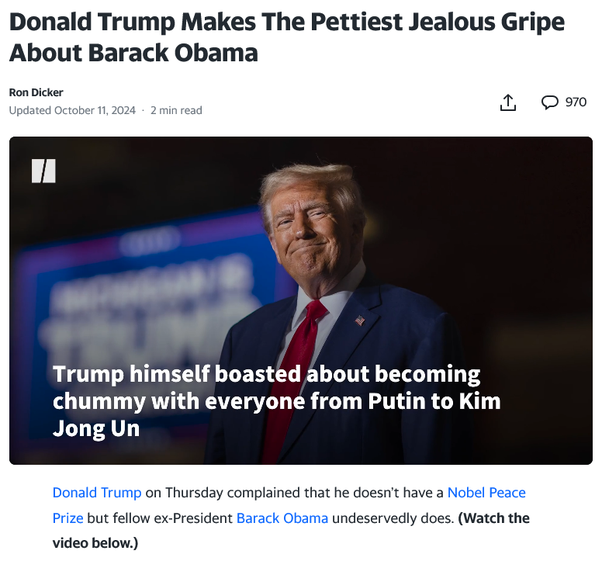
The jealousy is why Trump can still gripe about Obama a decade later.

Supporting a hated monster like Trump is the closest Musk will get to camaraderie. Meanwhile, both regard each other as useful idiots to their self-serving causes. Once the wheels fall off in their relationship — and it will because there isn’t enough room on the planet for two competing megalomaniac egos — eventually, one of them will step on the other’s toes hard enough to escalate into an open conflict — we’ll see embarrassing demonstrations that remind us of all the sandbox behaviours we experienced in elementary school.

Sadly, the more Xitter fails, the harder Musk will go after austerity for the little people, and that’s how he will deal with his “poor stature.” Musk is this century’s poster boy for why restraints on personal wealth and power are crucial to the stability of human civilization.

The MAGAts won’t see that, though, because they’re conditioned to desire submission to authorities they’ve been accustomed to worship. They will identify more with Musk’s struggles than their fellow citizens who suffer from Musk’s spitefulness.

Elon Musk is essentially living a life of revenge against whatever broke him in his childhood. His and Trump’s attitudes and behaviours are typical for bullies who remain convinced of their infinite entitlement to destroy others. They are self-righteous in their acts of destruction to levels equivalent to extreme religious zealotry.

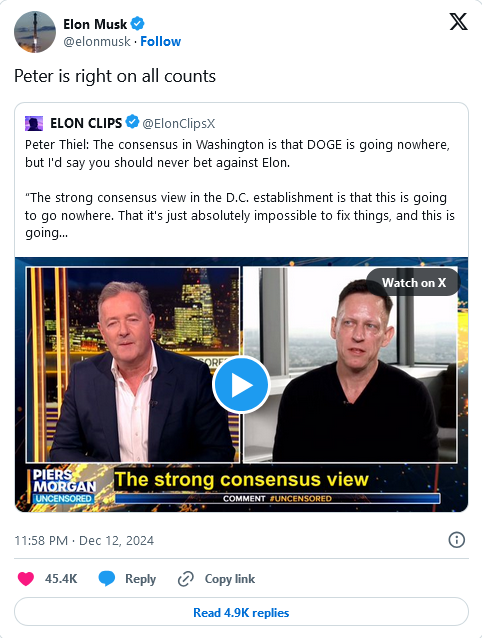
Musk will sincerely believe he is a poor victim for being denied the $56 billion he demanded as compensation from Tesla. Self-serving bullies like won’t stop until someone stops them. Until then, Musk in his “DOGE” role will strip away lifelines from the little people to save himself a few dollars on taxes with righteous fervour. He will sincerely believe he’s doing the right thing for society by getting revenge on his victimization.

The attitude of being a poor victim is a common among billionaires who brazenly justify denying people their right to life to save themselves a few dollars in taxes. Meanwhile, all of their justifications for austerity for the little people is presented as if tax increases are and should be equal across the board. The wealthy have had their taxes cut by more than half in the last several decades which constitutes billions in savings for each billionaire. The little people have conversely gained pennies in tax cuts by contrast. Meanwhile, people like Musk, Thiel, and those support Trump consider themselves poor and unjustly victimized if their taxes were increased by a few percentage points.

The next time you hear someone use the expression, “victim mentality,” pay close attention to the person who accuses others of having such a mentality because that expression is projection for a sociopath. We’ve all had enough experience now to understand how the corrupt will make accusations that are confessions in disguise — deflections away from responsibility for their actions. People like Musk and Trump embody that mentality. Every choice they make is a form of revenge for their victimization while anyone who suffers as a consequence deserves their fates.

What effects do you think AI will have on society?

This post is a response to a question posed in its complete format: “What effects do you think AI will have on society? Realistically, are people overreacting who say they’ll take all the jobs and run the world?”

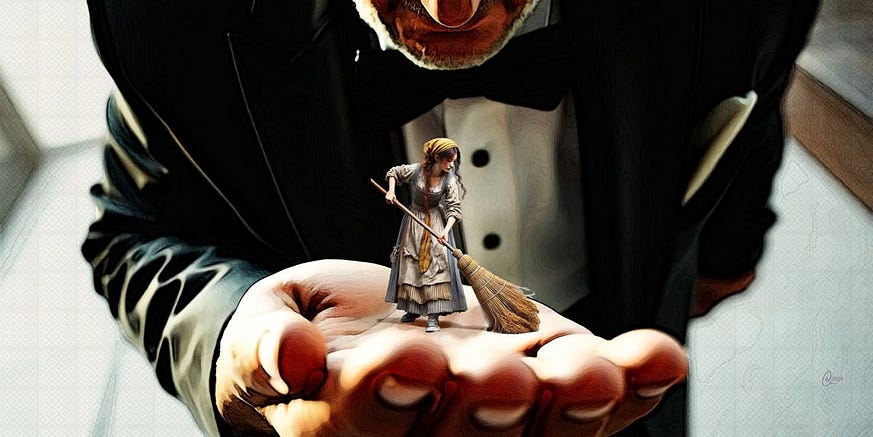
Realistically, machines can’t “take jobs away” from people. Organizations and the capitalists who fund them while demanding optimal revenue generation at the lowest cost possible are choosing automated solutions to the labour cost.

This trend, of course, does displace workers as technologies have always done. Unlike previous generations of technological advancement, however, the displacement is not limited to specialized functions.

For example, armies of people sawing logs by hand were not entirely displaced by the introduction of sawmills. Labour was reallocated and redefined. Instead of pushing a saw back and forth, labour became a process of pushing buttons.

Of course, fewer people needed to produce the same volume of lumber, but there was also enough demand to scale production and create employment opportunities further up the production line.

At the height of the technological transition to a digital age, we saw many jobs displaced, but new categories of employment at much higher levels of complexity emerged. Secretaries who transcribed letters were replaced by administrative assistants who functioned in a data entry capacity. At the same time, executives eventually learned it was more efficient and pleasurable to directly type their thoughts into word processors rather than proofread changes multiple times over in an often frustratingly long process.

Network technicians, web designers, database developers, and an entire class of Information Technology workers sprung up almost overnight — by contrast to how the labour demographic had evolved since the dawn of the Industrial Age.

That’s no longer the case in today’s dynamic.

The AI revolution will not spawn demand for new labour beyond the minimal replacement of armies of people pushing saws with one person pushing buttons.

Before this current stage of technological evolution, it was easily argued that displacement versus the creation of new jobs approximated a one-to-one exchange. The hundreds of thousands of trucking jobs replaced by self-driving vehicles will not result in new jobs created to transport goods globally. Self-navigating cargo vessels will not create 15 to 30 new jobs per ship when intelligent robots replace workers.

Hundreds of millions of jobs worldwide will be transitioned to an automation model.

This brutal inevitability ignores issues used as political footballs and bypasses all the fearmongering over demanding higher wages. Automation will displace jobs, but not because automation “takes those jobs.” Technological innovation has always been and always will be a more efficient way of doing business.

Although the transition to an automated society is often viewed as a technological transformation, it is primarily a social transformation. People are going to have to stop thinking about “getting jobs” and starting about how to generate revenue for themselves by leveraging services as independent entrepreneurs. This view of capitalism has always been at the heart of the capitalist vision, and it was cemented in our psychology when business was granted personhood status.

The primary challenge within this transition is to provide the means to pursue one’s independent revenue-generating efforts with the necessary resources to succeed as an independent business owner.

We are inundated with exposure to the results of resources transforming our world by creating new classes of the wealthy whose net worth far exceeds previous generations — even after accounting for inflation. Henry Ford, for example, was a highly successful industrialist, but his net worth and reach don’t come close to Elon Musk’s status as a centibillionaire. It can be argued, of course, that such a disparity is a consequence of a corrupted tax burden. Still, those factors don’t fully explain the difference in dollar value between Ford’s millions and Musk’s centibillions.

The profit potential has never been more significant simply because the markets that once comprised a few million consumers now stretch across the globe, with a population approaching eight billion potential consumers. This global reach is why it is often argued that it’s easier today to become wealthy than before.

The reality, however, is that just like yesteryear, resources are required as seed funding to support the creation of tomorrow’s industry giants.

We cannot continue to rely on dynasties to dominate the innovation engine because they are not naturally innovative. They are conservative and often repressive by nature because they are risk-avoidant.

The heart of capitalism beats to the tune of innovation. There is no more significant potential for innovation than the eight billion people mostly trying to carve out a living while engaged in activities they value. The handful of billionaires and centibillionaires cannot compete with that innovative potential. By allowing our species to be directed by such a small number of individuals, we are limiting our potential as a species while granting too much power to people who are so grossly corrupted by it that they have become a threat to our future survival.

We must level the playing field and empower the little people who can put to great shame the illusion that the powerful in society are so far above the rest of us that we can’t survive without their direction.

Not only can we survive without them, but we can prosper in ways currently impossible under their thumbs.

We need UBI to release humanity from the yoke of our oppressors and fully embrace our creative potential through the innovative possibilities unlocked to us all through a fully automated society.

Will money and economies still exist if all jobs are automated?

This post is a response to a question posed in its complete format: “Will money and economies still exist, if all jobs get automated? If all jobs are automated, what will people work to earn money? If all jobs are automated, will people receive everything they want and need, for free, without having to work?”

Within a fully automated society, people will have their needs taken care of.

Wants are an entirely different beast.

If you want money to travel around the globe, you’ll still need to earn money to afford that.

If you want to buy a sportscar instead of using public transit, you’ll still need to earn money to afford that.

How you make money will be more a choice for you rather than a necessity made of compromise by a perpetual lowering of your expectations.

You won’t be forced to take a job you hate because you’re afraid of being made homeless. You’ll be able to hold out until you find a vocation you like and that brings meaning to you and your life.

You’ll have many more options for being self-employed than now in ways only emerging today as viable systems to help you bring your imagination to life.

I’ve recently discovered an entirely new concept for doing just that. Check it out:

The site is called “Makeship.” What makes it unique is that you can design your character, and if your design is accepted, it will be made into a plush toy that you can sell for a profit. They handle all the “heavy lifting” from converting your design into a 3D plush toy, its production process, and, to a large extent, a lot of your marketing through crowd-funded campaigns.

Makeship

Many new initiatives are sprouting up everywhere that approach manufacturing, sales, and distribution from a service-oriented perspective.

You’ve probably already heard about dropshipping, where you can essentially choose products from a distribution catalogue and assemble them in a store where you handle all the sales for those products. They handle all the packaging and shipping for you.

This is just the beginning of the new world of automation.

Large entities will capitalize on individual ingenuity, innovation, and effort by empowering the little people to go out and carve their niches in the commercial world.

With the assistance of AI, we’ll be able to produce full-scale movies for distribution simply by the prompts and tweaks we make to flesh out our creative visions in ways that others would want to consume.

Life won’t cater to people without ambition or desire to work, but it will become a panoply of options and opportunities everyone can exploit.

With these tools at our disposal, we’ll finally enter an age where merit is not lip service disguising favouritism. Whatever you imagine will stand or fall on the strength of your effort without being buffeted about by the day’s politics.

Instead of fearing automation, we should be learning to embrace it and leaning into it to begin pushing our governments to adapt to a new world without waiting for widespread suffering through the transition process to compel them to solve problems that can be avoided.

UBI will save millions of lives if we begin implementing it now. If we wait until millions of jobs are lost, then we will lose a lot more than millions of lives, and we’ll end up coping with the daily chaos of ongoing riots and widespread destruction of property.

Is it true that no programmers will be needed within 5 years due to AI?


This post is a response to a question initially posed on Quora, and can also be accessed via “https://www.quora.com/Is-it-true-that-no-programmers-will-be-needed-within-5-years-due-to-AI/answer/Antonio-Amaral-1

Fewer people will indeed be hand-writing tens of thousands of lines of code. However, someone still has to identify use cases for an application, design the application, develop the application, evaluate and tweak the code for the application, test the application, deploy the application, and evaluate the application.

Whoever does that will need to understand code, code architecture, and coding techniques and be able to identify potential exploits within the codebase.

Despite the changes, the role of programmers will remain crucial in the future of coding. Their numbers may even increase. However, they will not be as prone to developing carpal tunnel syndrome or relying on eye-strain remedies as they do now, thanks to the evolving nature of coding.

Coding will become a much more accessible activity, just like creating polished and professional-looking graphics, which are much more accessible today to people without art training.

We will eventually see the end of multi-thousand-employee enterprises and an explosion of small businesses that can match punches with today’s big players.

In another couple of decades, you and half a dozen buddies will get together to operate a business that can serve the globe with a unique product or service that each of you has some expertise in to create a successful enterprise that currently requires employing a few hundred people.

As I’ve pointed out in other answers, this transition period will be excruciating for many people. Lives will be lost, and we can only mitigate the widespread destruction that will eventually be resolved by instituting a universal basic income.

We are already seeing the beginning of a new infrastructure emerging in primitive forms with entrepreneurial solutions such as drop-shipping and outsourced manufacturing to dedicated manufacturers that don’t sell any product they design but rather provide a manufacturing service for designers.

Once it’s completed, the most significant upside of the transition is that we will all have the opportunity to create revenue for ourselves based on our ingenuity. At the same time, all the grunt work that people toil on today while wondering when they can escape their hell will be handled through automation.

People will be ever more reliant on their knowledge and creativity to create success for themselves while being free of toil.

It’s a bloody scary time right now — and primarily because it’s defined by the greed epitomized by eight people owning half of the world, but once we cross that finish line, people will be cheering because we will all finally be free of the treadmill wearing our lives down to dust.

It certainly is scary as hell right now, but if we survive our greed and environmental stupidity, we’ll arrive at the closest we have ever been to a Star Trek utopia.

I highly recommend watching Geordi LaForge or Tom Paris devising engineering solutions or Janeway programming the Holodeck to see how they issue verbal commands and make adjustments.

Watching Tony Stark work on his 3D table is exciting, and it is exciting to imagine what will happen in the real world because we are heading in that direction of usability.

I remember getting a good laugh with a friend when I joked about being in our senior years and reminiscing about how we used to kill ourselves by being on our knees and feeding miles of cable through small tunnels. Now, we’ve got wireless that kicks the old wired solutions’ ass.


Join the Conversation at https://ubinow.quora.com

Anyone wishing to engage in a dialogue on UBI is invited to participate in an open space on Quora dedicated to the issue. You may need to register for a Quora account — It’s free, and I don’t get any kickbacks from it. This space is intended purely for stimulating discussion on the topic — there are no hidden surprises beyond possibly needing to join Quora if you want to post comments. Visitors to the site can read the content without registration hassles.

https://ubinow.quora.com/