This post is a response to a question initially posed on Quora, and can also be accessed via “https://www.quora.com/Is-it-true-that-no-programmers-will-be-needed-within-5-years-due-to-AI/answer/Antonio-Amaral-1“
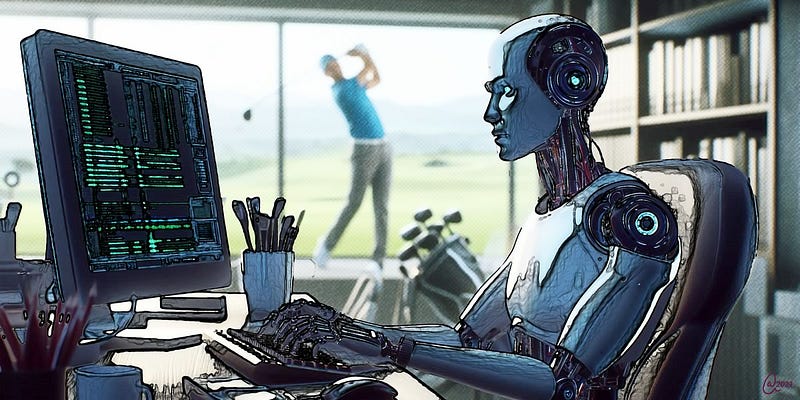
Fewer people will indeed be hand-writing tens of thousands of lines of code. However, someone still has to identify use cases for an application, design the application, develop the application, evaluate and tweak the code for the application, test the application, deploy the application, and evaluate the application.
Whoever does that will need to understand code, code architecture, and coding techniques and be able to identify potential exploits within the codebase.
Despite the changes, the role of programmers will remain crucial in the future of coding. Their numbers may even increase. However, they will not be as prone to developing carpal tunnel syndrome or relying on eye-strain remedies as they do now, thanks to the evolving nature of coding.
Coding will become a much more accessible activity, just like creating polished and professional-looking graphics, which are much more accessible today to people without art training.
We will eventually see the end of multi-thousand-employee enterprises and an explosion of small businesses that can match punches with today’s big players.
In another couple of decades, you and half a dozen buddies will get together to operate a business that can serve the globe with a unique product or service that each of you has some expertise in to create a successful enterprise that currently requires employing a few hundred people.
As I’ve pointed out in other answers, this transition period will be excruciating for many people. Lives will be lost, and we can only mitigate the widespread destruction that will eventually be resolved by instituting a universal basic income.
We are already seeing the beginning of a new infrastructure emerging in primitive forms with entrepreneurial solutions such as drop-shipping and outsourced manufacturing to dedicated manufacturers that don’t sell any product they design but rather provide a manufacturing service for designers.
Once it’s completed, the most significant upside of the transition is that we will all have the opportunity to create revenue for ourselves based on our ingenuity. At the same time, all the grunt work that people toil on today while wondering when they can escape their hell will be handled through automation.
People will be ever more reliant on their knowledge and creativity to create success for themselves while being free of toil.
It’s a bloody scary time right now — and primarily because it’s defined by the greed epitomized by eight people owning half of the world, but once we cross that finish line, people will be cheering because we will all finally be free of the treadmill wearing our lives down to dust.
It certainly is scary as hell right now, but if we survive our greed and environmental stupidity, we’ll arrive at the closest we have ever been to a Star Trek utopia.
I highly recommend watching Geordi LaForge or Tom Paris devising engineering solutions or Janeway programming the Holodeck to see how they issue verbal commands and make adjustments.
Watching Tony Stark work on his 3D table is exciting, and it is exciting to imagine what will happen in the real world because we are heading in that direction of usability.
I remember getting a good laugh with a friend when I joked about being in our senior years and reminiscing about how we used to kill ourselves by being on our knees and feeding miles of cable through small tunnels. Now, we’ve got wireless that kicks the old wired solutions’ ass.

Join the Conversation at https://ubinow.quora.com
Anyone wishing to engage in a dialogue on UBI is invited to participate in an open space on Quora dedicated to the issue. You may need to register for a Quora account — It’s free, and I don’t get any kickbacks from it. This space is intended purely for stimulating discussion on the topic — there are no hidden surprises beyond possibly needing to join Quora if you want to post comments. Visitors to the site can read the content without registration hassles.
 thotbag