Of course, peace is always possible. The challenge is making it desirable enough for all parties to commit to making it possible.
Peace is otherwise impossible when one or more parties refuse to accept compromise as the only path toward achieving any form of peace, whether temporary or lasting.
We have to accept the reality that some people are so broken they would choose to burn the world to ashes rather than give up their power or relinquish their power designs, and so that means the only path to peace is through the destruction of those types. Sadly and ironically, the argument of an escalation of conflict as the only path to peace is validated by the entrenchment of those who endorse imposition as their means of achieving peace through subjugation.
For some people, reason as a path to peace is rejected in favour of catering to hubris. Sometimes, people are so confident in their ability to overpower those they believe entitled to victimize that they will adamantly reject compromise even upon their final breath.
Peace requires giving up at least some of one’s power, while conflict escalations are almost always about exercising, protecting, or expanding power.
It is easy to become cynical in a world filled with so much violence that there has never been a period in human history where wars have not been waged, at least somewhere on the planet. It’s easy to think humans are an irreparably self-destructive species, but that’s a perceptual choice.
The reality is that although our species has never been “war-free,” humanity has predominately existed in a state of peace. Most people are comfortable with enough personal power to live peaceful lives.
However, a small percentage of humans are unsatisfied with that level of personal security and require much more power to quell their insecurities. Their antics are far more successful at capturing public attention because conflict is like a drug that enraptures people’s imaginations, while peace is boring. With this skewed mindset, it’s easy to believe peace is impossible.
To make peace possible on a universal (or global) level, we must address the fundamental elements giving rise to conflict, which begin with addressing factors that undermine psychological health. It’s a massive task that is conceptually simple but logistically impossible today. Whether we will mature enough as a species to achieve optimal mental health sufficiently to mitigate the aggravating factors for conflict escalation is a toss-up. We are currently on a trajectory toward extreme aggravation and conflict escalation that could dramatically reshape the human landscape.
It isn’t very comforting to contemplate how we might survive our challenges over the next few decades. If we can maintain most of the trappings of modern democratic society, our experiences will encourage systems that can address our psychological issues in healthier ways.
I want to believe that once we emerge from the other end of the dark tunnel of regression we have entered, we will be much closer to reaching a new bar for global peace.
This post is a response to a question posed in its complete format: “Why won’t rich people just donate a tiny bit of all their wealth to poor people?”
Some of them do. MacKenzie Scott, the ex-wife of Amazon founder Jeff Bezos, has donated over $17 billion to charitable causes since 2019. Our problems, however, can’t be fixed by relying on a few donations by the small percentage who care about other human beings beyond themselves.
People need to stop thinking about ways to guilt the few rich capable of feeling guilt into ponying up on behalf of those who don’t care in the least about the poor as long they shut up and die quietly and out of sight.
Why do you think “hostile architecture” exists?
A lot of people don’t want to help the poor. They want them gone out of sight and out of mind. They want to blame the poor for creating their conditions of poverty.
They want to think of them as lazy addicts who irresponsibly ruined their own lives.
It’s no different than shaming a woman for her clothes or behaviour for inviting a rapist.
It’s like shaming a mugging victim for paying cash for their drink in broad daylight.
People don’t want to think about why things go wrong for other people because it means dealing with the possibility that things can go wrong for them. If people believed they could also become one of “those people.” many would just give up, while others wouldn’t be able to function past their anxieties.
Although the existence of centibillionaires is a huge symptom of a system so broken that so many poor exist, no one wants to change anything because it means having to do things differently than they’ve become used to.
Look at how impossible it’s been for Americans to adopt a universal metric system — even though it would save them money.
Look at how impossible it’s been for Americans to adopt universal healthcare — even though it would save them money and lives.
People may demand change, but they hate change. Many people prefer complaining about how bad things are to doing something different because they fear change will be worse than what they’ve gotten used to.
My province of BC has had three referendums on electoral reform that would have made our elections more representative of the people. We would have become a more democratic province that more effectively addressed the needs of the people if the people could vote for what they want rather than vote against a change they don’t understand. Even worse, the change is easy to know if one makes a small effort to educate themselves, but they don’t and won’t understand something until they’ve lived it. When people are unsure, they consistently vote to maintain a corrupt status quo instead of voting to change it.
Americans are going to continue voting for corrupt leaders until they realize their lives are at so much risk that the choice is no longer “change or continue suffering” but “change or die.”
That’s where we are right now… or at least, those who refuse to read the writing on the wall will eventually figure out that’s the case when they start seeing the suffering around them can no longer be denied. They will change only when they become more afraid of maintaining a destructive status quo than the change they can’t understand until they’ve made their change.
Rich people won’t give up their wealth, even in part to sustain a failing system until it fails so badly that they start running and hiding for their lives from the mobs who are angry enough to repeat history. They won’t change what they’ve gotten comfortable with, even if it means they’ll end up more prosperous.
This is why “woke” is such an important concept these days — because we are at the stage where a lot of people are sick and tired of screaming “Wake up!” to people who insist on ignoring the threat they’ve become to our future.
The bullying Nazis among us still think they can play their bullying games endlessly while laughing at the “librul” tears they imagine are being shed out of frustration without realizing those tears are being shed because of what comes after those tears… the mourning of having to do what could have been avoided.
The few wealthy people cannot, through donating portions of their money, fix what’s broken.
The system needs to change on fundamental levels enough to force the greedy sociopaths to acknowledge the critical importance of maintaining a universally sustainable social contract. They need to understand the benefit of giving up some of their money to pay back into a system that allowed them to become rich in the first place.
Allowing a small number of elite few to grow hoards is not how to develop a sustainable economy or lift people out of poverty.
People like Musk know this. They don’t care because they see themselves as entitled to rule over the rest of us like we were herd animals.
Eventually, someone like Musk will push society far enough for the guillotines to come out and put his head on a pike. He doesn’t believe that’s what he’s inviting into his life. He thinks he is untouchable… just like Trump thinks he’s untouchable — that no one would dare do the unthinkable.
Suppose Trump decides to start a war with Canada, and NATO steps in. In that case, the chances of an American military officer putting a bullet in his head on the brink of launching a nuclear attack against a long-time partner becomes a very real possibility. Just because he’s the “commander in chief” doesn’t mean he has carte blanche to do whatever he wants. Everyone has limits. That’s just life. We must acknowledge that and protect them for everyone, for all our sakes.
We don’t know right now what those limits are and what it will take to cross that one bridge too far… but if or when it does happen, there will be chaos in the streets. We’ll be spending the next hundred years dealing with profound regret while armed with microscopes to examine in micro-detail how it could be that we allowed this nightmare to go on as long as it did.
We will be kicking ourselves with the kind of regret that will change us forever in ways that will horrify us deeply if this happens again. We should be paying attention to how the German people have had to cope with their recovery from the madness that overtook them. We should be learning from history, but 76 million people voted for a repetition, while another 80 million said they didn’t care enough to do anything different but pretend it wasn’t their problem to solve… so they made it their problem and everyone’s problem.
Meanwhile, it’s unfair to the few wealthy who are generous and care about humanity to put the onus on them alone to solve the problems we all have a responsibility to solve.
If that means we have to start punching Nazis to get them to develop enough humility to behave like human beings, then we need to start swinging as if our lives depend on it because they do.
Nothing will change until we take this dystopia seriously enough to deal with the threats we face in the form of hatemongers who feel themselves entitled by God to rule this world.
If there’s one thing we can learn from Luigi Mangione, it’s how overwhelming this problem is and how overpowering the enemy is. They’re not taking any breaks now that they’ve been given the keys to transform the landscape radically. They’re putting the pedal to the metal, and if it means running over millions of homeless people with a bulldozer, then so be it.
They don’t care about the poor. They are happy to destroy the easily victimized among us.
Why do you think they’re starting with schoolchildren?
This post is a response to a question posed in its complete format: “To which extent do novels, or manga, conveying deep idea, or talking about social issues, relate to them given global awards, or high global popularity, to which extent does this depend on how smart the creator is, why only few reach to this level?”
Popularity and recognition are primarily not determined by intelligence, creativity, or any value generally associated with degrees of quality, skill, or craftsmanship but by timing and resonance.
The kind of popularity attributed to intelligence and creativity is recognized only through endurance throughout the ages. It is the rarest form of popularity that remains consistently in the shadow of most other forms of popularity. It does receive the occasional boost because it can garner enough of a niche following to emerge on the populist stage for a time. Still, it then retreats to becoming a niche once again.
A book like “Fifty Shades of Grey” was a literary mess on every level, from the writing to the butchered subject matter to the horrid values it sensationalized.
It was a massive success because it appealed to a repressed and widespread imagination responding to an increasingly darkening reality by retreating into dark fantasies that most would not have the courage to explore in real life.
I’m certainly not claiming that I would or have the courage or the slightest interest in exploring this area of the human condition for myself. Still, I am at least aware enough of the dynamics to understand how the story itself represents more of an expression of a mind suffering from Stockholm Syndrome indulging in titillation rather than providing realistic insights into the dynamic it attempts to portray. It’s more of a study of mental health in society than a literary masterpiece.
This leads me to my point that, as a people, we have been enduring a staggering decrease in the quality of our lives over the last several decades, shocking most of us. A piece of schlock like this validates feelings shared by a large audience and titillates the imagination through sensationalized imagery.
It became popular, not because of any enduring qualities but because it fulfilled a need for an outlet.
“The Secret” is another example of appealing to repressed sentiment, but instead of validating the repressive darkness people have been suffering through, it capitalized on a need to restore hope.
Ultimately, both literary productions created more harm than good in the same way that trolls undermine the social contract.
Once materials like these run their course, they begin to resemble porn in that a temporary titillation is an insufficient mitigation for addressing underlying causes, and like cocaine, once it’s run its course through one’s body, one is left feeling drained and hungry for more of that emotion that gave them a temporary boost in life.
There is, sadly, no real cure to this phenomenon of populism beyond two different strategies. The first strategy is the sanest, but it is also the most long-term and invisible strategy for addressing this need to bottom feed while racing toward an ever-receding bottom. It’s a strategy that will make many eyes roll once I write it as a one-word summary: education.
Education is the “magic pill” that will mitigate most of humanity’s ills — at least, it will once we address the economic roots of humanity’s ills.
It won’t ever be a cure because there is no final state to education. There is no finishing an education. Only lifelong learning exists for our species if we wish to survive anywhere near as long as the dinosaurs did.
The alternative to education is our current self-destructive trajectory, which risks the end of human civilization and, quite possibly, our species if our rock bottom is deep enough.
The alternative track to education we are on is to continue our descent into worshipping the superficially constructed Holy Grail of attention for the sake of attention. We will continue to behave like addicts drawn toward the chaos of feeding an insatiable hunger until we consume all of what we value through superficial titillations that temporarily distract us from an otherwise horrifying existence.
Surviving the nightmare ahead of us means our future progeny will have slim pickings to choose from as representations of the best human potential to pick out from the forgettable detritus of populism. The future will be as we experience it today when looking back on history and forgetting how Leonardo DaVinci had many contemporaries competing for the same artisanal benefits he remains remembered for.
We don’t remember the easily forgotten mass, but we do remember the outliers, and that’s the broad lesson of history.
If we exist as a species and civilization in another two hundred years, no one will know who or what a Kardashian is. They will note, however, how rampant superficiality characterizes this primitive and barbaric state in which we live.
No one will remember any of the Harry Potter books or the trans-hating hypocrite who fraudulently represented hope within her discardable stories. They will, however, continue to be influenced by Tolkien.
No one will remember much of anything notable about the products of this era beyond the horrid worship of excess.
Not one talking head from Fox will be given a nod of acknowledgement for their contributions to society. Rupert Murdoch might earn a passing reference as a key player in corrupting human civilization. Even he will be regarded as a side note contributing to corruption. At the same time, his success at making it so widespread will be considered a global failure in ethics that permitted monstrosities like centibillionaires to exist.
Donald Trump will be remembered as this century’s Hitler, no matter how many may find that offensive today. It’s just where we are as a species, and history has given us enough hindsight information to make such predictions with great confidence.
Those who may be offended by this prediction would do well to consider how that’s an optimistic outcome to the trajectory we are on right now because if he succeeds in achieving the maximum potential of his efforts, then we may not have much left of humanity to be capable of studying the history we make today in any way resembling our current capacity for exploring our history from yesterday.
Suppose we don’t rein in society’s current excesses of distorted power. In that case, we will be lucky to exist in any state resembling anything other than a primitive existence at the mercy of nature.
This post is a response to a question posed in its complete format: “How did the internet reach a point of legitimately being something that no one knows how to shut off in the event of an emergency? Do you think there’s any reason it should have a way of being done?
I’m struggling to think what sort of emergency could possibly warrant shutting off a global environment of interconnected devices while I’m watching the run of Terminator movies.
If Skynet were to become a global threat, then shutting down the entire globe of interconnected machines could not occur quickly enough to defuse such a fictional threat.
Local isolation areas could occur through coordination with service providers, which might be sufficient to limit Skynet’s reach, but doubtfully, because that imaginary AI with a vengeance streak would not make itself so obviously a threat before it’s too late to do anything about it.
Next, a more realistic threat could be a sophisticated virus that propagates throughout the Internet and is likely undetected until triggered into action. Any coordinated shutdown of internet trunks and backbones would still not stop it.
All efforts to mitigate the effects of such a virus would have to be applied locally to billions of connected devices.
It is likely advantageous to maintain internet connectivity to deliver an antiviral payload.
Again… I’m at a loss to identify what possible threat could warrant shutting down or blocking all connectivity between devices.
If such a feature were possible, it would constitute a more significant threat that bad actors could exploit.
Shutting down significant connections could disrupt vast swaths of many economies, making nations vulnerable to extortion.
In this light, such a feature seems more of a threat than any imaginary one, justifying exposing global connectivity to such a weakness.
The primary strength of the Internet is its vast array of redundancies that we will need to rely on to save our asses with increasing climate emergencies ahead.
Your question is born from a mindset where you imagine a coordinated rollout of connecting technology applied uniformly to billions of devices.
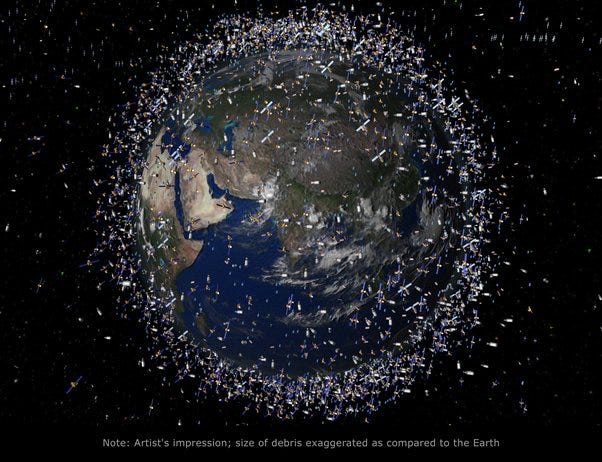
That’s not how the Internet came about and grew into a state of global coverage created by an array of trunk lines floating in the ocean and satellites in orbit.
The Internet began small (like everything massive typically does) by hardwiring two computers to each other and developing protocols that permit information exchange.
From there, it grew into supporting military and scientific needs for coordinated information-sharing. From there, tech nerds at the forefront of computer technology shared information on virtual public bulletin boards.
From there and at the beginning of the 1990s, Timothy Berners-Lee wrote protocols for assigning unique identifiers to devices that would allow information to be directed to intended devices in a chaotic system of signal transmissions. He also invented a “Hyper Text Markup Language” that converted computer code into “human-readable pages.”
He is widely known as the “Father of the Internet.”
The Internet grew by quantum leaps year by year as businesses, schools, and homes adopted computers that could connect.
Private companies launched satellites and installed trunk lines while laying down millions of miles worth of cable into a spiderweb of interconnectivity — hence the term “World Wide Web” — the “www” following “http” (hypertext transfer protocol).
While posting a message on my Facebook page asking Mark Zuckerberg to improve blocking on Facebook, I looked up the total number of users, and its numbers were 2.9 billion people on Facebook alone.
All of this has been as far from a coordinated strategy of development as could be the case.
There has never been a perceived need to hamper the primary strength of an always-on internet connection. When failures occur on a localized basis, that entire affected area is in disarray from the disruption.
There exists no means to quickly shut down such a chaotic arrangement of interconnected devices because that’s antithetical to the purpose of the Internet in the first place. At most, an EMP pulse could disrupt a localized area quickly, but that’s about the extent to which a rapid shutdown is possible.
UPDATE:
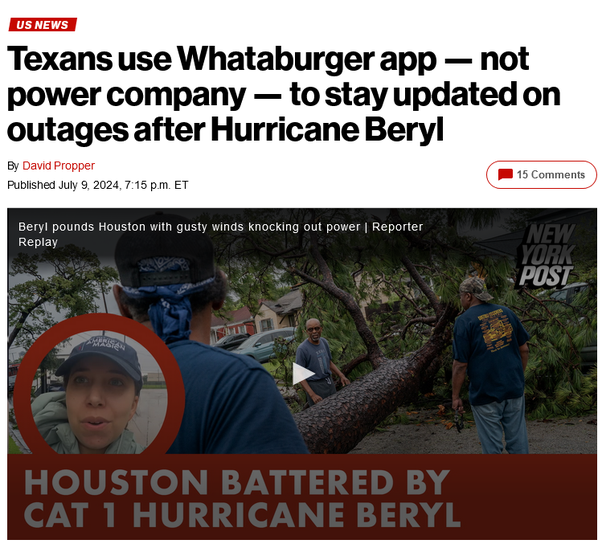
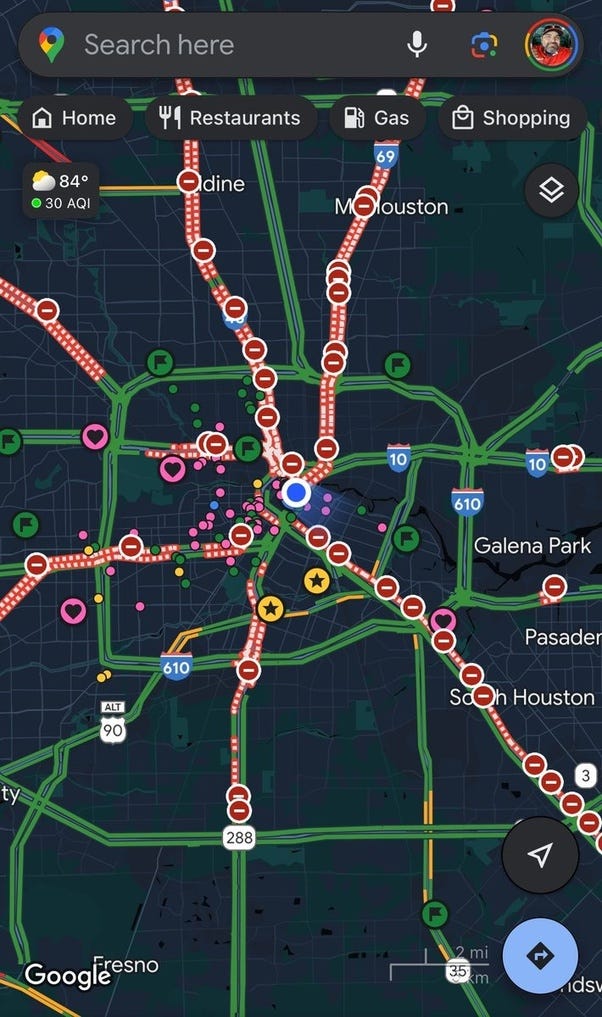
As it turns out, one of the benefits of redundancy is when a privatized corporation tasked with the responsibility of helping citizens survive and navigate an environmental emergency fails to live up to its commitment, another corporation with an app to sell burgers ironically fills in the life-saving service gap to assist people and ostensibly fill their bellies with burgers and fries.
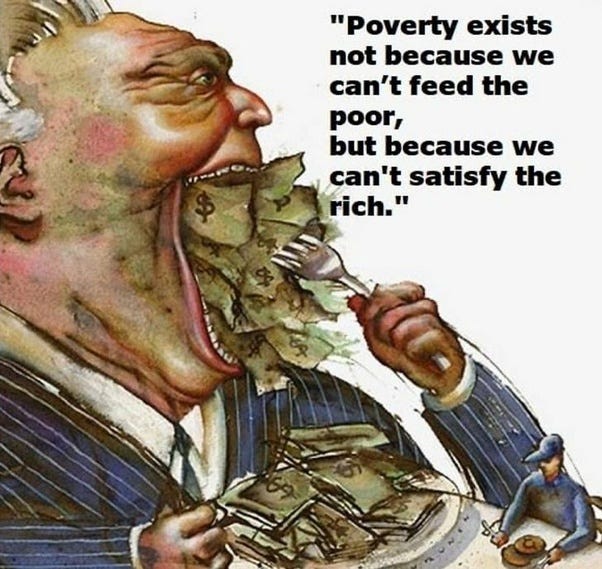
Setting aside the failings of individuals who make bad decisions and cause problems for themselves, because there is always a tiny percentage of people who need more guidance to make better decisions, the vast majority of people suffering in poverty have done everything right with their lives and are still struggling.
A big part of the reason why that happens is that too many people waste their time wallowing in a misanthropic belief that poverty is due to the victims of it being responsible for creating their poverty and that if they just did something different with their lives, they, too, would be among the wealthy in society.
This myth that poverty is a self-imposed sentence is precisely what the thieves in our lives want the people to believe.
This myth that poverty is a self-imposed sentence helps people to believe they won’t become victims of poverty themselves.
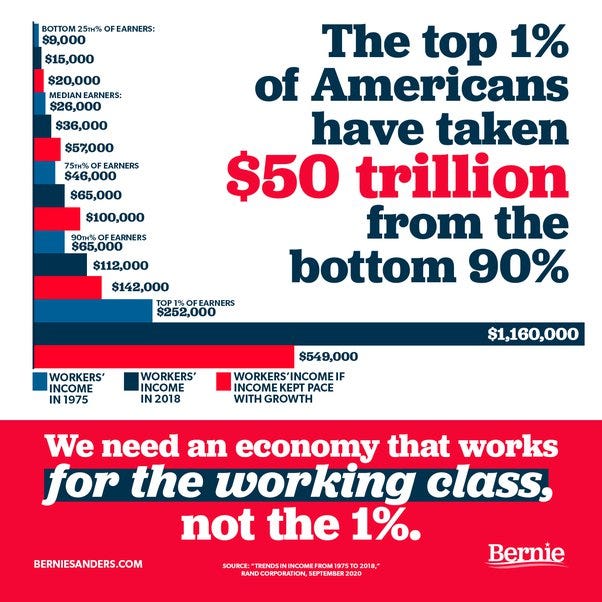
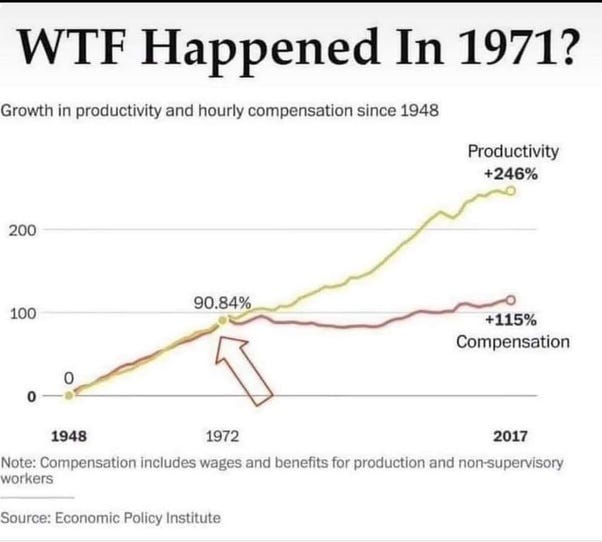
This myth that poverty is a self-imposed sentence overlooks how our culture is geared entirely around impoverishing the majority in favour of the sociopaths who are willing to destroy lives to achieve personal material benefit.
This myth that poverty is a self-imposed sentence is why people become poor and broke because believing this nonsense allows poverty to exist in a post-scarcity world that could easily eradicate poverty overnight — if we could only address the rampant greed corroding the social contract to be the actual cause of poverty instead of shaming the victims suffering unnecessarily in a state of poverty that would not exist if economic justice existed.
There hasn’t been a time in my life where I have not been blamed for the clients who have stiffed me after praising me for doing work they benefited from.
Try to make sense of that.
It’s precisely what Donald Trump does when he calls the contractors that worked for him losers. He put thousands of people out of business throughout his life by not paying them for doing work on his behalf, and as far as he is concerned, it’s their fault.
This question embodies a corrupt attitude that pervades society, and it is this attitude that permits poverty to exist.
It’s the same attitude that admires how people can avoid paying taxes and envies that ability enough to want it for themselves.
This question enables the attitude of greed to characterize the rot infecting humanity and destroying human civilization because it teaches us to forget that we are all in this together.
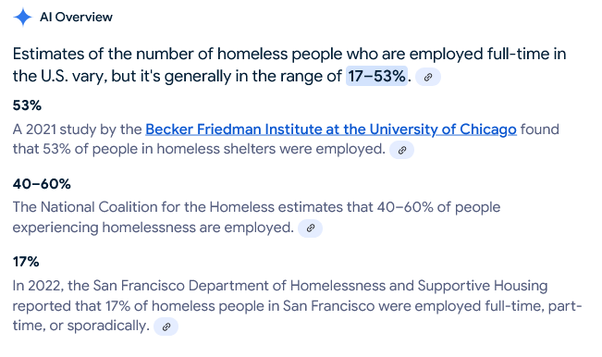
Up to about half the people who are homeless in the U.S. are working full-time jobs.
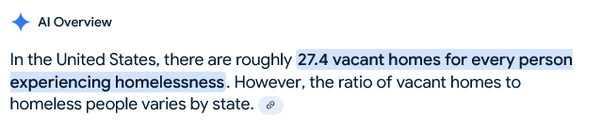
There are over 25 times more vacant homes in the U.S. than there are homeless people.
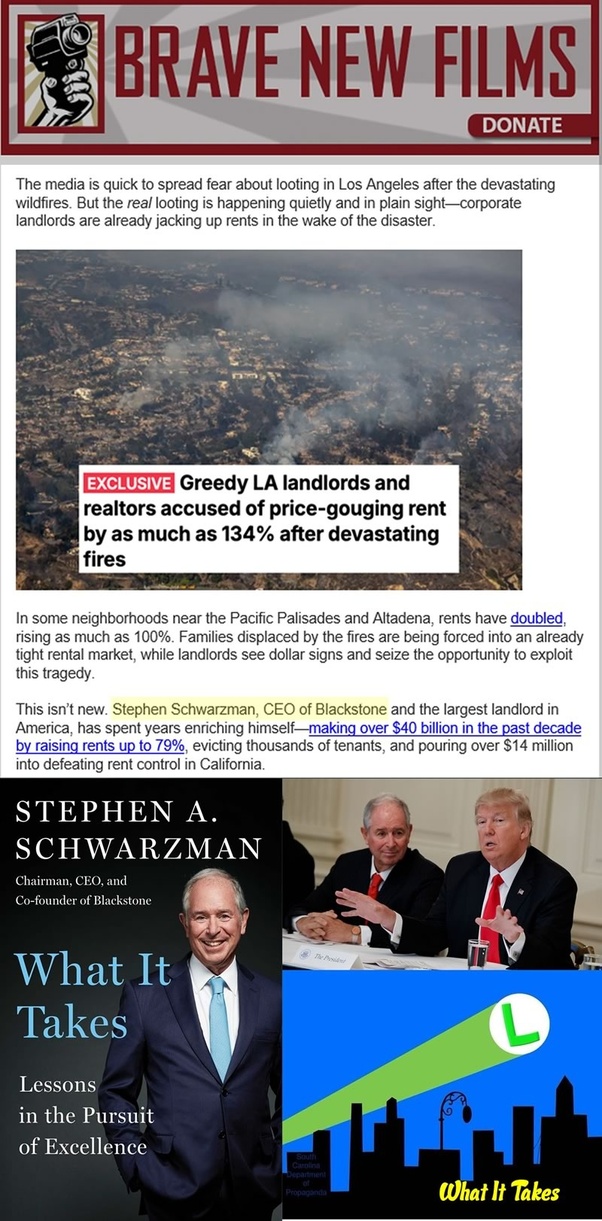
Try to make sense of that… and then get pissed off about this:
This post is a response to a question posed in its complete format: “How do atheists think this brief existence is all there is? Don’t you have a yearning in your heart that there must be something over the rainbow?”
That’s not exactly how that works.
This brief existence is all there is for this thing we call “ego.”
This thing we call “ego” is far from being “all there is” and is, in effect, as relevant to the universe as a speck of dust on our planet. The problem here isn’t the insignificance of ego but the ego’s addiction to being (or being perceived as) relevant beyond its existence.
There is much, much more to existence beyond the human ego, but as soon as each life ends, so too does that frail construct that demands immortality for itself on the sole basis of simply recognizing its own existence.
What we should be doing with human egos is learning how to train them to focus on the lives they get so that the benefits of existence are maximized for themselves and through others because that’s the only way for the ego to validate itself within the context of its limited existence.
Pissing away one’s life by catering to delusions of egotistical immortality is the most toxic form of grooming for one’s ego that invariably metastasizes it into a cancerous tumour for human society.
Whatever may exist “over the rainbow” is not for the human ego to experience.
This existence is all there is for the human ego.
The sooner the human ego can embrace that, the sooner it can grow to appreciate a gift that can vanish at any moment for any reason. Appreciation for the finiteness of one’s existence is precisely the point of a limited existence. There is no other way to transcend this limitation.
This post is a response to a question posed in its complete format: “Why can’t I just accept failure? Like if I fail on something I always almost grandiosly believe that there is no way that’s the end and begin comming up with a whole palet of things to do that could potentialy “fix the situation”?”
Instead of asking why you can’t accept failure, you should ask whether failure is acceptable within specific contexts. You should also ask yourself what you might learn from what you perceive as a failure, which also begs the question of why you perceive a specific outcome as a failure.
For example, if you’re interested in someone and wish to develop an intimate relationship with them, and your advances are met with rejection, do you perceive that as a failure? If you perceive that as a failure, does that motivate you to persist in your advances, hoping you can convince them to change their mind?
Suppose your approach is to persist in pursuing a relationship after being rejected because you can’t accept what you perceive as a failure. In that case, you are failing to understand the dynamic in play.
Lack of success in achieving a goal does not equal failure.
Being rejected by someone else isn’t a situation you can fix.
Let’s move on to a different context commonly associated with a perception of failure, such as not achieving the goal of becoming a millionaire. The paths one can take to achieve such a goal are innumerable, while the variables affecting the outcomes are more easily quantifiable. For example, elements in achieving this goal amount to the degree of opportunity extant within a particular strategy, the material resources one has on hand to help them achieve their goal, their interpersonal relationships and the successes and advantages one may gain through their networking efforts, timing, market reception and demand for their product or service, their competitive difference, the uniqueness of their offering, the quality of their branding, and how they can leverage media to maintain a top of mind that contributes toward steady growth.
These combined can almost be a prescription for guaranteeing one can become a millionaire in time. However, any single tragedy or traumatic life-altering event in their lives can derail all of that.
Failing to achieve their goal of becoming a millionaire doesn’t mean they have failed because it’s impossible to predict random events in one’s life that can dramatically alter its trajectory.
In this case, to contrast against the former example, one can return to pursuing their original goal of becoming a millionaire while being entirely hobbled in all the areas one initially relied on to achieve their success at the outset of working toward their goal. What can happen at a point where one realizes their goal is not only much more difficult, if not impossible, to attain after so much had been lost, is that their initial goal is no longer as important as it once was, or at least no longer defined by the same parameters or reasoning one applied at the outset. Instead of becoming a millionaire, they adjust their goal to a more modest level of meeting needs and fulfilling some desires while realizing how some choices they made the first time are no longer acceptable.
The nature of their goal will have changed in ways that make its first interpretation moot.
That process is called learning — growing as an individual and adapting to a reality that one has a limited capacity for influencing.
One hasn’t failed if they can succeed in adapting to new circumstances. Quite frankly, the opposite is true in such a case because such tragedies often result in even worse tragedies from being unable to cope with traumatic losses. People frequently commit suicide when faced with intense trauma that destroys what they had accustomed themselves to accept as true about their lives.
The point is to help you understand the genesis of failure lies within one’s perceptions. If you struggle intensely against what you perceive as a failure, you fail to understand your circumstances’ deeper level.
IOW, your perception of failure is a failure to restrain your ego because it assumes you have complete control over outcomes when you don’t.
Sometimes, “failure” is failing to accept failing to achieve a goal. Failing to achieve a goal is an opportunity to learn something about reality and oneself. If people can walk away to continue living their lives while learning something they did not understand before their experience of failure, then they haven’t failed at all.
For someone who values a debt-free existence, it can undoubtedly be viewed as an absence of a burden that enables greater freedom of choice. However, the entire system of capitalism is based upon leveraging debt to create revenue.
Revenue and profits are seen as far more powerful versions of freedom within a system that can be leveraged in ways in which the debts themselves can be resolved by servicing them with the increased revenue they generate or by being forgiven.
Of course, this form of debt is not the same as implied by the question, which is based on the notion of debt accrued in purchasing lifestyle augments. For example, a purchase of an air purifier I made just today was made through a credit card, constituting an assumption of debt on my behalf. This purchase will generate no revenue, but I applied my justifications to the decision before making it.
One can argue that my decision decreased my freedom, but that’s only a tiny part of my decision. I can easily say in favour of the practical benefits of making this purchase, even with the context of it ultimately increasing my freedom (from headaches, specifically). However, that makes this degree of granularity in decision-making a cartoon.
Suppose the point of this question is to criticize people for spending thousands on a 100″ television through credit debt instead of a quick payment of a couple of hundred for a 24″ television that would leave them debt-free. In that case, these discussions are merely psychological masturbation sessions where people are attempting to objectify subjective considerations for themselves and applying essentially bigoted reasoning to determine values of rationality toward decisions made by others for things they value.
The reality, however, is that if one is going to argue how debt freedom is an important freedom, then so are many other forms of freedom. For example, freedom from a crushing health exploitation system through a universal healthcare system is also an important freedom that many don’t consider freedom because they’re obligated to support it through their taxes — even if it means a reduced fiscal burden and improved services. The fact that they have no choice but to contribute to it, whereas they do have a choice in a privatized system to pay much more and be rejected by their insurance carrier to die, is also considered an important enough form of freedom for many that universal healthcare remains unimplemented in a nation that likes to think of itself as a bastion of freedom even though it has the highest incarceration rates in the world.
The point is that no matter how vital debt freedom seems to some, sound fiscal management skills are more critical because debt is contextual. The largest corporations in the world carry the most significant amount of debt and begin by getting deeply into debt. Our financial systems are geared around rewarding debt.
Your credit score, for example, drops when you’re debt-free and increases when you have debt and show that you can manage it. The only way to improve one’s debt ceiling is to go into debt. You can live your entire life being a cash-only person and living debt-free, but when you reach a point where you need debt to resolve an issue or accomplish a goal, going debt-free becomes a liability in your application for debt.
In short, Americans are not taught that freedom from debt is an essential freedom because it isn’t. The ability to service one’s debt through revenue constitutes a far greater level of freedom. After all, there isn’t one investment manager who counsels investing one’s money into risky investments. They always counsel investing other people’s money.
Some may wish to argue for a return to debtor prisons based on this dynamic, but that would just penalize the wrong people.
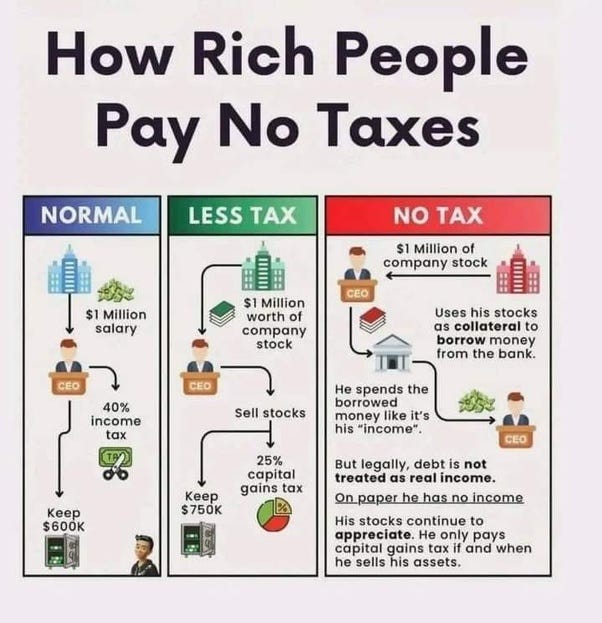
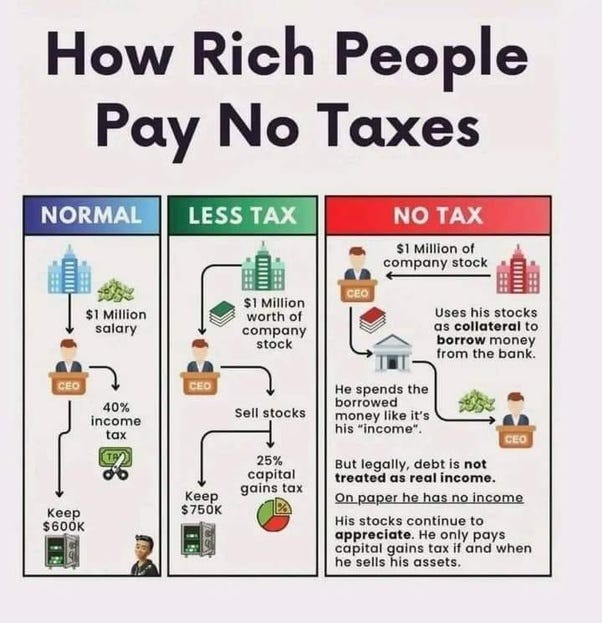
Here’s how wealthy people leverage debt to lower their cost of living, for example:
The wealthiest among us experience the most significant degree of fiscal freedom precisely by how they manage their debt.
The kind of debt and the thinking about debt described by this question is from an era when people could count on stable 40-year careers, prudent personal economic management, and modest living that would result in a comfortable retirement. Those days are long gone.
This post is a response to a question posed in its complete format: “When will people understand that their constant selfish reckless belligerent greed is what brought society to its current disgusting miserable state of existence?”
Let’s look at someone like Donald Trump. He has spent an entire lifetime spreading hatred while bullying people to feed shallow desires, and he entertains himself through acts of cruelty he enacts on fleeting whims. He’s been behaving in ways that epitomize constant selfish, reckless, and belligerent greed, ostensibly his entire life.
His response to being criminally convicted was not remorse but to have the conviction overturned.
This question naively presumes that a person who behaves in destructive ways throughout their life will magically experience an epiphany of conscience in which they will transform into the “decent human” imagined by this querent.
Never has any evil monster throughout history found any turning point in their life that magically transformed them into saintly beings. Most who claim to have “seen the light” assume such a position as a fraudulent means of continuing their prior agenda of self-benefit at the expense of others.
The short answer to your question is “never.”
People cannot change their essential nature. They may choose to improve, but that presupposes desire that has always existed and a lifetime of dedication toward that end.
People like Donald Trump see nothing wrong with their behaviour and so will never make an effort to improve.
Epiphanies such as this question presume to be possible constitute wishful thinking on a highly destructive level of delusion that prevents us from addressing the fundamental issues of broken psychology that we must dedicate ourselves as a society to addressing on the most basic levels.
We can never truly call ourselves civilized if our systems enable and empower the kind of evil embodied by people like Donald Trump — and make no mistake about it, we encourage his evil.
Our societies embrace and enable selfish, reckless, and belligerent greed.
Until we can address the fundamentally broken human psychology on a system-wide and social scale, we will continue to be plagued by these behaviours.
Ten percent of the world’s wealthiest are destroying our planet at a rate practically matching the total of the other 90% of the rest of humanity. Instead of doing something to restrain their destructive behaviours, we put them on pedestals and worship their harmful behaviours.
Changing humans in ways that address destructive behaviours embodying selfishness, recklessness, and belligerent greed means we must start at the top and change all of human society.
This post is a response to a question posed in its complete format: “Do you feel that Wal Mart employee’s lack of performance could be due to the fact that welfare literally forces people to accept a job offer or lose benefits that provide Food and Housing? Support #UBI”
When employers don’t care about their staff, their staff stops caring about them.
When employees stop caring about their employers, they disengage and produce the minimum they can get away with. They focus less on productivity and more on toxic politicking to gain personal benefit over others in an increasingly misanthropic culture that pits people against each other.
The sociopathic Walton family is teaching their people to hate them, their operation, and the society which permits them to exploit the vulnerable. Their people, staff and customers are being virtually trained to devalue everything about human life and modern society. This naturally results in the disengagement that every other historic failure of society has experienced preceding widespread systemic collapse.
This isn’t rocket science. It’s reciprocity.
Most people understand it clearly as “you get what you give.”
Sadly, we’ve allowed our societies and our systems to forget the most critical principle to acknowledge and characteristic of the human condition to preserve within everything we do. Strangely, it’s also a core principle within almost every religion throughout the history of religion.
It’s not complicated in the least.
Even science acknowledges it.
It’s cause and effect.
“Do Unto Others As You Would Have Them Do Unto You.”
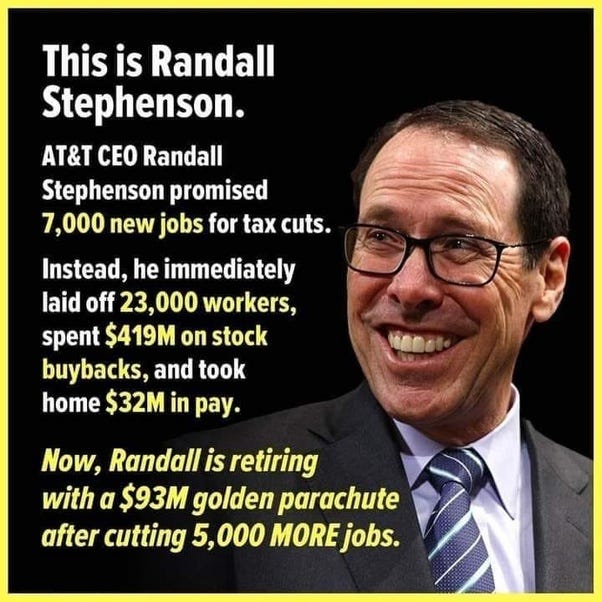
It’s only a matter of time before the greedy, misanthropic Walton family finds themselves confronted with the bill for the consequences of their sociopathic and parasitic disdain toward society. In effect, they are no different than this person who justifies shoplifting.
They are responsible for breeding this kind of thinking because this is precisely their reasoning as they disempower their people and force them to rely on government assistance so that they can increase their hordes in an escalation of the misanthropic decay of society.
They are spitting on the social contract from the comfort of their luxurious mansions.
They are no different from this person and are responsible for validating this skewed justification.
UBI is a basic correction to veering off-course in the last several decades. UBI is insurance for the transition toward automation, which is well underway. UBI is a stabilizing societal element that will eliminate poverty, homelessness, and various social problems that create conflicts from which we all suffer.





















 thotbag